Qatar Grand Prix Grid Shake-Up: Verstappen and Bottas Face Penalties for Yellow Flag Infractions
The build-up to the inaugural Qatar Grand Prix has been rocked by crucial decisions from the FIA stewards, profoundly altering the starting grid for today’s race. Both championship contender Max Verstappen and Mercedes driver Valtteri Bottas have been handed grid penalties for failing to sufficiently slow down under yellow flag conditions during a dramatic qualifying session at the Losail International Circuit.
These F1 penalties, stemming from incidents involving the stationary car of Pierre Gasly in Q3, highlight the unwavering commitment of Formula 1 to driver safety and the stringent enforcement of its regulations. The decisions have sent ripples through the paddock, with significant implications for both the drivers’ and constructors’ championship battles as the season reaches its climax.
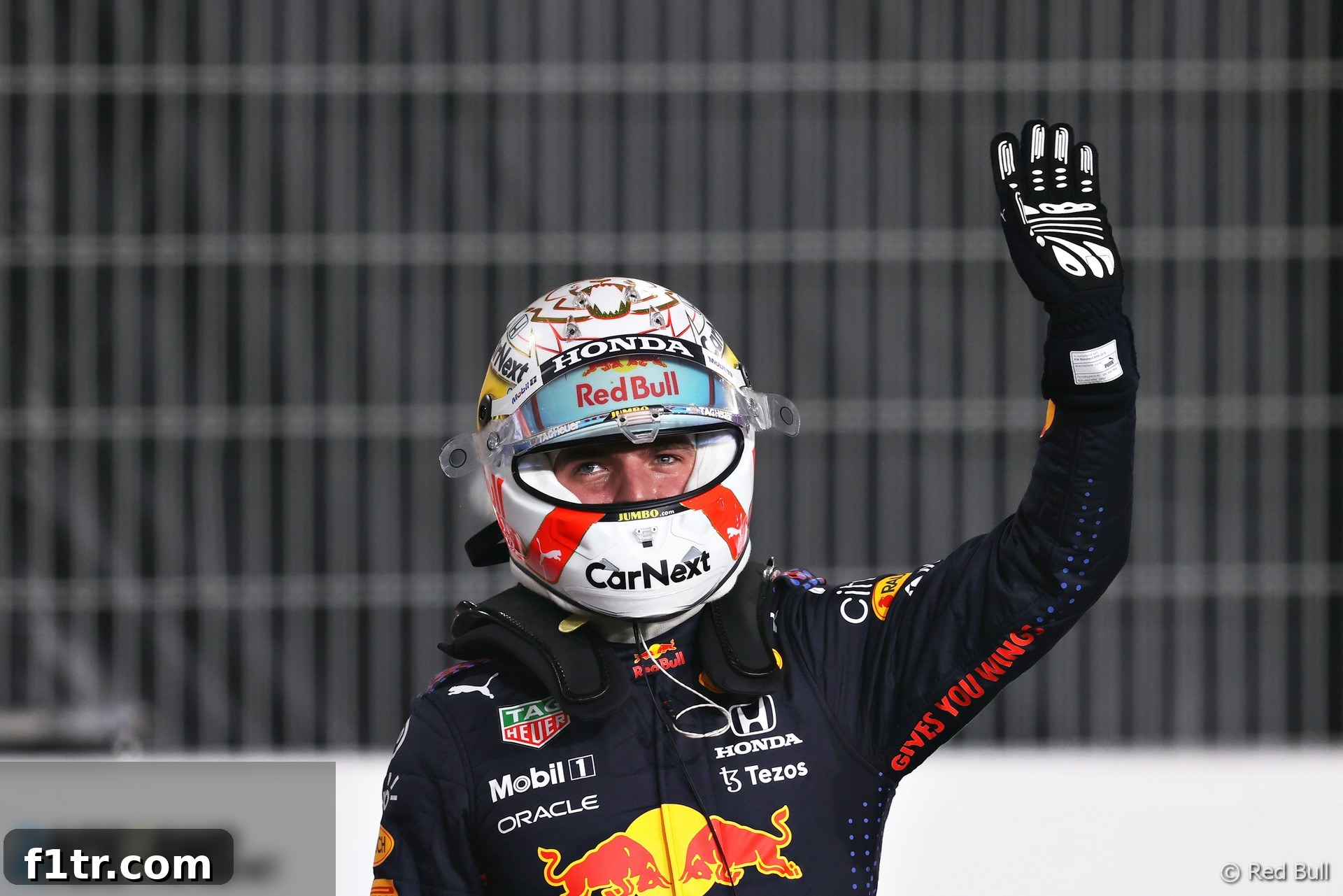
Max Verstappen’s Five-Place Grid Penalty: A Major Setback for Red Bull
Max Verstappen, who originally qualified second, has been dealt a five-place grid penalty for the Qatar Grand Prix. The Red Bull Racing driver was found to have failed to slow sufficiently for double waved yellow flags, a serious infraction given the enhanced danger indicated by such signals. Double waved yellow flags are deployed when there is a significant hazard on or near the track, requiring drivers to be prepared to stop and demanding a substantial reduction in speed.
The incident occurred during the dying moments of Q3, as drivers were pushing for their final flying laps. Pierre Gasly’s AlphaTauri had stopped on the pit straight after sustaining damage, prompting the deployment of the crucial safety signals. The FIA stewards confirmed that double waved yellow flags were clearly visible at flag point 16.6, where Verstappen passed.
Red Bull argued for a less severe penalty, stating that Verstappen’s dashboard did not display any warning lights and that the team had not advised him of the situation. However, the stewards firmly reiterated the fundamental principle of driver responsibility. They emphasized that it is incumbent upon the driver to react to all signals displayed on the track, regardless of electronic warnings or team radio communication. Furthermore, the stewards noted that Verstappen acknowledged seeing Gasly’s stationary car. “Having seen a disabled car, it is reasonable to expect, as was the case of the driver of car 55 [Sainz], that there was a potential danger and that a yellow flag situation probably existed and therefore to take the appropriate action (i.e. to reduce speed),” the stewards’ report stated.
This penalty is a significant blow to Verstappen’s championship hopes, as he will now start today’s race from seventh position instead of a front-row start. Losing five grid places can dramatically alter race strategy and make his path to victory considerably more challenging at the high-speed Losail International Circuit.
Valtteri Bottas’s Three-Place Drop for Single Waved Yellows
Mercedes driver Valtteri Bottas also faced the wrath of the stewards, receiving a three-place grid penalty. His infraction was related to passing single waved yellow warning flags, a less severe but still critical breach of Formula 1 regulations. Single waved yellow flags indicate a hazard on or near the track, requiring drivers to slow down and be prepared for potential changes in track conditions or obstructions.
Bottas’s incident also occurred during his final Q3 flying lap, near the start/finish line where Pierre Gasly’s AlphaTauri was stopped. The stewards noted that Bottas “admitted he did not notice the yellow flag displayed at flag point 16.6 and conceded that he did not reduce speed as required in the yellow flag area despite noting that car 10 [Gasly] was stationary on the pit straight.”
Despite admitting to seeing Gasly’s car, Bottas’s failure to reduce speed or react to the visual yellow flag signal resulted in his penalty. While less severe than Verstappen’s, a three-place drop from his original third-place grid slot still pushes him back to sixth, impacting Mercedes’ strategic options and potentially their fight for constructors’ championship points.
Carlos Sainz Jnr Cleared: A Lesson in Driver Awareness
In contrast to Verstappen and Bottas, Ferrari’s Carlos Sainz Jnr was investigated for a similar infraction but ultimately cleared by the stewards. Sainz’s case provides a clear example of the expected driver conduct under yellow flag conditions and underscores the importance of immediate, decisive action.
The stewards’ report highlighted Sainz’s proactive response: “The driver stated that although he did not see the yellow flag, he did see that car 10 was stationary on the right of the pit straight and therefore assumed that there was the probability that he was in a yellow flag area, so made a significant reduction in speed in the relevant mini-sector.”
Sainz’s ability to perceive the danger (Gasly’s stationary car) and react accordingly by significantly reducing his speed, even without explicitly seeing the flag, was crucial to his exoneration. This demonstrates that while flag observance is paramount, a driver’s awareness of their surroundings and subsequent appropriate action can be equally critical in avoiding penalties and, more importantly, ensuring safety.
The Critical Role of Yellow Flags in Formula 1 Safety
The incidents involving Verstappen and Bottas serve as a stark reminder of the paramount importance of yellow flags in Formula 1. These signals are not mere suggestions but critical safety directives designed to protect drivers, marshals, and track personnel. The FIA’s regulations surrounding yellow flags are among the most strictly enforced in motorsport, precisely because a failure to adhere can have catastrophic consequences.
- Single Waved Yellow Flag: Indicates a hazard on or near the track. Drivers must slow down, be prepared to change direction, and must not overtake until past the incident.
- Double Waved Yellow Flag: Signifies a significant hazard that partially or wholly blocks the track, or marshals are working close to or on the track. Drivers must significantly reduce speed, be prepared to change direction or stop, and must not overtake.
The distinction between single and double waved yellows is crucial, reflected in the severity of the penalties imposed. Double waved yellows demand a far greater reduction in speed and a higher level of caution due to the amplified danger. This strict enforcement is a cornerstone of F1 safety protocols, ensuring that drivers prioritize safety above all else, especially during high-speed qualifying laps.
Impact on the Qatar Grand Prix Grid and Championship Battle
The grid penalties have dramatically reshaped the starting order for the Qatar Grand Prix, setting the stage for an even more unpredictable race at the Losail International Circuit. The biggest beneficiary of these penalties is undoubtedly Pierre Gasly, whose original fourth-place qualification now elevates him to an astonishing front-row start in second position. This is a massive opportunity for the AlphaTauri driver and a testament to his impressive qualifying performance.
The revised top positions for today’s race are as follows (subject to final confirmation after all penalties):
- Lewis Hamilton (Mercedes) – Pole Position
- Pierre Gasly (AlphaTauri) – Starts 2nd (originally 4th)
- Fernando Alonso (Alpine) – Starts 3rd (originally 5th)
- Lando Norris (McLaren) – Starts 4th (originally 6th)
- Carlos Sainz Jnr (Ferrari) – Starts 5th (originally 7th)
- Valtteri Bottas (Mercedes) – Starts 6th (originally 3rd)
- Max Verstappen (Red Bull Racing) – Starts 7th (originally 2nd)
- See the full updated 2021 Qatar Grand Prix grid
For Max Verstappen, starting from seventh will be a considerable challenge. The Losail International Circuit is a high-speed track with limited overtaking opportunities, making a charge through the field more difficult. This unexpected setback could hand a significant advantage to his championship rival, Lewis Hamilton, who will start from pole position. The dynamics of the drivers’ championship battle have just intensified.
Valtteri Bottas’s drop also impacts Mercedes’ strategy. With Bottas further back, he might not be able to provide the same level of support to Hamilton early in the race, placing more pressure on the seven-time world champion to manage the race from the front.
Stewards’ Rationale and Historical Precedent
The FIA stewards’ decisions are often guided by precedents set in previous races, ensuring a degree of consistency in the application of rules. In this case, they referenced several instances where similar yellow flag infringements resulted in grid penalties.
Notably, Lewis Hamilton received a three-place penalty at the Red Bull Ring in 2020 for failing to slow for double waved yellow flags during qualifying. More recently, Sebastian Vettel incurred a five-place grid drop at the Bahrain Grand Prix earlier this year for a similar offense under double waved yellows. These examples underscore the consistent and severe approach taken by the stewards, particularly when double waved flags are involved, signifying the highest level of caution required.
The severity of Verstappen’s five-place penalty compared to Bottas’s three-place penalty directly reflects the differing levels of danger indicated by double versus single waved yellow flags. This tiered approach emphasizes that the regulations are designed not just to punish, but to deter dangerous behavior and reinforce the critical importance of safety protocols in the fast-paced world of Formula 1.
Conclusion: Safety First, Always
The grid penalties handed to Max Verstappen and Valtteri Bottas ahead of the Qatar Grand Prix serve as a powerful reminder that while speed and competition are the essence of Formula 1, safety always remains the ultimate priority. The FIA’s strict enforcement of yellow flag regulations is a non-negotiable aspect of the sport, ensuring that all participants are protected.
With a reshuffled grid and the championship stakes higher than ever, the inaugural Qatar Grand Prix promises to be an enthralling spectacle. The revised starting positions will undoubtedly influence race strategies, potentially leading to an even more dramatic contest at the Losail International Circuit. All eyes will now be on the drivers to navigate the challenges presented by these penalties and deliver a memorable performance.
More from the 2021 Qatar Grand Prix
- Pirelli’s investigation into Qatar tyre failures indicates kerbs caused punctures
- Horner rejects talk of title fight pressure after criticism over marshal comment
- “I don’t know how much slower I can go”: Inside Ricciardo’s unnecessary economy run
- ‘No regulator in the world will be popular’ with a title fight this intense – Masi
- Why drivers backed Hamilton’s call for clarity after meeting over Verstappen incident
Browse all 2021 Qatar Grand Prix articles