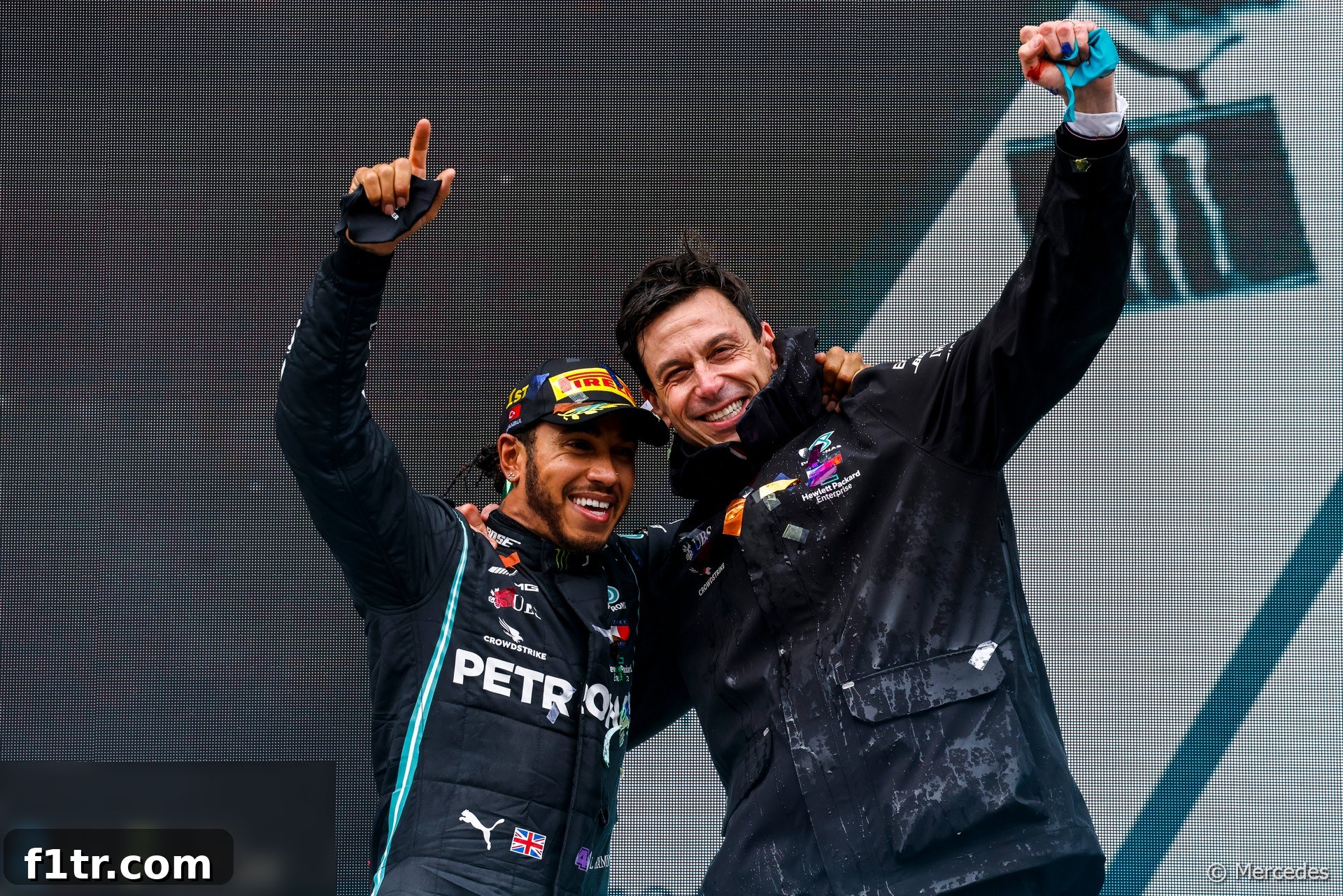
Lewis Hamilton, the reigning Formula 1 World Champion, is setting new priorities for his impending contract renewal with Mercedes-AMG Petronas F1 Team. As negotiations progress for his return to the grid next year, a significant focus for the British driver is on optimizing his schedule to reduce the extensive travel synonymous with the sport. This reflects a broader shift in his approach to balancing his unparalleled career with personal well-being and a growing commitment to off-track endeavors.
Advert | Become a Supporter & go ad-free
Optimizing Performance: The Quest for Reduced Travel in F1
With an ambitious and record-breaking 23 rounds potentially planned on the 2021 F1 calendar, the demands on drivers will be more intense than ever. Hamilton recognizes that maximizing personal time and minimizing physical travel could be a key component to sustaining his peak performance and ensuring longevity in the sport. He emphasized that this aspect would be a crucial “part of the conversation” surrounding his new deal to remain at Mercedes, a team he has driven to unprecedented success.
The global pandemic of 2020 served as a stark demonstration of how work dynamics can evolve, even at the pinnacle of international motorsport. Hamilton highlighted this learning curve in an interview with the BBC: “This year’s shown that, for example, you can work from home. So I’m sure there’ll be a lot of Zoom dates in the contract rather than actual present days which means I have to fly less.” This statement signals a forward-thinking approach, aiming to leverage technology to reduce the physical toll of constant travel, thereby allowing him more energy and focus for racing, training, and his personal life.
A Shift in Lifestyle: From Jet-Setter to Conscious Traveler
Lewis Hamilton’s past lifestyle was famously characterized by his extensive global travel between races. He was once renowned for criss-crossing the world frequently, often utilizing his private jet for dozens of transatlantic trips every year. This was a visible aspect of his brand, showcasing a superstar lifestyle that allowed him to pursue various interests outside of Formula 1. However, in recent years, Hamilton has consciously scaled back this aspect of his life. He notably sold his private plane, demonstrating a commitment to reducing his carbon footprint and adopting a more sustainable personal ethos. The arrival of the pandemic further curtailed international movement, offering Hamilton an unexpected opportunity to experience a slower pace of life and reassess his priorities, reinforcing his desire for reduced travel going forward.
Prioritizing What Truly Matters: Family and Personal Well-being
Beyond the professional implications, Hamilton’s desire for reduced travel is deeply rooted in his personal life and the importance he places on family connections. After securing a historic seventh world championship title, equaling Michael Schumacher’s record, Hamilton spoke passionately about his eagerness to celebrate this monumental achievement with his loved ones. The restrictive nature of the 2020 Formula 1 season, operating within strict bio-secure bubbles, meant that he was largely unable to see his family for much of the year – a personal sacrifice that weighed heavily on him.
For Hamilton, success on the track is made richer when it can be shared with those closest to him. “Time with friends and family are the most important,” he stated, articulating a sentiment that resonates with many. “If we get to start travelling more [I want to] take my family somewhere and create memories with them and celebrate with them just being around. This year I’ve not been able to see them and that’s just been the hardest.” This candid reflection underscores the emotional toll that the relentless F1 schedule can take, even on the most successful athletes. His ambition now extends beyond merely winning races; it encompasses creating lasting memories and enjoying the simple, yet profound, presence of his family and friends, ensuring a holistic sense of well-being that fuels his spirit both on and off the circuit.
Advert | Become a RaceFans supporter andgo ad-free
Driving Change: The Hamilton Commission and Motorsport Diversity
Beyond his racing aspirations and personal well-being, Lewis Hamilton is increasingly channeling his energy into creating a lasting social impact, particularly through The Hamilton Commission, which he publicly announced in June. This initiative represents a significant step in his long-standing advocacy for diversity and inclusion within motorsport and the broader STEM fields. He views his platform not just as a means to achieve sporting glory, but as a powerful tool to drive meaningful, systemic change.
The Commission’s primary objective is to address the underrepresentation of Black people in UK motorsport and to inspire young Black individuals to pursue careers in science, technology, engineering, and mathematics (STEM). Hamilton is committed to understanding the root causes of these disparities. “I want to find out what the real problem is first so we can fix it efficiently,” he explained. This methodical approach highlights his dedication to implementing effective, evidence-based solutions rather than superficial gestures.
A Data-Driven Approach to Inclusivity
To achieve this, Hamilton has partnered with prestigious institutions like the Royal Academy of Engineering in London. This collaboration underscores the rigorous, academic approach The Hamilton Commission is taking. “We’ve got this incredible commission. Some great people, they’re all academics, some people working on the ground in Black communities, some in politics,” he elaborated, emphasizing the diverse expertise brought together to tackle this complex issue. The research being conducted is crucial: “This research that we’re doing is trying to understand why there is a lack of young Black kids applying to STEM [science, technology, engineering and mathematics] subjects. What are the barriers?” By identifying these barriers – whether they be educational, societal, or economic – the Commission aims to develop targeted interventions that can genuinely broaden access and opportunity.
Beyond Quotas: Fostering Genuine Merit-Based Opportunity
While Hamilton has frequently voiced concerns about the lack of diversity within Formula 1 teams, including his own, he firmly believes that the solution lies in practicing “non-biased hiring.” This distinction is critical to him. He is not advocating for quotas or forced recruitment based solely on ethnicity, but rather for a system where talent from all backgrounds has an equal chance to thrive. “You want people to earn the position,” he asserted. “No one wants to be handed, we don’t want to create a position of forcing these teams to just hire people, minorities, for the sake of filling a space.”
Instead, the vision is to cultivate a robust pipeline of qualified individuals from underrepresented groups who can compete for positions on merit. “We want to create an opportunity for those individuals actually who are educated and have earned the right [to be there],” he clarified. This philosophy ensures that diversity is achieved through genuine talent identification and development, creating a more equitable and ultimately stronger talent pool for motorsport and STEM industries. The Hamilton Commission thus represents a long-term commitment to systemic change, aiming to dismantle barriers and build a future where opportunity is truly universal.
Advert | Become a RaceFans supporter andgo ad-free
The Evolving Role of a Champion: Lewis Hamilton’s Legacy
As Lewis Hamilton navigates his contract discussions with Mercedes, it’s clear that his future role extends far beyond merely being a racing driver. He is evolving into a global advocate, a family man seeking balance, and a champion dedicated to social justice. His demands for reduced travel and increased personal time are not a sign of waning commitment but rather a strategic effort to maintain his peak physical and mental condition, allowing him to continue performing at an elite level while simultaneously dedicating significant energy to his impactful off-track initiatives. For Mercedes, retaining Hamilton means not just keeping the most successful driver in F1 history, but also aligning with a powerful brand ambassador whose values resonate deeply with contemporary societal discourse. His legacy will be defined not only by his unparalleled achievements on the track but also by the profound positive change he instigalls worldwide.
Looking Back: Key Moments from the 2020 F1 Season
The 2020 Formula 1 season, amidst unprecedented global challenges, was a landmark year for Lewis Hamilton and offered numerous compelling storylines throughout the paddock. For those interested in revisiting the pivotal moments and developments from this extraordinary championship year, here are some highlights:
- Grosjean to make F1 test return tomorrow for first time since Bahrain horror crash
- Pictures: Wrecked chassis from Grosjean’s Bahrain fireball crash to go on display
- Bottas vs Rosberg: Hamilton’s Mercedes team mates compared after 78 races each
- F1 revenues fell by $877 million in Covid-struck 2020 season
- Hamilton and Mercedes finally announce new deal for 2021 season
Explore More: Browse All 2020 F1 Season Articles
Conclusion: A Champion’s Holistic Vision for the Future
Lewis Hamilton’s upcoming contract with Mercedes marks a pivotal moment in his career, signaling not just a continuation of his dominance in Formula 1 but also an evolution of his role as a global figure. His desire to reduce travel, prioritize family time, and vigorously champion diversity through The Hamilton Commission illustrates a holistic vision for his future. This approach ensures that while he remains fiercely competitive on the track, he also dedicates himself to personal well-being and meaningful societal contributions. By integrating these elements into his professional life, Hamilton is setting a new benchmark for what it means to be a modern champion – one who excels in sport while also inspiring positive change in the world, securing a legacy that will extend far beyond the racetrack.