F1 Teams Demand Immediate Changes to Paul Ricard Kerbs Amidst Costly Car Damage
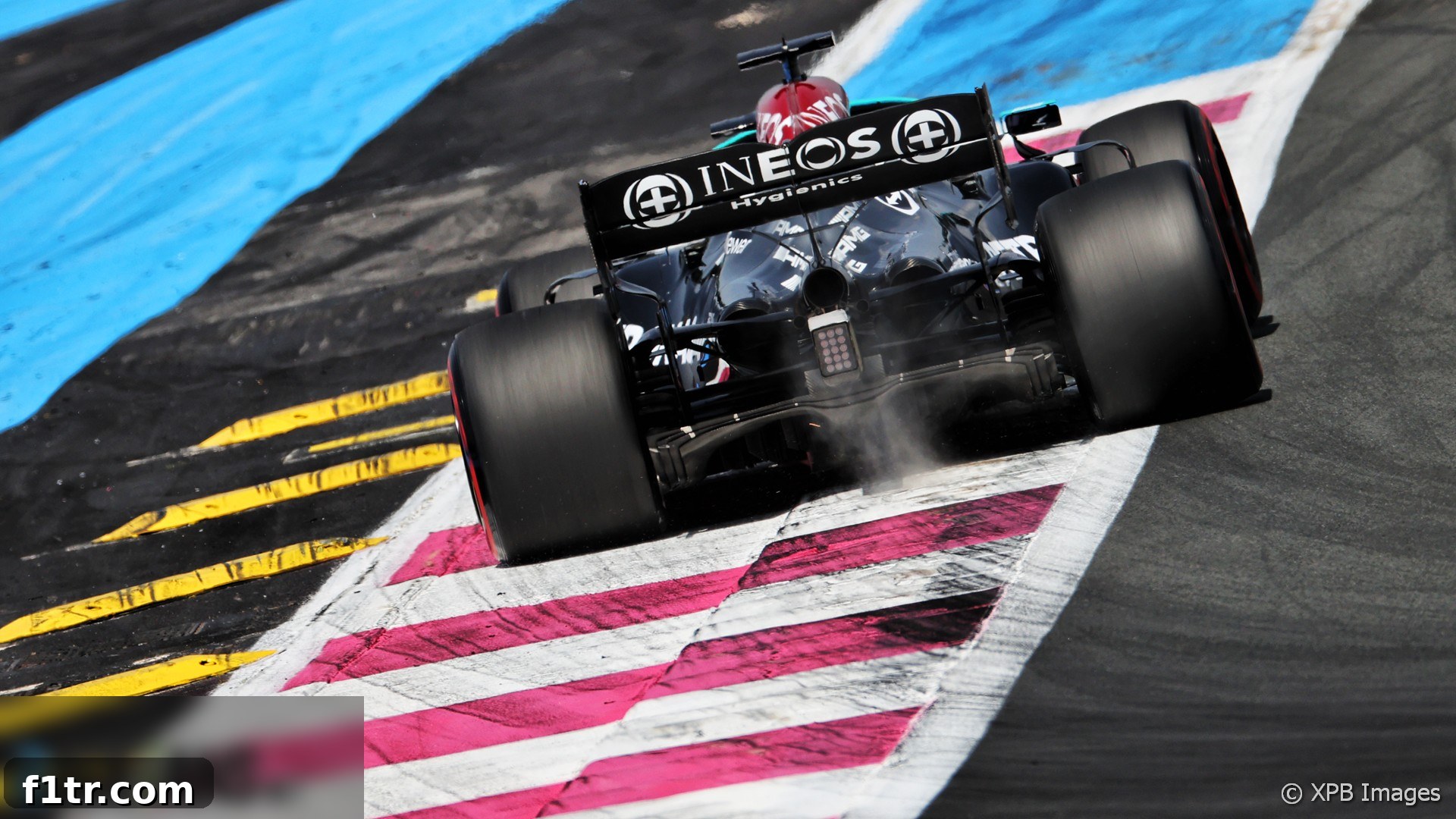
The relentless pursuit of speed in Formula 1 often comes with unforeseen challenges, and at the heart of recent controversies are the very boundaries that define the race track. Following the 2021 French Grand Prix at Paul Ricard, Formula 1 teams collectively raised significant concerns regarding the aggressive kerbs positioned at the exit of Turn 2. These particular kerbs have been identified as a major culprit behind substantial and financially crippling damage to their highly sophisticated machinery, prompting urgent calls for modifications.
The debate ignited during the initial practice sessions when Ron Meadows, Sporting Director for Mercedes-AMG Petronas F1 Team, directly voiced his team’s frustrations to Formula 1 Race Director Michael Masi. Meadows highlighted the immediate and severe impact these kerbs were having on their cars, suggesting an unacceptable level of risk and expense. Masi, however, initially deflected the criticism by pointing out the historical context, stating that the kerbs in question were identical to those used during F1’s previous visit to the circuit two years prior.
“The 50 millimetre ones that we have in a lot of places, Ron, and they were actually there in 2019,” Masi explained, implying a level of precedent. However, Meadows’ reply underscored the severity of the problem for the teams: “Our car’s rooted because we went over them. We can’t say ‘well, you shouldn’t go there’ because that’s tens or hundreds of thousands of pounds-worth of damage by going three foot too wide.” This exchange vividly illustrates the escalating tension between regulatory continuity and the practical, economic realities faced by the teams.
The issue was far from isolated to Mercedes. As Friday’s sessions progressed, other prominent figures within the paddock echoed similar sentiments. Jonathan Wheatley, Sporting Director for Red Bull Racing, also formally raised concerns with Michael Masi about the damage inflicted on one of their cars. The consensus among the F1 fraternity quickly solidified: these specific kerbs were proving to be overly punitive, transforming minor infringements of track limits into major financial setbacks.
The Financial Burden and Sporting Integrity
The financial implications of such damage are a paramount concern, particularly for the sport’s smaller teams, where every component and repair cost significantly impacts their already stretched budgets. Guenther Steiner, the outspoken Team Principal of Haas F1 Team, articulated this perspective with characteristic frankness. “Obviously Jonathan complained to Masi,” Steiner began, before emphasizing the broader principle. “Even if you’re big team, we shouldn’t have kerbs there which destroy a car, in my opinion. [For] a big team or a small team, that is not constructive. If you know it damages the car, why do we have them there?”
Steiner’s argument delves into the fundamental philosophy of track limits enforcement. He questioned whether the intention of regulating track limits should be to inflict car damage, drawing a stark comparison: “Should we put barriers around the race tracks and then for sure we wouldn’t go in them because we destroy the car completely? It’s a fine line where you say ‘it is acceptable, it’s not acceptable’.” For Steiner and many others, the current situation crossed that fine line, moving from acceptable sporting deterrence to unacceptable financial punishment.
He further elaborated on what he believes constitutes appropriate track limits penalties: “But there is other places when you go off the track limits and you lose time, but you don’t destroy your car. That’s what it should be.” This highlights a preference for penalties that impact performance – such as a compromised lap time or a time penalty – rather than those that result in irreparable damage to the chassis, suspension, or underbody components. In an era of strict budget caps, every incurred damage bill chips away at a team’s ability to develop and compete effectively, affecting not just immediate race performance but also long-term competitiveness.
The Call for Consistency and Fairness in Track Limits Policing
Aston Martin Team Principal Otmar Szafnauer reinforced these concerns, extending the discussion beyond mere damage to the inconsistency and lack of fairness inherent in Formula 1’s current approach to policing track limits. Szafnauer’s critique focused on the need for a standardized, transparent, and equitable system.
“I’m not in favour of damaging cars,” Szafnauer stated unequivocally. “I think there’s probably better ways to assess and penalise the track limits.” His remarks reflect a desire among teams for innovative solutions that uphold sporting integrity without imposing undue financial burdens or compromising driver safety due to compromised machinery.
A key point of contention for Szafnauer was the perceived inconsistency in how track limits are applied, not just from circuit to circuit, but even within different corners of the same track. “The other thing is it just has to be consistent that even within a lap sometimes it’s not consistent. On this corner it’s one thing, the other corner where you also have track limits it’s something else. So I think there are better ways to do it, being more consistent. Also being consistent from driver to driver, team to team.” This plea for uniformity is critical, as arbitrary enforcement can lead to confusion, frustration, and a perception of unfair competition.
Szafnauer also stressed the importance of measurability. Penalties should be based on objective data rather than subjective interpretation, ensuring that drivers and teams clearly understand the boundaries and consequences. “And it’s got to be measurable. I personally like that better than having kerbs that damage the car.” He concluded by highlighting a crucial race scenario: “In a race situation you may be pushed by somebody and your decision is either ‘get hit because I’m being pushed wide’ or ‘damage my car’ and I think that could be an unfair situation.” This underscores the potential for the current kerb design to unfairly penalize drivers who are victims of aggressive racing or unavoidable contact, forcing them into a no-win situation.
The Broader Debate: Evolution of Track Limits Enforcement in F1
The Paul Ricard kerb controversy is a microcosm of a larger, ongoing debate within Formula 1 concerning track limits. For years, the sport has grappled with finding the optimal balance between promoting spectacular racing and maintaining strict adherence to the track boundaries. Historically, various methods have been employed, each with its own advantages and drawbacks.
Traditional gravel traps, for instance, offered a natural and immediate deterrent, severely punishing drivers who exceeded track limits by slowing them down or causing them to get stuck. However, their use has diminished in some areas due to safety concerns (cars digging in and flipping) and the logistical challenges of recovery. Modern circuits often utilize vast tarmac run-off areas, which provide a safer environment in case of an off-track excursion but make it easier for drivers to gain an unfair advantage by running wide.
To counteract this, F1 has experimented with various solutions: speed bumps (often referred to as ‘sausage kerbs’), artificial grass, stricter white line definitions enforced by stewards, and electronic detection systems. While these aim to deter corner-cutting, the Paul Ricard kerbs represent a particularly aggressive form of punishment that, according to teams, goes beyond what is reasonable or necessary.
The current generation of Formula 1 cars, with their extremely low ride heights and highly sensitive aerodynamic floors, are particularly vulnerable to harsh kerbing. Even a slight brush can inflict substantial damage to the floor, diffuser, or suspension components, compromising performance and necessitating costly repairs. This vulnerability means that what might have been an acceptable kerb design in 2019 might no longer be suitable for the cars of today, highlighting the need for continuous evaluation and adaptation of track infrastructure.
Moving Forward: Seeking Practical and Fair Solutions
The consensus among teams is clear: the current kerbs at Paul Ricard’s Turn 2 exit are not fit for purpose. While the need to enforce track limits is universally accepted, the method of enforcement must be proportional to the infringement and avoid causing excessive, financially ruinous damage to the cars. The sport needs to find a pragmatic solution that maintains the integrity of racing without unduly penalizing teams for minor errors or external factors.
Potential solutions could include modifying the height or profile of the kerbs, exploring alternative deterrents that affect lap time rather than car integrity, or investing in more advanced, consistent, and automated track limits detection systems. The ideal scenario would involve a collaborative approach between the FIA, Formula 1 management, and the teams to develop a standardized framework for track limits that is fair, consistent, measurable, and safe across all circuits.
Ultimately, the discussion around Paul Ricard’s kerbs highlights a critical balancing act: ensuring drivers respect the track boundaries while simultaneously preventing avoidable and exorbitant costs for teams. As Formula 1 continues to evolve, finding innovative and equitable ways to manage this challenge will be crucial for the sport’s continued success and appeal to both participants and fans.