The exhilarating start to the 2025 Formula 1 season delivered immediate drama and intense competition, setting a thrilling tone for the championship ahead. While the seasoned rivals Lando Norris and Max Verstappen once again found themselves battling at the sharp end of the grid, tying for the most pole positions during the previous season, it was Norris who ultimately seized the prestigious pole for the opening race of 2025, underlining his ambition and McLaren’s strong form. This early triumph immediately reignited their fierce rivalry, promising an electrifying year for Formula 1 enthusiasts.
Advertisement
Support us & go ad-free
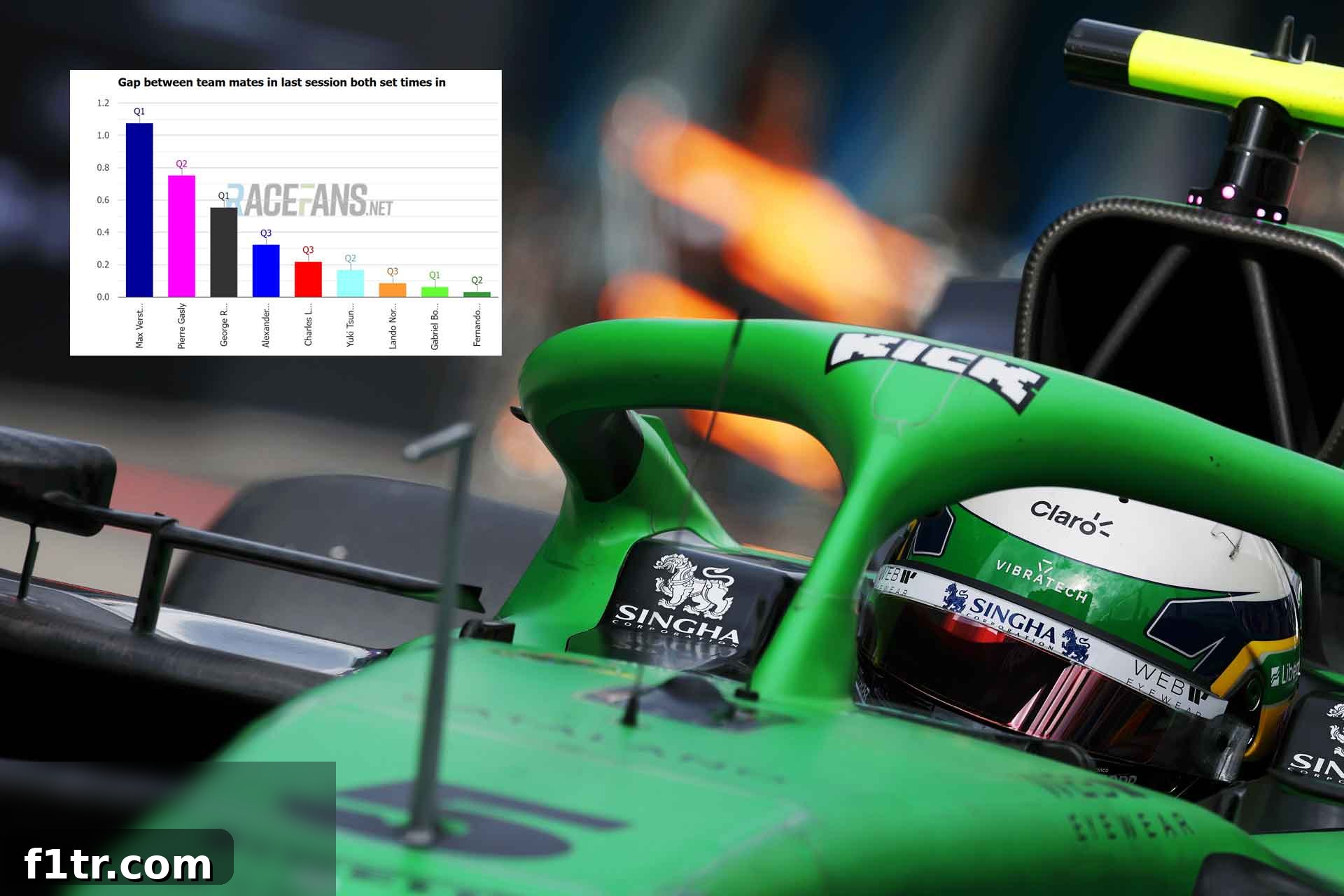
Beyond the established stars, the first qualifying session held profound significance for the six new full-time drivers making their Formula 1 debut. For these rising talents, it was a pivotal moment to prove their mettle against the world’s best. Amongst them, only one, the reigning Formula 2 champion, managed to outperform a more experienced team mate, a feat that immediately sent ripples through the paddock and highlighted the immense potential within the new crop of F1 stars. Their performances, both triumphs and challenges, offered an early glimpse into the demanding journey that awaits them in the pinnacle of motorsport.
Teams’ Dynamic Improvement from Practice to Qualifying: A Strategic Edge
The transformation in team performance from Friday’s practice sessions to Saturday’s crucial qualifying rounds is often a critical indicator of a team’s understanding of the circuit, their car, and their ability to extract maximum performance under pressure. As observed during Friday’s running, Red Bull Racing initially appeared to be operating far below their expected pace at the Melbourne circuit. This gave rise to speculation, but astute observers knew better than to write off the reigning champions. Therefore, it came as little surprise when Max Verstappen, a master of adaptation and precision, quickly dialled into his car’s true potential during final practice, immediately placing himself firmly in contention for pole position. The team’s engineers and strategists clearly worked tirelessly overnight, making the necessary adjustments to unlock the raw speed of their formidable machinery, showcasing the relentless pursuit of perfection that defines top-tier Formula 1 teams.
However, McLaren demonstrated an intimidating pace that looked incredibly difficult to overcome. Their car, meticulously prepared and expertly driven by Lando Norris, appeared to be in a league of its own, especially over a single lap. Red Bull team principal Christian Horner, ever the pragmatist, conceded that there was likely only another tenth of a second or so to be found in their package, acknowledging the impressive benchmark set by their Woking rivals. This tight margin at the very front of the grid underscored the razor-thin differences that define Formula 1’s elite battles, where every millisecond counts and strategic refinement can mean the difference between triumph and disappointment.
Aside from Red Bull’s characteristic recovery, Mercedes emerged as another team that made a remarkable leap forward from Friday to Saturday. Having grappled with effectively utilising the soft compound tyres during practice, the Silver Arrows clearly unearthed crucial answers overnight. Their engineers meticulously analysed data, tweaked setups, and found the elusive sweet spot for their car and tyre combination. This breakthrough allowed George Russell to launch a credible assault on pole position, showcasing Mercedes’ inherent capability to bounce back and fight for top honours. Their ability to diagnose and rectify performance issues so swiftly is a testament to their engineering prowess and experience.
Conversely, the most significant surprise of Saturday’s qualifying was arguably Ferrari, who appeared to make the smallest proportional step forward compared to their rivals. While hopes were high for the Scuderia, they seemed to particularly struggle as ambient and track temperatures steadily climbed throughout the qualifying sessions. This sensitivity to rising temperatures potentially hampered their tyre performance and overall car balance, preventing them from extracting the ultimate pace when it mattered most. The Maranello outfit will undoubtedly be scrutinising their data to understand why they couldn’t adapt as effectively as some of their competitors, especially considering the fluctuating conditions that are often characteristic of F1 weekends.
Advertisement
Become a RaceFans supporter andgo ad-free
The detailed analysis of lap times from Free Practice 1, 2, and 3 leading into Qualifying demonstrated varying rates of improvement across the grid. While some teams like Red Bull and Mercedes showed a steep positive gradient in performance gains, others like Ferrari exhibited a more modest upward trend, indicating potential challenges in optimising their car’s setup for peak performance under changing conditions. These insights into team progression are vital for understanding the strategic capabilities and adaptability of each contender over a race weekend.
Gaps Between Team Mates: The Rookie Challenge and Veteran Dominance
The dynamic within a team, particularly the performance comparison between two drivers, offers a fascinating insight into both individual skill and car characteristics. For the six fresh faces on the Formula 1 grid, the opening qualifying session was a baptism of fire, a direct comparison against some of the most experienced and talented drivers in the world. Amidst this intense pressure, only one of the newcomers managed the impressive feat of out-qualifying their more seasoned team mate. Take a bow, Gabriel Bortoleto, the reigning Formula 2 champion, who immediately made his mark by besting Nico Hulkenberg, a veteran with 227 Grand Prix starts, by a slender six-hundredths of a second in Q1. This exceptional performance was enough to secure him a coveted spot in Q2, an outstanding debut for any rookie.
Bortoleto, reflecting on his first experience, expressed satisfaction with his initial performance. “The first part of qualifying went smoothly for me,” he commented. “We put everything together and made the cut. I think making it into Q2 in my first-ever qualifying is definitely not bad.” This modest assessment belied the sheer difficulty of the achievement, especially against such an experienced competitor. However, his Q2 session was not without its dramatic moments. He recounted a “lurid moment” where the car almost got away from him in turn four, a stark reminder of the fine margins in F1. “I wanted to give it a shot at Q3 and pushed a little too hard on my lap,” he admitted with characteristic honesty. “I still managed to keep the car on track, but it didn’t really make sense to try again. Still, I think we can be quite satisfied with the job done today.” His blend of raw speed and self-awareness bodes well for his future in the sport, showcasing the rapid learning curve expected of F1’s newest talents.
While Bortoleto shone, several other new drivers faced substantial deficits to their team mates, though these were often accompanied by significant mitigating factors that illustrate the challenges of F1. Liam Lawson, for instance, was on course to significantly improve his lap time when an unfortunate off-track excursion curtailed his efforts. Jack Doohan faced a critical disadvantage when he was unable to activate his Drag Reduction System (DRS) due to Lewis Hamilton’s spin-off in front of him, severely compromising his top-speed potential on a crucial qualifying lap. Andrea Kimi Antonelli, another highly-rated rookie, suffered floor damage during his session, a subtle yet profound impairment to aerodynamic performance that can shave critical tenths off lap times. These incidents highlight how quickly fortunes can change in Formula 1 and how external circumstances can heavily influence a driver’s qualifying outcome, especially for those still finding their feet in the notoriously unforgiving world of F1.
Advertisement
Become a RaceFans supporter andgo ad-free
The visual representation of team mate gaps would vividly underscore these performances, showing Bortoleto’s impressive small margin over Hulkenberg, alongside the larger differences seen for other rookies. These visualisations often reveal the impact of the mitigating factors cited, painting a comprehensive picture of individual performance against the backdrop of an incredibly competitive grid. Such data is invaluable for teams and fans alike in assessing driver performance and potential.
NB. Oliver Bearman, another promising talent, did not set a representative qualifying time in this session, precluding a direct comparison with his team mate.
Intense Team Mate Battles: Streaks of Dominance and Emerging Dynamics
Team mate battles are a perennial source of fascination in Formula 1, revealing not only a driver’s raw speed but also their consistency, adaptability, and mental fortitude. Even with the challenge of floor damage, Fernando Alonso, F1’s most experienced driver, once again showcased his enduring class by out-qualifying his team mate, Lance Stroll. This extended his remarkable streak of consecutive races in which he has bested Stroll in qualifying, an incredible run that stands as the longest currently on the grid. Alonso’s ability to consistently extract maximum performance, even from a compromised car, speaks volumes about his legendary talent and unwavering determination. His dominance over Stroll is a key factor in Aston Martin’s competitive outlook, with the Spaniard often carrying the team’s hopes for significant points.
Last season saw George Russell establish a clear qualifying advantage over his then-Mercedes team mate, Lewis Hamilton. Now, as Hamilton embarks on a new chapter with Ferrari, the initial qualifying session offered the first direct comparison against Charles Leclerc. Hamilton found himself behind his new Monegasque team mate, a scenario he acknowledged without surprise. Despite the deficit, Ferrari’s newest recruit expressed his satisfaction at being as close as he was, considering it his debut with the iconic Italian squad. This pragmatic view highlights his rapid adaptation to the new machinery and the high benchmark set by Leclerc, who has long been the team’s qualifying specialist. The Hamilton-Leclerc dynamic is poised to be one of the most compelling narratives of the 2025 season, as two of the sport’s finest talents go head-to-head in identical machinery at one of F1’s most storied teams. The battle for supremacy within Ferrari will undoubtedly push both drivers to their absolute limits, potentially elevating the team’s overall performance.
| Driver | Consecutive Qualifying Wins |
|---|---|
| Fernando Alonso | 13 |
| Yuki Tsunoda | 9 |
| Lando Norris | 8 |
| Max Verstappen | 8 |
| George Russell | 7 |
This table illustrates the current longest streaks of drivers consistently out-qualifying their team mates. Fernando Alonso’s remarkable run is a testament to his unparalleled experience and ability to extract every ounce of performance, often overshadowing his team mate’s efforts. The consistent performance of drivers like Yuki Tsunoda, Lando Norris, and Max Verstappen further underscores their status as top-tier qualifiers within their respective teams.
| Driver | Consecutive Qualifying Losses |
|---|---|
| Lance Stroll | 13 |
| Liam Lawson | 9 |
| Oscar Piastri | 8 |
| Lewis Hamilton | 7 |
Conversely, this table presents the longest streaks of drivers being out-qualified by their team mates. Lance Stroll’s streak, directly linked to Alonso’s dominance, highlights the challenge of being paired with a multi-world champion. The streaks for Liam Lawson, Oscar Piastri, and Lewis Hamilton (at the start of his Ferrari tenure) point to various factors, from rookie learning curves to adapting to new teams and strong internal competition.
Advertisement
Become a RaceFans supporter andgo ad-free
Consistent Q3 Appearances: A Mark of Elite Performance
Reaching Q3, the final and most critical phase of Formula 1 qualifying, is a definitive mark of a car and driver package operating at the absolute peak of performance. It signifies a consistent ability to extract top-ten pace from the car across various track conditions. At present, George Russell holds the impressive distinction of having the longest continuous run of Q3 appearances. His last failure to progress to the final session occurred at the Hungarian Grand Prix, where an unfortunate sequence of events saw him drop out in Q1. This streak underscores Russell’s remarkable consistency and his capacity to consistently put the Mercedes in a strong starting position, even when the car might not be the outright fastest on the grid. Such a run is invaluable for a team, as it translates directly into better grid positions and, consequently, a higher probability of scoring points in the race.
| Driver | Consecutive Q3 Appearances |
|---|---|
| George Russell | 12 |
| Lando Norris | 8 |
| Oscar Piastri | 5 |
| Max Verstappen | 4 |
| Carlos Sainz Jnr | 4 |
| Pierre Gasly | 2 |
This table showcases the current leaders in consecutive Q3 appearances, highlighting the drivers who consistently demonstrate top-tier qualifying speed. George Russell’s lead here speaks volumes about his consistency and Mercedes’ ability to perform under pressure. Lando Norris and Oscar Piastri’s strong showings reflect McLaren’s upward trajectory, while Max Verstappen and Carlos Sainz Jnr also maintain impressive runs, indicative of their teams’ strong qualifying pace and their individual driving prowess. These streaks are not just statistics; they are critical indicators of a driver’s ability to perform when it truly matters, setting them up for competitive race starts and ultimately, better championship standings.
Miss nothing from RaceFans
Get a daily email with all our latest stories – and nothing else. No marketing, no ads. Sign up here:
Go ad-free for just £1 per month>> Find out more and sign up
2025 Australian Grand Prix Coverage
For more insights and updates from the thrilling start to the season, delve into our comprehensive coverage of the 2025 Australian Grand Prix:
- F1 rules change to prevent repeat of Verstappen-Bearman Australian GP confusion
- Contact with team mate may have led to Bortoleto’s Australian GP crash
- Hamilton dismisses ‘negativity’ over his radio calls. ‘Other drivers are almost abusive’
- Antonelli “got really scared” when he made “big save” on first lap of Australian GP
- Williams explain role played by car’s systems in Sainz’s race-ending crash
Browse all 2025 Australian Grand Prix articles