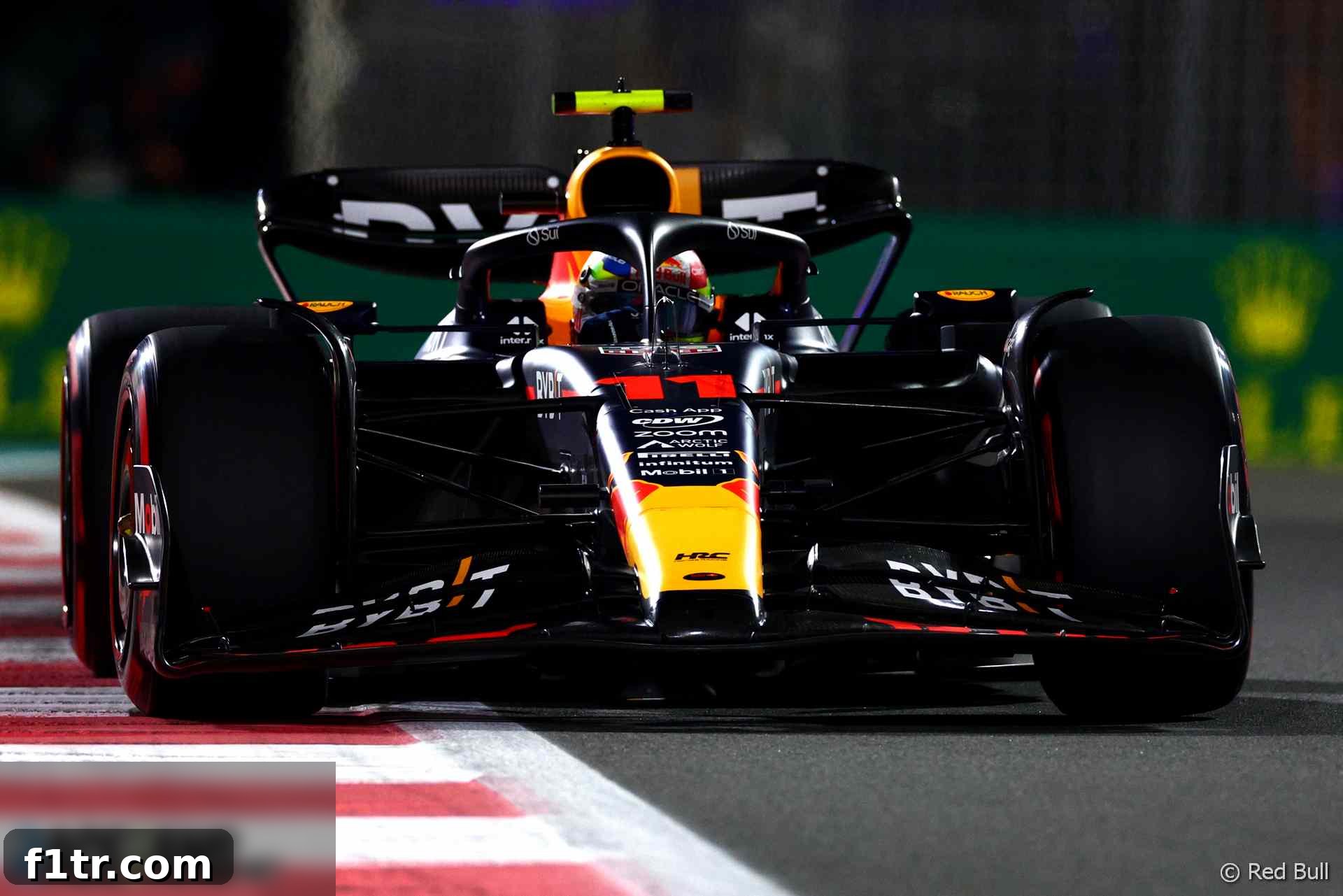
Sergio Perez Demands F1 Overhaul Track Limits Rules After Abu Dhabi Frustration
Formula 1 faces a persistent challenge in consistently enforcing track limits, a contentious issue that frequently sparks debate among drivers, teams, and fans alike. Red Bull driver Sergio Perez has now issued a strong call to action, urging the sport to utilize the upcoming off-season to finally implement decisive solutions to this recurring problem. His impassioned plea follows a frustrating qualifying session at the Abu Dhabi Grand Prix, where a deleted lap time significantly impacted his starting position.
Abu Dhabi Qualifying: A Fifth Place Vanishes
The incident at the Yas Marina Circuit perfectly encapsulated the fine margins and potential for frustration inherent in the current track limits system. Perez initially delivered a strong performance, clocking a lap time that provisionally placed him fifth on the grid for the final race of the season. However, this promising result was swiftly nullified when stewards deemed he had run wide at Turn 1, exceeding the track boundaries. The deletion of this crucial lap relegated him four places down, consigning him to a ninth-place start.
The Red Bull driver’s immediate reaction underscored the confusion often experienced by competitors. Upon being informed by his race engineer, Hugo Bird, of the violation, Perez questioned, “Are we sure?” Bird confirmed the race control message, to which Perez replied with a degree of disbelief, “I don’t think it was out.” This exchange highlights the often-subjective nature of track limits interpretation, even for those in the cockpit who feel they are pushing the very edge without gaining an unfair advantage.
Perez’s Frustration: A Call for Consistency and Clarity
Speaking to the media after qualifying, Perez didn’t mince words about his feelings. He openly admitted the situation was “frustrating,” particularly when “it’s so close and you just have to rely on the stewards.” This reliance on human judgment in fractions of a second creates a perceived inconsistency that undermines confidence in the system.
The Mexican driver emphasized the broader impact of this ambiguity, stating his hope that “in the winter we are able to find better solutions.” He stressed that the issue extends beyond the immediate consequences for drivers, affecting “also for the people back home because it’s just confusing for everyone.” For fans, seeing race results or grid positions altered hours after a session, often due to microscopic infringements, detracts from the spectacle and the perceived fairness of the competition.
Perez elaborated on the detrimental effects on the sport’s image: “I don’t think it looks nice, finishing qualifying and then you have teams that will be arguing this afternoon to try to get penalties on others.” This refers to the often-seen scenario where rival teams pore over footage, seeking any potential infringement by competitors to gain an advantage, which can lead to protracted debates and further erode public trust. His conclusion was unequivocal: “I just feel like it’s some work that we’ve got ahead of us to try to come up with a better solution on track limits.”
The Root of the Problem: Circuit Design and Modern F1
A significant part of Perez’s argument zeroes in on circuit design as a fundamental contributor to the problem. He believes Formula 1 “should be working on a better solution than what we have now and working on the circuits.” The modern trend of creating extensive run-off areas with flat exit kerbs, while improving safety, has inadvertently blurred the lines of the racing surface. These designs invite drivers to push the absolute limits, often leading to inevitable debates about whether a wheel width truly constituted an unfair advantage.
“I think we create these issues for ourselves just with how the circuits are,” Perez concluded. In an era where every thousandth of a second matters, drivers are naturally compelled to exploit every available inch of tarmac. When the physical barrier of a gravel trap or a harsh kerb is replaced by a painted line and a vast expanse of asphalt, the temptation to exceed the “official” boundary becomes almost irresistible. This highlights a fundamental tension between modern safety standards and the desire for clear, unambiguous racing limits.
A Recurring Headache: Past Incidents and Widespread Impact
Perez’s frustration is not an isolated incident but part of a recurring pattern throughout the 2023 season and indeed, several previous campaigns. He himself was a victim of stringent track limits enforcement at the Austrian Grand Prix qualifying earlier in the year. In a particularly brutal session, all three of his attempts in Q2 were struck off, leaving him a distant 15th on the grid – a stark illustration of how severely these penalties can impact a driver’s weekend.
The Abu Dhabi qualifying session further demonstrated the widespread nature of the issue. Perez was one of six drivers to have at least one lap time deleted due to track limits infringements. This group included his own illustrious teammate, Max Verstappen, proving that even the most precise drivers can fall afoul of the regulations. Zhou Guanyu and Pierre Gasly also each lost a lap time. More dramatically, Logan Sargeant had two lap times deleted, which ultimately prevented him from setting a time in Q1 altogether, while Nico Hulkenberg also saw two laps removed, though he managed to secure a starting position one place ahead of Perez.
The sheer number of affected drivers underscores that this is not a problem of individual driver error alone, but a systemic issue within the sport’s regulatory framework and circuit design philosophy.
The FIA’s Role and Stewards’ Appeals
The Formula 1 stewards, the officials responsible for interpreting and enforcing the sporting regulations during a Grand Prix weekend, are acutely aware of the challenges. Following a spate of penalties at earlier rounds this year, most notably the Austrian and United States Grands Prix, they formally urged the FIA (Fédération Internationale de l’Automobile), the sport’s governing body, to impose “more rigorous track limits solutions.”
This appeal from the very officials tasked with the enforcement highlights the difficulty of their job. They operate under specific guidelines and with available technology, but the sheer volume of borderline cases and the public scrutiny mean their decisions are constantly under review. The stewards’ call for more decisive action from the FIA indicates a need for either clearer regulations, technological advancements in monitoring, or changes to circuit infrastructure to minimize the grey areas that currently plague the sport.
Why Track Limits Matter: Upholding Sporting Integrity
At its core, the enforcement of track limits is crucial for maintaining the sporting integrity of Formula 1. Without clear boundaries, drivers could gain an unfair advantage by running wider on corner exits, carrying more speed, or compromising safety by using excessive run-off areas. The rules are designed to ensure fair competition, where success is determined by skill, precision, and adherence to established parameters.
However, when the application of these rules leads to widespread confusion and frustration, it inadvertently undermines the very integrity it seeks to protect. If drivers and fans alike struggle to understand why a lap is deleted, or if the penalties feel arbitrary, it can diminish faith in the fairness and professionalism of the sport. This makes Perez’s call for clear, consistent, and easily understood solutions all the more critical, not just for the drivers, but for the credibility of Formula 1 as a global spectacle.
Potential Solutions and Future Outlook
Addressing the track limits conundrum will likely require a multi-faceted approach. Discussions during the off-season could explore several avenues:
- Circuit Modifications: Reintroducing elements like more aggressive kerbs, strategically placed gravel traps, or grass verges at specific corners known for track limits infringements could provide a physical deterrent rather than relying solely on electronic monitoring or visual inspection.
- Technological Enhancements: While sensor technology is already in use, further developments could lead to more precise, real-time, and indisputable detection of infringements, reducing the need for subjective human review.
- Clearer Guidelines: The FIA could work with drivers and teams to refine the regulations, ensuring greater clarity on what constitutes an infringement and how penalties will be applied, leaving less room for interpretation.
- Driver Feedback: Engaging drivers directly in the solution-finding process, leveraging their unique on-track perspective, could lead to more practical and accepted outcomes.
Perez’s direct appeal serves as a powerful reminder that the issue demands immediate and comprehensive attention. The upcoming winter break offers a vital window of opportunity for Formula 1, the FIA, and circuit operators to collaborate and implement reforms that will bring much-needed clarity, consistency, and fairness to track limits enforcement, ensuring the sport remains thrilling and transparent for all.
2023 Abu Dhabi Grand Prix Related Articles
- Mercedes’ team photo shows we still have a long way to go on diversity – Hamilton
- Why luck was a factor in Perez’s penalty for “joke” comment
- Bottas and Zhou see encouraging signs from overhauled 2024 car
- Only Verstappen got the best from his car every weekend, rival team bosses admit
- How Sainz suffered the worst season finale for a driver since Schumacher in 1997
Browse all 2023 Abu Dhabi Grand Prix articles