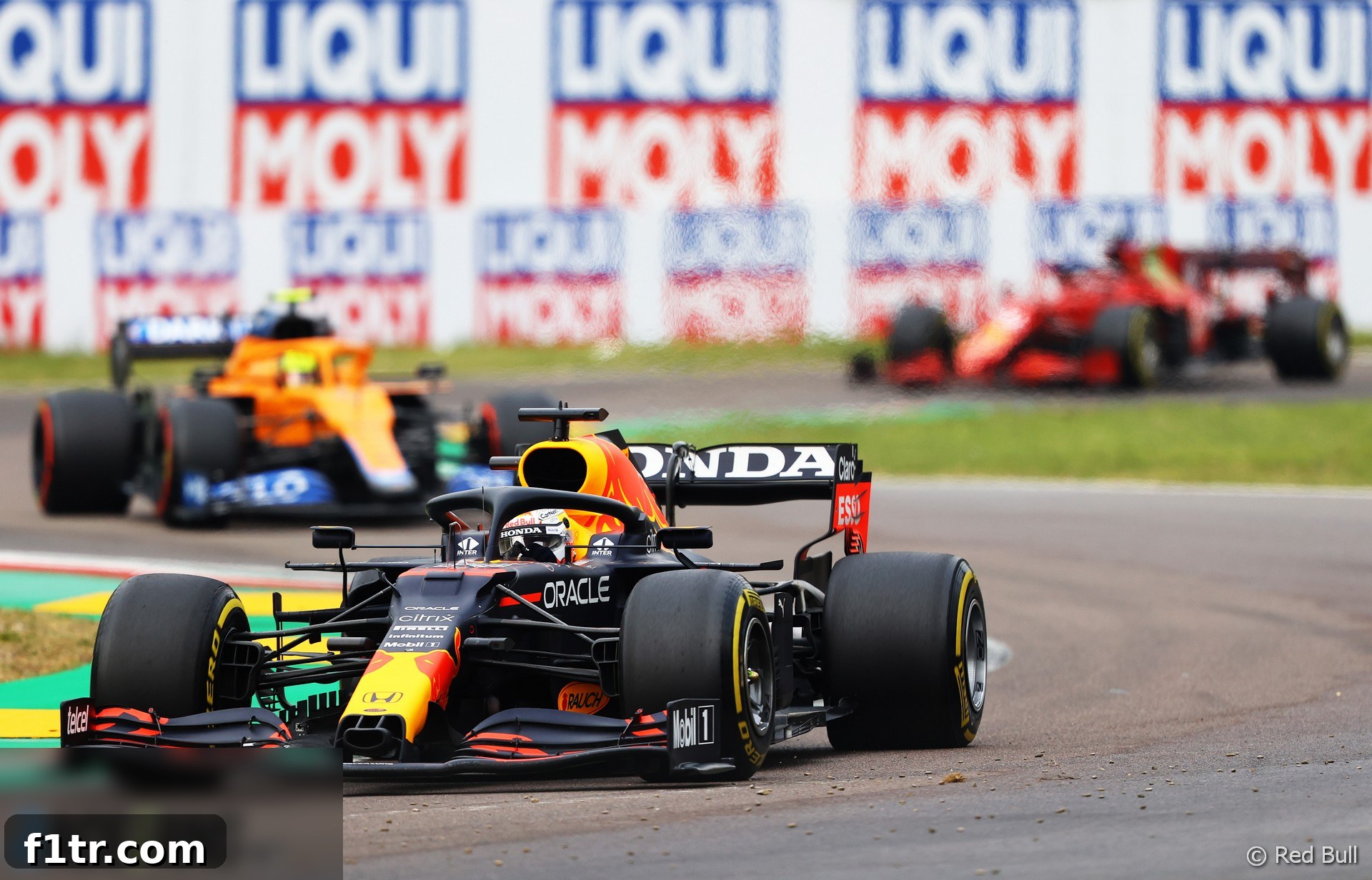
The 2021 Emilia Romagna Grand Prix delivered a thrilling spectacle, but one particular moment during a safety car restart sparked considerable debate among drivers, fans, and pundits alike: an incident involving Max Verstappen, Charles Leclerc, and Lando Norris. As the field prepared for a crucial restart, then-race leader Max Verstappen briefly lost control of his Red Bull, spinning off track. This unexpected turn of events presented a split-second dilemma for Charles Leclerc, who was running directly behind him. Should he have seized the opportunity to overtake the momentarily stranded Red Bull, or was holding position the safer, more compliant choice? This incident highlighted the intricate nature of Formula 1 regulations and the intense pressure drivers face when making critical decisions at blistering speeds, influencing race outcomes and sparking controversy in the demanding world of motorsport.
The Controversial Spin and the Unseen Opportunity
The pivotal moment unfolded at Rivazza 1, a challenging corner at the iconic Imola circuit, during a critical phase of the race. As the cars were circulating under Safety Car conditions, anticipating the restart, Max Verstappen, leading the procession, unexpectedly skidded off the track. His Red Bull briefly veered off the asphalt, losing momentum and momentarily facing the barrier. Directly in his wake, Charles Leclerc in his Ferrari observed the incident unfold with a clear, albeit fleeting, opportunity presenting itself. The Monégasque driver instinctively slowed down, allowing Verstappen to recover and rejoin the queue, maintaining his leading position. This seemingly straightforward act of caution immediately raised questions about the legality and strategic wisdom of such a decision, especially given the high stakes of a Grand Prix.
While Safety Car regulations strictly prohibit overtaking under normal circumstances, there are specific exceptions, one of which applies if a driver leaves the track. This particular nuance became the focal point of the subsequent discussion among drivers, team principals, and the FIA. The question lingered: was Verstappen’s brief excursion sufficient to permit an overtake, and if so, why didn’t Leclerc capitalize on it? The incident became a prime example of the fine line between following racing rules and seizing a potential race-winning advantage, highlighting the complex interpretations that arise in the heat of competition. Such split-second judgments can significantly impact the final standings and the trajectory of a championship battle, making every decision under the Safety Car microscope.
Leclerc’s Prudent Decision: A Matter of Interpretation
Charles Leclerc, reflecting on the heart-stopping moment, admitted to a momentary contemplation of overtaking, a natural instinct for any competitive driver. “I considered this at one point,” he stated, acknowledging the fleeting thought of passing the struggling Red Bull. However, he ultimately chose to back off, a decision he firmly defended as the correct course of action, aligning with his cautious approach to potential penalties. “I think looking back at it, it was the right choice, because I think he always had one wheel on the track,” Leclerc explained. His justification hinged on his perception that Verstappen had not fully left the racing surface, suggesting that at least one of his wheels remained within the track limits, as defined by FIA regulations. This technicality, however small, was significant in his eyes, implying that an overtake might have been deemed illegal or, at the very least, put him in a precarious position with the eagle-eyed race stewards, risking a penalty that could undo his race.
Leclerc further elaborated on the dynamic nature of the incident, noting that Verstappen didn’t completely spin and thus was able to recover quickly. “So I backed off because he didn’t completely spin, obviously, as we’ve seen. I thought about it, but it was too late then, he was already back in front.” This highlights the split-second nature of such decisions in Formula 1, where a driver must process complex information and potential consequences in an instant, often with incomplete information. For Leclerc, prioritizing compliance and avoiding a potential penalty, even at the cost of a momentary advantage, appeared to be the guiding principle. His approach emphasized caution and adherence to what he perceived as the spirit of the regulations, aiming to navigate the situation without inviting scrutiny from the race officials and potentially jeopardizing his points finish. His decision reflects the strategic mindset of a driver balancing aggressive racing with strict adherence to the rulebook.
Norris’s Bold Stance: A Risk Worth Taking
In stark contrast to Leclerc’s cautious approach, Lando Norris, who was following closely behind the leading pair in his McLaren, unequivocally stated that he would have seized the opportunity to pass. “I had a great view of it,” Norris recounted with a hint of amusement, perhaps at the missed chance. “It was quite funny actually. I think Charles could have gone past him in my opinion. At that stage Max was out of control and going left and Charles kind of just hit the brakes and slowed down and stopped. At some point he has to go past Max because he was facing the barrier for a lot of the corner.” Norris’s assessment suggested a clear window for an overtake, viewing Verstappen’s situation as definitively “out of control” and therefore permissible for a pass under the specific Safety Car rules regarding cars leaving the track.
Norris, no stranger to the complexities of track limits himself, having had a lap time deleted in qualifying for exceeding them, articulated his readiness to exploit such a scenario. “We have to maybe ask the guys in charge what the exact ruling is for going off, as off-track, all four wheels off the track and example of yesterday – but at the same time Max was going very slow. Charles could have driven past him at the point.” For Norris, the crucial factor was Verstappen’s reduced speed and momentary disorientation, creating an undeniable opportunity. He firmly believed that if he were in Leclerc’s position, he would have taken the chance. “I’m not sure. I think if I was in P2, I would have gone for it, because you have a chance at winning then. It’s a risk worth it.” This statement encapsulates Norris’s aggressive, opportunistic racing philosophy, where the potential reward of gaining a leading position often outweighs the inherent risks or ambiguities of the rules, showcasing the competitive fire that drives F1 racers to push every boundary.
Verstappen’s Perspective: A Moment of Recovery
Max Verstappen, the protagonist of the spin, also offered his insights into the incident, explaining his immediate reactions and what he perceived as the expected conduct from his rivals. “I was off track for a bit, but once I was back on the track of course I was driving slow because I was recovering, getting my steering wheel straight,” the Red Bull driver explained. His primary focus, understandably, was on regaining control of his car and rejoining the track safely, which naturally involved a significant reduction in speed and a momentary loss of stable direction. From his vantage point, the situation was one of recovery from an unforeseen incident, not an open invitation for an opportunistic overtake.
Verstappen further elaborated on why he didn’t expect Leclerc to pass. “But then I don’t think you can pass any more. I think when you see a car drifting like that in front of you, first of all I think you just back out, because you don’t know where it’s going to go.” He highlighted the inherent danger and unpredictability of a spinning or recovering car, suggesting that a natural reaction for any following driver would be to exercise extreme caution rather than attempting a risky maneuver that could lead to a collision or further incident. “It’s seconds. Maybe you have a chance of two or three seconds to do it. It’s so tricky out there with tyres. You don’t want to also react to it – maybe you spin yourself. It can happen.” This perspective underscores the split-second nature of decision-making in Formula 1, where self-preservation and avoiding further incidents often take precedence over seizing a marginal opportunity, especially when the track conditions and tire grip are already challenging and unforgiving, painting a vivid picture of the hazards involved.
FIA’s Official Stance on Safety Car Overtaking
To shed light on the official interpretation of the rules governing such incidents, FIA race director Michael Masi provided a crucial clarification that added another layer of complexity to the debate. He explained that had Leclerc passed Verstappen, the Red Bull driver would have been entitled to reclaim his position before Safety Car Line One. This specific, demarcated line was situated between Rivazza 2 and Turn 19 at the Imola circuit, serving as a critical reference point for driver conduct under Safety Car conditions. Masi’s explanation delves into the intricacies of Formula 1 regulations during safety car periods, particularly after a race suspension or a restart following an interruption.
“After a [race] suspension, it is considered a race lap, but in the same sort of principles as a formation lap,” Masi stated, drawing a parallel to how drivers are allowed to sort themselves out before the actual start of a Grand Prix. “So if a car was out of position, it would be like a formation lap that they can regain that position as long as it’s before [the Safety Car One line], is the general principle is the way the regulations are worded.” This clarification is vital for understanding the full context of the incident. It means that even if Leclerc had legally passed Verstappen due to his off-track excursion, Verstappen would have had the right to get his position back, provided he did so before a specific designated point on the track. This rule aims to maintain the integrity of the race order during Safety Car periods and prevent opportunistic overtakes from permanently altering positions under non-racing conditions. It adds a significant layer of complexity to the incident, suggesting that even a seemingly advantageous pass might have been nullified by subsequent regulation enforcement, thus potentially vindicating Leclerc’s cautious approach and highlighting the importance of understanding the fine print of the FIA Sporting Regulations.
The Nuances of Formula 1 Safety Car Protocols
The incident at Imola underscores the critical and often contentious nature of Formula 1’s Safety Car protocols. These rules are meticulously designed to ensure driver safety and maintain fairness during periods of reduced speed or track hazards, such as debris or stalled cars. However, their interpretation in dynamic, real-time scenarios, where events unfold in fractions of a second, can be incredibly challenging and subject to multiple viewpoints. The distinction between a driver merely running wide and a driver being genuinely “off-track” for the purpose of an overtake exception is a fine one, often dependent on the exact positioning of all four wheels and the race director’s ultimate judgment. Leclerc’s focus on Verstappen having “one wheel on the track” highlights this specific detail, which can mean the difference between a legal overtake and a penalty that could dramatically alter a driver’s race outcome and championship aspirations.
Furthermore, the concept of regaining position, as lucidly explained by Michael Masi, is a fundamental aspect of Safety Car rules. It prevents a cascading effect of unfair advantages or disadvantages stemming from minor incidents during these controlled periods. Drivers are expected to maintain order and only engage in genuine racing once the Safety Car pulls in and the race proper resumes with the green flag. This regulatory framework is a constant balancing act between allowing drivers to race, ensuring paramount safety for all competitors and marshals, and maintaining the sporting integrity of the competition, especially after a suspension or significant incident. Such situations often test the immediate judgment of drivers, who must weigh potential gains against regulatory compliance and the risk of penalties that could jeopardize their race results, emphasizing the strategic depth required to succeed in Formula 1 beyond sheer speed.
High-Stakes Decisions: Skill, Strategy, and Regulation
The exchange between Charles Leclerc, Max Verstappen, and Lando Norris perfectly illustrates the multifaceted nature of decision-making in Formula 1. It’s not simply about raw speed and car performance, but also about tactical acumen, a deep understanding of intricate regulations, and the unparalleled ability to make split-second judgments under immense, championship-level pressure. Leclerc’s caution, Norris’s opportunism, and Verstappen’s focus on immediate recovery all reflect valid, yet contrasting, approaches to a highly unusual situation on track. This debate extends beyond the immediate incident, touching upon the very philosophy of racing: when to be aggressively bold, when to be conservatively strategic, and how to interpret the complex rulebook in real-time, all while hurtling at speeds exceeding 200 mph.
Ultimately, such moments contribute to the rich tapestry and compelling narrative of Formula 1, fueling intense discussions among fans, commentators, and the teams themselves, becoming part of the sport’s enduring lore. They highlight the incredible demands placed upon these elite athletes, who must not only master their machines but also navigate a complex world of constantly evolving regulations, variable track conditions, and the unpredictable strategies of their competitors. The Imola incident serves as a stark reminder that even during seemingly controlled Safety Car periods, the unpredictable nature of motorsport and the high stakes involved can lead to moments of profound strategic and ethical deliberation on the track, shaping careers and championships, and keeping the global audience captivated by every twist and turn of the Grand Prix season.
Related 2021 F1 Season Insights
- Masi ‘basically gifted the championship’ to Verstappen says 2021 FIA steward Sullivan
- Las Vegas race backers looking to extend F1 deal beyond 2025
- Why Mercedes put ‘a reminder of joy and pain’ on display in their factory lobby
- Verdict on error in GT race suggests Mercedes would have lost 2021 Abu Dhabi GP appeal
- Title ‘stolen’ from Mercedes made us ‘underdogs people cheer for’ – Wolff
Browse all 2021 F1 season articles