Haas F1 Team: Charting a Course Beyond Midfield – The Ferrari Partnership Deep Dive
As the Haas Formula 1 Team embarked on its third season in 2018, the motorsport world watched with keen interest. Having consistently secured an eighth-place finish in its initial two campaigns, the ambitious, lean American outfit faced the pivotal question: could it realistically elevate its performance and challenge the established order?
Haas F1’s entry into the sport in 2016 was nothing short of sensational. Their debut season immediately put them on the map, largely thanks to the seasoned hands of Romain Grosjean, who steered the team to remarkable sixth and fifth-place finishes in its inaugural two races. This unprecedented start for a brand-new entrant hinted at a strategically sound approach to Formula 1.
The Unique Haas Model: Leveraging Technical Collaboration
Haas F1 stood out as the only new team to join Formula 1 in eight years, and its strategy was revolutionary. Unlike traditional new teams that design and manufacture nearly all components in-house, Haas maximized a loophole in the regulations, allowing them to procure a significant number of ‘non-listed parts’ from another manufacturer. This manufacturer, crucially, was Ferrari, one of F1’s most storied and technically advanced teams.
This technical alliance meant that Haas’s 2016 challenger shared considerable DNA with Ferrari’s previous year’s machine, particularly in components not explicitly listed by the FIA as requiring in-house design. While this strategy proved immensely successful in their debut year, the landscape changed with a drastic overhaul of aerodynamic regulations in 2017. These new rules momentarily limited Haas’s ability to fully exploit the depth of their technical partnership.
However, 2018 brought a more stable regulatory environment, with rules largely remaining unchanged from the previous year. This continuity offered Haas a renewed opportunity to fully leverage its close association with Ferrari, signaling a potential for significant performance gains and a stronger integration of Maranello’s engineering prowess into the Haas VF-18.
The “Linkage”: A Double-Edged Sword of Partnership
Rob Taylor, Haas’s esteemed chief designer, prefers the term “linkage” to describe the intricate cooperation between the two F1 teams. In an exclusive interview, Taylor candidly referred to this unique arrangement as a “double-edged sword,” highlighting both its substantial advantages and its inherent challenges. This frank assessment underscores the complexities of operating as a customer team within the cutthroat world of Formula 1.
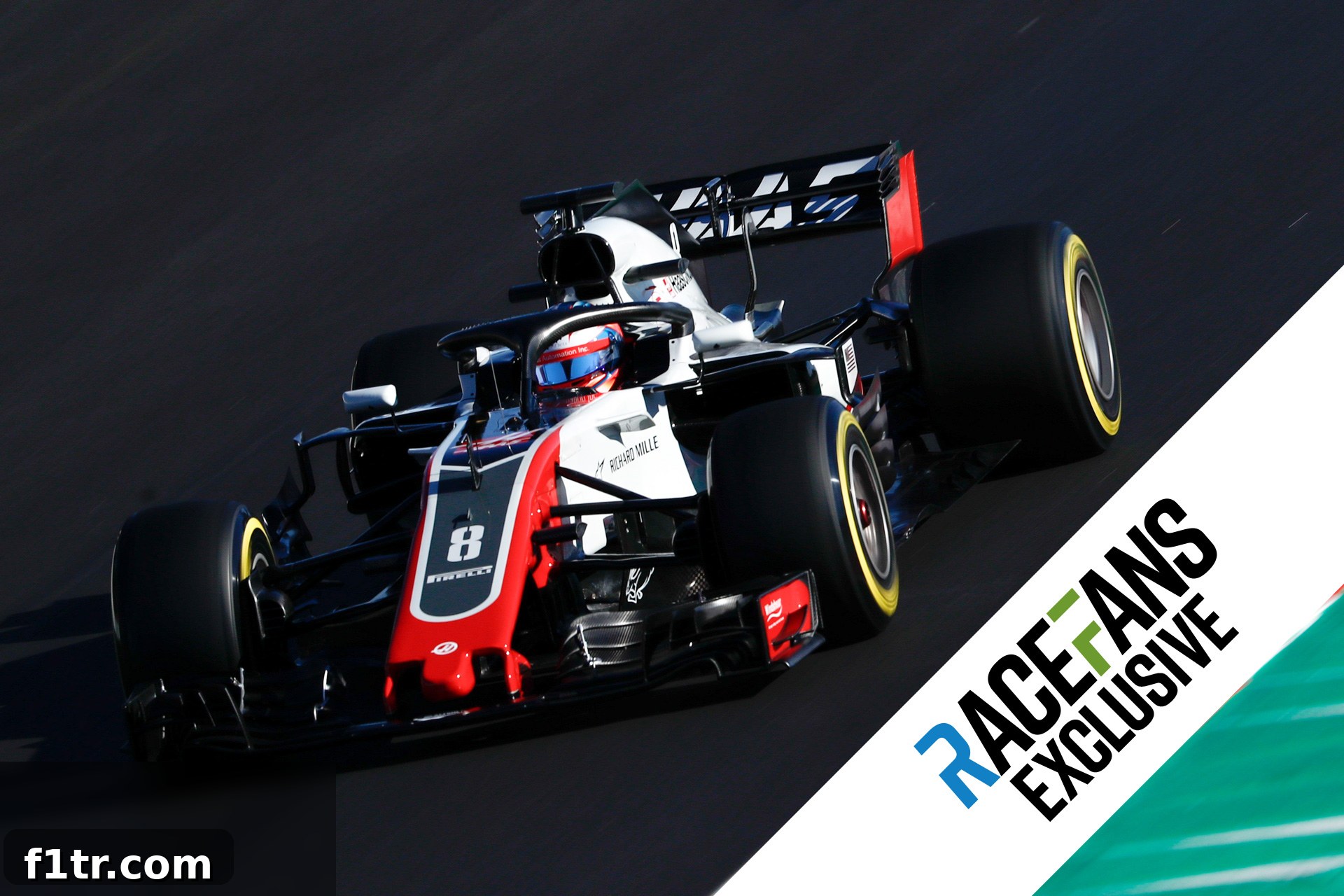
The visual evidence of this linkage was undeniable in the VF-18. The car exhibited clear design echoes of Ferrari’s formidable SF70-H, particularly in its sidepod philosophy. Ferrari had pioneered this aggressive and aerodynamically sophisticated sidepod design in 2017, a concept that rival midfield teams openly admitted would be both prohibitively expensive and incredibly time-consuming to replicate. For Haas, having direct access to this proven design pathway offered a significant competitive advantage from the outset of the season.
On-Track Performance and Testing Insights
The tangible benefits of this enhanced partnership were immediately apparent during pre-season testing. Haas demonstrated impressive pace, clocking lap times a mere 1.1 seconds off the outright best time set by Ferrari’s four-time world champion, Sebastian Vettel. What made this performance even more remarkable was that Haas achieved these times on super-soft tires, which are two stages harder and inherently slower than the hyper-softs utilized by Vettel. This suggested a fundamental strength and efficiency in the VF-18 chassis, hinting at strong potential for the competitive season ahead.
Evolving Dynamics of the Ferrari-Haas Relationship
Taylor openly acknowledged that the initial stages of collaboration with Ferrari were “quite hard” at times. Establishing seamless communication and integration between two distinct Formula 1 operations, even with a shared goal, presented considerable hurdles. However, as the partnership matured, Ferrari, the Scuderia, became increasingly adept at anticipating Haas’s specific needs and integrating their requirements into its own design and manufacturing processes.
“When people are designing things in Maranello, there’s now an understanding that ‘hold on a minute, someone else is looking over my shoulder’ – the Haas guy, in a virtual sense, will be interested in this piece of information,” Taylor explained. “So that relationship has improved markedly in that way.” This shift in mindset led to a significant improvement in the flow of crucial data and technical insights. Previously, Haas might have faced “a nasty surprise at the last minute,” but with enhanced communication, the information flow, mutual understanding, and the overall relationship between the two teams had markedly improved.
The Inherent Limits of Collaboration
Despite the growing synergy, it’s crucial to acknowledge the inherent limitations of such a partnership. Ferrari, as a works team competing for the championship, will never compromise its own competitive edge for the sake of its customer. This reality means that while Haas benefits immensely, it must also contend with a certain degree of dependency.
“It still doesn’t change the fact that the deadline, the actual crunch time, the definitive data still runs at the Ferrari pace and in our world it’s late,” Taylor noted. This highlights a fundamental challenge: Haas operates on a timeline dictated by Ferrari’s primary objectives, which can sometimes put them at a disadvantage in terms of development cycles. Taylor added, “I don’t think they moderate their choices, they just tell us more about their choices.” This indicates that while transparency has improved, Ferrari’s design decisions remain focused on their own car, with Haas adapting to those choices rather than influencing them.
Haas’s Path to Greater Independence
Interestingly, Haas has also progressively begun to produce more of its own alternatives to the ‘non-listed parts’ that it could theoretically source from Ferrari. This trend, as Taylor observed, has “grown over the three cars” Haas has raced. There have been instances where, due to specific circumstances or design philosophies, certain Ferrari components were deemed unsuitable or sub-optimal for Haas’s unique requirements. “Those are through circumstance rather than through the business model,” Taylor clarified.
This growing capability signifies a crucial evolution for the team. “There’s certain times where we’ve thought ‘we can’t use that, we’re going to have to put that to one side and make our own’,” Taylor revealed. This strategic decision to develop bespoke components stems from Haas’s increasing confidence and capacity to manufacture within its own supply chain. This newfound freedom allows the team greater flexibility and control over specific design elements, enabling them to pursue solutions more tailored to their chassis and operational philosophy, rather than simply adopting Ferrari’s components wholesale. It’s a clear indication of Haas maturing beyond a simple customer team into a more self-reliant constructor.
Future Prospects and Implications for Formula 1
Ultimately, the Haas F1 Team’s fortunes remain inextricably linked to Ferrari’s performance, particularly concerning the power unit and major components. Furthermore, a significant question mark hanging over all customer teams in the off-season revolved around new technical directives concerning engine operations. How these directives would affect the competitive balance between works teams and their customers remained a key area of speculation.
Should Haas continue its upward trajectory and achieve another significant step forward in performance, it would undoubtedly serve as a compelling incentive for other aspiring teams to closely examine and potentially emulate the Haas model. In an era where Liberty Media, Formula 1’s commercial rights holder, is actively striving to make the sport more cost-effective and accessible for new entrants, the Haas blueprint of strategic partnerships and judicious outsourcing offers a highly attractive and viable pathway into the pinnacle of motorsport.
In the meantime, this relatively fledgling outfit is becoming increasingly ambitious in its own right. “Watching the team evolve and the car evolve in parallel, to some extent we’re pushing the capabilities of the team and the car at the same time,” Taylor affirmed. He emphasized the symbiotic relationship between car design and team development. “We can’t afford to make a car that’s hideously difficult to service and maintain and do all those things with an immature race team. The two go hand-in-hand. It’s not one or the other it’s both.”
Taylor concluded with a profound insight into the immense challenge of Formula 1: “And truly I believe designing a race team’s a whole lot harder than designing a racing car.” This statement perfectly encapsulates the comprehensive, multifaceted effort required to succeed in F1, where technical innovation must be matched by operational excellence and strategic foresight.
Go ad-free for just £1 per month
Find out more and sign up
2018 F1 season preview
- The 2018 F1 season in 20 questions
- Haas exclusive: No more ‘nasty surprises’ as Ferrari relationship matures
- Which F1 drivers will beat their team mates in 2018?
- Williams exclusive: “We’re not in a position to play fantasy F1 driver”
- Toro Rosso exclusive: “I was convinced Honda are in a better position”
Browse all 2018 F1 season preview articles