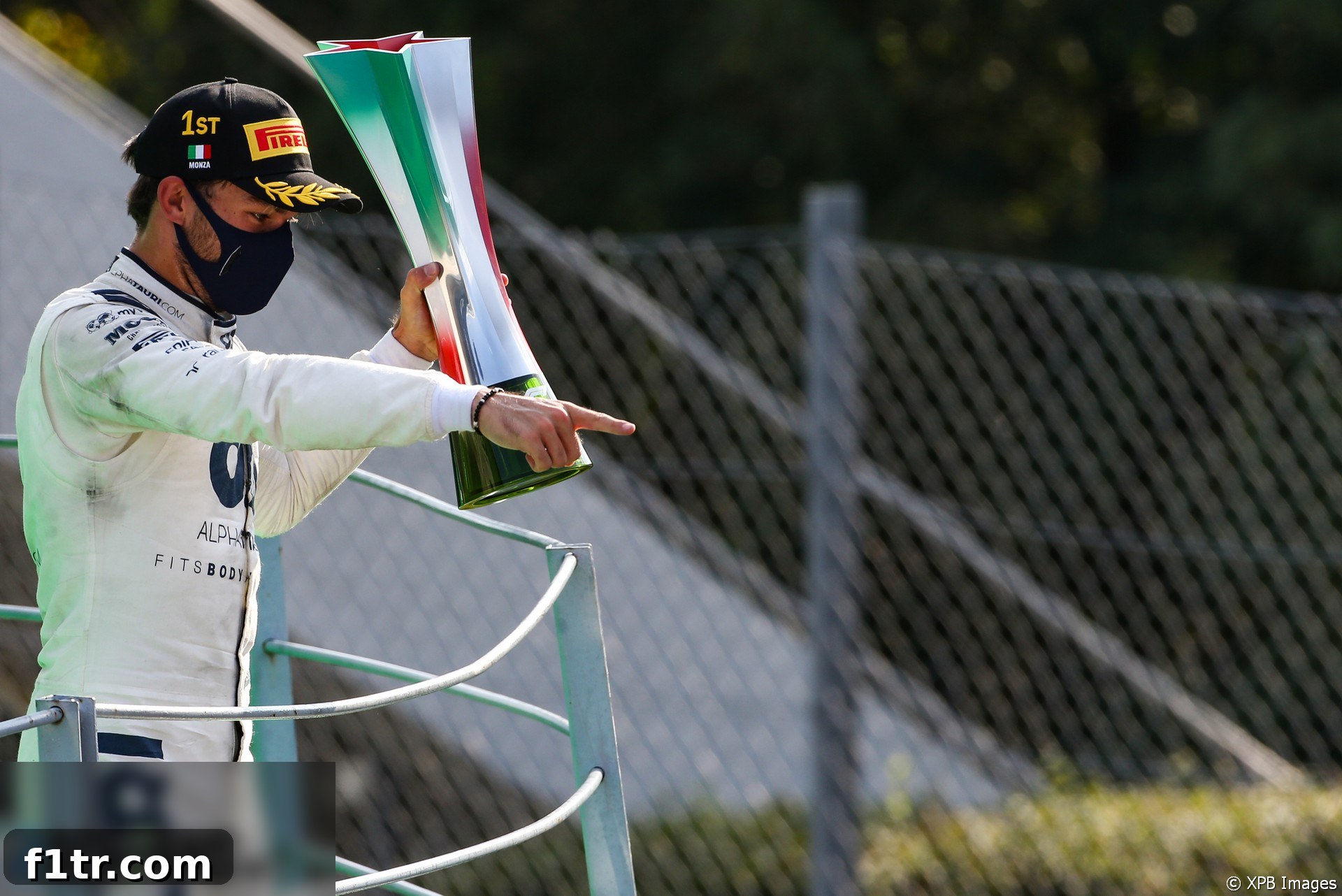
In the high-stakes world of Formula 1, team principals often face relentless scrutiny, especially regarding driver lineups. Following Pierre Gasly’s sensational victory at the Italian Grand Prix, speculation naturally surged about a potential return to Red Bull Racing. However, team principal Christian Horner has firmly addressed these rumors, stating that Red Bull is not actively pursuing Gasly’s transfer back from their sister team, AlphaTauri. This declaration underlines a strategic focus on stability and current driver development, even amidst outstanding individual performances.
Gasly’s career trajectory has been a dramatic narrative of resilience and redemption. After being promoted to Red Bull Racing for the 2019 season, he struggled immensely to adapt to the challenging RB15 chassis and the immense pressure of competing alongside superstar Max Verstappen. His tenure lasted only 12 races before a mid-season demotion back to Toro Rosso (now AlphaTauri), where he was replaced by Alexander Albon. This swift return to the junior team, often perceived as a career setback, proved to be the catalyst for Gasly’s resurgence. He immediately rediscovered his confidence and form, culminating in his maiden F1 win at Monza, a testament to his talent and mental fortitude.
Advert | Become a Supporter & go ad-free
Christian Horner’s Stance: Focus on Albon and RB16 Development
Christian Horner’s assessment of Gasly’s recent performance is overwhelmingly positive. “Pierre has done a fantastic job,” Horner remarked, acknowledging the French driver’s remarkable turnaround. “Since stepping back into what was Toro Rosso, now AlphaTauri, he’s found his confidence, he’s driving incredibly well. AlphaTauri are doing a great job with him. It’s truly gratifying to witness his success.” This commendation, however, comes with a clear caveat regarding Red Bull Racing’s immediate plans.
Horner reiterated Red Bull’s unwavering commitment to Alexander Albon. “As far as Red Bull Racing’s seats are concerned, we are fully focused on Alex Albon,” he stated. “Our priority is to provide him with the best possible opportunity to secure that seat long-term. We are actively working on certain issues with the car, and I believe it simply wouldn’t make strategic sense to switch the drivers back at this juncture.” This statement highlights Red Bull’s dual objective: supporting Albon and resolving the performance challenges plaguing the RB16 chassis.
Albon’s journey at Red Bull has been markedly different from Gasly’s post-demotion success. While flashes of his potential have been evident, he has consistently struggled to match the pace and consistency of Max Verstappen, particularly over a race distance. The demanding nature of the RB16, which has proven sensitive and difficult to drive on the limit, especially for the second driver, has undoubtedly exacerbated Albon’s challenges. The team’s public support for Albon suggests a belief that his struggles are partly car-related and that he possesses the raw talent to overcome them with time and development.
AlphaTauri’s Evolving Role: From Junior to Sister Team
A crucial element in Red Bull’s current driver strategy is the redefinition of AlphaTauri’s role within the Red Bull motorsport empire. Historically, Toro Rosso functioned primarily as a junior team, a direct feeder for Red Bull Racing, with drivers often moving between the two squads based on performance and Red Bull’s needs. This dynamic has shifted significantly with AlphaTauri’s rebranding in the off-season.
“AlphaTauri is now a sister team rather than a junior team,” Horner explained. This distinction is more than just a semantic change; it signifies a greater degree of independence and a different strategic purpose for the Faenza-based outfit. As a sister team, AlphaTauri is expected to foster its own identity, develop its drivers, and compete with its own ambitions, rather than solely serving as a talent pipeline for the senior team. This newfound autonomy means that AlphaTauri can now hold onto drivers like Gasly, who are performing exceptionally well, without the automatic expectation of their promotion to Red Bull Racing. Franz Tost, AlphaTauri’s team principal, is reportedly “happy, I believe, with Pierre,” reinforcing the stability of Gasly’s position.
The implications of this shift are profound. It allows AlphaTauri to build a more stable team environment, where drivers are not constantly under the threat of demotion or the pressure of immediate promotion. For Gasly, it means he can continue to lead the team, develop his skills, and compete for strong results, free from the intense spotlight and internal comparisons that defined his challenging stint at Red Bull Racing. This provides a clear path for his career growth and for AlphaTauri to flourish as a competitive mid-field contender.
Addressing RB16 Issues and Future Driver Decisions
Horner emphasized that the immediate focus for Red Bull Racing is on understanding and rectifying the inherent issues with the RB16 chassis. “The final decisions will be made later in the year, but there’s no push from our side to reverse the situation,” he stated. “We want to address some of the issues we have with RB16, which I think we’re starting to understand and get on top of, and I think we’ll go from there.” This suggests that the team believes improving the car’s performance is paramount, as it directly impacts both Albon’s output and the team’s overall competitiveness against Mercedes.
The RB16 has been described as a challenging car, particularly sensitive to changes and difficult to extract maximum performance from, especially compared to its predecessors. This technical hurdle disproportionately affects the second driver, who may not possess the same unique driving style or adaptability as a generational talent like Max Verstappen. By committing to Albon and the car’s development, Red Bull is signaling patience and a methodical approach to problem-solving, rather than resorting to immediate driver changes as a knee-jerk reaction to performance disparities.
The decision to not immediately recall Gasly is also a demonstration of Red Bull’s commitment to strategic stability. Constantly shuffling drivers can be disruptive, impacting team morale, car development feedback, and sponsor relations. By allowing Gasly to thrive at AlphaTauri and giving Albon the necessary time and resources at Red Bull, the organization is pursuing a more measured approach, aiming for long-term benefits rather than short-term fixes.
The Red Bull Junior Program and External Talent Pool
Red Bull has long been renowned for its prolific and often ruthless junior driver program, a system that has produced multiple world champions and Grand Prix winners. Drivers like Sebastian Vettel, Daniel Ricciardo, and Max Verstappen are all products of this highly competitive pipeline. Horner reaffirmed the team’s preference for this homegrown talent, acknowledging its historical success.
“Our preference has always been to nurture talent,” Horner explained. “Whether that’s Sebastian Vettel, whether that’s Daniel Ricciardo, whether that’s Max Verstappen – they’ve all come through the junior program, they’ve been schooled by Franz [Tost], and they’ve always done well in Red Bull Racing’s seats. So our preference is always in that home-grown talent.” This philosophy underpins much of Red Bull’s driver management strategy, emphasizing development from within the Red Bull family.
However, Horner also did not entirely rule out the possibility of looking beyond their extensive junior program. He acknowledged that circumstances might necessitate such a move. “If the pool isn’t big enough then, of course, occasionally, you have to look outside of it,” he conceded. “But our intention is absolutely to work with the talent pool that we have.” This nuanced stance indicates that while loyalty and internal development remain core tenets, pragmatism could prevail if the internal options are deemed insufficient for Red Bull Racing’s top-tier ambitions. It leaves the door slightly ajar for a potential external signing, though it would likely be considered only as a last resort, should their existing talent not meet the required benchmarks.
Advert | Become a RaceFans supporter andgo ad-free
The Path Forward: Stability and Strategic Development
In conclusion, Christian Horner’s remarks paint a clear picture of Red Bull’s current driver strategy: a commitment to stability, an emphasis on developing Alexander Albon within Red Bull Racing, and a recognition of AlphaTauri’s enhanced role as a sister team. Pierre Gasly’s exceptional performance at AlphaTauri is celebrated, but it does not trigger an immediate reshuffle within the Red Bull family. Instead, it underscores the success of the two-team structure, allowing both Gasly and AlphaTauri to flourish independently, while Red Bull Racing focuses on resolving its car issues and maximizing Albon’s potential.
The future of Red Bull’s driver lineup will undoubtedly remain a hot topic, but for now, the message is clear: the team is dedicated to its current path, trusting in internal development and strategic alignment to achieve its championship aspirations. Gasly’s victory is a triumph for AlphaTauri and a testament to his individual growth, but it does not signal an immediate return to the senior team. Both drivers are positioned to continue their respective journeys, with Red Bull Racing and AlphaTauri each pursuing their distinct, yet interconnected, objectives in the challenging world of Formula 1.
2020 Tuscan Grand Prix Ferrari 1000
Browse all 2020 Tuscan Grand Prix Ferrari 1000 articles