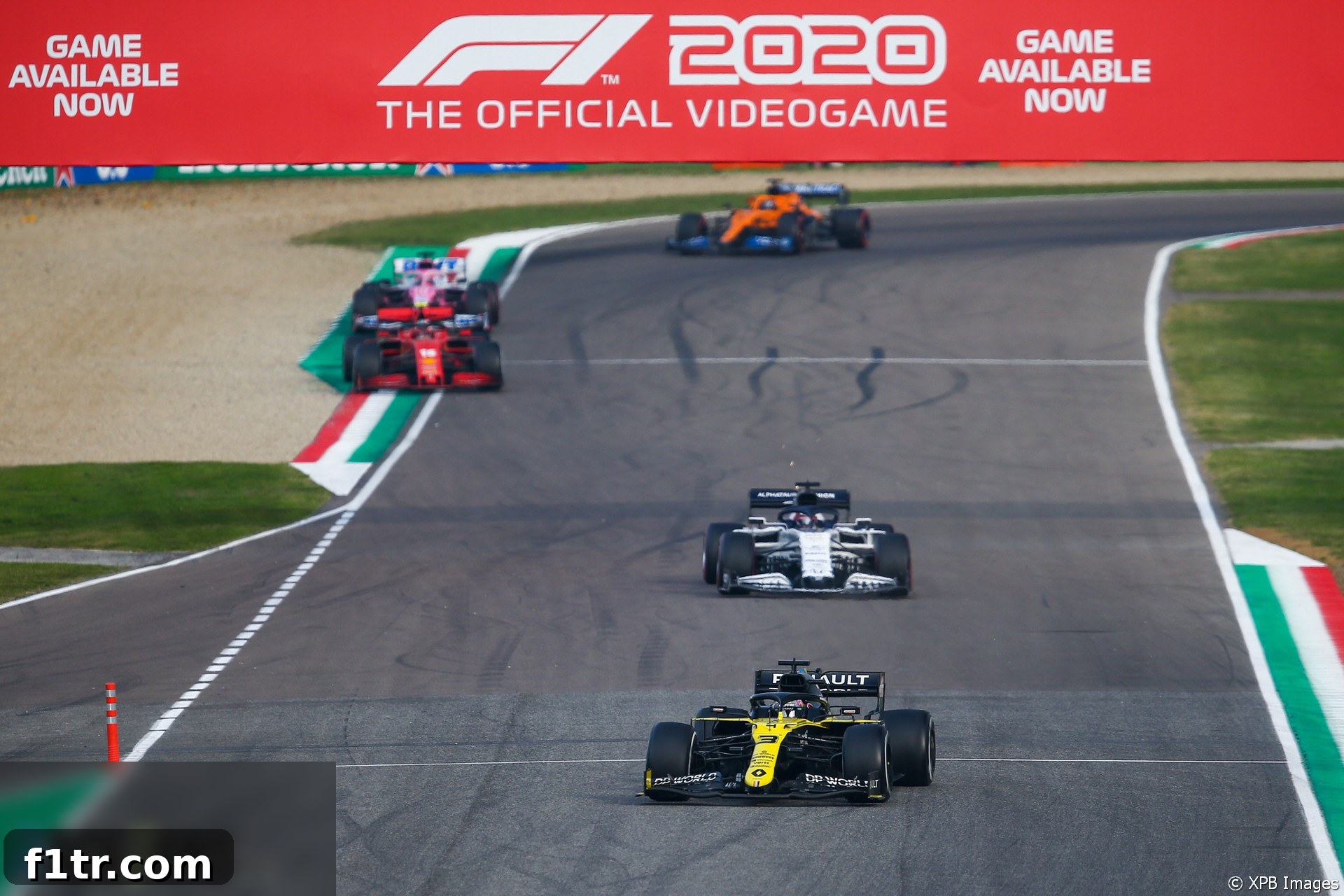
Imola Circuit Adjustments: Extended DRS Zone Set to Ignite Overtaking Action at Emilia-Romagna Grand Prix
Formula 1 is constantly seeking ways to enhance on-track excitement and provide more opportunities for thrilling overtakes. In line with this ongoing commitment, significant adjustments have been made to the Drag Reduction System (DRS) detection and activation zones at the iconic Autodromo Enzo e Dino Ferrari, more commonly known as Imola, ahead of the Emilia-Romagna Grand Prix. These strategic changes aim to invigorate racing on a circuit renowned for its challenging, old-school characteristics, moving the zones further around the lap compared to previous iterations of the event.
The decision to modify these crucial points reflects an ongoing dialogue within the sport about balancing historic circuit layouts with the demands of modern Formula 1 car aerodynamics. While Imola remains a beloved venue that tests drivers’ skill and precision, the specter of limited overtaking opportunities has sometimes cast a shadow over recent races. These adjustments are a proactive step to address that, promising a more dynamic and engaging race weekend for fans and competitors alike.
Understanding the Drag Reduction System (DRS) in Formula 1
To fully appreciate the significance of these changes at Imola, it’s essential to understand the Drag Reduction System (DRS) itself. Introduced in Formula 1 in 2011, DRS is a driver-activated mechanism designed to aid overtaking. When enabled, a flap on the car’s rear wing opens, significantly reducing aerodynamic drag and allowing the car to achieve higher top speeds on designated straights.
The rules governing DRS use are specific:
- Detection Zone: Drivers must be within one second of the car ahead at a specific ‘detection point’ on the track to be eligible to activate DRS.
- Activation Zone: Once detected, drivers can press a button to open their DRS flap only within pre-defined ‘activation zones’, which are typically long straights.
- Race Conditions: DRS is generally available during the race only after the first two laps, or after safety car periods have ended, and only if race control deems conditions safe. It cannot be used in practice or qualifying if a yellow flag is displayed in the activation zone.
DRS has become a fundamental strategic tool, influencing pit stop timings, defensive driving, and offensive maneuvers. Its effectiveness, however, varies significantly from circuit to circuit, depending on track layout, the length of straights, and the placement of detection and activation zones. This variability is precisely why adjustments like those at Imola are critical for optimizing racing quality.
The Historic Imola Circuit: A Test of Skill and Strategy
The Autodromo Enzo e Dino Ferrari circuit in Imola, Italy, holds a hallowed place in Formula 1 history. Nestled near the Apennine mountains, its undulating terrain and challenging corners have witnessed countless legendary battles and poignant moments. The circuit, which hosted the San Marino Grand Prix for many years, returned to the F1 calendar as the Emilia-Romagna Grand Prix, much to the delight of purists who appreciate its “old-school” character.
Imola is characterized by a series of high-speed sections interspersed with demanding chicanes and technical corners. Notable sections include the challenging Tamburello and Villeneuve chicanes, the flowing Piratella and Acque Minerali, and the tight Rivazza corners leading onto the main straight. Unlike many modern circuits designed with wide run-off areas and multiple overtaking spots, Imola’s narrower confines and classic layout often make clean overtakes a premium commodity.
Historically, Imola has posed a formidable challenge for drivers looking to pass. The circuit’s flow means that carrying speed through sequences of corners is crucial, and losing momentum can be costly. While the main straight offers the primary opportunity for slipstreaming and DRS-assisted passes, its length and the subsequent braking zone into Turn 1 (Tamburello) have not always been sufficient to guarantee a successful move, especially with the aerodynamic characteristics of contemporary F1 cars. This inherent difficulty in overtaking served as a primary motivator for the recent DRS zone modifications.
Advert | Become a Supporter & go ad-free
Key Adjustments to Imola’s DRS Zones for the Emilia-Romagna Grand Prix
In a direct response to feedback and analysis from previous races, Formula 1 race organizers have implemented precise adjustments to both the DRS detection and activation zones at Imola. These changes are subtle in their numerical values but potentially profound in their impact on the racing dynamic.
Detailed Breakdown of the Detection and Activation Points
Previously, the single DRS detection point at Imola was located 40 metres after Turn 18, which is situated as cars make their way towards the start/finish line. The new setup sees this detection point moved significantly further back along the lap. It is now positioned 20 metres before Turn 17. This relocation means drivers will have to be within the crucial one-second window of the car ahead much earlier in the final sector of the lap.
Correspondingly, the DRS activation zone has also been adjusted. In the past, the activation zone commenced directly at the start/finish line. This year, it has been brought forward, starting 60 metres before Turn 19. Turn 19, often considered a flat-out kink rather than a heavy braking corner on the start/finish straight, now marks the very beginning of the activation area. This effectively extends the usable DRS zone by a considerable margin, allowing drivers to engage the system earlier on the approach to Turn 1.
By shifting both points further around the lap, the intention is clear: to maximize the duration a driver can benefit from the drag reduction on the main straight. The single zone for both detection and activation remains, but its physical placement and length have been strategically optimized for the unique challenges of the Imola circuit.
Anticipated Impact: Enhancing Overtaking Opportunities
The primary rationale behind extending the DRS zone at Imola is to generate more on-track action and improve the spectacle for fans. The hope is that these adjustments will translate into more genuine overtaking opportunities and reduce the processionary nature that sometimes characterizes races at circuits with limited passing zones.
Learning from Past Races: Imola 2020 vs. Portimao
The need for these changes was highlighted by the comparative analysis of previous races. The Emilia-Romagna Grand Prix held at Imola in 2020, while a welcome return for the circuit, was noted for a relative lack of significant on-track overtaking maneuvers. Despite the inherent challenges of the track, the race was often criticized for not delivering the level of wheel-to-wheel excitement that fans crave.
This contrasted sharply with the race preceding it that year at Portimao (the Portuguese Grand Prix), where DRS played a much more significant and visible role in facilitating driver battles. The layout of Portimao, with its longer, undulating main straight and specific DRS zone placement, seemed to create more effective overtaking chances. The lesson from Portimao was clear: when DRS is optimally integrated with a circuit’s characteristics, it can dramatically improve the racing product. Imola’s adjustments are a direct attempt to replicate that success and ensure the DRS is a more potent tool on its main straight.
Strategic Implications for Drivers and Teams
The extended DRS zone will undoubtedly have strategic implications for drivers and teams alike. Activating DRS 60 metres before Turn 19 means cars will be able to carry higher speeds earlier as they exit the final corner and head towards Turn 1 (Tamburello). This could create a number of new dynamics:
- Earlier Advantage: Drivers with DRS will gain a speed advantage much earlier on the main straight, potentially allowing them to pull alongside or even ahead of their rivals before the primary braking point for Turn 1.
- Impact on Turn 1 & Subsequent Braking Zones: An earlier speed advantage could lead to more aggressive braking maneuvers into Turn 1, increasing the chances of dive-bomb passes. Furthermore, successfully completing a pass before Turn 1 could then grant the overtaking driver a better line and defensive position for the subsequent braking zones of Turns 2 and 3, preventing immediate counter-attacks.
- Slipstreaming and Defence: The longer DRS zone might also amplify the effect of slipstreaming, allowing following cars to close the gap more effectively. This could force leading drivers to adopt different defensive lines, making them more vulnerable.
- Tyre Management: With potentially more opportunities for flat-out running and aggressive braking, tyre degradation and management could become an even more critical factor over a race stint, influencing pit stop strategies.
These changes are designed to shift the balance, making it harder for a leading car to simply break away or defend comfortably, thereby encouraging more sustained battles and closer racing throughout the grand prix.
Advert | Become a RaceFans supporter andgo ad-free
The Broader Goal: Improving the Spectacle of F1 Racing
The adjustments at Imola are part of Formula 1’s broader, continuous effort to improve the quality of racing across its diverse calendar of circuits. With the advent of more sophisticated aerodynamics and powerful engines, modern F1 cars are incredibly fast, but this speed sometimes comes at the cost of being able to follow closely and overtake effectively, particularly in dirty air.
While future regulatory changes (such as the 2022 technical regulations aimed at reducing dirty air) are designed to address these fundamental issues, interim solutions like strategic DRS zone placements remain crucial. They represent the sport’s commitment to finding the optimal balance between technological advancement, driver skill, and fan entertainment. Each circuit presents its own unique challenges and opportunities, and careful, data-driven modifications to systems like DRS are vital to unlock the best possible racing experience at every venue.
Conclusion: A More Dynamic Race at Imola?
The modifications to the DRS detection and activation zones at Imola for the Emilia-Romagna Grand Prix are a clear signal of Formula 1’s intent to foster more aggressive and engaging racing. By extending the DRS zone and allowing drivers to deploy the system earlier on the main straight, race organizers hope to transform what was once a notoriously difficult overtaking spot into a more potent battleground.
All eyes will be on the Autodromo Enzo e Dino Ferrari to see if these calculated adjustments deliver on their promise. Will drivers find new strategies to exploit the extended zone? Will we witness more wheel-to-wheel duels into Turn 1 and beyond? The answers will unfold on race day, but the anticipation is certainly heightened by these thoughtful changes. Fans can look forward to an Emilia-Romagna Grand Prix where the tactical use of DRS could play a more pivotal role than ever before, hopefully culminating in a truly memorable and action-packed event.
Don’t miss anything new from RaceFans
Follow RaceFans on social media:
- Join RaceFans on Facebook
- Follow RaceFans on Twitter
- Get daily email updates from RaceFans
Related 2021 F1 Season Insights
- Masi ‘basically gifted the championship’ to Verstappen says 2021 FIA steward Sullivan
- Las Vegas race backers looking to extend F1 deal beyond 2025
- Why Mercedes put ‘a reminder of joy and pain’ on display in their factory lobby
- Verdict on error in GT race suggests Mercedes would have lost 2021 Abu Dhabi GP appeal
- Title ‘stolen’ from Mercedes made us ‘underdogs people cheer for’ – Wolff
Browse all 2021 F1 season articles