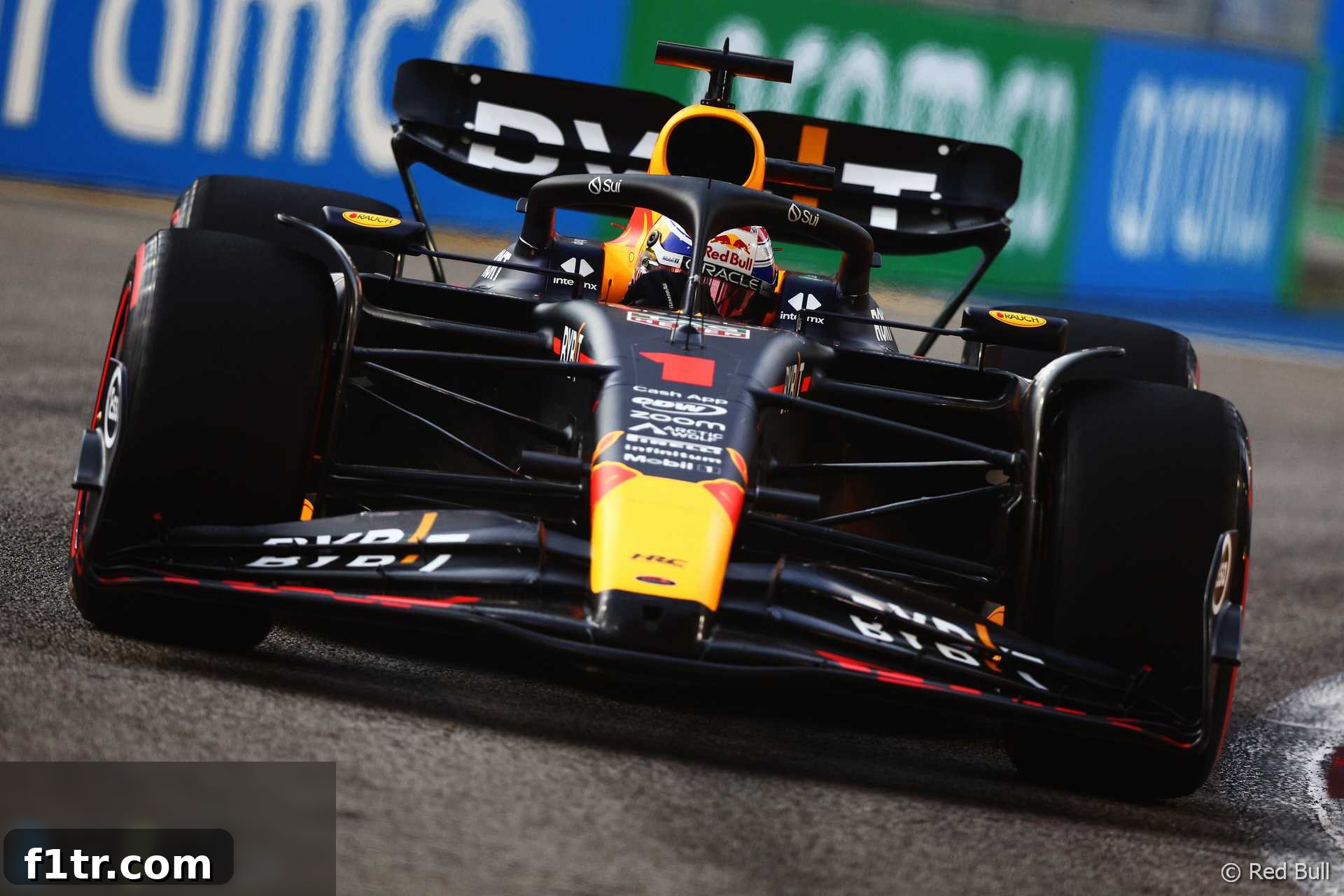
Max Verstappen, the reigning Formula 1 world champion, narrowly avoided a significant setback at the Singapore Grand Prix, escaping a grid penalty despite being placed under investigation for three distinct potential infringements following a dramatic qualifying session. The Red Bull ace ultimately received two reprimands from the stewards and was cleared of wrongdoing in the third incident, allowing him to start the demanding street race from his qualified 11th position without further disadvantage.
The qualifying session on the Marina Bay Street Circuit proved to be an unexpected challenge for Verstappen and his Red Bull team. After a dominant season, failing to progress into Q3 was a rare misstep, placing immense pressure on the Dutchman even before the stewards’ summons. His unexpected early exit from the top-10 shootout heightened scrutiny on his actions during the initial two phases of qualifying, leading to multiple impeding allegations that threatened to derail his race weekend further.
Three Incidents, Two Reprimands: Verstappen’s Qualifying Scrutiny
The stewards’ investigations centered on three specific moments, each shedding light on the intricate challenges of traffic management in a high-stakes qualifying environment, particularly on a tight street circuit like Singapore. The outcomes of these inquiries, while ultimately favorable to Verstappen in terms of grid position, sparked considerable discussion about driver conduct and the application of sporting regulations.
Incident 1: Impeding Russell and Hamilton in the Pit Lane
The first serious allegation involved Verstappen’s conduct near the end of Q1, specifically his alleged impeding of Mercedes drivers George Russell and Lewis Hamilton. The incident occurred as Verstappen, like many other drivers, was attempting to create a sufficient gap to the cars ahead before embarking on his final flying lap of the session. He was observed waiting at the pit lane exit, a common strategy to find clear air and optimize tire preparation for a performance lap. His race engineer, Gianpiero Lambiase, even radioed him to confirm everything was in order with his car before he eventually pulled away.
This prolonged wait brought him under the spotlight for a potential breach of Article 37.5 of the FIA Formula 1 Sporting Regulations, which addresses drivers stopping unnecessarily on the circuit and impeding others. After a thorough hearing, the stewards acknowledged Verstappen’s intent to create space but ultimately determined that his “14-second wait,” while strategic, had the “potential… to negatively impact other drivers.” Consequently, Verstappen was issued his first reprimand of the season. This ruling underscored the delicate balance F1 drivers must maintain between optimizing their own qualifying strategy and ensuring they do not unduly obstruct competitors, particularly in the congested pit lane exit area during critical moments of a session.
Incident 2: Clearing Verstappen in the Sargeant Impeding Case
A second investigation focused on a separate incident in the closing minutes of Q1, where Verstappen was accused of potentially impeding Williams driver Logan Sargeant. This scenario is a frequent occurrence in F1 qualifying, especially on circuits like Singapore, where multiple cars converge while preparing for their final laps, often backing up on the approach to key corners. Sargeant was among several cars waiting near the penultimate corner when Verstappen’s actions came under scrutiny.
However, after reviewing all available evidence and hearing testimony, the stewards cleared Verstappen of any wrongdoing in this particular instance. Verstappen explained that he was actively trying to stay off the racing line to avoid a collision with the surrounding cars, demonstrating an awareness of his environment and a proactive effort to mitigate risk. Crucially, Sargeant himself provided testimony that supported Verstappen’s account during the hearing. The stewards often take a driver’s perspective and intent into significant consideration, and in this case, the combination of Verstappen’s explanation and Sargeant’s backing led to his exoneration, highlighting the importance of peer testimony in such investigations.
Incident 3: Red Bull Fined, Verstappen Reprimanded for Tsunoda Incident
The third and final investigation involved an incident during Q1 between Verstappen and Yuki Tsunoda, a driver from Red Bull’s junior team, AlphaTauri. Verstappen was the first driver to set a time in the session. As he completed his initial flying lap and began his in-lap, offering feedback to his race engineer over the radio on the exit of Turn 3, Tsunoda was simultaneously on his out-lap, having passed Verstappen on the exit of Turn 17 earlier in the session. The incident occurred when Tsunoda, now on a crucial flying lap, encountered Verstappen’s Red Bull on the racing line, compromising his run.
This incident revealed a crucial communication breakdown within the Red Bull family. The stewards noted the unusual absence of any team representation from AlphaTauri at their hearing on the matter. Red Bull, however, admitted fault, confirming they had failed to adequately warn Verstappen about Tsunoda’s proximity until the AlphaTauri was almost alongside. Recognizing the team’s responsibility in managing their drivers’ track position and communication, the stewards imposed a €5,000 (£4,308) fine on Red Bull Racing. Verstappen, despite the team’s admission, was still issued a second reprimand for the season, a decision the stewards stated was consistent with previous rulings for similar incidents involving impeding this season. This ruling underscored that while a team’s communication failure can lead to penalties for the team, the driver still bears ultimate responsibility for their actions on track.
The Implications of Reprimands: No Grid Penalty, For Now
While escaping a grid penalty for the Singapore Grand Prix was a significant relief for Max Verstappen, the two reprimands he received are not without consequence in the broader context of the Formula 1 season. These marked his first reprimands of the current season. Crucially, neither of these reprimands carried any accompanying penalty points on his superlicence, which would have been a far more severe outcome.
Formula 1’s sporting regulations stipulate that any driver who accumulates five driving reprimands within a single season will automatically incur a 10-place grid penalty for the next Grand Prix they participate in. While this threshold is rarely met, it serves as a strict warning system for consistent minor infringements. For Verstappen, with two now on his record, he still has room for error, but further minor infractions will bring him closer to this punitive threshold. The stewards’ decision to issue reprimands rather than grid penalties or superlicence points reflects their judgment that these incidents, while breaches of regulations, did not warrant more severe on-track sanctions given the circumstances.
In terms of his superlicence penalty points, Verstappen’s tally remains at two. Both of these points originated from a collision with Lewis Hamilton during the early laps of the 2022 Brazilian Grand Prix, an incident that served as a stark reminder of the consequences of aggressive driving. Superlicence points carry a more direct threat: accumulating 12 points within a 12-month period results in an automatic one-race ban. Therefore, while the reprimands are a formal warning, the absence of penalty points ensures his current superlicence status remains stable, offering him continued freedom on track without the immediate threat of a race suspension.
Reflecting on Qualifying Conduct and Steward Decisions
The incidents involving Max Verstappen at the Singapore Grand Prix qualifying underscore the perpetual challenge of managing track traffic in Formula 1, particularly on circuits known for their narrow confines and unforgiving nature. Qualifying sessions are a delicate balance of aggressive driving, strategic timing, and adherence to regulations designed to ensure fair competition and driver safety. Drivers constantly push the boundaries to find the smallest advantage, often leading to contentious situations like those Verstappen found himself in.
The stewards’ decisions in these cases highlight the nuanced approach required when interpreting sporting regulations. Factors such as driver intent, the actual impact on other competitors, and the communication protocols within teams are all considered. The differentiation between a driver’s individual responsibility and a team’s role in guiding their driver through traffic is also evident in the separate penalties issued to Verstappen and Red Bull. This rigorous system of investigation and penalties ensures that while racing remains competitive, a baseline of order and safety is maintained on the track.
Ultimately, escaping a grid penalty meant Verstappen could focus solely on his race strategy from 11th on the grid, rather than facing the additional hurdle of a further demotion. This outcome was a relief for the Red Bull team and their star driver, allowing them to fully concentrate on mitigating the impact of a challenging qualifying session and fighting their way through the field on race day. The incidents, however, serve as a potent reminder that even the most dominant drivers are subject to the sport’s strict rules and the watchful eye of the race stewards.
2023 Singapore Grand Prix
- Sainz’s Singapore win made Leclerc focus on improving his race pace – Clear
- Singapore and Austin retirements cost me top 10 championship place – Ocon
- How Ocon’s “extreme” height for an F1 driver is helping other tall racers
- Steward’s admission Verstappen should have had penalty frustrates his rivals
- Drivers back Singapore qualifying tweak as rule changes again for Japanese GP
Browse all 2023 Singapore Grand Prix articles