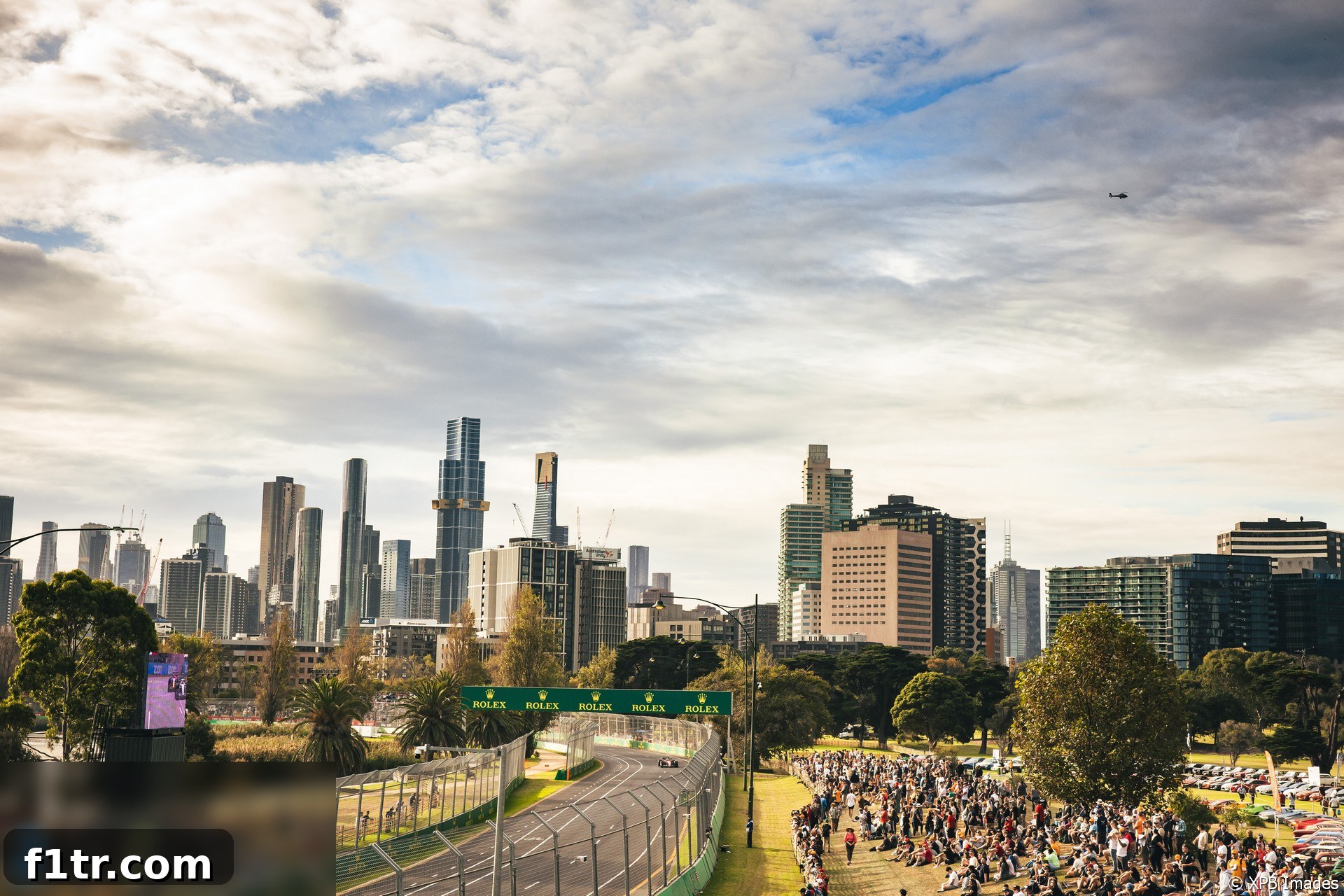
2023 Australian Grand Prix: Unpacking the Wet Weather Forecast and Cooler Temperatures
The 2023 Formula 1 season is poised for its first potential encounter with significant weather variability at the Australian Grand Prix. Unlike its reputation as one of the warmer fixtures on the calendar, this year’s event at the iconic Albert Park circuit in Melbourne is facing a forecast that promises a mix of clear skies, intermittent rain, and distinctly cooler temperatures, particularly during the crucial first two days of F1 action.
Advert | Become a Supporter & go ad-free
As one of the few races held in the Southern Hemisphere, the Australian Grand Prix often brings bright sunshine and warm conditions. However, the 2023 outlook paints a different picture, raising intriguing possibilities for team strategies, driver performance, and the overall spectacle. The prospect of rain affecting practice and qualifying sessions injects an element of unpredictability that could dramatically reshape the competitive landscape for this early-season race.
Friday Practice: Navigating the Highest Rain Threat
Friday, the opening day for Formula 1 practice sessions, carries the highest risk of rain throughout the weekend. While the morning might begin dry, allowing teams some initial dry running, the likelihood of precipitation is expected to intensify as the day progresses. The second free practice session (FP2) is particularly vulnerable, with meteorologists indicating a significant chance of rain.
This potential disruption to FP2 could have profound implications. For teams, especially early in the season, every minute of track time is invaluable for gathering critical data, fine-tuning car setups, and validating upgrades. A wet or mixed-condition FP2 would limit opportunities for long-run simulations on dry tires, crucial for understanding tire degradation and race pace. Engineers would face the challenge of making setup decisions with incomplete dry-weather data, potentially leading to compromises on Saturday and Sunday.
Drivers, too, would be put to the test. Adapting quickly to changing grip levels, managing tire temperatures in the wet, and finding confidence on a potentially treacherous Albert Park circuit are skills that can separate the top performers. Teams might also need to quickly switch focus to wet-weather setups, which are distinct from dry configurations, further complicating their Friday preparations. The ability to extract performance in these challenging conditions will be a key differentiator.
Qualifying Day: A Cool and Potentially Damp Saturday
Saturday, the highly anticipated qualifying day for the 2023 Australian Grand Prix, also faces a risk of rain, albeit perhaps earlier in the day than during the actual qualifying session. Should rain materialize in the morning, it could affect final practice (FP3), leaving teams with even less dry running before the crucial qualifying hour. Even if qualifying itself remains dry, a prior wet track means rubber might be washed away, altering grip levels and track evolution.
Adding to the challenge, Saturday is forecast to be the coolest day of the race weekend. Ambient temperatures are expected to peak at a mere 15°C, with lows dropping to 11°C. Such cool conditions inherently impact tire performance. Getting tires up to optimal operating temperature becomes more difficult, potentially affecting grip levels and overall lap times. Teams will need to be meticulous in their tire warm-up strategies, both on out-laps and within the garage.
A wet qualifying session, regardless of temperature, invariably spices up the grid. It creates opportunities for less fancied teams and drivers who excel in tricky conditions, while also posing a significant risk for championship contenders. Mistakes are amplified, visibility can be severely compromised, and the margin for error shrinks dramatically. Fans can expect a thrilling and potentially unpredictable qualifying battle if the rain arrives.
Race Day: A Cooler, Drier Sunday Beckons
Fortunately for race strategists and fans hoping for a high-speed contest, Sunday, the main race day, appears to be the least likely to be impacted by inclement weather. The risk of rain is forecast to be less than 20%, offering a much-needed reprieve. While a dry race is anticipated, temperatures will remain notably cool, with a maximum of 16°C expected during the evening race. This is hardly any warmer than Saturday’s conditions.
These cooler, but dry, conditions will still present strategic nuances. Tire degradation might be lower than in hotter races, potentially enabling longer stints or influencing tire compound choices. Engine performance, too, can benefit from cooler air, allowing for more aggressive mapping. However, maintaining tire temperature and generating sufficient grip, especially in the early laps or after safety car periods, will remain a consideration for drivers and engineers alike.
Light winds, generally around 10-20 km/h, are also expected across all three days of F1 action. While not strong enough to significantly impact car performance on their own, consistent wind direction changes can sometimes influence aerodynamic balance, requiring minor adjustments from drivers.
A Stark Contrast to 2022: The Chill Factor
The 2023 Australian Grand Prix is shaping up to be considerably cooler than last year’s event. In 2022, the race witnessed temperatures soaring up to 28°C, making it the ninth hottest race of the season by both ambient and track temperature. The contrast between 28°C and a forecasted maximum of 15-16°C is significant and will undoubtedly alter the dynamics of the entire race weekend.
Such a dramatic temperature swing impacts virtually every aspect of Formula 1. On the car side, cooling requirements become less critical, potentially freeing up aerodynamic efficiency. Tire behavior changes fundamentally; managing overheating in 28°C is a vastly different challenge from generating heat and grip at 15°C. For drivers, the physical demands shift, as does the feel of the car. Spectators, too, will need to bundle up, a rare occurrence for many attending an Australian Grand Prix in autumn.
Albert Park: A Circuit Transformed by Weather
The Albert Park circuit itself responds uniquely to varying weather conditions. Its street circuit nature, with walls close to the track, amplifies the consequences of mistakes, particularly in the wet. Key braking zones and high-speed corners like the fast-flowing sequence from Turns 9 to 12 could become even more treacherous with a damp surface or standing water, demanding immense precision and bravery from the drivers. The newly resurfaced track might also behave differently under wet conditions, potentially offering more or less grip than older asphalt.
The potential for a safety car or even a red flag increases significantly in wet conditions, further adding to the strategic complexity. Teams must be ready to adapt pit stop timings, tire choices, and overall race strategy on the fly, constantly monitoring weather radar and track conditions.
Strategic Domino Effect: How Weather Shapes the Weekend
For team principals and strategists, the volatile forecast for the 2023 Australian Grand Prix presents an early-season test of adaptability. Decisions made on Friday regarding wet-weather setups versus dry-weather data collection will ripple through the entire weekend. A compromised practice session could mean drivers enter qualifying with less confidence in their car’s balance.
The cooler temperatures, even without rain, could play into the hands of certain cars or tire compounds that perform better in lower ambient conditions. It’s a game of informed gambles, meticulous preparation, and quick reactions. The team that best reads the conditions and executes its strategy flawlessly will undoubtedly gain a crucial advantage in Melbourne.
Ultimately, the fluctuating weather forecast for the 2023 Australian Grand Prix ensures an enthralling spectacle. Whether it’s the high-stakes drama of a wet qualifying session or the intricate strategic battles played out in cool, dry conditions, Albert Park is set to deliver an unforgettable start to the season’s European leg. The elements are ready to add another layer of challenge and excitement to the pinnacle of motorsport.
Advert | Become a RaceFans supporter andgo ad-free
For more updates on the track conditions during each session, keep an eye on RaceFans Live and the RaceFans Twitter account.
2023 Australian Grand Prix
- Australian GP to forbid fans from entering track at end of this year’s race
- I only missed one chance to score points this year – Albon
- Formula 1’s stewards should listen to drivers less, not more
- Mercedes unsure whether gains seen in Melbourne were ‘track-specific’
- Why Ferrari saw a ‘real step forward in pure performance’ in point-less Australian GP
Browse all 2023 Australian Grand Prix articles