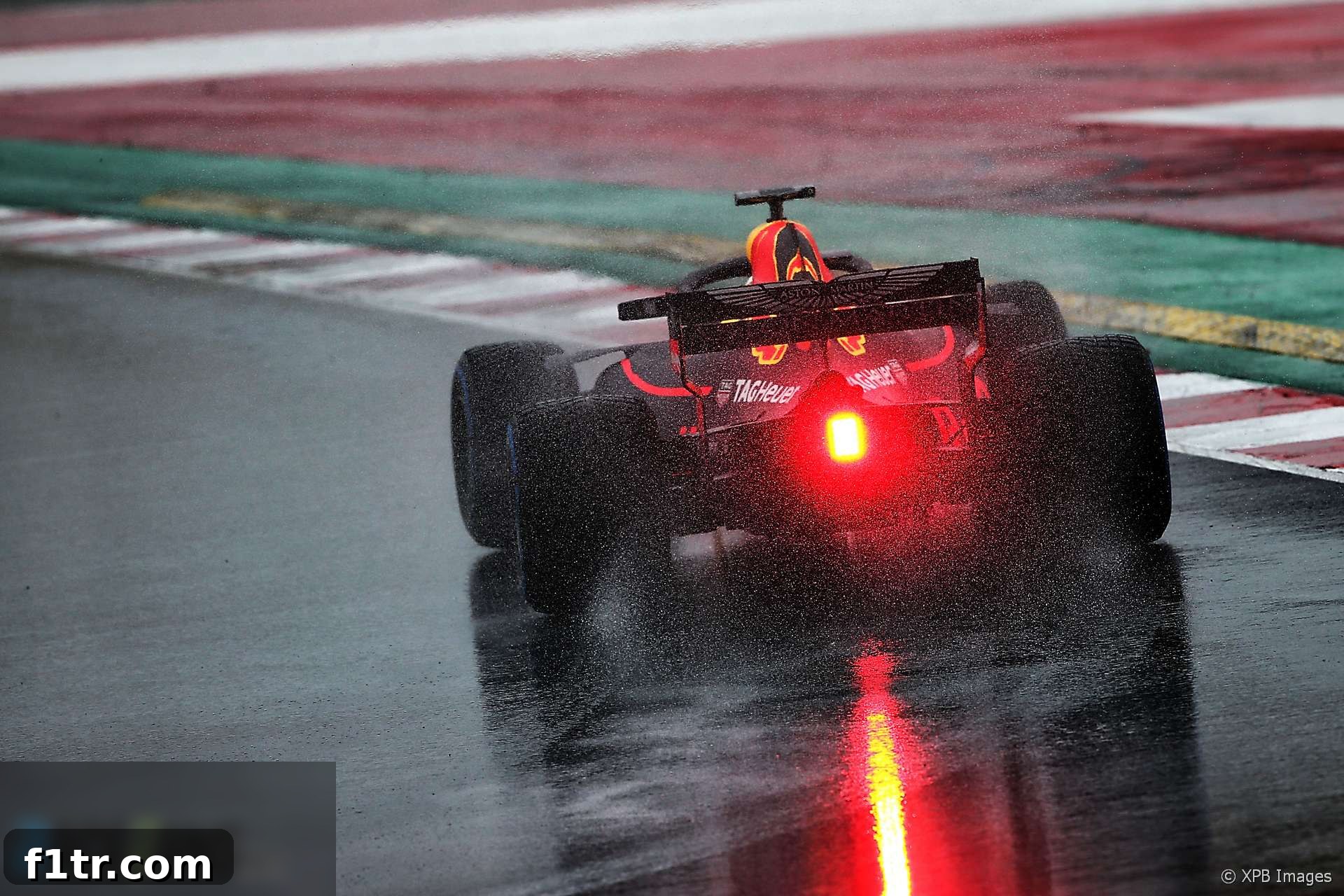
The highly anticipated pre-season testing at the Circuit de Catalunya, a critical phase for all Formula 1 teams, faced an unexpected and significant setback due to severe weather conditions. Wednesday’s session was largely a washout, significantly curtailing valuable track time and leaving teams with a considerable challenge. With no agreement reached to extend the pre-season test schedule, this disruption meant a full “one-eighth less testing” was available, a crucial loss in the tight schedule leading up to the 2018 F1 season.
The conditions at the Spanish circuit were far from ideal for high-performance testing. Poor weather ensured the track was open for a mere six hours, with only about half of the teams daring to send their cars out. Air temperatures struggled to rise above 2 degrees Celsius, creating an icy atmosphere, while the track remained persistently wet throughout the entire day. These challenging circumstances severely limited the type and quality of data that could be collected, impacting everything from aerodynamic evaluations to tire performance assessments and long-run reliability checks.
The impact of this weather-induced disruption on team preparations for the 2018 F1 season cannot be overstated. Pre-season testing is the only real opportunity for teams to validate their designs, understand the nuanced behavior of their new cars, and gather essential data before the championship battle begins. Every hour on track is meticulously planned to collect crucial information on everything from engine mapping and aerodynamic efficiency to suspension setups and tire degradation. Losing a full day, especially under such extreme and unrepresentative conditions, is a significant blow to the meticulously crafted testing programmes.
James Allison, the technical director for Mercedes, articulated the frustration shared across the paddock. His team, known for its precision and thoroughness, opted not to send their car out on the snow-hit track, deeming the conditions unsuitable for meaningful data collection. “We now have one-eighth less testing available to us,” Allison remarked, highlighting the immediate and tangible impact of the lost day. This reduction necessitates a complete overhaul of pre-existing schedules, forcing teams to cram eight days’ worth of critical work into just seven.
Allison further elaborated on the strategic adjustments required: “So we shuffle our programme around and try to fit all the work we need to do into seven days instead of eight. Winter testing is always tight, but this is only because you’re trying to achieve as much as possible in the time available. There’s just slightly less time available now. It is the same challenge for all the teams, so we take it on the chin and move on.” This pragmatic approach underscores the resilience and adaptability required in Formula 1. Teams must swiftly re-prioritize, potentially sacrificing less critical tests to focus on fundamental aspects like reliability, basic setup verification, and core performance assessments. For a top team like Mercedes, this means re-allocating highly specialized personnel and resources, a complex logistical undertaking.
The unique conditions posed additional challenges beyond merely reducing track time. Cold and wet tracks prevent tires from reaching their optimal operating temperatures, rendering data on tire performance and degradation largely irrelevant for typical race conditions. Furthermore, aerodynamic evaluations are severely compromised, as the car behaves differently in wet conditions compared to dry, making it difficult to assess new aero packages effectively. This meant that even for the teams that ventured out, the data gathered might have been of limited use for dry-weather performance analysis, adding another layer of complexity to their winter testing programmes.
Smaller teams often feel the pinch of such disruptions even more acutely. Sauber, for instance, managed a single installation lap with Marcus Ericsson at the wheel before retreating to the garage. For a team with more limited resources and a greater need for track time to develop their car and integrate new components, losing an entire day can be devastating. As a direct consequence of the lost track time, Sauber adjusted its driver line-up for the subsequent day. Ericsson was now slated to run the car in the morning, handing over to Charles Leclerc in the afternoon, who was originally scheduled to drive for the entire day. This change reflects a desperate attempt to maximize mileage for both drivers, particularly for a rookie like Leclerc, for whom every lap is invaluable for learning the car and the demands of F1.
Ferrari, another front-running team, approached the situation with a different strategy. Kimi Raikkonen did not appear in the Ferrari during Wednesday’s test, but the Italian team stated that they were not making any changes to their pre-planned schedule as a result of the weather. Sebastian Vettel was confirmed to drive the following day and on the first and third days of the next week’s test, with Raikkonen taking the other two. This decision suggests Ferrari either had a more flexible testing programme that could absorb the loss, or that their objectives for that specific day were less critical or could be achieved in alternative ways. It could also indicate confidence in their initial data collection and car performance, allowing them to stick to their original plan without significant modifications, unlike some of their competitors.
The inability to extend the pre-season testing further amplified the problem. While an extension might seem like a straightforward solution, it involves significant logistical hurdles, including track availability, the demanding schedules of team personnel, freight and travel arrangements, and potential clashes with other F1 or motorsport events. The F1 calendar is a tightly choreographed sequence, and even a slight alteration can create a ripple effect. Thus, teams were forced to accept the reduction and make the most of the remaining days, applying immense pressure to optimize every single minute of track time.
This weather-interrupted F1 winter testing session served as a stark reminder of the unpredictable challenges teams face in their relentless pursuit of performance. While the loss of track time was a collective setback, the differing strategies employed by teams like Mercedes, Sauber, and Ferrari highlighted the varied resources, priorities, and adaptability across the grid. The remaining days of testing would now be even more critical, as teams scrambled to gather the necessary data, refine their car setups, and ensure reliability before the 2018 F1 season officially kicked off. The pressure was on to transform every remaining lap into meaningful progress, hoping to overcome the early season hurdles imposed by Barcelona’s uncooperative weather.
Don’t miss anything new from RaceFans
Follow RaceFans on social media to stay updated with the latest news, analyses, and insights from the world of Formula 1. Ensure you’re always in the loop regarding team developments, driver performances, and critical season updates.
- Join RaceFans on Facebook
- Follow RaceFans on Twitter
- Get daily email updates from RaceFans
2018 F1 season
- F1 feared “death knell” for Drive to Survive after Ferrari and Mercedes snub
- McLaren staff told us we were “totally crazy” to take Honda engines in 2018 – Tost
- ‘It doesn’t matter if we start last’: How Red Bull’s junior team aided Honda’s leap forward
- Honda’s jet division helped F1 engineers solve power unit problem
- McLaren Racing losses rise after Honda split
Browse all 2018 F1 season articles