Max Verstappen’s Tuscan Grand Prix Nightmare: Engine Failure Overshadows Opening Lap Crash
The highly anticipated inaugural Tuscan Grand Prix at the picturesque Mugello circuit promised a spectacle of high-speed racing and strategic battles. For Red Bull Racing’s star driver, Max Verstappen, however, the event quickly spiraled into a familiar nightmare. Hopes of challenging the dominant Mercedes team were extinguished mere seconds after the lights went out, not by a daring overtaking maneuver or a misjudgment in a corner, but by a crippling engine failure. It was a cruel twist of fate that saw Verstappen retire from the race on the very first lap, involved in a multi-car incident that was, in his own words, a direct consequence of his power unit’s unreliability. This article delves into the frustrating events of the Tuscan Grand Prix, exploring Verstappen’s perspective on the repeated mechanical failures and their significant impact on his 2020 Formula 1 campaign.
The Dramatic Start and Unfortunate Collision
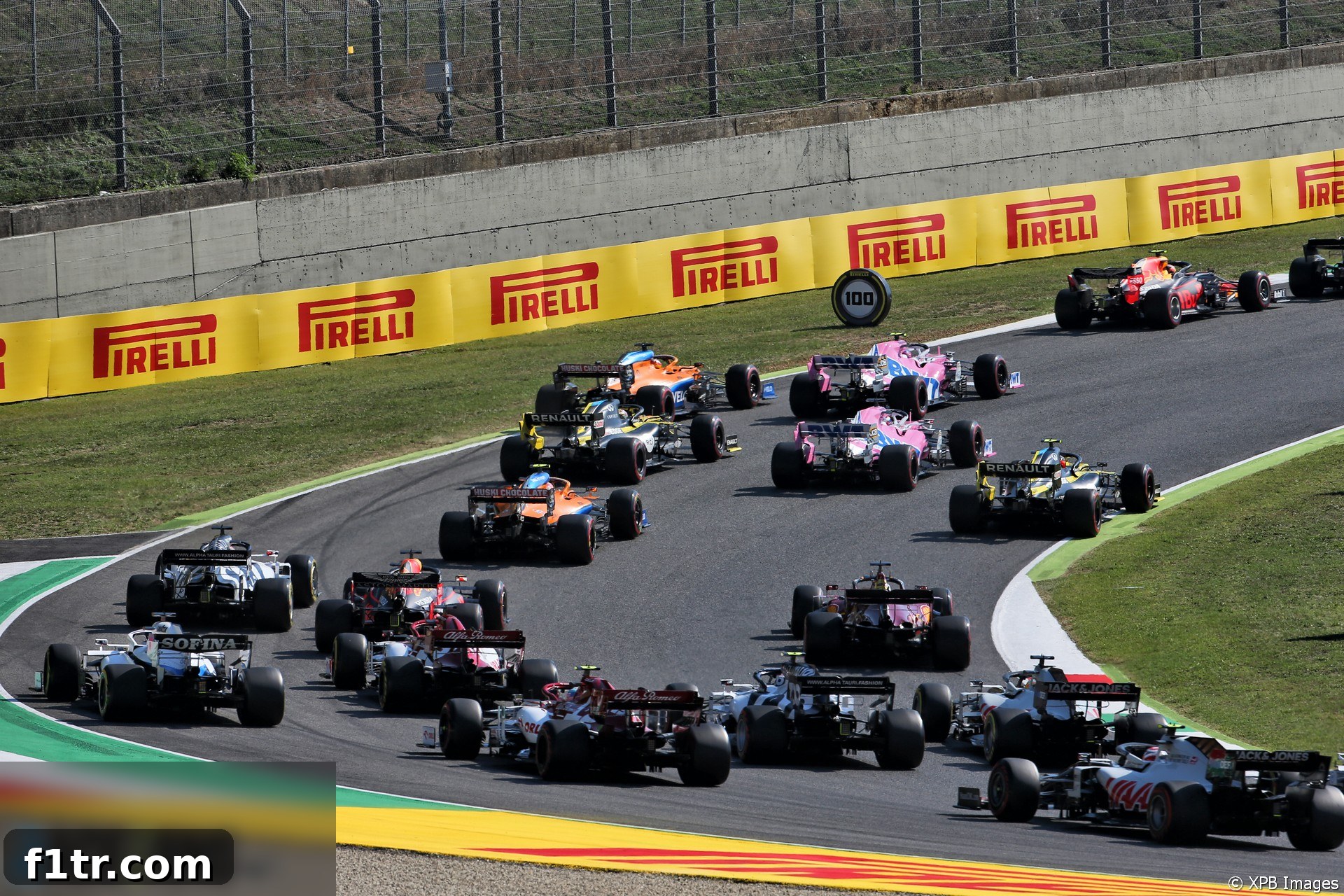
The atmosphere at Mugello was electric, even without spectators, as the grid prepared for the historic Tuscan Grand Prix. As the cars launched off the line, the roar of engines filled the air, but for Max Verstappen, that roar quickly turned into a silent dread. As he accelerated away from his P3 grid slot, the Red Bull RB16 immediately lost power, a critical failure that left him vulnerable and helpless in the midst of a charging pack. His car, suddenly bereft of its vital horsepower, became an obstacle rather than a competitor. This instantaneous loss of momentum created a dangerous ripple effect behind him. Caught in the escalating chaos, Verstappen’s stricken car was first tagged by Pierre Gasly, the AlphaTauri driver, and then subsequently impacted by Kimi Räikkönen’s Alfa Romeo as drivers frantically tried to react to the unexpected slowdown. The collision, though not severe enough to cause major damage had his car been moving at racing speed, was sufficient to end his race prematurely, pushing him into the gravel trap at Luco, the second corner. It was a devastating end to what had started with such promise.
A Lingering Problem: The Engine’s Betrayal
Verstappen’s frustration was palpable, and it stemmed not from the unavoidable crash itself, but from the persistent problem that preceded it. He revealed that the engine issue was not entirely unforeseen; he had reported a problem with his Honda power unit as early as the reconnaissance lap on his way to the grid. The Red Bull technical team made frantic attempts to address the issue in the short window before the start of the race, but their efforts proved futile. “It wasn’t [fixed],” Verstappen stated after his retirement. “Already on the formation lap the engine stalled.” This admission painted a clear picture of a problem that had merely been temporarily masked, only to resurface with brutal efficiency at the most critical moment. As he went flat out for the race start, the engine experienced a “similar problem” to what he had encountered just a week prior at the Italian Grand Prix in Monza. “There was no power there,” he explained, highlighting the critical reliability lapse that has plagued his recent races.
More Than Just a Crash: The Deeper Disappointment
For a driver of Verstappen’s caliber, known for his aggressive racing and unwavering determination, a race-ending collision might typically be the primary source of disappointment. However, in Mugello, his feelings were unequivocally directed elsewhere. “I don’t even know what happened,” he said of the impact itself. “I just got hit from behind. I’m not disappointed about that, we shouldn’t even be in that position. It’s just really disappointing that again we have a retirement.” This candid remark underscored the magnitude of his exasperation. The crash was merely a symptom; the engine failure was the disease. This recurring reliability issue meant that the potential for a strong result, or even a challenge for victory, was snatched away before the race had truly begun. For a driver who has consistently demonstrated his ability to extract every ounce of performance from his machinery, being denied the chance to compete due to mechanical shortcomings is arguably the most bitter pill to swallow. His final sentiment, “I’m really not happy at the moment but you can’t change it,” perfectly encapsulated the helplessness and raw frustration of the moment.
Red Bull’s 2020 Reliability Woes
The 2020 Formula 1 season has been a challenging one for Red Bull Racing, despite moments of brilliance. While their primary rivals, Mercedes, have consistently demonstrated unparalleled pace and bulletproof reliability, Red Bull and their Honda power units have faced an uphill battle. Verstappen’s retirement at Mugello marked his second DNF (Did Not Finish) in consecutive races due to engine-related problems, a deeply concerning trend for a team with championship aspirations. The lack of power and the subsequent stalling issues reported by Verstappen point to fundamental vulnerabilities within the Honda power unit. For a team aiming to close the gap to Mercedes, reliability is just as crucial as outright speed. These mechanical failures are not only costing valuable championship points for Verstappen and the team but are also eroding confidence and momentum. Each retirement adds to the pressure on Honda to deliver a more robust and dependable engine package, one that allows Red Bull to consistently fight at the front without the looming threat of mechanical failure.
Impact on the Championship Standings
In a condensed and intense 2020 F1 season, every race and every point carries immense weight. Max Verstappen’s two consecutive retirements due to engine issues have delivered a significant blow to his drivers’ championship hopes. While challenging Lewis Hamilton for the title was already an ambitious task given Mercedes’ dominance, these DNFs have further widened the points gap, making his path to the championship even more arduous. These lost opportunities are also detrimental to Red Bull Racing’s position in the Constructors’ Championship. Every point squandered due to reliability concerns makes it harder to secure the lucrative second-place finish, impacting not just prestige but also financial benefits. The team cannot afford such setbacks, especially when their rivals are demonstrating such consistent performance. The need for immediate and effective solutions to these reliability issues becomes paramount if Red Bull intends to make a stronger challenge in the remaining races of the season and, crucially, in future campaigns.
Mugello’s Maiden F1 Voyage and Verstappen’s Missed Opportunity
The Tuscan Grand Prix was a landmark event, marking Mugello’s debut on the Formula 1 calendar. The high-speed, flowing circuit, nestled in the stunning Tuscan countryside, was highly praised by drivers for its challenging corners and exhilarating characteristics. It presented a unique opportunity for teams and drivers to make their mark on a new track. For Max Verstappen, Mugello held the promise of being a circuit where his aggressive driving style could shine, potentially allowing him to extract an advantage over his competitors. Starting from third on the grid, he was in an excellent position to challenge for a podium finish, or perhaps even contend for victory if circumstances aligned. The engine failure at the very start not only robbed him of this opportunity but also prevented fans from witnessing what could have been another thrilling performance from the Dutch prodigy on a virgin F1 circuit. It was a missed chance to make history for all the wrong reasons.
The Road Ahead: Solutions and Resilience
As the Formula 1 season progresses, the onus is now firmly on Red Bull Racing and Honda to address these critical reliability concerns with urgency. The team’s ambitions extend beyond merely competing; they aspire to win championships. To achieve this, a consistently reliable power unit is non-negotiable. The technical teams will undoubtedly be working tirelessly to diagnose the root cause of the recurring engine issues and implement robust solutions. For Max Verstappen, the challenge lies in maintaining his focus and resilience despite the repeated setbacks. His talent and speed are undeniable, but even the most gifted drivers are powerless without a dependable machine beneath them. The ability to bounce back from such frustrations, to remain motivated and continue pushing the development of the car, will be crucial. The motorsport world will be watching closely to see how Red Bull and Honda respond to these latest challenges, hoping that future races will see Verstappen battling for wins, unhindered by mechanical woes.
The Tuscan Grand Prix proved to be a bitter pill for Max Verstappen and Red Bull Racing. The immediate and frustrating retirement due to a persistent engine problem underscored the challenges faced by the team in their quest for championship glory. While the collision that ended his race was an unfortunate consequence, Verstappen’s profound disappointment lay squarely with the reliability of his power unit. As the 2020 season continues its relentless pace, the pressure intensifies on Honda to deliver a truly robust and reliable engine. For Verstappen, a driver known for his relentless pursuit of victory, the hope remains that future races will allow him to showcase his formidable talent without the shadow of mechanical failures, enabling him to fight at the very sharp end of the grid where he unequivocally belongs.
For more detailed coverage and analysis of the 2020 Formula 1 season and the Tuscan Grand Prix, explore our archives for related articles and insights.