F1’s Evolving Stance on Track Limits: Hulkenberg’s Bahrain Penalties Signal a Nuanced Approach
The opening round of the 2023 Formula 1 season in Bahrain not only delivered thrilling racing but also unveiled a significant development in how the sport’s regulations are applied. Haas driver Nico Hulkenberg, marking his anticipated return to a full-time F1 seat, found himself at the epicenter of this change. He received cumulative time penalties for exceeding track limits but, critically, no penalty points on his Super Licence. This decision by the race stewards represents a notable departure from recent practices and signals a potentially more pragmatic and driver-friendly approach to minor infringements, addressing a long-standing point of contention within the paddock. The incident has ignited discussions about the delicate balance between strict rule enforcement, fair competition, and the professional integrity of the drivers, ultimately pointing towards a more adaptive interpretation of what constitutes a penalizable offense in modern Formula 1.
Hulkenberg’s Bahrain Ordeal and the Rule Enforcement
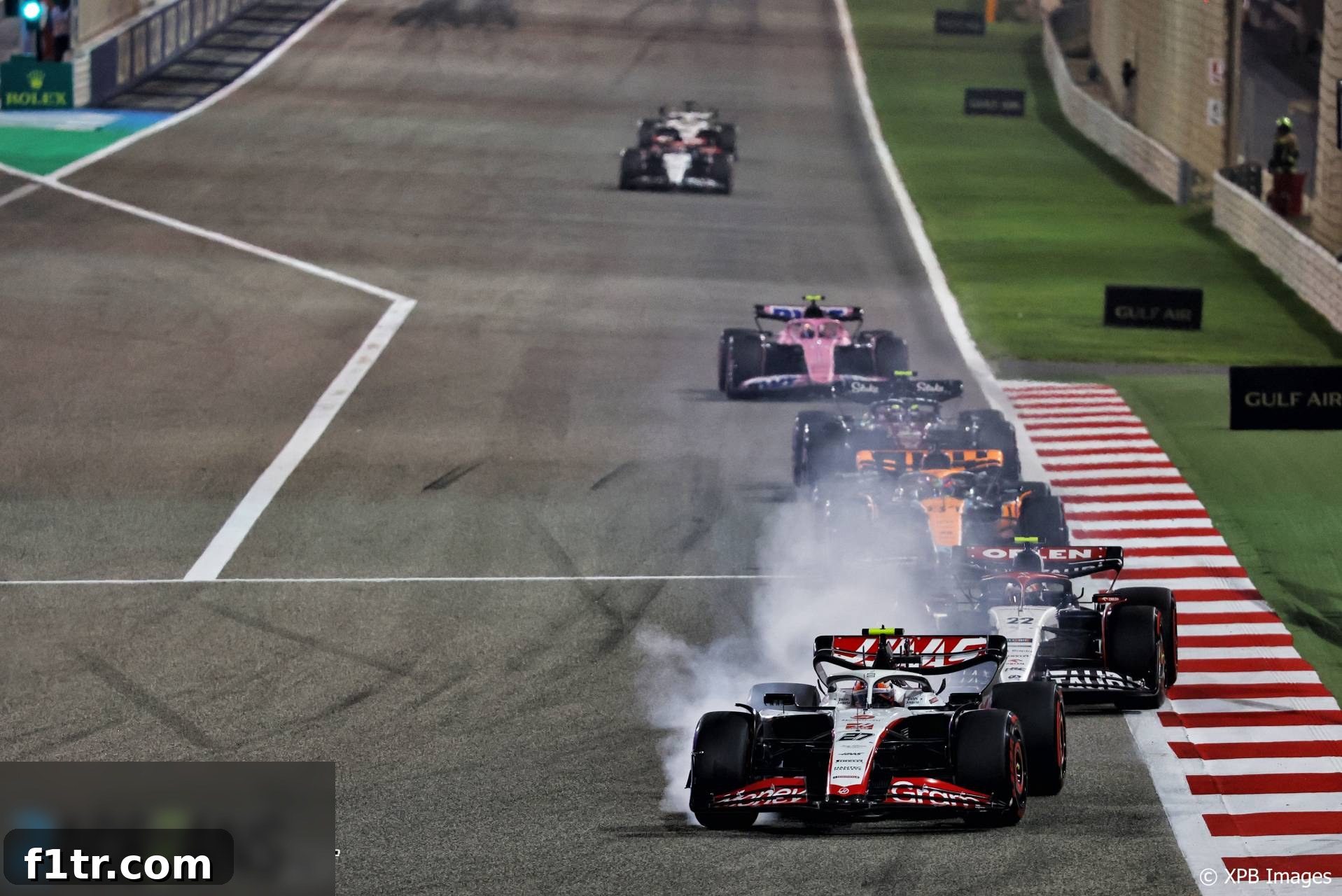
Nico Hulkenberg’s Grand Prix weekend began with promising pace, yet the race itself was punctuated by repeated infractions of track limits. The experienced German driver was found to have left the track “without a justifiable reason” on no fewer than five separate occasions during the Bahrain Grand Prix. The enforcement process followed a tiered approach, as outlined in the race director’s notes for the event. After his third violation, Hulkenberg was shown the black-and-white flag, a formal warning for unsporting conduct, serving as a final caution before more severe penalties are applied. However, Hulkenberg continued to push the boundaries, leading to a five-second time penalty after his fourth transgression. A fifth violation later in the race compounded his issues, resulting in an additional 10-second penalty, which was applied to his total race time after the checkered flag. Despite these cumulative time penalties significantly impacting his final classification, the critical detail that captured attention was the unprecedented absence of penalty points being added to his Super Licence, a stark contrast to previous seasons where similar offenses would have incurred such a penalty.
Understanding Track Limits in Formula 1
Track limits have been a perennial source of debate and controversy in Formula 1 for decades. At its core, the rule is seemingly simple: drivers must keep all four wheels within the white lines that delineate the edge of the circuit. The rationale behind this rule is multi-faceted and crucial to the sport’s integrity. Firstly, it ensures fair play, preventing drivers from gaining an unfair advantage by running wide and utilizing asphalt run-off areas to carry more speed through corners than is genuinely possible on the actual racing surface. Secondly, it serves as a vital safety measure, designed to prevent cars from running into potentially dangerous areas, gravel traps, or barriers at high speed, thereby reducing the risk of accidents. However, the interpretation and consistent enforcement of this rule have proven notoriously difficult. Modern circuits, often featuring vast asphalt run-off areas like those found at the Bahrain International Circuit, frequently tempt drivers to test these limits. This dynamic makes consistent monitoring and punitive action a complex challenge for race control and stewards. The blurred lines between intentional gain and genuine error, especially in the intense heat of battle, have often led to frustration among competitors and fans alike. The constant scrutiny, sometimes corner by corner, has occasionally overshadowed the pure spectacle of racing, turning focus onto the minutiae of millimeter-perfect precision rather than daring overtakes and strategic battles.
The Contentious Penalty Point System for Minor Infringements
The FIA’s penalty point system was initially introduced to deter dangerous driving and repeated serious infringements, aiming to ensure high standards of conduct and safety on track. Drivers accumulate points for various offenses, and reaching 12 penalty points within a 12-month period automatically results in a one-race ban. While universally accepted for severe safety breaches or flagrant disregard of rules, its application to minor infringements like track limits has drawn significant criticism from drivers across the motorsport spectrum. Many argue that a technical violation, which often results in only a minimal time gain, should not carry the same weight or consequence as, for example, causing a collision, an unsafe release from the pits, or other genuinely dangerous acts. They contend that accumulating points for such minor errors unfairly jeopardizes their Super Licence and their ability to compete, particularly when these incidents are frequently a result of pushing the car to its absolute limit rather than deliberate dangerous intent. The psychological burden of having penalty points on their license for non-dangerous mistakes has been a recurring theme in driver briefings and discussions.
Last season provided several high-profile examples of this frustration. Drivers such as Lando Norris, Pierre Gasly, Zhou Guanyu, and Sebastian Vettel all incurred single penalty points for track limits violations during the Austrian Grand Prix. These incidents, while seemingly minor in isolation, contribute to a cumulative total that could potentially sideline a driver for an entire race. The concerns were not limited solely to Formula 1. In Formula 2, the primary feeder series for F1, the severity of the rule was even more evident. Last year, three F2 drivers received one-race bans after accumulating 12 penalty points, with a significant portion of these points being issued for track limits abuses. Oliver Caldwell’s case was particularly striking, as he amassed an astonishing seven penalty points in the Bahrain round alone, all of which were attributed to exceeding track limits. The stark reality of a young driver’s burgeoning career being significantly impacted by such regulations led F2 CEO Bruno Michel to openly express his view that giving drivers penalty points for track limits was “too harsh,” advocating strongly for a comprehensive re-evaluation of the rule. This collective outcry from drivers and senior figures within the motorsport community evidently did not fall on deaf ears, paving the way for the policy shift observed in Bahrain.
A Policy Shift: Relief for Drivers and Fairer Racing?
The decision to penalize Nico Hulkenberg with time penalties but without adding penalty points marks a significant and welcomed policy adjustment by the FIA race stewards. This change suggests a more nuanced and thoughtful understanding of the nature of track limits violations. Rather than viewing every infringement as an act worthy of points on a driver’s license, which can lead to disproportionate consequences, the stewards appear to be differentiating between incidents that genuinely compromise safety or fair play in a substantial way, and those that are primarily technical breaches that can be adequately addressed with immediate time penalties. For the drivers, this shift is undoubtedly a welcome relief. It allows them to push closer to the absolute limits of the circuit without the constant fear that a minor error, perhaps in a critical qualifying lap or a tight race battle, could lead to a ban several races down the line. This could potentially encourage more aggressive and exciting driving, as drivers might feel less constrained by the looming threat of accumulating penalty points for every millimeter over the white line. The psychological burden associated with the penalty point system for non-dangerous mistakes has long been a recurring theme in driver briefings, and this adjustment reflects a clear acknowledgment and response to their persistent concerns.
From the perspective of racing integrity, the time penalties themselves remain a powerful and effective deterrent. A five-second or ten-second penalty, applied during or after a race, can be race-deciding, effectively punishing drivers for gaining an illegal advantage and ensuring that regulations are upheld. The absence of penalty points simply means that the consequence is now more proportional to the nature of the offense, aligning the punishment more closely with the actual impact of the violation on the race. It signals a move towards a system where the “crime” fits the “punishment” more accurately, distinguishing between racing incidents that involve technical infringements and those that genuinely threaten safety or fair competition on a broader, more serious scale. This refinement in policy can lead to a more balanced and ultimately fairer competitive environment.
Striking a Balance: Consistency and the Fan Experience
The challenge for the FIA and race stewards now lies in maintaining consistency with this new approach across all circuits and races throughout the season. Each track presents its own unique challenges regarding track limits, with some corners being inherently more prone to violations than others due to their design and the speed at which they are taken. The objective clarity that comes from universally applied and understood rules is paramount for both competitors and the global fanbase. This policy adjustment represents a critical step towards refining the balance between strict rule enforcement, which is necessary for maintaining order and fairness, and allowing the pure racing spectacle to unfold without excessive intervention. It acknowledges that motorsport is a dynamic sport where drivers are constantly pushing the boundaries of physics and performance, often operating on the very edge of control.
The public’s perception of Formula 1’s regulations is also a significant factor. Frequent, seemingly arbitrary penalties for minor infractions can often detract from the enjoyment of the sport, leading to confusion, frustration, and a perception of over-regulation among viewers. By reserving penalty points for more serious offenses that genuinely impact safety or the integrity of the competition, the sport can maintain its credibility and ensure that the primary focus remains on the drivers’ exceptional skill, daring maneuvers, and the thrilling racing action, rather than endless debates about track boundaries. This evolution suggests a more collaborative and responsive approach between the governing body and the competitors, indicating a willingness to listen to feedback and adapt rules to better suit the modern era of racing. It’s a delicate dance between maintaining strict controls for safety and integrity, and fostering an environment where drivers feel empowered to perform at their peak without undue bureaucratic hindrance, ultimately enhancing the overall fan experience.
Conclusion: A Step Towards a More Nuanced Future
Nico Hulkenberg’s penalties in the 2023 Bahrain Grand Prix may well be remembered as a pivotal moment in the ongoing narrative of Formula 1 regulations. The decision to impose time penalties without additional penalty points for track limits violations marks a significant policy shift, demonstrating a willingness by the FIA to reconsider and adapt rules that have been a source of considerable frustration for drivers. This change suggests a more pragmatic, nuanced, and proportionate application of penalties, clearly distinguishing between technical infringements and more serious offenses that genuinely warrant license points. It is a welcome development that could foster a healthier spirit of competition, significantly reduce driver anxiety over minor errors, and ultimately lead to a more understandable and perhaps even more exciting spectacle for fans. While maintaining consistency across diverse circuits and race conditions will undoubtedly remain a challenge, this new direction indicates a proactive and forward-thinking effort to align regulations more closely with the realities of modern Formula 1 racing, signaling a potentially fresh and more balanced chapter in the sport’s complex regulatory framework.
2023 Bahrain Grand Prix Articles
- FIA no longer applying its limit on F1 cars ‘porpoising’
- Why F1’s 2023 tyres are requiring drivers to change their management style
- The familiar and unfamiliar problems holding McLaren back at the start of 2023
- ‘Not like a rookie’: How McLaren glimpsed Piastri’s potential in curtailed debut
- “I’m a shouty guy”: Tsunoda told to rein in “emotional” radio chatter
Browse all 2023 Bahrain Grand Prix articles