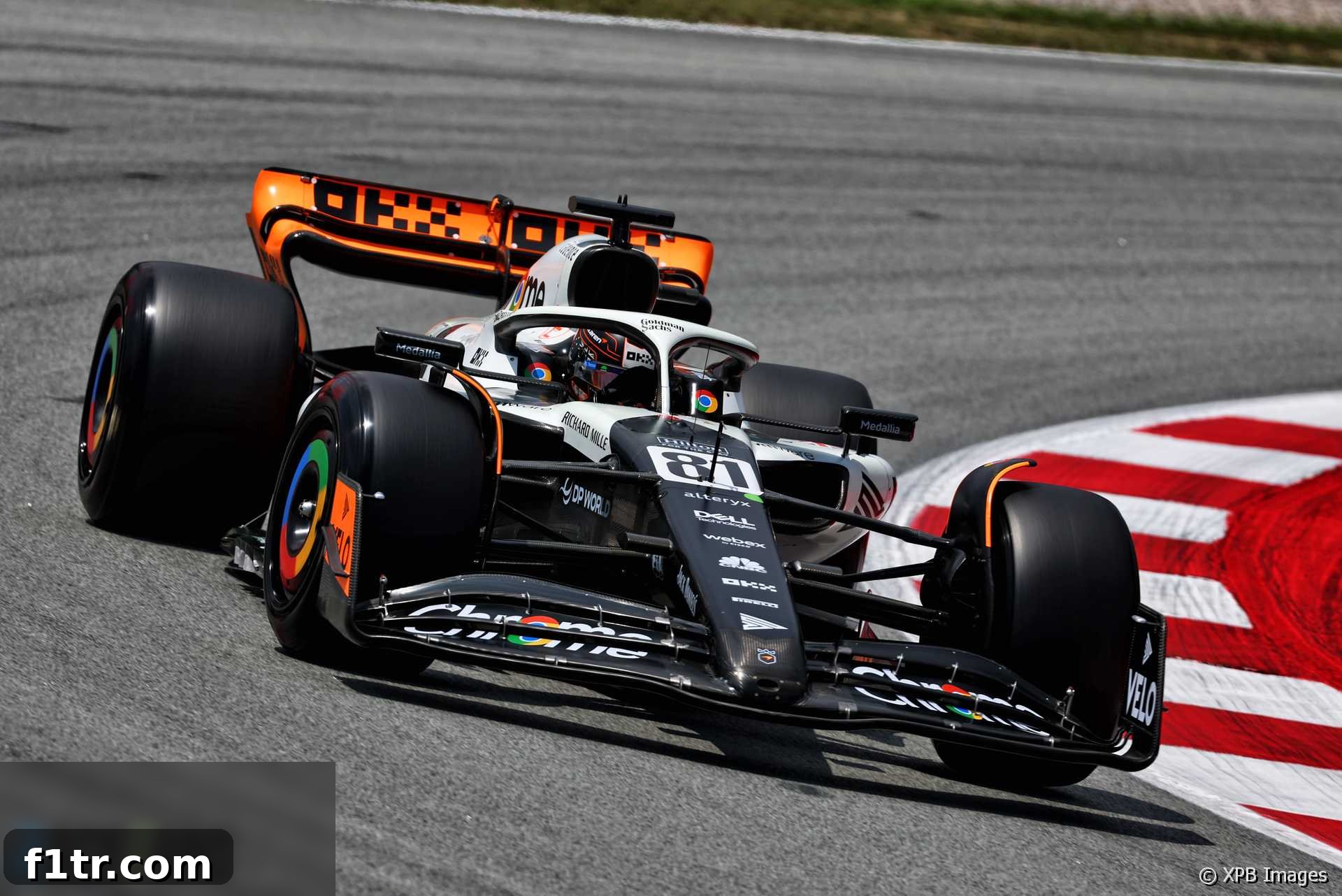
Formula 1 teams are once again grappling with the complex phenomenon of porpoising, a persistent aerodynamic challenge that unexpectedly resurfaced during the initial practice sessions of the Spanish Grand Prix. McLaren team principal Andrea Stella confirmed that teams would need to make crucial adjustments to their cars to counteract the bouncing, which several drivers reported through the circuit’s demanding high-speed sections.
The Unforeseen Return of an Aerodynamic Enigma at Catalunya
The Circuit de Barcelona-Catalunya, a familiar testing ground for Formula 1 teams, presented a unique challenge this year. The track reverted to its original, faster configuration for its final sector, reintroducing two high-speed right-hand corners where a slower chicane previously stood. It was precisely in these reinstated, rapid turns that McLaren, alongside other prominent teams, observed their cars suffering from significant porpoising.
This resurgence of porpoising is particularly noteworthy given that many teams, particularly Red Bull, were thought to have largely mitigated the issue that plagued the sport in 2022. The fact that it appeared with such prominence in Spain indicates a delicate balance between aerodynamic performance and stability, one that even the most technically advanced teams find challenging to master.
What is Porpoising? Understanding the Phenomenon
Porpoising, in Formula 1, describes an aerodynamic oscillation where the car rapidly bobs up and down at high speeds. This effect is primarily caused by the car’s interaction with the ground through its “ground effect” aerodynamics. As the car gains speed, the downforce increases, pulling it closer to the track. However, if the car gets too low, the airflow under the floor can stall or become disrupted, leading to a sudden loss of downforce. This causes the car to rise slightly, allowing the airflow to reattach, and then the downforce returns, pulling the car back down. This cyclical process creates a jarring, rhythmic bouncing motion that resembles the movement of a porpoise in water.
The introduction of new technical regulations in 2022, which heavily emphasized ground effect for generating downforce, brought porpoising back to the forefront of F1 engineering challenges. While ground effect is incredibly efficient for creating downforce, it comes with the inherent risk of this stability issue. The phenomenon is distinct from “bottoming out,” which occurs when the car’s floor physically hits the track surface, though the two often go hand-in-hand, with porpoising frequently leading to violent bottoming out.
For drivers, porpoising is more than just an inconvenience; it can significantly impact their performance and physical well-being. The constant jarring makes it difficult to maintain a consistent line, can blur vision, and leads to immense discomfort, contributing to fatigue over a race distance. From a car performance perspective, it compromises handling, reduces grip, and can lead to excessive tyre degradation, as the tyres are repeatedly loaded and unloaded, making it harder to manage their temperature and wear.
Driver Feedback: A Universal Concern on the Track
The immediate feedback from drivers underscored the widespread nature of the problem. McLaren’s Lando Norris was among the first to report it during the session, stating emphatically, “porpoising and bottoming into the last corner, it’s upsetting the car quite a bit.” His comments highlighted how quickly the phenomenon destabilizes the car, making precision driving incredibly difficult in a critical section of the circuit.
Mercedes driver George Russell, whose team famously struggled with severe porpoising throughout the majority of the 2022 season, also confirmed experiencing similar issues. He relayed to his race engineer, “A bit of bouncing on the entry to that last corner.” Despite Mercedes’ extensive efforts to address porpoising in their W14 challenger, its reappearance, even in a milder form, indicated that the challenge is deeply rooted in the aerodynamic principles governing the current generation of F1 cars, particularly under specific track conditions.
Perhaps most surprisingly, even Red Bull, a team largely credited with mastering the new technical regulations and effectively avoiding significant porpoising since their introduction, encountered the problem. Sergio Perez noted, “I’m starting to bounce as I go into the final corner.” Red Bull’s dominant performance in 2022 and 2023 was partly attributed to their ability to run their cars low to the ground without suffering from excessive porpoising, extracting maximum downforce. Perez’s feedback therefore sent a strong signal across the paddock: this was not merely a car-specific weakness but potentially a track-specific characteristic that could challenge all competitors.
Andrea Stella’s Insight: A Track-Specific Challenge Requiring Adaptation
McLaren team principal Andrea Stella’s analysis following the practice session brought crucial context to the reports. He emphasized the significance of Red Bull’s experience, telling reporters, “If we were alone here I would say that’s porpoising, we know you can have it in some places.” However, he continued, “But the fact that we heard the same coming from Red Bull as well I think highlights that it could be a track-specific element that all teams might have to deal with.”
Stella’s reasoning was sound: Red Bull had previously demonstrated a more robust understanding and solution for porpoising. Their encounter with the issue at the Circuit de Barcelona-Catalunya strongly suggested that the unique combination of the track’s high-speed corners, surface characteristics, and potentially the atmospheric conditions during the session, created an environment particularly conducive to the aerodynamic instability. This scenario implies that no team is entirely immune when faced with specific, challenging conditions.
The implications of this “track feature” are considerable. Stella elaborated, “So it could be a track feature, a challenge that certainly we have to deal with. We understand Mercedes and Red Bull have to deal with based on their comments. And could be a performance limitation because to deal with that you need to make some adjustments that might cost some performance somewhere else.” This statement highlights the precarious tightrope walk F1 engineers face: mitigating porpoising often requires compromises in other areas, such as ride height, suspension stiffness, or aero balance, all of which can translate into a loss of outright performance. The challenge then becomes finding the optimal setup that minimizes bouncing without sacrificing too much pace.
The Technical Nuances and Team Adaptations
Navigating the Aerodynamic Tightrope
Teams typically combat porpoising through a combination of mechanical and aerodynamic adjustments. These include increasing ride height to prevent the floor from getting too close to the ground, stiffening suspension components to reduce vertical movement, or modifying floor designs to make them less sensitive to airflow disruption. However, each of these solutions comes with inherent trade-offs. Raising the ride height, for instance, reduces overall downforce, impacting cornering speeds. Stiffer suspension can lead to a harsher ride and make the car less compliant over bumps, which might degrade tyre performance or compromise stability in other parts of the track. The ongoing engineering battle is to find that elusive sweet spot where the car is fast, stable, and predictable.
The Mercedes Saga: A Year of Learning
Mercedes’ journey with porpoising is arguably the most documented. Their W13 challenger in 2022 was severely affected, significantly hampering their championship aspirations. They spent much of that season trying to understand and mitigate the issue, making substantial design changes to their floor and suspension. While their 2023 car, the W14, has shown marked improvement, George Russell’s comments from Spain serve as a potent reminder that the inherent characteristics of their car design, or the specific demands of certain track features, can still expose them to the problem. Mercedes continues its quest to unlock the full potential of its ground-effect concept, and dealing with occasional porpoising flair-ups remains a critical part of that process.
Red Bull’s Unexpected Encounter
Red Bull’s success in 2022 and 2023 has been built on a car concept that appears remarkably stable and efficient, largely free from the porpoising woes that afflicted rivals. Their ability to run a very low ride height without triggering severe aerodynamic bouncing has been a key differentiator. Sergio Perez’s report from Spain, therefore, introduces an intriguing wrinkle. It suggests that even the most optimized designs have their limits when confronted with highly specific combinations of speed, track surface undulations, and corner profiles. This instance provides valuable data for Red Bull, forcing them to consider if the Spanish Grand Prix conditions are an outlier or a preview of challenges that might arise at other circuits with similar characteristics.
McLaren’s Continuous Pursuit of Stability and Pace
For McLaren, who are themselves in a significant development phase with their car, the porpoising issues observed at the Spanish Grand Prix add another layer of complexity. As they strive to climb up the grid, achieving consistent aerodynamic stability is paramount. Andrea Stella’s focus on understanding whether the issue is track-specific or symptomatic of broader car characteristics is crucial for their long-term development path. Every data point on porpoising, especially when other teams are affected, contributes to a collective understanding that drives continuous innovation within the sport.
Broader Implications for the F1 Season and Future Development
The reappearance of porpoising at the Spanish Grand Prix, particularly affecting teams that had seemingly overcome it, carries significant implications for the remainder of the Formula 1 season. It suggests that while progress has been made, the issue is not entirely eradicated and can still be triggered by specific track layouts or conditions. Teams will need to remain vigilant, constantly refining their car setups and aerodynamic packages to address potential bouncing without compromising their overall performance envelope. This continuous engineering battle between raw pace and stability is what makes Formula 1 such a compelling spectacle.
Furthermore, this event underscores the delicate nature of ground-effect aerodynamics. The quest for maximizing downforce by running cars as low as possible will always be balanced by the risk of unsettling the airflow and inducing porpoising. It will be interesting to observe how teams adapt their strategies for upcoming races, particularly at circuits known for high-speed corners or undulating surfaces. The insights gained from the Spanish Grand Prix will undoubtedly feed into ongoing research and development, shaping the evolution of F1 cars in the seasons to come.
Supporting Independent F1 Analysis
Engaging with high-quality, in-depth analysis is crucial for truly appreciating the intricate world of Formula 1. Independent journalism plays a vital role in bringing detailed insights and perspectives directly from the paddock. By supporting platforms dedicated to such content, fans can ensure the continued availability of comprehensive reporting and expert commentary. Many such platforms offer enhanced experiences, including ad-free browsing and exclusive content, allowing enthusiasts to delve deeper into the sport they love.
- Explore Supporter Benefits
- Frequently Asked Questions about Support
Further Insights from the Grand Prix
For more detailed coverage and in-depth analysis from the event, explore a range of articles focusing on various aspects of the Grand Prix weekend:
- Ben Sulayem raises safety concerns over “too many people on the grid” at races
- Why Ferrari say their change in design is the result of “discipline”, not “copying”
- Hamilton and Russell were seeking tow from Sainz when they collided – Mercedes
- Red Bull’s Spanish GP diffuser update was ‘inspired by rivals’ including Williams
- Why McLaren always doubted second-row start in Spain would lead to points finish
Browse all 2023 Spanish Grand Prix articles