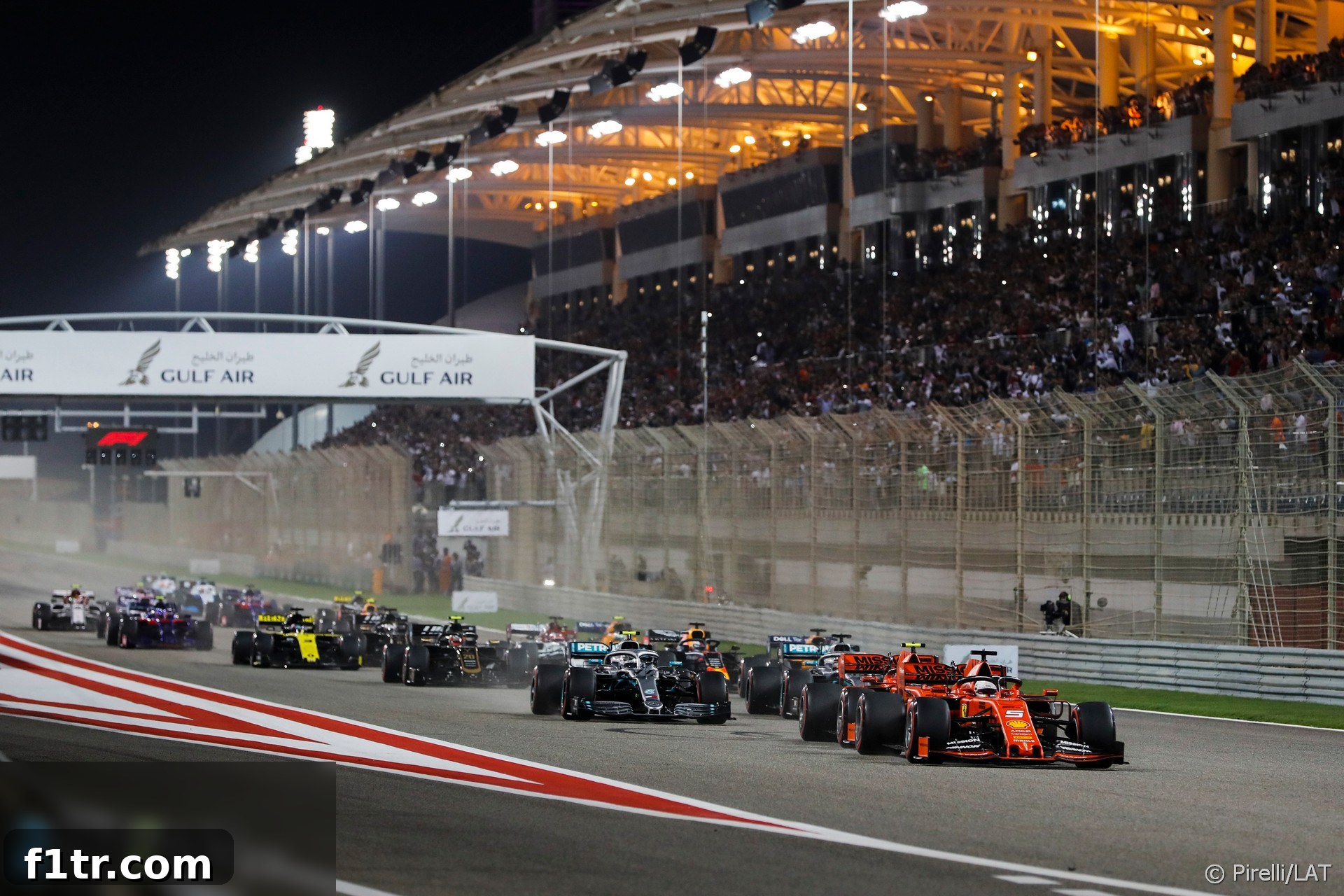
In a pivotal move that underscored Formula 1’s remarkable adaptability and innovative spirit, Michael Masi, the sport’s race director at the time, confirmed that the Bahrain International Circuit’s ‘Outer Circuit’ was fully capable of hosting a Grand Prix event. This significant announcement opened the door for a unique racing spectacle, offering a fresh challenge for teams and drivers while providing an exhilarating new experience for fans. The decision to potentially utilize an alternative track configuration at an existing venue highlighted F1’s proactive approach in navigating operational complexities, particularly relevant during challenging periods such as the global events of 2020.
The confirmation came after extensive evaluations, with Masi asserting that there were no regulatory hurdles preventing the premier motorsport series from competing on this distinctive layout. His statement, delivered to Speedcafe, clarified that the Outer Circuit possesses the requisite FIA Grade One status, a critical certification for any circuit aspiring to host a Formula 1 Grand Prix. This accreditation signifies that the track meets the highest international standards for safety, infrastructure, and operational efficiency, ensuring that it is fully equipped to handle the demands of Formula 1 machinery and the high-speed racing synonymous with the sport.
The concept of racing on the shorter, ‘oval-like’ Bahrain Outer Circuit was initially championed by Ross Brawn, Formula 1’s managing director of motorsport. Brawn’s vision was to explore novel ways to enhance the racing calendar, potentially by staging a second event at the Bahrain International Circuit using this distinct layout in addition to the traditional Grand Prix track. This strategy aimed to maximize the utility of established venues, reduce logistical burdens, and introduce varied racing challenges within a condensed schedule. The prospect of an F1 race on a circuit with characteristics reminiscent of an oval track sparked considerable excitement among enthusiasts, promising a departure from conventional Grand Prix layouts.
While the Bahrain Outer Circuit received the green light, it’s important to note that not all shorter track configurations at other renowned venues meet the stringent FIA Grade One requirements for Formula 1. For instance, iconic circuits like Silverstone, despite offering several alternative layouts such as its National and International configurations, do not possess the necessary Grade One license for these shorter variants. This distinction underscores the rigorous criteria applied by the FIA and the specific attributes of the Bahrain Outer Circuit that allowed for its approval. Michael Masi further elaborated on this, regretting that similar options were not available for circuits like Austria or other layouts at Silverstone. However, he expressed enthusiasm for the flexibility offered by tracks like Bahrain, seeing it as a valuable asset in exploring innovative approaches to event scheduling and racing formats.
The FIA Grade One status is not merely a bureaucratic formality; it is a comprehensive certification encompassing detailed safety assessments, track design specifications, medical facilities, marshalling posts, and technological infrastructure. Circuits must demonstrate robust safety barriers, ample run-off areas, state-of-the-art medical centers, and sophisticated race control systems. The fact that the Bahrain Outer Circuit met these exacting standards is a testament to the versatility and forward-thinking design of the facility, allowing it to adapt to different racing formats without compromising on safety or operational excellence.
At 3.543 kilometers (approximately 2.2 miles), the Bahrain Outer Circuit is significantly shorter than the full Grand Prix track, which measures around 5.4 kilometers (3.3 miles). This shorter length necessitated a substantial increase in the number of laps to meet Formula 1’s minimum race distance requirement of 305 kilometers (approximately 190 miles). For a race on the Outer Circuit, the lap count would be extended by around 30 laps, bringing the total to approximately 87 laps. This adjustment ensures that while the layout is different, the overall endurance and strategic demands of a Grand Prix remain consistent with F1’s established standards.
The FIA’s minimum length requirement for Formula 1 circuits is 3.5 kilometers. The Bahrain Outer Circuit just surpasses this threshold, making it one of the shortest circuits to host an F1 race in modern history, excluding special dispensations. To put this into perspective, Silverstone’s International Circuit, at 2.979 kilometers, falls short of this minimum, thus precluding it from hosting an F1 Grand Prix. Monaco, arguably F1’s most historic and unique venue, is an exception; its Grand Prix track measures 3.34 kilometers, but it is granted a special dispensation due to its rich heritage and unparalleled status within the sport. This highlights the FIA’s pragmatic approach, balancing strict regulations with the preservation of iconic events that contribute significantly to Formula 1’s legacy.
Racing on the Bahrain Outer Circuit presented a truly distinctive challenge for Formula 1 teams and drivers. Its “oval-like” nature, characterized by long straights and fast, sweeping corners, promised a high-speed spectacle with potentially more overtaking opportunities compared to the technical and winding Grand Prix layout. This track configuration puts a premium on aerodynamic efficiency, engine power, and tire management under sustained high-load conditions. Drivers would need to adapt their car setups, focusing on top speed and stability through fast corners, while strategists would contend with unique pit stop windows and fuel consumption calculations over the extended lap count. Such a race would not only test the limits of the cars but also the drivers’ ability to maintain focus and aggression over a greater number of laps at relentless pace.
The decision to utilize the Bahrain Outer Circuit was a prime example of Formula 1’s commitment to innovation and its ability to respond creatively to unforeseen circumstances. During the particularly challenging 2020 season, when global restrictions severely impacted the calendar, F1 demonstrated incredible flexibility by organizing multiple races at the same venue, often employing different track configurations where possible. This approach not only ensured the continuity of the championship but also delivered fresh and exciting racing narratives for fans worldwide. The success of such initiatives paved the way for future considerations of alternative layouts, showcasing a forward-thinking attitude that continues to shape the sport’s evolution.
Beyond the immediate context of the 2020 season, the precedent set by Bahrain’s Outer Circuit has broader implications for Formula 1’s future. It opens up discussions about maximizing existing infrastructure, potentially offering more diverse racing experiences without the need for constructing entirely new circuits. This adaptability could prove invaluable for expanding F1’s global reach, revisiting historic locations, or introducing varied race formats. By embracing circuit configurations that offer different characteristics, F1 can ensure that each event, even when held at a familiar location, brings a fresh set of challenges and excitement. The Bahrain Outer Circuit, with its unique blend of speed and strategy, exemplifies this innovative spirit, cementing its place as a symbol of Formula 1’s ongoing evolution.
In conclusion, Michael Masi’s confirmation regarding the Bahrain Outer Circuit’s suitability for Formula 1 racing was a landmark moment, reflecting the sport’s dynamic nature and its capacity for ingenuity. Backed by its impeccable FIA Grade One status and championed by figures like Ross Brawn, this unique circuit configuration offered a compelling alternative that delivered a thrilling and high-speed spectacle. It served as a testament to F1’s commitment to delivering compelling motorsport action, even under unprecedented circumstances, while setting a new standard for circuit adaptability and innovation within the pinnacle of motorsport.