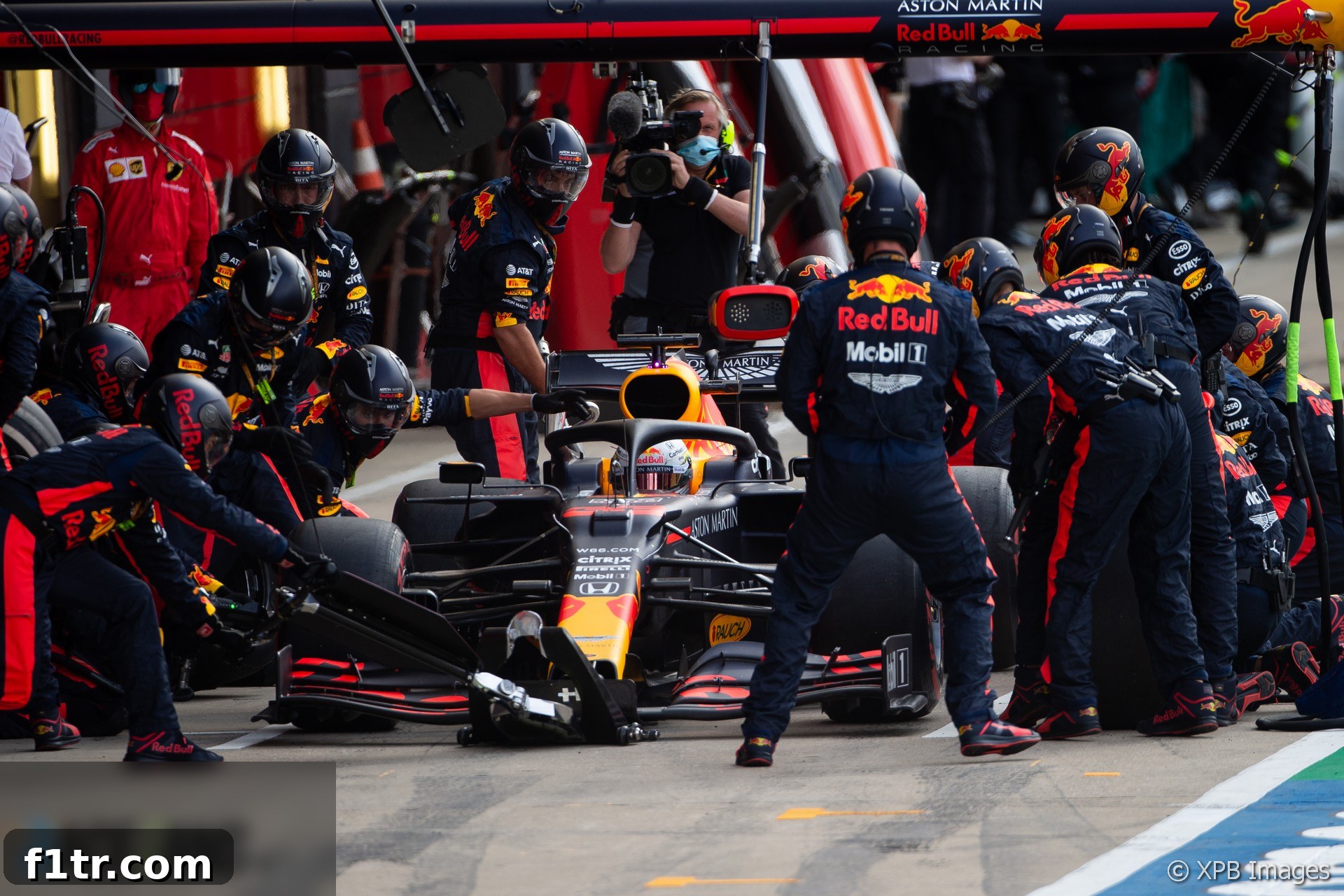
Max Verstappen’s second pit stop during the dramatic 2020 British Grand Prix was not merely a strategic gamble for an extra point, but a crucial safety measure to prevent a potential tyre failure, according to Red Bull team principal Christian Horner. This revelation sheds light on the high-stakes decisions made in the closing moments of a race that saw multiple front-runners succumb to tyre punctures, ultimately securing a valuable second-place finish for Verstappen and avoiding what could have been a catastrophic end to his race.
Advert | Become a Supporter & go ad-free
The British Grand Prix: A Race Defined by Tyres
The 2020 British Grand Prix at the iconic Silverstone circuit will forever be remembered for its thrilling and chaotic final laps, dominated by unexpected tyre failures. While Lewis Hamilton famously nursed his punctured Mercedes across the finish line to victory, and his teammate Valtteri Bottas and McLaren’s Carlos Sainz Jnr also suffered similar fates, Red Bull Racing found itself in a precarious position with Max Verstappen. The Dutch driver, who was running comfortably in second place, was called into the pits for a precautionary tyre change just two laps from the end. This decision, initially perceived by some as Red Bull sacrificing a potential victory for a bonus point, has since been justified by Horner’s candid post-race comments.
Horner’s Revelation: A Pre-emptive Strike Against Disaster
Christian Horner revealed the alarming condition of Verstappen’s tyres upon inspection, stating, “The tyre that came off the car had about 50 little cuts in it. So it’s been through debris.” This discovery painted a stark picture of the imminent danger Verstappen faced. Had Red Bull not intervened, the team strongly believes Verstappen would have suffered a similar, if not identical, tyre failure to those that plagued his rivals. The high-speed nature of Silverstone, with its demanding corners like Copse and Stowe, places immense stress on the tyres, making them particularly vulnerable to damage from debris scattered across the track.
The decision to pit Verstappen for fresh soft tyres with only two laps remaining allowed him to secure the fastest lap of the race and the associated bonus point. However, this move simultaneously meant he lost the track position that could have elevated him to a race win had Hamilton’s puncture occurred one lap earlier. For a team relentlessly chasing Mercedes, missing such an opportunity might seem frustrating. Yet, Horner underscored the team’s unwavering focus on driver safety and strategic foresight.
Strategic Foresight Versus Missed Opportunity
Horner articulated the difficult choice facing the Red Bull pit wall: “If we’d stayed out, we could have lost a second position with the same failure as Lewis, Carlos Sainz and Bottas. So it was right on the limit. We’ll be grateful to what we’ve got rather than what we potentially lost.” This statement perfectly encapsulates the fine margins and risk assessment inherent in Formula 1 strategy. While the allure of a potential victory is ever-present, securing a high-points finish and ensuring the car completes the race safely often takes precedence, especially when clear dangers are identified.
The widespread tyre issues across the grid were a significant talking point from the 2020 British Grand Prix. Valtteri Bottas’s tyre delamination effectively ended his podium challenge, while Carlos Sainz Jnr suffered a puncture that dropped him out of the points. The dramatic image of Lewis Hamilton battling his three-wheeled Mercedes to the finish line highlighted the treacherous conditions and the fragility of the Pirelli compounds under extreme loads. Red Bull’s swift action, therefore, proved to be an astute defensive strategy rather than an aggressive attacking one.
Lessons from Silverstone: Prioritising Safety and Points
In retrospect, Red Bull’s decision appears not just justified but imperative. The team’s engineers and strategists would have been monitoring tyre wear and potential damage meticulously, especially after witnessing incidents unfold with other competitors. The data indicating extensive cuts on Verstappen’s tyre provided irrefutable evidence that continuing without a change would have been an unacceptable risk. This pragmatic approach secured a crucial 18 points for Verstappen and Red Bull in the Constructors’ Championship, a result far superior to a potential DNF (Did Not Finish) or a dramatically reduced points haul.
Horner’s perspective on the outcome reflects a mature and realistic assessment of the situation: “You can either look at the glass being half-empty or being half-full. We’ve benefited from Bottas’s issues given they had a quicker car from ours today. We very nearly had the same issues ourselves.” This philosophy acknowledges the competitive nature of F1, where misfortunes for one team can indirectly benefit another, without necessarily celebrating a rival’s struggles. It reinforces the idea that in a sport where reliability and incident avoidance are paramount, simply reaching the finish line with a strong result can be considered a victory in itself.
Verstappen’s Consistent Performance in the 2020 Season
The 2020 Formula 1 season was a unique and challenging one, heavily impacted by the global pandemic. Amidst a compressed calendar and unprecedented logistical demands, Max Verstappen consistently demonstrated his prowess and delivered strong results for Red Bull. His second-place finish at the British Grand Prix was another testament to his ability to extract maximum performance from the car and seize opportunities, even in the face of dominant Mercedes machinery. While Red Bull was striving to close the gap to Mercedes, securing podium finishes was a vital part of their championship aspirations.
The team’s decision to pit Verstappen, though costing him a fleeting chance at victory, ultimately reinforced Red Bull’s reputation for shrewd strategy and proactive risk management. It showed a commitment to protecting their assets – both driver and car – and securing the best possible outcome under challenging circumstances. This race served as a stark reminder of the unpredictable nature of motorsport, where mechanical integrity and strategic brilliance are just as crucial as raw pace.
“If Hamilton had the issue a lap before we’d all be putting ourselves on the back. So it’s never good to benefit from others’ misfortune but I don’t think we can be upset with what happened today,” Horner concluded. His remarks perfectly encapsulate the bittersweet nature of the result: a missed chance for an improbable win, but a thoroughly justified strategic decision that averted disaster and secured a strong second place. The 2020 British Grand Prix will long be remembered not just for its dramatic finish, but for the strategic brilliance and proactive safety measures that defined Red Bull’s approach.
Advert | Become a RaceFans supporter andgo ad-free
2020 F1 Season: Further Reading
- Grosjean to make F1 test return tomorrow for first time since Bahrain horror crash
- Pictures: Wrecked chassis from Grosjean’s Bahrain fireball crash to go on display
- Bottas vs Rosberg: Hamilton’s Mercedes team mates compared after 78 races each
- F1 revenues fell by $877 million in Covid-struck 2020 season
- Hamilton and Mercedes finally announce new deal for 2021 season
Browse all 2020 F1 season articles