Nyck de Vries’s Stellar F1 Practice Display Earns High Praise, Yet Mercedes Sees No Immediate Seat
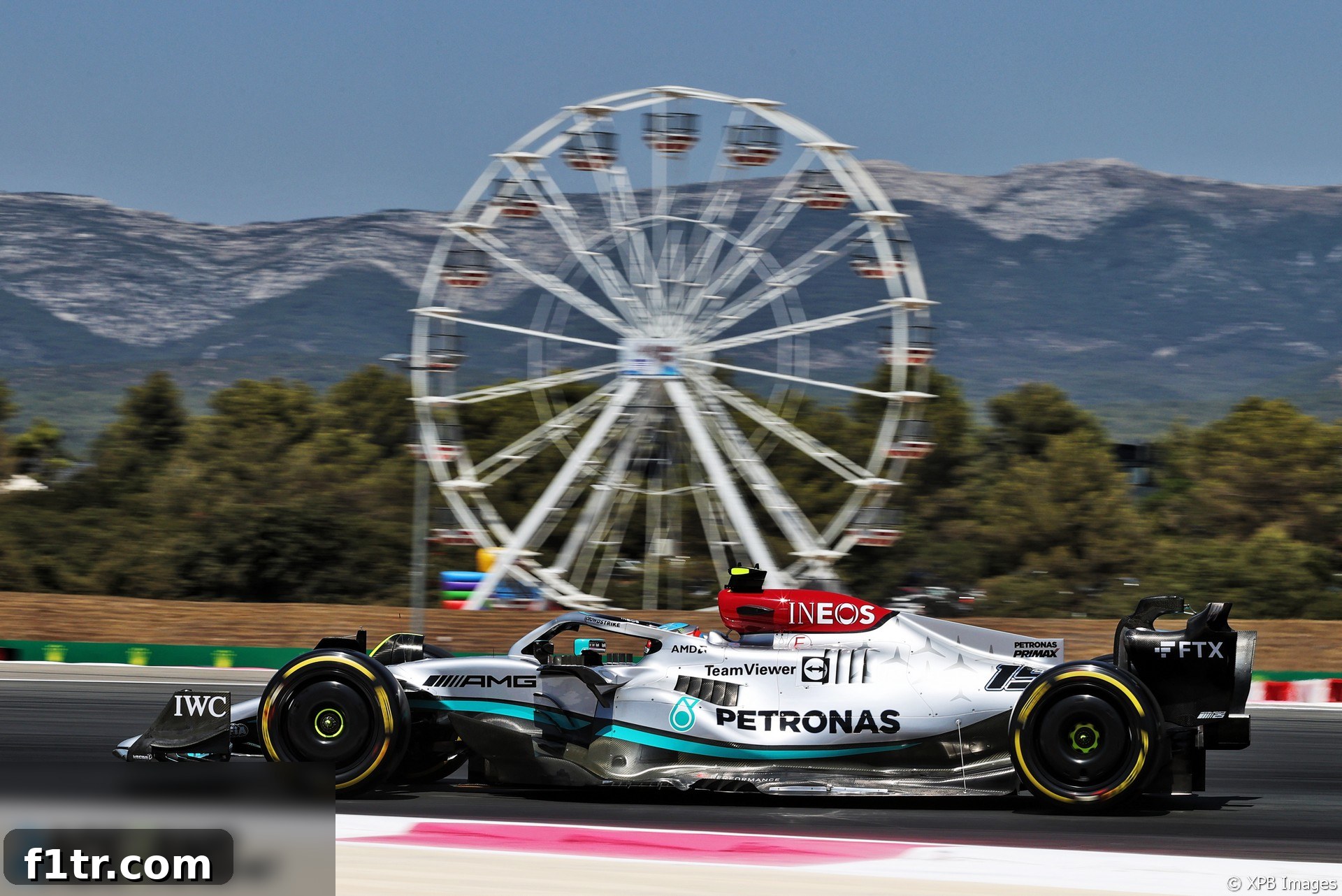
In the high-stakes world of Formula 1, moments of brilliance from emerging talents often ignite hope, but the path to a full-time race seat remains notoriously challenging. This reality was underscored recently as Mercedes team principal Toto Wolff lauded Nyck de Vries’s exceptional performance during a practice session for the French Grand Prix. De Vries, a driver with an impressive motorsport resume, stepped into Lewis Hamilton’s W13 for the first practice session, demonstrating pace and professionalism that caught the attention of the paddock.
Advert | Become a Supporter & go ad-free
During the opening practice at Circuit Paul Ricard, Nyck de Vries commanded the Mercedes-AMG Petronas F1 car with remarkable confidence. Substituting for seven-time world champion Lewis Hamilton, de Vries delivered a composed and swift outing, registering a best lap time of 1’35.426. This impressive effort positioned him ninth-fastest overall, a mere 0.545 seconds behind his seasoned Mercedes teammate, George Russell. Such a narrow margin against a consistent front-runner like Russell speaks volumes about de Vries’s inherent speed and adaptability, particularly considering his limited track time in a current-generation F1 car.
Mercedes team principal Toto Wolff was unequivocal in his praise following the session. “Today was very, very good,” Wolff told Sky Sports, visibly impressed by de Vries’s contribution. Adding an intriguing layer to the session, Lewis Hamilton, who observed from the team garage, actively engaged in coaching de Vries. Wolff elaborated, “It was interesting because he was coaching Nick, he was helping him with the overlays and it was quite interesting to see.” This dynamic between the veteran champion and the aspiring talent highlights the collaborative spirit within Mercedes and underscores the value they place on developing drivers, even if an immediate F1 seat isn’t on the horizon.
A Mandate for Emerging Talent: The FIA’s Young Driver Initiative
Nyck de Vries’s participation in the French Grand Prix practice session was not merely an opportunistic outing but a fulfillment of a new FIA requirement for the 2022 season. This mandate stipulates that all Formula 1 teams must run drivers with minimal prior F1 experience during at least two practice sessions across the championship year. The rule aims to provide invaluable track time and exposure for promising young drivers who might otherwise struggle to gain experience in top-tier machinery. De Vries, a prime candidate for such opportunities, previously drove for Williams during first practice for the Spanish Grand Prix earlier in the season, where he impressively out-paced the team’s regular driver, Nicholas Latifi, further cementing his credentials.
These practice sessions are crucial proving grounds. They allow teams to assess potential future talents under competitive conditions, evaluating not just raw speed but also their ability to integrate with the team, provide technical feedback, and handle the immense pressure of an F1 environment. For drivers like de Vries, it’s a golden chance to showcase their abilities to the entire F1 paddock, including teams and potential sponsors, in the hope of securing a more permanent role down the line.
A Champion’s Pedigree: Nyck de Vries’s Remarkable Career Trajectory
Nyck de Vries’s aspirations for Formula 1 are not built on fleeting moments but on a foundation of consistent success across multiple top-tier motorsport categories. He is the reigning Formula E World Champion, having clinched the title with the Mercedes EQ Formula E Team. This achievement alone speaks volumes about his talent in sophisticated, high-performance machinery and his ability to manage energy, strategy, and racecraft under immense pressure. Furthermore, de Vries is a former Formula 2 champion, having dominated the series in 2019. The Formula 2 championship is widely regarded as the primary feeder series for Formula 1, and its champions often find their way to the pinnacle of motorsport.
His impressive track record also includes numerous victories and podiums in various junior categories, showcasing a consistent upward trajectory throughout his career. Despite these significant accolades, securing a coveted Formula 1 seat remains an elusive goal for many talented drivers, a testament to the hyper-competitive nature and limited availability within the sport. De Vries’s career illustrates the paradox of being a highly accomplished driver without a clear path to F1, highlighting the often-unseen political and financial complexities that intertwine with pure talent in driver selection processes.
Toto Wolff’s Candid Assessment: The Realities of F1 Opportunities
While acknowledging de Vries’s undeniable talent, Toto Wolff, ever the pragmatist, delivered a candid assessment of Mercedes’ ability to facilitate an F1 seat for him. Wolff articulated the difficult reality that despite de Vries’s strong ties to Mercedes through Formula E, the primary F1 team’s priorities lie elsewhere. “I think if we’re not able to provide him with an interesting Formula 1 project, we need to let him go,” Wolff stated, emphasizing the need for de Vries to explore all available avenues for his career progression.
Mercedes’ current driver lineup of Lewis Hamilton and George Russell is not only strong but also secured with long-term commitments, leaving no immediate vacancies within the factory team. Russell, a product of the Mercedes junior program, represents the successful pathway Mercedes envisions for its future stars. This internal structure, coupled with the existing contracts, means there is simply no space for de Vries at Mercedes-AMG Petronas F1 Team in the foreseeable future. The team’s loyalty and investment in their established drivers and their own development pipeline naturally take precedence.
The ‘Interference’ Dilemma and Broader Driver Market Dynamics
Wolff further elaborated on the delicate nature of driver placements in Formula 1, explaining why Mercedes could not actively promote de Vries to rival teams. “We can’t really help him,” Wolff added. “We can’t really tell any team to look at him and consider him, because that would be felt like an interference, and that goes the contrary way.” This insight reveals the intricate political landscape of the F1 paddock, where direct endorsements from a rival team principal could be perceived negatively or as an attempt to exert undue influence.
The F1 driver market operates on complex dynamics, often involving lengthy negotiations, intricate contractual clauses, and a constant interplay of talent, finance, and team strategies. Teams prefer to make their own independent assessments, and any perceived external pressure can be counterproductive. Wolff’s comments highlight the ethical boundaries and professional courtesies that are observed, even in the cutthroat world of Formula 1. This means de Vries, despite his impressive resume and the praise from a figure as influential as Wolff, must largely navigate this complex market on his own merits and connections.
Beyond F1: Exploring Future Avenues and Keeping the Dream Alive
Recognizing the immediate F1 blockade, Wolff offered practical advice to de Vries, encouraging him to keep his options open. “He’s looking at the various options, sports cars and then maybe Formula E,” Wolff revealed. These categories, particularly the World Endurance Championship (WEC) and Formula E, offer highly competitive and professionally rewarding careers for drivers who may not secure an F1 seat. De Vries, already a champion in Formula E, would undoubtedly be a valuable asset to any top team in these series.
However, Wolff also offered a glimmer of hope, emphasizing that the F1 dream should never be entirely abandoned. “But you must never give up on the opportunity that one day a Formula 1 door can open,” he concluded. History is replete with examples of drivers who, after pursuing other motorsport disciplines, eventually found their way into Formula 1 later in their careers. Factors such as unexpected team vacancies, changes in regulations, or a particularly strong showing in another series can sometimes reignite a dormant F1 opportunity. De Vries’s continued excellence across different racing platforms ensures he remains on the radar, should such an unforeseen opening arise.
The Broader Implications for Young Drivers in Formula 1
Nyck de Vries’s situation is emblematic of the broader challenges faced by an entire generation of highly talented young drivers striving to reach Formula 1. The sheer depth of talent in junior categories far outstrips the limited number of available seats, creating an intensely competitive bottleneck. Many drivers with championship-winning pedigrees in F2, F3, and other feeder series find themselves without a clear path to the pinnacle of motorsport, often due to a combination of timing, team politics, and the financial demands associated with securing a spot.
The FIA’s young driver practice session initiative is a commendable step towards alleviating some of this pressure, offering invaluable experience. However, it serves more as a showcase than a guaranteed entry ticket. The ultimate decision rests with the teams, who must balance talent with experience, commercial considerations, and the overarching strategic vision for their driver lineups. De Vries’s journey, filled with success yet marked by F1 uncertainty, serves as a powerful reminder of the intricate and often unforgiving nature of the sport’s highest echelon.
Conclusion: A Talent Acknowledged, A Future Uncertain
Nyck de Vries’s impressive performance at the French Grand Prix practice session was a testament to his exceptional talent and readiness for Formula 1. The praise from Toto Wolff, a highly respected figure in the sport, further solidifies his standing as a top-tier driver. Yet, the complex realities of the F1 driver market and Mercedes’ own strategic commitments mean that an immediate F1 seat remains out of reach, at least with the Silver Arrows. While the door to Formula 1 is never entirely closed for a driver of his caliber, de Vries must continue to forge his path, whether through excellence in Formula E, sports car racing, or by patiently waiting for the right F1 opportunity to materialize. His journey continues to be one of the most compelling narratives in modern motorsport, highlighting the fine line between championship success and the ultimate dream of a full-time F1 career.
Advert | Become a RaceFans supporter andgo ad-free
Related Articles: 2022 French Grand Prix Insights
- Ferrari’s season of missed chances led to “difficult” criticism for Binotto
- McLaren looking into why their starts are “more inconsistent” this year
- Mercedes expect Hungarian GP will ‘expose our qualifying weakness’
- Hamilton and Russell ‘out-performing a car that’s not good enough’ – Wolff
- “We need to decide now”: Inside Sainz and Ferrari’s French GP strategy dilemma
Browse all 2022 French Grand Prix articles