Haas F1 Team Prioritizes Stability, Retains Romain Grosjean for 2020 Amidst VF-19 Performance Challenges
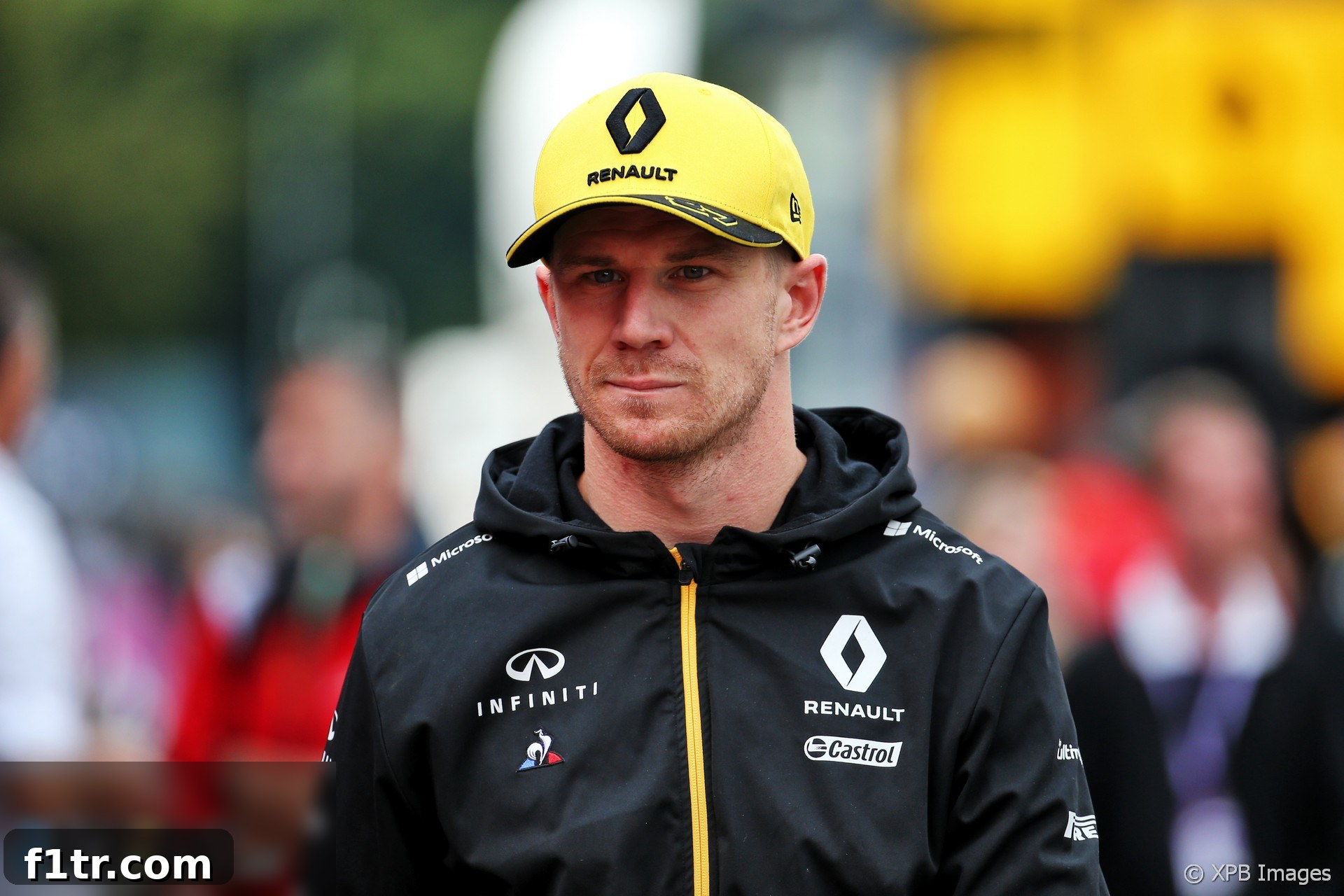
In a significant announcement that set the tone for their future strategic direction, the Haas F1 Team confirmed its driver lineup for the upcoming 2020 Formula 1 season, opting to retain seasoned French driver Romain Grosjean alongside Kevin Magnussen. The decision, made by team principal Guenther Steiner, concluded a period of intense speculation, particularly concerning the experienced German driver Nico Hulkenberg, who was widely considered a strong candidate for the vacant seat. Steiner’s rationale for this choice delved deep into the complexities of Formula 1 team management, emphasizing stability and a known operational environment as critical factors, especially during a challenging period marked by the underperformance of their VF-19 chassis.
The Intense Driver Market: Grosjean vs. Hulkenberg for a Coveted Seat
The F1 driver market is notoriously competitive, with only twenty seats available, making every team’s decision a subject of intense scrutiny. For Haas, the choice between Romain Grosjean and Nico Hulkenberg was indeed a “close call,” as acknowledged by Guenther Steiner. Both drivers bring a wealth of experience and a proven track record in Formula 1. Romain Grosjean, who has been with the Haas F1 Team since its inaugural season in 2016, represents continuity and deep familiarity with the team’s operations, philosophy, and evolution. His tenure has seen the team’s highs and lows, making him an integral part of its fabric. On the other hand, Nico Hulkenberg, a highly respected and consistent performer across multiple teams in his F1 career, offered an alternative of fresh perspective and a different benchmark, which can often be appealing to teams seeking to revitalize their performance.
Hulkenberg’s availability on the market, following his departure from Renault, made him an attractive prospect for several teams. His consistent points-scoring ability and strong race craft are well-regarded within the paddock. However, Haas ultimately decided that the advantages offered by Grosjean’s established relationship and intrinsic knowledge of the team’s internal workings outweighed the potential benefits of bringing in a new talent, no matter how accomplished. This was not a decision taken lightly, underscoring the delicate balance F1 teams must strike between seeking new blood and valuing existing relationships.
Dispelling Rivalry Concerns: Magnussen and Hulkenberg’s Past Encounters
One aspect that fueled much of the media speculation surrounding Nico Hulkenberg’s potential move to Haas was his historically fractious relationship with current Haas driver Kevin Magnussen. Their on-track incidents and subsequent verbal exchanges, most notably the infamous “suck my balls, honey” comment from Magnussen during an interview, have become part of recent F1 folklore. It was widely speculated that the prospect of pairing these two strong personalities, known for their assertive driving styles, might deter Haas from forming what could be a combustible lineup. However, Guenther Steiner categorically dismissed these concerns as a deciding factor in his team’s choice. “I didn’t consider” whether a Hulkenberg-Magnussen pairing would prove difficult to manage, Steiner stated, making it clear that the team’s decision-making process was focused on more fundamental performance and strategic considerations rather than interpersonal dynamics.
While the rivalry between drivers, even within the same team, is a constant element of Formula 1, Steiner’s stance highlights that team principals often prioritize overall team performance and car development over potential personality clashes. His comments suggested a belief that professional athletes can put aside past grievances for the betterment of the team, or simply that the team had more pressing issues to address. This effectively removed a popular narrative from the discussion, redirecting the focus toward the technical and operational challenges faced by the Haas F1 Team.
The VF-19 Chassis: The Real Deciding Factor for Haas F1
The crux of Haas F1’s decision to retain Romain Grosjean, rather than recruiting Nico Hulkenberg, ultimately hinged on the team’s profound struggles with its VF-19 chassis during the 2019 F1 season. The car proved inconsistent and challenging to understand, often performing well in qualifying but losing pace dramatically in race conditions. This performance deficit became the overriding factor, overshadowing any considerations about driver rivalries or the allure of a new talent. Guenther Steiner articulated this clearly: “The biggest thing is our car this year is not performing as we wanted it to perform, which in the end has nothing to do with the drivers we’ve got in the car at the moment. It is the car, we are very conscious about that, very open about that.”
In a situation where the fundamental issue lies with the machinery, rather than the individuals operating it, changing a driver can be a counterproductive move. A new driver, regardless of their skill, would face a steep learning curve not just with the team’s procedures but also with the intricacies and inherent flaws of an already problematic car. Steiner emphasized this point, noting, “Now changing drivers, I don’t know if it would help us to make the car better. It could [help] but it could also not because the new guy wouldn’t know where we start off.” The team recognized that introducing another variable in the form of a new driver would likely complicate their efforts to diagnose and rectify the VF-19’s deep-seated issues, potentially hindering their progress rather than accelerating it. This pragmatic approach underscores the challenges smaller, privately owned teams like Haas face when grappling with technical difficulties, where resources for extensive analysis and development are more limited than those of larger, manufacturer-backed operations.
Romain Grosjean’s Invaluable Role in Understanding the VF-19 and Ensuring Team Stability
In light of the VF-19’s unpredictable nature, Romain Grosjean’s extensive experience with the Haas F1 Team and his intimate knowledge of its cars became an indispensable asset. Having been with the team for four seasons, Grosjean possessed a unique historical perspective on the car’s development trajectory and performance characteristics. His feedback, often candid and direct, proved crucial in the team’s efforts to understand the car’s shortcomings. Steiner specifically credited Grosjean, stating, “Romain was a big part of it in getting the understanding of why we were wrong with the car in the moment. He was a big help and we didn’t want to have any more unknowns.”
This deep understanding allowed Grosjean to advocate for specific changes, including at one point urging the team to revert to an older specification of its chassis mid-season, a testament to his detailed insight. In times of crisis, continuity and familiarity are often preferred over change, especially when the root cause of performance issues is still being investigated. Grosjean’s ability to articulate the car’s behavior and contribute meaningfully to the diagnostic process was seen as more valuable than the potential gains from a new driver needing time to adapt. By retaining Grosjean, Haas aimed to maintain a stable environment, ensuring that critical data and feedback channels remained consistent as they strived to resolve their technical challenges and lay a solid foundation for the 2020 F1 season.
Guenther Steiner’s Rationale: Prioritizing Known Quantities for Future Success
Guenther Steiner’s decision was a calculated move, prioritizing known quantities and stability during a critical period for the Haas F1 Team. While acknowledging the quality of Nico Hulkenberg as a driver, Steiner’s focus was firmly on the team’s internal struggles. “It was a close call because they’re both very good drivers,” he admitted, showcasing his respect for Hulkenberg. However, the existing relationship with Grosjean, his understanding of the team’s operational procedures, and his direct experience with the problematic VF-19 were ultimately the deciding factors. Steiner understands the intricacies of building and managing an F1 team, particularly one that operates on a leaner budget compared to the sport’s giants. Introducing an unknown variable, even a highly skilled one, during a period of introspection and troubleshooting could have been detrimental.
The team principal’s commitment to Grosjean reflects a philosophy that loyalty and continuity can be powerful tools in overcoming adversity. By sticking with a driver who knows the “highs and lows” of the team and “on a good day he’s a very good driver,” Haas aimed to leverage existing knowledge and relationships to pull themselves out of their performance slump. Steiner’s public support for Hulkenberg, expressing hope that he “stays in F1 because I like him and he’s a good driver,” further highlights that the decision was purely strategic for Haas, not a judgment on Hulkenberg’s capabilities.
Looking Ahead: Haas F1’s Prospects for the 2020 Season and Beyond
The retention of Romain Grosjean and Kevin Magnussen signaled Haas F1 Team’s intent to tackle its performance issues with a consistent approach. The stability in its driver lineup allowed the team to channel all its energy into understanding and improving the car, rather than integrating a new driver. For the 2020 F1 season, the pressure would undoubtedly be on both Grosjean and Magnussen to deliver consistent results, but more importantly, to provide precise and actionable feedback that could steer the team’s technical development in the right direction. This decision underscored the unique challenges faced by independent teams in Formula 1, where every choice, especially regarding personnel, has amplified consequences on their competitive standing. Haas gambled on the known, hoping that deep familiarity would pave the way for a resurgence.
Nico Hulkenberg’s Next Chapter: Remaining in Formula 1?
While the door at Haas closed for Nico Hulkenberg, Guenther Steiner remained optimistic about the German driver’s prospects within Formula 1. Steiner believed Hulkenberg had “other options” to potentially keep him on the grid for the 2020 F1 season, a testament to Hulkenberg’s respected standing in the paddock. “Nico’s a grown up, he’s doing this a long time. He has been here before in these positions,” Steiner noted, acknowledging Hulkenberg’s resilience and experience in navigating the uncertain waters of driver contracts. The hope was, as expressed by Steiner, that “we have got him around next year as well in Formula 1 because he deserves to be here.” Indeed, Hulkenberg’s talent and experience made him a valuable asset, and the F1 community shared the sentiment that such a capable driver deserved a place on the grid.
Ultimately, Haas F1’s decision to retain Romain Grosjean was a strategic choice born out of necessity and a desire for stability amidst technical turmoil. It was a reflection of the team’s internal struggles with the VF-19 chassis, rather than a commentary on the individual merits of the drivers involved. By choosing the known over the unknown, Haas F1 aimed to create a stable foundation from which to rebuild and challenge for improved performance in future seasons.
Related Articles: 2019 F1 Season Insights
- Crying in the Melbourne car park at 2019 grand prix was my career low – Ocon
- McLaren Racing reports reduced £71 million loss in 2019
- Kvyat: Hockenheim podium last year was “my biggest achievement” so far
- How the FIA’s new encrypted fuel flow meter targets Ferrari’s suspected ‘aliasing’ trick
- “He smashed my office door”: 23 must-see moments from ‘Drive to Survive’ season two
Browse all 2019 F1 season articles