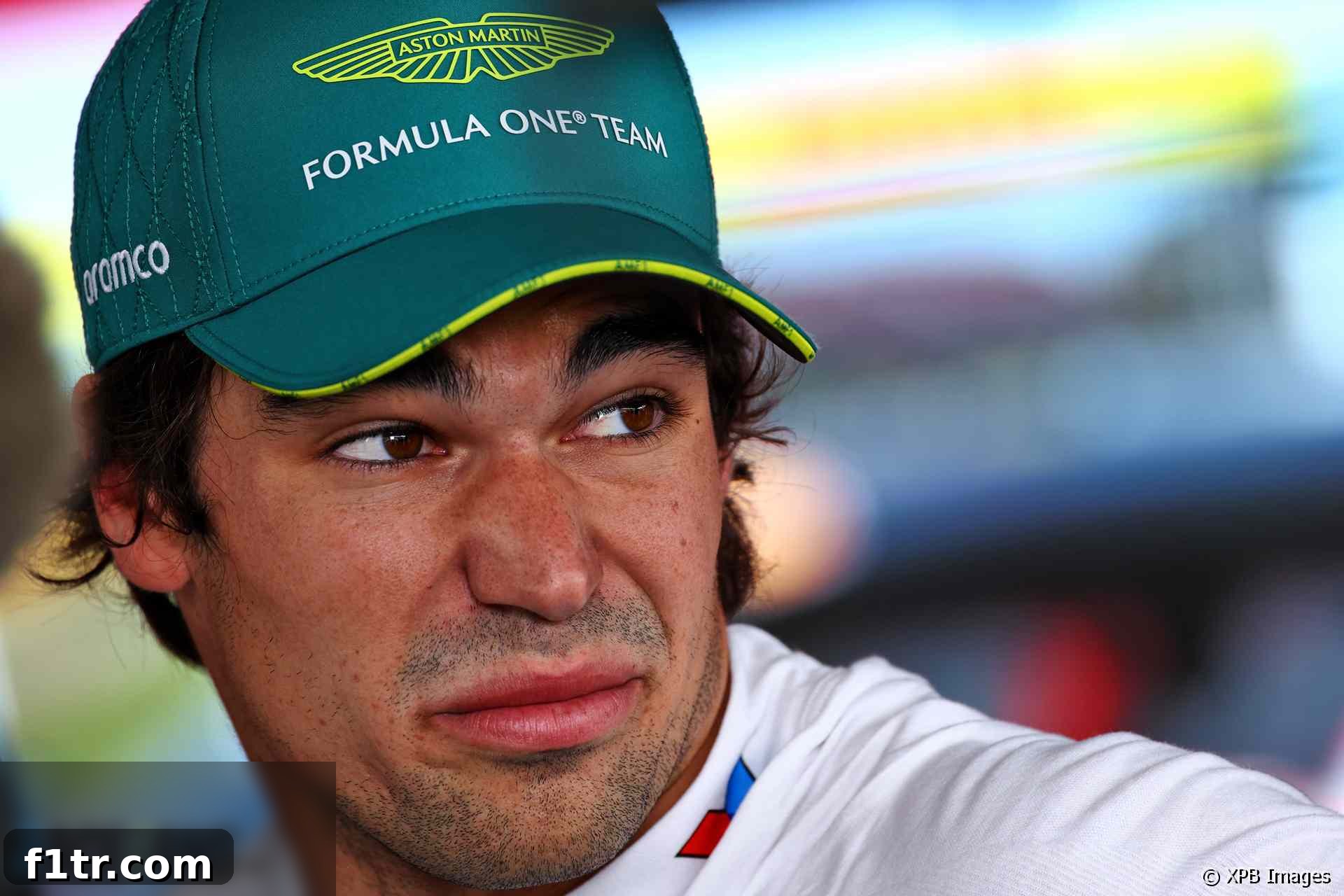
In the high-stakes, competitive world of Formula 1, contract extensions are often moments of significant speculation and intense discussion. However, when the announcement came that Lance Stroll had secured a new deal with Aston Martin, it was met with an almost universal lack of surprise. This predictable outcome underscores a unique dynamic within the sport, where talent, performance, and familial connections intersect in a complex dance.
Lance Stroll’s Unique Position in Formula 1
At 25 years old, Lance Stroll finds himself in a position few F1 drivers ever experience. His continued tenure at Aston Martin, despite a performance record that hasn’t consistently placed him among the grid’s top performers over the last two seasons, is a testament to more than just on-track ability. The undeniable fact that Stroll’s father, Lawrence Stroll, serves as the Executive Chairman of Aston Martin Cognizant Formula One Team provides him with an unparalleled degree of job security. This relationship, while offering stability, also brings intense scrutiny, shaping public perception and setting a higher bar for his performance against the backdrop of an otherwise meritocratic sport.
Navigating the Early Challenges of the 2024 Season
The 2024 Formula 1 season presented Lance Stroll with immediate challenges, particularly as he continued to partner with the formidable Fernando Alonso. Alonso, a much older, vastly more experienced, and arguably faster teammate, set a high benchmark that Stroll often struggled to match, especially in the early rounds. The season began on a relatively solid note with a tenth-place finish in Bahrain, earning a valuable point behind Alonso. This initial glimmer of promise, however, quickly faded as the championship moved to Saudi Arabia.
The Jeddah Corniche Circuit proved to be a harsh mistress for Stroll. During the weekend, he twice made contact with the inside wall at the notoriously fast left-hand kink of Turn 22. These unforced errors brought a premature and unceremonious end to his Saudi Arabian Grand Prix, while his teammate Alonso delivered a strong fifth-place finish. Such incidents highlight a recurring theme in Stroll’s career: moments of inconsistency and costly mistakes that undermine his potential.
The struggles continued in Japan. The Suzuka International Racing Course, a circuit renowned for its demands on driver precision and courage, saw Stroll eliminated in Q1 during qualifying, while Alonso impressively secured fifth on the grid. On race day, the performance gap between the two Aston Martin drivers was stark. In a race free from significant damage or external setbacks, Stroll finished a full minute behind Alonso in the very same machinery, underscoring a fundamental difference in pace and race management. This significant deficit raised eyebrows within the paddock and among fans, intensifying discussions about his comparative performance.
The Chinese Grand Prix offered little respite. Stroll once again found himself unable to match Alonso’s pace throughout the weekend, failing to score any points. Adding to his woes, he incurred a penalty for a reckless incident under the Safety Car, colliding with Daniel Ricciardo. This was not just a performance issue but also a lapse in race discipline, drawing further criticism. These early season mishaps painted a picture of a driver struggling for confidence and consistency, often overshadowed by his illustrious teammate.
Lance Stroll: Key Performance Metrics (Early 2024)
| Best | Worst | |
|---|---|---|
| GP Start Position | 8 (x2) | 16 |
| GP Finish Position | 6 | 17 |
| Points Scored | 23 | |
The Glimmers of Promise: Resilience and Strategic Acumen
While the initial phase of the 2024 season presented significant hurdles, it would be an oversimplification to characterize Stroll’s entire year as a string of underperformances. Indeed, there were weekends where he demonstrated genuine pace, strategic intelligence, and solid racecraft, hinting at the potential that many believe he possesses. His performances at Imola and the Red Bull Ring, in particular, stood out as genuinely strong showings.
At the Emilia Romagna Grand Prix in Imola, Stroll executed an excellent strategic race. Starting from 13th on the grid, he managed his tyres brilliantly during a long opening stint, allowing him to climb through the field and secure a valuable points finish. This performance highlighted his ability to manage race conditions and work effectively with the team’s strategy calls, converting a challenging grid position into a tangible result.
The Austrian Grand Prix weekend at the Red Bull Ring was another testament to his potential. Despite Aston Martin struggling to find outright pace and being largely out of contention for points in that particular race, Stroll delivered a remarkably solid weekend, once again outperforming his teammate, Fernando Alonso. This was a crucial psychological boost, demonstrating that on certain tracks and under specific conditions, he could indeed extract more performance from the car than a two-time world champion.
This period of improved form extended through a trio of rounds including Austria, Britain, and Hungary. During these races, Stroll appeared to build genuine momentum, showcasing cleaner driving, better qualifying efforts, and more consistent race pace. He seemed to be entering the summer break with renewed confidence and a clearer understanding of the car’s limits. This sustained period of decent performances provided a counter-narrative to his earlier struggles, proving he could deliver when the conditions aligned.
The Challenge of Consistency: A Persistent F1 Hurdle
However, the momentum Stroll had carefully built was abruptly halted by another unforced error. The Belgian Grand Prix at Spa-Francorchamps, known for its unpredictable weather, saw Stroll become the sole driver in the entire field to crash out during the wet conditions of the weekend. This incident served as a stark reminder of the consistency challenge that has plagued his career. In Formula 1, mere flashes of brilliance are often insufficient; sustained, error-free performance is the hallmark of a top-tier driver.
The contrast between his strong mid-season performances and these recurrent moments of sloppiness underscores the critical area for improvement. For Stroll to elevate his standing on the grid and silence the critics who often attribute his seat solely to his family’s investment, he must demonstrate a more consistent level of performance throughout an entire season. This means minimizing unforced errors, maximizing qualifying potential, and consistently converting race pace into points finishes.
The Alonso Dynamic: A Double-Edged Sword
Driving alongside a legend like Fernando Alonso presents Lance Stroll with a unique, double-edged challenge. On one hand, it offers an unparalleled learning opportunity. Alonso’s experience, racecraft, and analytical approach can be invaluable for a younger driver looking to improve. Observing how Alonso extracts performance, manages tyres, and strategizes during a race provides a masterclass in Formula 1 driving.
On the other hand, it places Stroll under immense pressure. Alonso’s consistent brilliance and ability to regularly extract the absolute maximum, and often more, from the Aston Martin AMR24 car inevitably highlight any performance gaps. The comparison is direct, public, and relentless. When Alonso is consistently finishing higher, qualifying better, and avoiding mistakes, it naturally amplifies any shortcomings in Stroll’s performances. This dynamic has a significant impact on both internal team perception and external media narrative.
The Road Ahead for Lance Stroll and Aston Martin
As the Formula 1 season progresses into its final ten rounds, Lance Stroll stands at a critical juncture. If he can recapture and sustain the form he displayed heading into the summer break, capitalizing on his strategic strengths and minimizing the costly errors, he has a strong chance of significantly improving his standing in the drivers’ championship. Such a resurgence would not only boost his points tally but also begin to reshape the narrative around his abilities, moving the focus away from his familial connections and more towards his on-track merit.
However, if the pattern of sloppy moments and inconsistent performances, reminiscent of the early season, continues to emerge, then the perception of him as one of the grid’s weaker performers will likely solidify. The stakes are high, not just for Stroll’s personal career trajectory but also for Aston Martin’s ambitions. With the team investing heavily in new facilities, personnel, and a future engine partnership with Honda, consistent performance from both drivers is paramount for their aspirations to compete at the very front of Formula 1.
The future of Lance Stroll in Formula 1 remains a fascinating topic. His talent is undeniable, yet his consistency is often questioned. The unique circumstances of his tenure at Aston Martin provide stability, but also amplify the need for him to prove his worth purely on performance. The remainder of the season offers a crucial opportunity for him to demonstrate that he can be a consistently competitive force in the pinnacle of motorsport.
Formula 1 Insights and Analysis
- “Overtaking is overtaking”: Domenicali denies F1’s yo-yo racing is “artificial”
- The crashes F1 is trying to prevent may be rare – but the danger is obvious
- F1 returning to India soon after 2027 sounds like wishful thinking
- Verstappen loathes F1’s new generation of cars – but what do his rivals reckon?
- The ‘throwback weekend’ is back in fashion. But it’s a flawed concept – especially for F1
Browse all Formula 1 articles