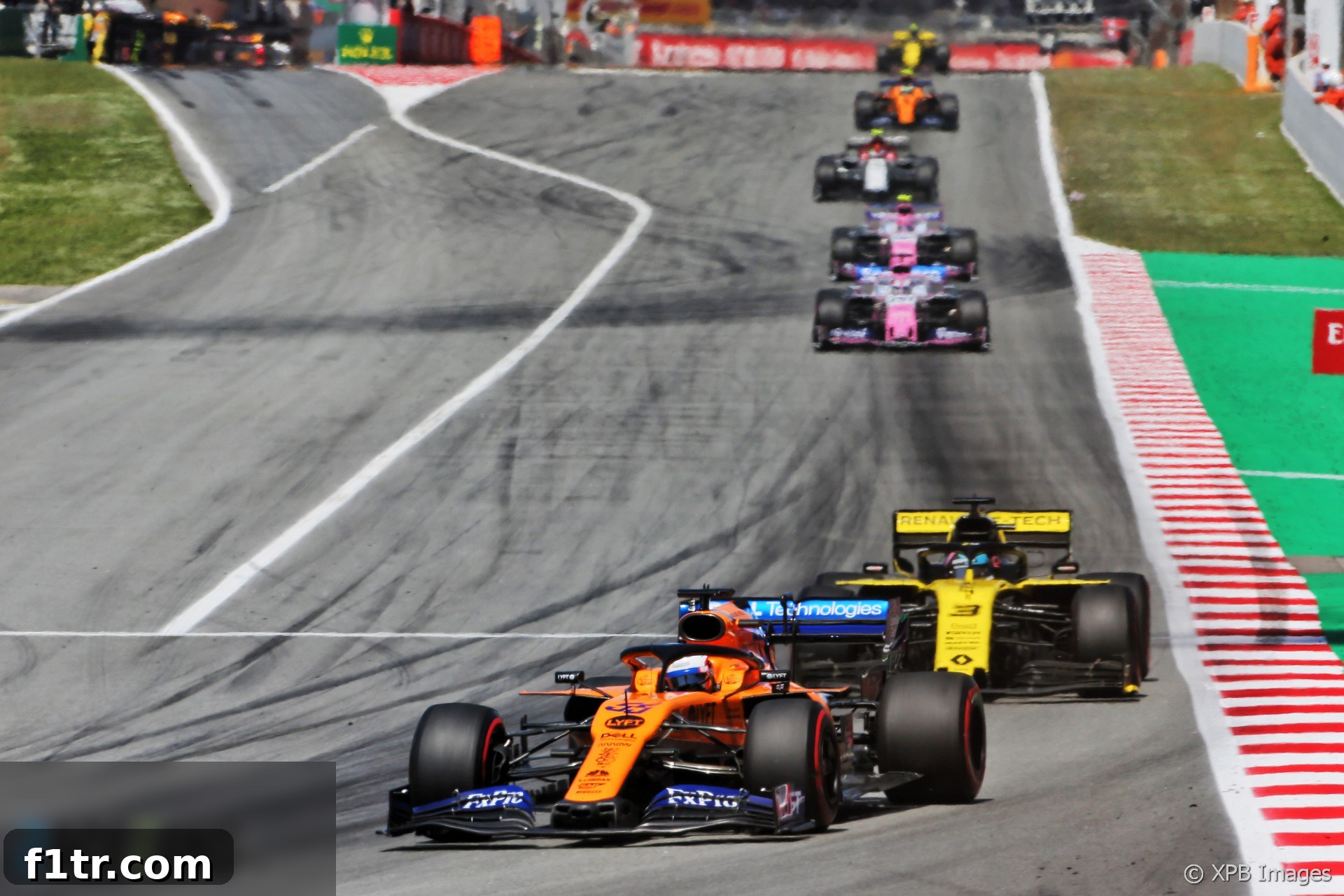
McLaren’s Strategic Upgrade: How the Spanish GP Package Fueled Their 2019 Resurgence
The 2019 Formula 1 season marked a pivotal period for McLaren, as the team embarked on a determined journey to reclaim its competitive edge. A significant turning point, as revealed by then-McLaren driver Carlos Sainz Jnr, was the comprehensive upgrade package introduced at the Spanish Grand Prix. This suite of aerodynamic enhancements, though not immediately delivering peak performance, laid the groundwork for a season of remarkable progress, demonstrating the critical interplay between engineering innovation and on-track execution.
The Spanish Grand Prix Upgrade: A Blueprint for Improvement
The Circuit de Catalunya, known for its challenging layout and as a traditional testing ground for F1 machinery, was chosen as the venue for McLaren’s ambitious upgrade debut. The package was far from a minor tweak; it encompassed a meticulously redesigned front wing, revised barge boards, and an updated engine cover. Each component was engineered to work in harmony, optimizing airflow around and over the car to generate more downforce and reduce drag, crucial for improving overall lap time.
Sainz highlighted the immediate, albeit raw, potential of these modifications. “The feedback we’ve been giving the team since the beginning of the season has led the team to bring upgrades that suit the car better,” he stated, underscoring the collaborative effort between drivers and engineers. This continuous dialogue ensured that the upgrades directly addressed the car’s identified weaknesses and enhanced its strengths, making the pursuit of performance a data-driven and driver-centric process. The initial impression was clear: the car’s inherent balance and its stability through corners felt demonstrably improved, promising greater confidence and predictability for the drivers.
Unlocking Potential: The Learning Curve and Consistent Performance
Despite the inherent promise of the new parts, fully exploiting such a substantial upgrade in Formula 1 is rarely an instantaneous process. As Sainz candidly admitted, it took McLaren “two races to fully exploit” the package. The complexities of integrating new aerodynamics mean that teams must spend considerable time understanding their nuances, fine-tuning setups, and adjusting driver styles to extract every last tenth of a second.
The initial races following the Spanish Grand Prix — Spain itself and Monaco — served as crucial learning opportunities. These tracks, with their distinct characteristics, presented different challenges for the newly configured MCL34. Spain’s high-speed corners and Monaco’s tight, twisty street circuit demanded varying setups, making it difficult to immediately unlock the full, consistent potential of the upgrades. However, this period of adaptation was vital. It allowed the engineering team at the track and back in Woking to gather invaluable data, correlating simulator work with real-world performance and refining their understanding of the car’s new aerodynamic profile.
The breakthrough, according to Sainz, arrived around the Canadian Grand Prix. “Since Canada I think we understand it a bit better and it’s a bit more consistent and we can more-or-less exploit in different tracks,” he explained. This marked a significant shift. The team had moved past the initial phase of integration and was now confidently translating the upgrade’s benefits into tangible on-track results, leading to a noticeable upturn in form that saw both cars consistently scoring points in subsequent races. This period of sustained improvement underscored the importance of patience, meticulous analysis, and iterative development in the relentless pursuit of F1 performance.
Driver Synergy: Pushing the Limits and Maximizing Lap Times
A key factor in McLaren’s ascending performance trajectory during the 2019 season was the dynamic partnership between Carlos Sainz Jnr and rookie Lando Norris. Both drivers consistently pushed each other, fostering a healthy competitive environment that ultimately benefited the entire team. This internal rivalry was instrumental in extracting the maximum potential from the MCL34, especially as the upgrades began to bear fruit.
Sainz elaborated on this synergy, stating, “The drivers pushing each other just makes the optimum lap time better at the end of qualifying.” In Formula 1, where margins are measured in milliseconds, having two drivers who can consistently extract the limit from the car, and then analyze and compare their approaches, is invaluable. They could identify specific corners or braking zones where one driver might have an edge, allowing the other to learn and adapt, thereby elevating the overall performance benchmark for both. This collaborative yet competitive dynamic ensures that no stone is left unturned in the quest for speed.
Furthermore, the high level of trust and open communication between Sainz, Norris, and the engineering team ensured a robust feedback loop. Their detailed observations and subjective feelings about the car’s behavior were crucial for guiding setup adjustments and informing future development decisions. This symbiotic relationship between human input and engineering expertise was a cornerstone of McLaren’s resurgence, enabling them to fine-tune the upgraded package and consistently place the car within the top 10 during qualifying sessions, a strong indicator of improved single-lap pace and overall competitiveness.
Engineering Excellence and Future Prospects
The success of the Spanish Grand Prix upgrade and its subsequent exploitation were not merely down to the drivers, but a testament to the dedication and capability of the entire McLaren team in Woking. “When you have a strong team mate you always find corners where you can improve, corners where the other guy can improve and it makes both go forward,” Sainz reflected. “It’s a combination of both things the factory is doing an amazing job to respond to what we need.” This acknowledgment highlights the relentless work behind the scenes – from initial conceptual design, through rigorous simulation and wind tunnel testing, to the manufacturing and constant refinement of components.
The ability of the factory to rapidly respond to driver feedback and translate it into effective aerodynamic solutions was a critical differentiator. This agile development process, coupled with a clear understanding of the car’s performance envelope, propelled McLaren to become a consistent contender for “best of the rest” behind the top three teams. This positive momentum was not just about the current season; it was also a vital building block for the future.
Sainz emphasized the importance of maintaining this upward trajectory: “We just need to keep that going and make sure next year’s car is another step.” The 2019 season’s lessons, particularly regarding the successful implementation and optimization of major upgrades, provided invaluable insights for the development of the 2020 challenger. It instilled confidence within the team that their new processes and philosophy were yielding tangible results, setting a promising course for McLaren’s continued climb back towards the front of the grid.
McLaren’s Resurgence: A Broader Perspective on 2019
The 2019 season ultimately represented a significant rebound for McLaren, marking a clear departure from several years of underperformance. The strategic introduction and successful integration of the Spanish Grand Prix upgrade package played a central role in this revival. It demonstrated the team’s renewed engineering prowess, its commitment to a data-driven development philosophy, and the strength of its driver lineup.
From a broader perspective, McLaren’s journey throughout 2019 illustrated the profound impact that well-conceived and expertly executed technical upgrades can have in Formula 1. It wasn’t just about bolting on new parts; it was about the comprehensive process of understanding, adapting, and ultimately mastering those changes. The team’s ability to transition from a period of learning and adaptation to one of consistent points-scoring highlighted a maturation in their approach to car development and race strategy.
Key Takeaways and What Lies Ahead
The 2019 Spanish Grand Prix upgrade stands as a testament to McLaren’s methodical approach to performance improvement. It underscored that in the hyper-competitive world of Formula 1, even the most significant advancements require time to be fully understood and optimized. Carlos Sainz Jnr’s insights provide a clear window into the strategic thinking, engineering dedication, and vital driver collaboration that underpinned this successful chapter in McLaren’s history.
This period of growth and learning proved to be a catalyst, not just for the remainder of the 2019 season, but for laying a solid foundation for McLaren’s future aspirations. By effectively leveraging their upgrades and fostering strong internal dynamics, McLaren signaled their intent to be a formidable force once again, continuously striving for that “another step” towards championship contention.
- Analysis: McLaren reveals F1’s biggest update of 2019 so far at Spanish Grand Prix
More on the 2019 F1 Season
Browse all 2019 F1 season articles