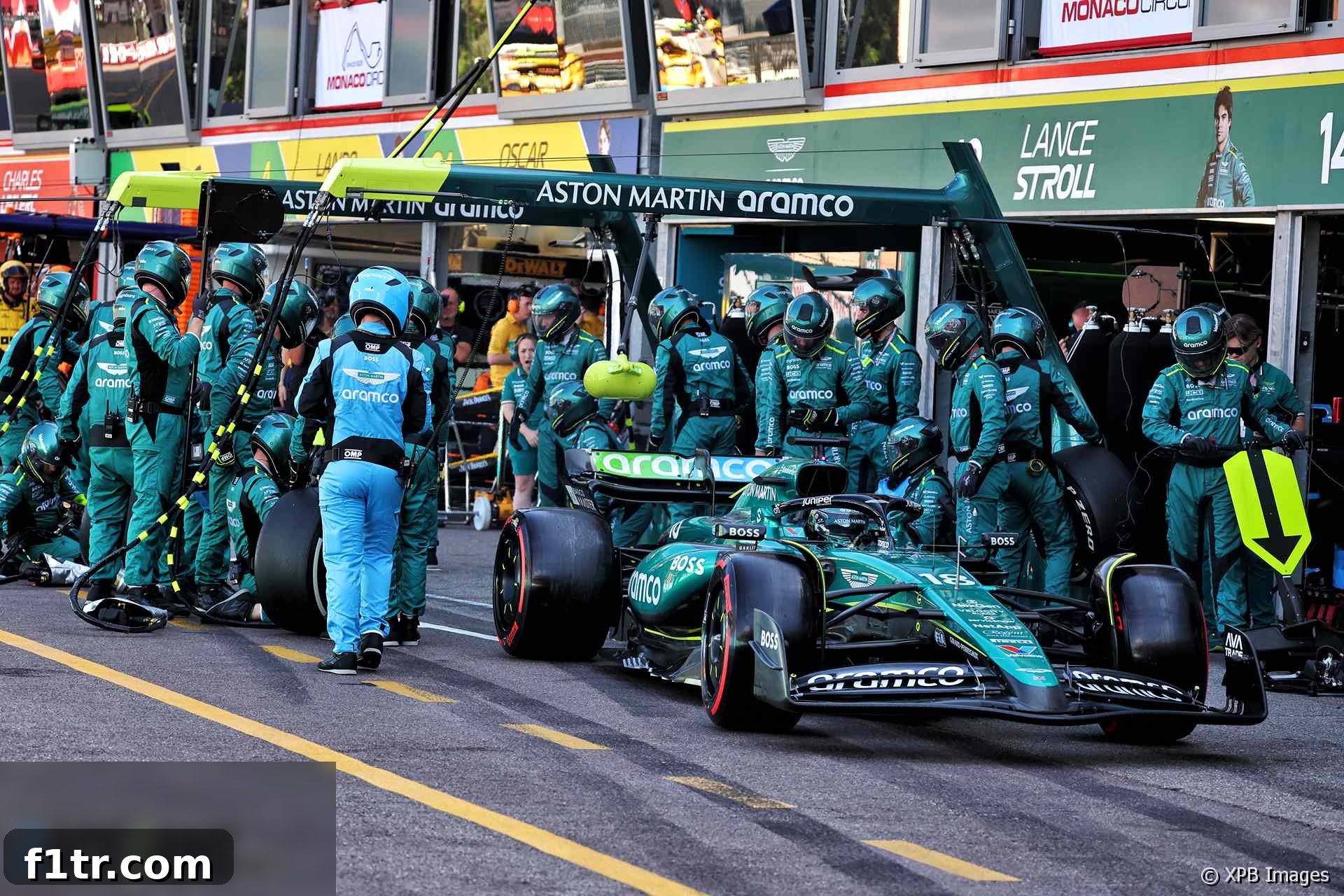
FIA Mandates Two Pit Stops for Monaco Grand Prix to Boost Strategy and Excitement
In a significant move aimed at enhancing strategic depth and race spectacle, the FIA has officially published a new rule requiring drivers to make at least two tire changes during the iconic Monaco Grand Prix. This groundbreaking regulation, agreed upon following extensive discussions and introduced as a revision to article 30.5 (m) of the Formula 1 sporting regulations, is exclusive to the prestigious street circuit, setting Monaco apart from all other rounds of the world championship.
Understanding the Core Changes: Monaco’s Unique Tire Strategy
The established F1 tire rule, which remains unchanged for all other Grands Prix, mandates drivers to use at least two different dry-weather tire compounds during a race. This obligation can typically be met without a compulsory pit stop if intermediate or wet-weather tires are used, or if tire changes occur during a red flag period, a scenario frequently observed, including at last year’s Monaco event where many drivers utilized stoppages to swap compounds.
However, the new directive for the Monaco Grand Prix introduces a far more stringent requirement. Under this revised article, drivers competing in the Principality must now utilize a minimum of three distinct sets of tires during the race. Crucially, these three sets must still comprise at least two different dry-weather compounds, unless conditions necessitate the use of intermediate or wet-weather tires. This modification fundamentally alters the strategic landscape, pushing teams to rethink their approach to one of F1’s most challenging races.
Navigating Wet Conditions: A Compulsory Pit Stop Regardless of Weather
Perhaps the most impactful aspect of this new rule specifically targets wet race scenarios in Monaco. Historically, if a race was declared wet and drivers used intermediate or full wet tires, they were generally exempt from the two-compound dry-weather tire rule, often meaning no mandatory pit stops if they started on wets and stayed on them. The new Monaco rule eradicates this exemption entirely.
Even if the Monaco Grand Prix is run entirely in wet conditions, with drivers on intermediates or full wets throughout, they are still obligated to use at least three different sets of tires. This means that a compulsory tire change during a wet race in Monaco is now an absolute requirement, a condition that does not exist at any other circuit on the Formula 1 calendar. Should the entire race be affected by rain, drivers would be compelled to make pit stops to fit fresh tires, most likely a new set of intermediates, guaranteeing strategic decisions even when the heavens open over Monte Carlo.
Red Flags, Penalties, and the Pursuit of Strategic Advantage
While the rule mandates the use of three tire sets, it does not explicitly stipulate that these changes must occur during conventional pit stops. In a race punctuated by multiple red flags, for instance, drivers could theoretically fulfill their tire change obligations during these stoppages. However, given the requirement for three distinct sets, two red-flag periods would be necessary to avoid a traditional pit stop, adding another layer of strategic complexity and unpredictability to an already dynamic event.
The penalty framework for non-compliance has also been updated to reflect Monaco’s unique circumstances. The long-standing practice dictates that failing to make a single mandatory tire change results in disqualification, or a 30-second time penalty if the race is shortened. This fundamental principle remains intact. However, the new regulation introduces an additional 30-second time penalty specifically for drivers who fail to make both of their mandatory tire changes (i.e., not using three sets), a violation exclusively possible under the new Monaco rules. This tiered penalty system underscores the FIA’s determination to enforce the new strategy-driving mandate.
A Deep Dive into the Regulatory Text: Past vs. Present
To fully grasp the magnitude of these changes, it’s essential to compare the previous and current versions of the relevant sporting regulation:
Previous Rule (Article 30.5c)i)):
“Unless he has used intermediate or wet-weather tyres during the race, each driver must use at least two different specifications of dry-weather tyres during the race, at least one of which must be a mandatory dry-weather race tyre specification as defined in Article 30.2c)ii). Unless a race is suspended and cannot be re-started, failure to comply with this requirement will result in the disqualification of the relevant driver from the race results. If the race is suspended and cannot be re-started, thirty (30) seconds will be added to the elapsed time of any driver who was unable to use at least two (2) specifications of dry-weather tyre.”
New Rule (Article 30.5 (m)):
“For all races except the race in Monaco, unless they have used intermediate or wet-weather tyres during the race, each driver must use at least two (2) different specifications of dry-weather tyres during the race, at least one (1) of which must be a mandatory dry-weather race tyre specification as defined in Article 30.2c)ii).
For the race in Monaco, each driver must use at least three (3) sets of tyres of any specification described in Article 30.1a)i) during the race and, unless they have used intermediate or wet-weather tyres during the race, each driver must use at least two (2) different specifications of dry-weather tyres during the race, at least one (1) of which must be a mandatory dry-weather race tyre specification as defined in Article 30.2c)ii).
Unless the race is suspended and cannot be re-started, failure to comply with these requirements will result in the disqualification of the relevant driver from the race results.
For all races except the race in Monaco, if the race is suspended and cannot be re-started, thirty (30) seconds will be added to the elapsed time of any driver who did not, when required to do so, use at least two (2) specifications of dry-weather tyre during the race.
For the race in Monaco, if the race is suspended and cannot be re-started, thirty (30) seconds will be added to the elapsed time of any driver who did not, when required to do so, use at least two (2) specifications of dry-weather tyre during the race, or who did not use at least three (3) sets of tyres of any specification during the race. Furthermore, an additional thirty (30) seconds will be added to the elapsed time of any driver who used only one (1) set of tyres of any specification during the race.”
The updated text clearly delineates the “Monaco exception,” explicitly introducing the “at least three (3) sets of tyres” clause. It also meticulously details the staggered penalty structure unique to Monaco, distinguishing between failing to use two specifications of dry tires and failing to use three sets overall, particularly in shortened races. The definition of a “mandatory dry-weather race tyre specification” refers to the specific compounds designated by Pirelli and the FIA for a given event, typically meaning the hardest compound allocated.
Strategic Implications and the Quest for Overtakes
The introduction of mandatory two-stop strategies for Monaco is poised to dramatically influence race dynamics. Monaco is notorious for its challenging layout, making overtaking exceptionally difficult. Previous races often evolved into processions, with drivers managing tires and positions with minimal pit stops.
With this new rule, teams will be forced into more complex strategic decisions. When to pit? Which tire compounds to use for each stint? The timing of these mandatory stops could open up opportunities for undercut or overcut strategies, potentially leading to more position changes and thrilling on-track battles. Drivers will need to push harder on their tires, knowing they have additional pit stops built into their race plan, which could lead to more aggressive driving and tighter racing.
Why Monaco? The Rationale Behind the FIA’s Decision
The FIA’s decision likely stems from a desire to address long-standing criticisms regarding the lack of excitement and overtaking opportunities at the Monaco Grand Prix. By compelling multiple pit stops, the governing body aims to introduce greater strategic variability, force drivers into different tire windows, and create more divergence in race pace.
This initiative aligns with Formula 1’s broader efforts to enhance the spectacle of its races. Monaco, with its unparalleled history and glamour, is a jewel in the F1 crown, but its on-track action has often failed to live up to its legendary status. This new tire rule represents a proactive step to ensure that the racing itself becomes as captivating as the backdrop against which it unfolds, giving fans more to anticipate than just qualifying performance.
A New Era for the Principality’s Grand Prix
The mandatory two-stop strategy marks a significant evolution for the Monaco Grand Prix, signaling the FIA’s commitment to innovation and improving the racing product. While the tight confines of Monte Carlo will always present unique challenges for overtaking, this rule change promises to inject a much-needed dose of strategic intrigue and unpredictability. As teams and drivers adapt to these new demands, the next Monaco Grand Prix is set to be one of the most strategically fascinating in recent memory, potentially ushering in a new era of racing excitement for this historic event.
Advert | Become a RaceFans supporter andgo ad-free
Formula 1
- “Overtaking is overtaking”: Domenicali denies F1’s yo-yo racing is “artificial”
- The crashes F1 is trying to prevent may be rare – but the danger is obvious
- F1 returning to India soon after 2027 sounds like wishful thinking
- Verstappen loathes F1’s new generation of cars – but what do his rivals reckon?
- The ‘throwback weekend’ is back in fashion. But it’s a flawed concept – especially for F1
Browse all Formula 1 articles