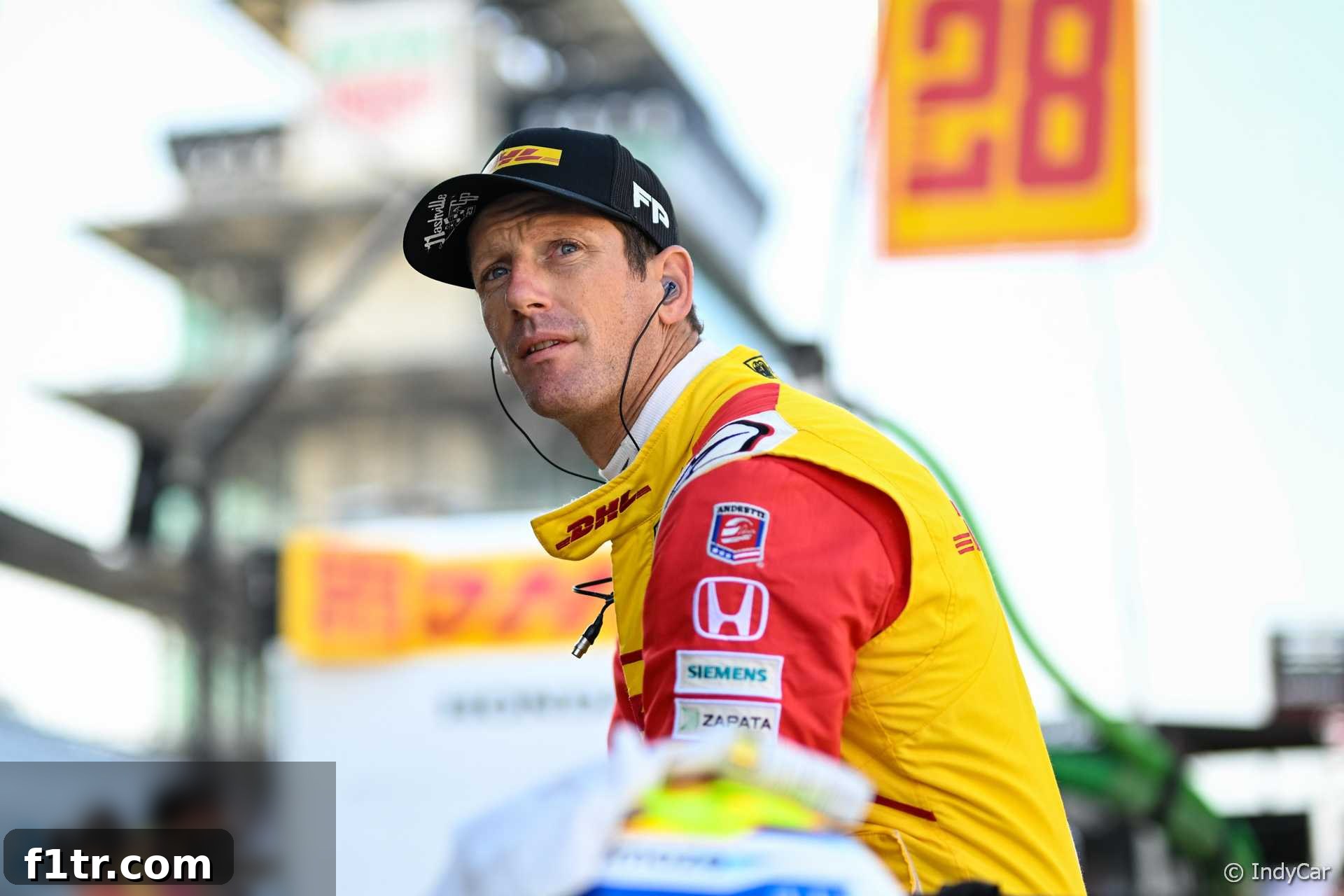
In a significant development shaking the foundations of the NTT IndyCar Series paddock, veteran racer Romain Grosjean has officially announced his intention to initiate arbitration proceedings against Andretti Autosport, the team he represented over the past two seasons. This decision comes in the wake of Andretti’s restructuring of its IndyCar program, which notably excludes the former Formula 1 driver from its 2024 lineup. The unexpected turn of events has sparked considerable discussion within the motorsport community, highlighting the high stakes and often complex contractual relationships inherent in professional racing.
Grosjean’s announcement, made via his official social media channels, details his move to enlist legal counsel to pursue his rights following his departure from the prominent American open-wheel racing outfit. This legal challenge underscores a clear disagreement regarding his future with the team, suggesting a breach of expectations or contractual obligations that Grosjean believes warrant formal intervention. As the motorsport world watches closely, this arbitration promises to shed light on the intricate dynamics between drivers and teams at the pinnacle of American single-seater racing.
Romain Grosjean’s IndyCar Journey: A Tale of Promise and Setbacks
Romain Grosjean’s transition to the IndyCar Series marked a new chapter in a distinguished career, one that began after his emotional departure from Formula 1 at the close of the 2020 season. Following a dramatic crash in Bahrain, which brought his F1 tenure with Haas to an early conclusion, Grosjean sought fresh challenges across the Atlantic. He initially joined Dale Coyne Racing for a part-time campaign in 2021, quickly demonstrating his adaptability and natural speed on American tracks. His performances, including a thrilling second-place finish at the GMR Grand Prix on the Indianapolis Motor Speedway road course, endeared him to a new fanbase and showcased his potential in IndyCar machinery.
Building on this promising debut, Grosjean secured a full-time seat with Andretti Autosport for the 2022 and 2023 seasons, a move that was widely anticipated to propel him towards an IndyCar victory. Over his three seasons in the series, Grosjean has indeed achieved considerable success, securing three pole positions—a testament to his raw pace—and earning five second-place finishes. Despite these strong qualifying and podium results, an elusive first IndyCar win has remained just out of reach, often due to challenging race circumstances or on-track incidents.
The 2023 season, in particular, proved to be a roller coaster for the French-Swiss driver. He started the year with impressive form, positioning himself as a championship contender by ranking fourth in the standings after the initial five races. However, a series of unfortunate incidents and missed opportunities in the latter half of the season saw his championship hopes dwindle, ultimately dropping him to 13th place by the season’s conclusion. This downturn in results, though not entirely Grosjean’s fault, likely played a role in the team’s subsequent decision-making processes regarding its driver lineup for 2024, emphasizing the brutal competitiveness of the IndyCar championship.
Andretti Autosport’s Strategic Realignment for 2024
Andretti Autosport, one of the most prominent and historically successful teams in IndyCar, has announced a significant strategic realignment for the 2024 season. The team, led by motorsport icon Michael Andretti, will be downsizing its full-time IndyCar program from four entries to three. This decision, while not unprecedented in the competitive world of open-wheel racing, has directly impacted the careers of several drivers, most notably Romain Grosjean and Devlin DeFrancesco, both of whom now find themselves without seats for the upcoming season.
The retained drivers for Andretti’s streamlined 2024 lineup are established talents Colton Herta and Kyle Kirkwood. Herta, a multiple race winner and often touted as a future Formula 1 prospect, continues to be a cornerstone of the team, representing both consistency and explosive pace. Kirkwood, who secured his maiden IndyCar victory in 2023, represents a promising investment in young, homegrown talent, having delivered on his potential. Joining them is the highly experienced Swede Marcus Ericsson, the 2022 Indianapolis 500 winner, whose arrival brings an additional layer of championship pedigree and strategic experience to the team. Ericsson’s move from Chip Ganassi Racing was one of the most high-profile driver changes of the offseason, signaling Andretti’s clear intent to strengthen its championship aspirations with proven winners and a renewed focus.
The decision to reduce the number of cars likely stems from a combination of factors, including logistical considerations, budget management, and a desire to consolidate resources to maximize the competitiveness of each entry. In an increasingly competitive series, teams often seek to optimize their operations to deliver peak performance. While such strategic decisions are common in motorsport, they inevitably lead to difficult choices regarding driver contracts and team compositions. For Grosjean, who had expressed a strong desire to continue with the team, this restructuring has evidently come as a profound disappointment, leading directly to his current legal challenge and highlighting the cutthroat nature of securing and maintaining a top-tier racing seat.
Romain Grosjean’s Official Statement: Seeking to Protect His Rights
In a direct and candid statement posted across his official social media platforms, Romain Grosjean articulated his disappointment and his resolve to protect his professional rights. His message provided insight into his perspective on the situation, revealing his initial expectations and the path he now intends to take through legal recourse.
“I enjoyed working with the IndyCar team at Andretti Autosport, and am proud of the successes we shared through two seasons,” Grosjean stated, acknowledging the positive aspects of his tenure with the team. “I am thankful for the many friendships developed at the highest level of American open-wheel racing.” This opening conveyed a clear sense of appreciation for the relationships forged and the achievements garnered during his time with Andretti, showcasing a professional demeanor despite the underlying conflict. It highlights his gratitude for the opportunities and camaraderie experienced within the competitive environment.
However, the statement quickly pivoted to express his profound disappointment: “I had expected to continue racing with the fine people of Andretti Autosport in the coming years. I am disappointed that is not being fulfilled, and wish Andretti team members well.” This sentence is crucial, indicating a clear expectation of continued employment that, in his view, was not met, leading to the current dispute. The “wish Andretti team members well” sentiment adds a layer of professional courtesy, separating his legal dispute from personal animosity towards individuals within the organization, emphasizing that his grievance is with the corporate decision, not the people.
Looking ahead, Grosjean affirmed his commitment to his racing career: “I am pursuing other options to continue my IndyCar career in pursuit of excellence.” This declaration signals his unwavering determination to remain in the series and seek a competitive seat elsewhere, should the arbitration process allow for such a move or if a resolution is reached. It also serves as a strong message to other potential teams, indicating his active availability, continued motivation, and enduring passion for the sport, reinforcing his market value as an experienced and skilled driver.
The core of his announcement, however, was the revelation of legal action: “I have commenced an arbitration proceeding in Indiana against Andretti Autosport, seeking to protect my rights. I am represented by John Maley and Mark Owens of Barnes & Thornburg, LLP.” The mention of Indiana is significant, as it is the operational base for many IndyCar teams and where many racing contracts are governed. Engaging a prominent legal firm like Barnes & Thornburg LLP, known for its expertise in complex commercial litigation and sports law, underscores the seriousness with which Grosjean is approaching this dispute. Arbitration is a common method for resolving contractual disagreements outside of traditional court litigation, often chosen for its speed, confidentiality, and specialized expertise, particularly in the realm of high-value sports contracts.
Understanding the Arbitration Process in Motorsport
Arbitration is a formal, out-of-court legal process where disputing parties present their case to a neutral third party, known as an arbitrator or a panel of arbitrators, rather than a judge or jury in a public court. The arbitrator then makes a binding decision, similar to a court judgment, after hearing all the evidence and arguments. In the high-stakes world of professional sports, and particularly motorsport, arbitration is frequently stipulated in driver contracts as the preferred method for resolving disputes. This is often due to several distinct advantages that appeal to both teams and athletes:
- Confidentiality: Arbitration proceedings are typically private and shielded from public view. This is highly desirable for both teams and drivers who wish to avoid public scrutiny, potential negative publicity, and the airing of sensitive commercial information that can arise from open court battles.
- Speed and Efficiency: Arbitration can often be a quicker process than traditional litigation, allowing for a resolution to be reached more expeditiously. This is particularly crucial in a sport with tight competitive schedules, seasonal deadlines, and short career windows.
- Expertise: Parties can often select arbitrators with specific knowledge of motorsport contracts, industry practices, and relevant legal precedents. This ensures that decisions are made by individuals who deeply understand the nuances of the competitive and business environment of racing.
- Cost-Effectiveness: While not always definitively cheaper than litigation, arbitration can sometimes be more cost-effective by avoiding extensive discovery processes, lengthy court trials, and the associated legal fees that accumulate over extended periods.
Romain Grosjean’s decision to pursue arbitration in Indiana strongly suggests that his contract with Andretti Autosport likely includes an arbitration clause, mandating this specific form of dispute resolution. His legal team will aim to demonstrate that Andretti Autosport failed to uphold its contractual obligations or expectations regarding his continued employment, seeking appropriate damages or other remedies as stipulated by the contract and relevant law. The outcome of such proceedings can vary widely, from substantial financial settlements to, in rare cases, reinstatement, although the latter is less common given the practicalities of team dynamics and the need for a harmonious working relationship.
Andretti Global’s Ambitious Vision and its Implications
The arbitration proceedings against Andretti Autosport occur amidst a period of significant expansion and ambition for its parent company, Andretti Global. Michael Andretti’s motorsport empire extends far beyond IndyCar, encompassing teams in various prestigious series, including Formula E, Extreme E, and the IMSA SportsCar Championship. The recent, and arguably most significant, development for Andretti Global was the FIA’s approval of its application to enter a Formula 1 team. This monumental step towards joining the pinnacle of global motorsport has been a long-held dream for Michael Andretti and represents a massive undertaking requiring immense financial, technical, and human resources on an international scale.
This broader strategic vision might offer some context, though certainly not justification, for the difficult decisions made within the IndyCar program. The need to consolidate resources, optimize spending, and focus on core strengths could be interpreted as part of a larger, global strategy to fund and streamline their worldwide motorsport operations, particularly with the colossal investment required for a Formula 1 entry. The sheer scale of the F1 project demands an unparalleled level of commitment, potentially influencing resource allocation across all of Andretti’s racing endeavors. While this does not lessen the impact on individual drivers like Romain Grosjean, it highlights the complex interplay of commercial, sporting, and strategic factors that influence team management decisions at this elite level of motorsport.
The high-profile nature of Grosjean’s arbitration, especially coming shortly after the positive F1 news for Andretti, could potentially cast a shadow on the organization’s public image and reputation. Maintaining strong, transparent, and fair relationships with drivers, even those who depart, is crucial for long-term credibility and attracting future talent in the competitive motorsport world. How Andretti navigates this legal challenge, both publicly and privately, will be closely watched by fans, rival teams, and potential future partners and drivers across all its ventures, as it reflects on the organization’s overall integrity and operational ethics.
What Lies Ahead for Romain Grosjean’s IndyCar Career?
Romain Grosjean’s unwavering commitment to continuing his IndyCar career is clearly evident in his statement. Despite the impending legal battle with Andretti Autosport, his sights remain firmly set on securing a competitive seat for 2024 and beyond. However, the timing of this dispute, occurring late in the offseason, presents significant challenges. Most top-tier seats for the upcoming IndyCar season have already been filled, leaving fewer prime opportunities for a driver of Grosjean’s caliber to immediately step into.
Nevertheless, Grosjean’s talent, experience, and considerable fan appeal make him a valuable asset for any team. His proven ability to extract pace, particularly in qualifying, and his articulate and charismatic presence, both on and off the track, make him a compelling package. Potential avenues for him could include exploring opportunities with smaller, ambitious teams looking for an experienced driver to lead their efforts and elevate their profile, or possibly a return to a part-time schedule if full-time opportunities are scarce. He has a proven track record of adapting quickly to new environments and tracks, which could make him an attractive prospect for teams that might face last-minute driver changes or seek to expand their operations in the near future.
The outcome of the arbitration will also significantly influence his future. A favorable resolution could provide substantial financial compensation, which might allow him more flexibility in pursuing new opportunities, or even dictate specific terms regarding his release from any existing obligations that might hinder his ability to sign with another team. Conversely, a prolonged or unfavorable arbitration process could add further complications, potentially delaying his return to the cockpit. Regardless, Romain Grosjean’s determination to remain in IndyCar suggests that his dedicated fanbase can expect to see the “Phoenix” of motorsport back on track, chasing that elusive first victory and continuing to add to his legacy in American open-wheel racing.
The situation between Romain Grosjean and Andretti Autosport serves as a stark reminder of the often-unseen contractual complexities and strategic considerations that underpin professional motorsport. As the arbitration proceeds, the wider IndyCar community will undoubtedly be following the developments closely, not just for the sake of the individuals involved, but also for the potential precedents and insights it might offer into the inner workings of team-driver relationships in this highly competitive and commercially driven sport.
Further Reading on IndyCar and Motorsport Disputes
- IndyCar Driver Market Dynamics and Contract Negotiations
- Navigating Legal Challenges in Professional Motorsport
- Team Strategy and Restructuring in IndyCar
- Andretti’s Formula 1 Entry Bid: A Comprehensive Overview
- Successful Driver Transitions from Formula 1 to IndyCar
Browse all IndyCar articles