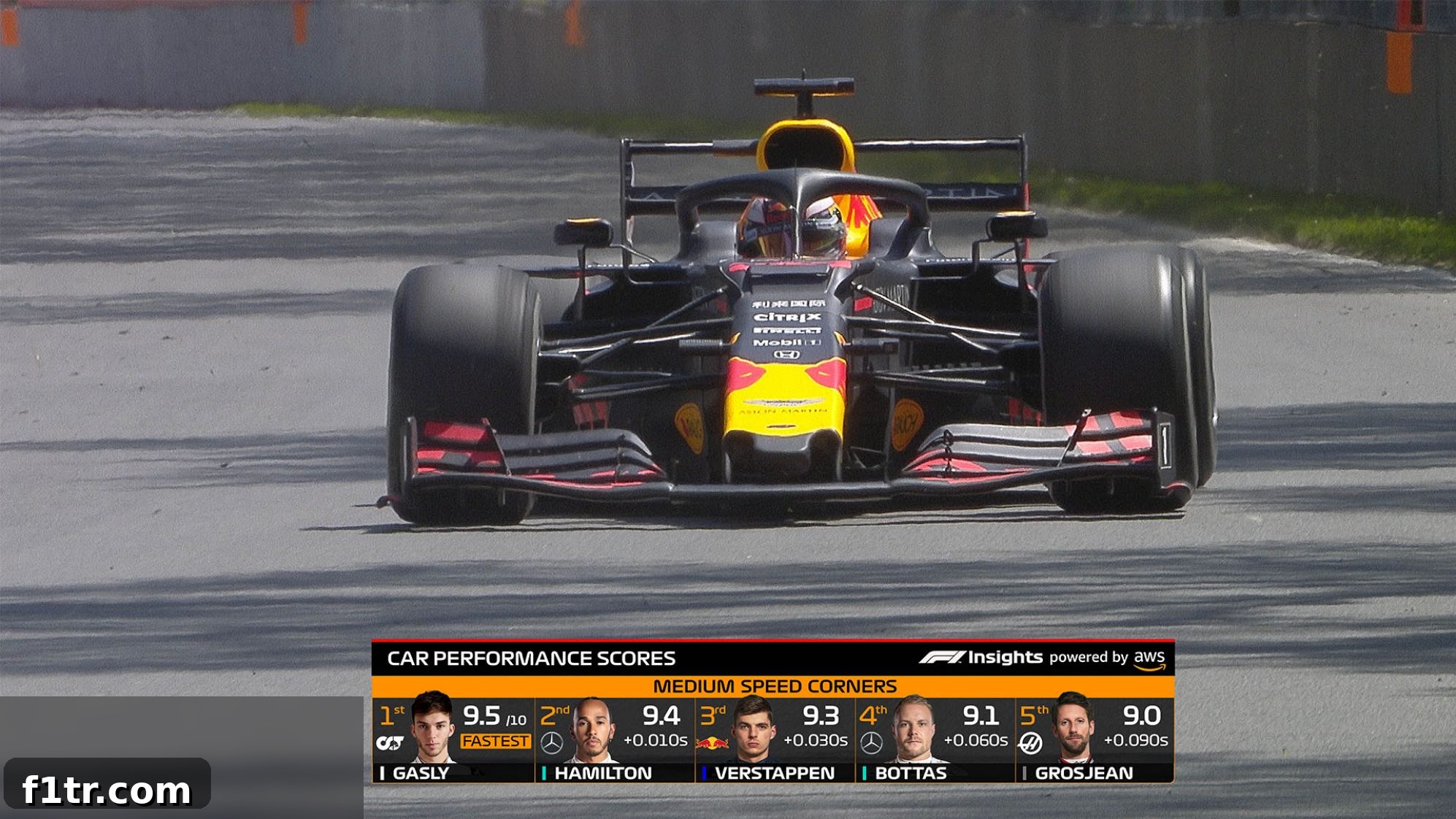
The exhilarating world of Formula 1 is not just about speed and thrilling races; it’s increasingly about data. For the 2020 F1 season, starting with the much-anticipated Austrian Grand Prix, Formula 1 unveiled a pioneering suite of television graphics designed to bring fans closer to the action than ever before. This innovative initiative, developed in close collaboration with F1 sponsor Amazon Web Services (AWS), leverages cutting-edge cloud technology and data analytics to unlock deeper insights into the sport.
Revolutionizing F1 Fan Experience: A Deep Dive into New TV Graphics Powered by AWS
Formula 1 has always been at the forefront of technological advancement, both on and off the track. The partnership with AWS marks a significant leap forward in how fans consume and understand the complexities of motorsport. By integrating sophisticated data processing and machine learning capabilities, these new graphics aim to demystify intricate race scenarios, driver performances, and car dynamics, making the sport more engaging and accessible to a global audience. The integration of AWS branding within these graphics also highlights the pivotal role of cloud computing in modern sports entertainment.
The Power of Data: AWS and F1’s Strategic Alliance
The collaboration between Formula 1 and Amazon Web Services is rooted in a shared vision: to enhance performance through data. While F1 teams utilize data to shave milliseconds off lap times and refine race strategies, AWS brings its unparalleled expertise in cloud infrastructure, advanced analytics, and machine learning to the broadcast side. This synergy enables the processing of colossal amounts of real-time data – reportedly over a million data points per second transmitted by the cars – to generate rich, immediate, and understandable visualizations for viewers.
Rob Smedley, Formula 1’s chief engineer, succinctly captured the essence of this partnership, stating that it is “bringing fans closer to the track than ever before, and unlocking previously untold stories and insights from behind the pit wall.” This commitment to transparency and enhanced understanding is at the heart of the new graphics package.
Unveiling the New Graphics: A Phased Introduction
The introduction of these six innovative graphics was strategically staggered throughout the 2020 F1 season, allowing fans to gradually adapt to and appreciate each new layer of information. This phased approach ensured that each graphic could make a significant impact and become an integral part of the F1 viewing experience.
1. Car Performance Scores: Debut at the Austrian Grand Prix
The inaugural graphic to make its debut was the ‘Car Performance Scores’, introduced during the season-opening Austrian Grand Prix. This revolutionary graphic provides a concise, yet comprehensive, overview of each car’s performance across key metrics such as low-speed cornering, high-speed cornering, straight-line speed, and tire management. By analyzing real-time data streams, the graphic translates complex engineering statistics into an easily digestible format, allowing fans to quickly grasp which cars are excelling in different areas of the track or under specific conditions.
Understanding these scores helps viewers appreciate the nuances of car design and setup, as well as the compromises teams make for various track layouts. For instance, a car might have exceptional straight-line speed but struggle in tight corners, and the Car Performance Scores make these strengths and weaknesses immediately apparent, enriching the commentary and fan discussions.
2. Ultimate Driver Speed Comparison: Premiering at the 70th Anniversary Grand Prix
As the championship progressed to its fifth round, the 70th Anniversary Grand Prix, F1 introduced a highly anticipated feature: the ‘Ultimate Driver Speed Comparison’. This graphic offers a fascinating retrospective, contrasting the performance of current drivers against legendary racers from as far back as 1983. Imagine seeing Lewis Hamilton’s pace compared against Ayrton Senna’s or Michael Schumacher’s in similar conditions or on similar track sections. This comparison is not merely a nostalgic nod; it leverages historical race data and advanced algorithms to provide meaningful context, sparking debates and celebrating the rich history of Formula 1.
This graphic serves as a powerful bridge between generations of F1 fans, allowing newer followers to appreciate the legacy of past champions while giving veteran enthusiasts a fresh perspective on contemporary talents. It underscores the continuous evolution of driver skill, car technology, and track characteristics over decades.
3. High-speed/Low-speed Corner Performance: Introduced at the Belgian Grand Prix
The iconic Spa-Francorchamps circuit, host of the Belgian Grand Prix, was the perfect venue for the debut of the ‘High-speed/Low-speed Corner Performance’ graphic. This specialized display offers granular information on how drivers navigate different types of corners. Cornering is a critical aspect of F1, demanding immense skill, precision, and a perfectly balanced car setup.
This graphic provides insights into driver technique, showing who is carrying more speed through a particular apex, who is braking later, or who is managing tire grip more effectively in both fast sweeps and tight chicanes. It highlights the subtle differences that can make or break a lap time, making it invaluable for understanding qualifying battles and race overtakes.
Looking Ahead: Graphics for the Second Half of the 2020 Season and Beyond
The innovation didn’t stop there. The latter half of the 2020 F1 season saw the introduction of even more sophisticated graphics, promising deeper analytical capabilities and predictive insights:
- Driver Skills Rating: This graphic aims to quantify driver performance beyond simple lap times. By analyzing factors such as braking consistency, throttle application, tire management, and overtakes, it intends to provide a holistic rating of a driver’s raw talent and adaptability across various conditions. This offers fans a more objective way to compare driver prowess.
- Car/Team Development and Overall Season Performance: F1 is a constant development race. This graphic visualizes the evolution of car performance and team strategy throughout the season. It tracks upgrades, their effectiveness, and how teams adapt to challenges, providing a dynamic narrative of the championship battle and highlighting engineering triumphs and setbacks.
- Qualifying and Race Pace Predictions: Leveraging machine learning and vast datasets, these graphics offer real-time predictions for qualifying results and race outcomes. By considering factors like tire degradation, fuel load, track conditions, and driver form, they provide educated guesses on who might win pole position or claim victory, adding an extra layer of excitement and anticipation to the broadcast.
The Impact on Fan Engagement and the Future of F1
These new F1 television graphics represent more than just visual enhancements; they signify a fundamental shift in how sports broadcasting can utilize data to elevate the fan experience. By transforming complex data into intuitive, real-time visuals, Formula 1 and AWS are making the sport more understandable and immersive for both seasoned aficionados and new viewers.
For fans, this means:
- Deeper Understanding: Gaining insights into the intricate strategies, car performance, and driver skills that were once exclusive to engineers and insiders.
- Enhanced Storytelling: The graphics provide new narrative hooks for commentators and viewers alike, enriching discussions about race events and driver rivalries.
- Increased Accessibility: Simplifying complex data makes the sport less intimidating and more approachable for casual viewers.
- Future Potential: This collaboration opens doors for even more advanced analytics, predictive models, and interactive viewing experiences in the years to come, potentially leading to personalized data streams or augmented reality overlays.
The partnership between Formula 1 and AWS demonstrates a powerful blueprint for how technology can transform sports. It’s a testament to the belief that the future of F1 lies not only on the track but also in the cloud, constantly pushing boundaries to deliver an unparalleled viewing spectacle.
Don’t miss anything new from RaceFans
Follow RaceFans on social media:
- Join RaceFans on Facebook
- Follow RaceFans on Twitter
- Get daily email updates from RaceFans
Explore More from the 2020 F1 Season
Delve deeper into the events, stories, and analyses from a memorable season:
- Grosjean to make F1 test return tomorrow for first time since Bahrain horror crash
- Pictures: Wrecked chassis from Grosjean’s Bahrain fireball crash to go on display
- Bottas vs Rosberg: Hamilton’s Mercedes team mates compared after 78 races each
- F1 revenues fell by $877 million in Covid-struck 2020 season
- Hamilton and Mercedes finally announce new deal for 2021 season
Browse all 2020 F1 season articles