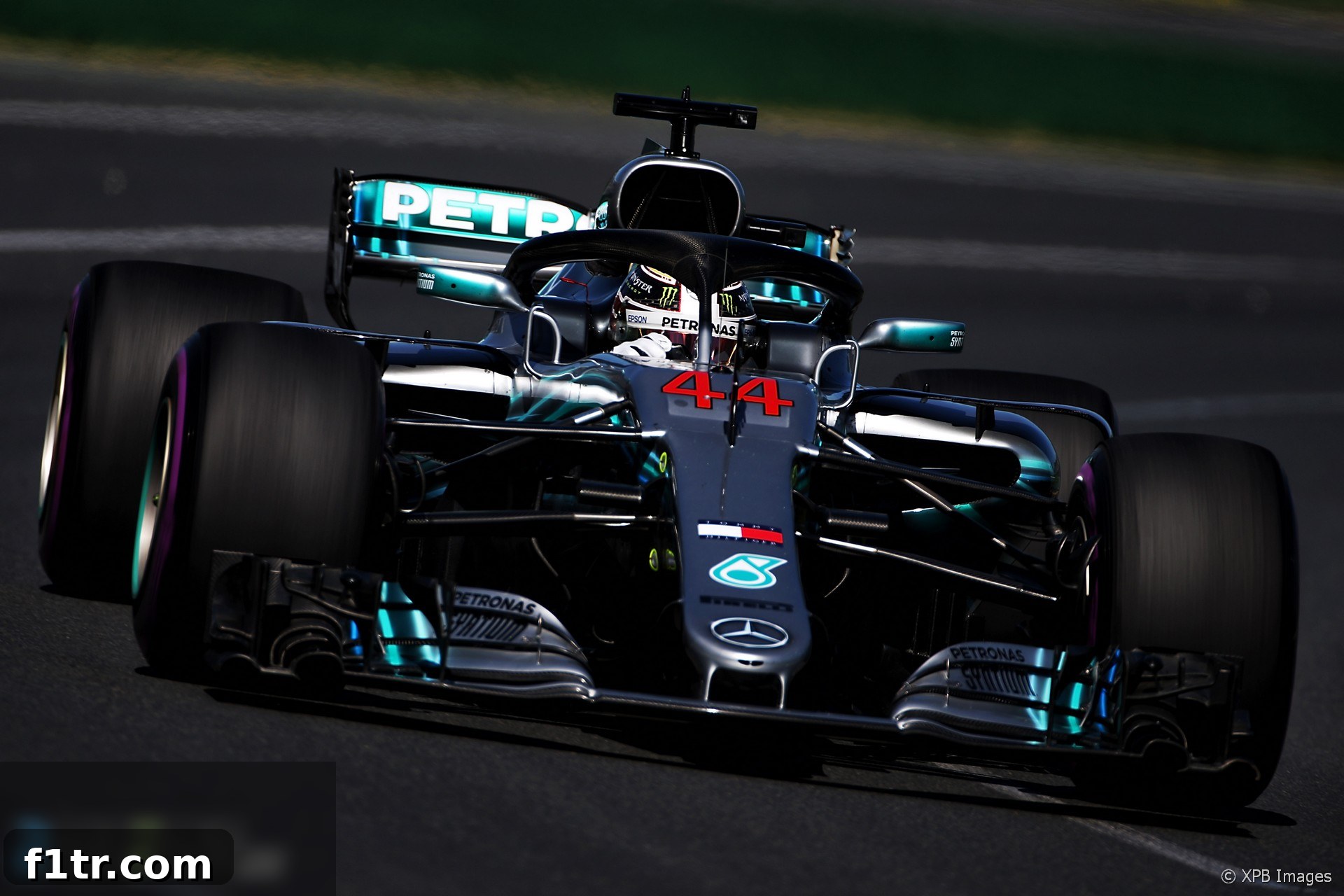
Mercedes Sets the Tone: Hamilton Leads 2018 F1 Season Opener in Australia Free Practice 1
The highly anticipated 2018 Formula 1 season roared to life at the iconic Albert Park Circuit for the Australian Grand Prix, and for Mercedes-AMG Petronas Motorsport, it was a familiar and reassuring start. In the crucial first free practice session, the reigning constructors’ champions immediately asserted their authority. Both Lewis Hamilton and Valtteri Bottas comfortably headed the timesheets, sending a clear message about their early-season form and setting a formidable benchmark for their rivals.
Four-time world champion Lewis Hamilton showcased his immense talent and the formidable speed of the Mercedes W09 by delivering a scorching lap time of 1’24.026. This impressive performance, achieved on a set of Pirelli’s ultra-soft tyres, was a testament to both the driver’s skill and the car’s inherent pace from the outset. Significantly, Hamilton’s chart-topping effort in FP1 was almost two-tenths of a second faster than his equivalent best from the previous year’s Australian Grand Prix, signaling a tangible improvement and a strong indication of Mercedes’ readiness to defend their titles.
His teammate, Valtteri Bottas, secured a solid second place, completing a dominant 1-2 for the Silver Arrows, albeit over half a second adrift of Hamilton. This early display of strength from the German outfit reinforced their status as the team to beat. Close behind the Mercedes duo was the ever-challenging Red Bull Racing car of Max Verstappen, who demonstrated the potential of the RB14 chassis. The formidable Ferrari pair, featuring Kimi Raikkonen and Sebastian Vettel, slotted in next, followed by the second Red Bull of local hero Daniel Ricciardo. This familiar sight saw the sport’s traditional ‘big three’ teams — Mercedes, Ferrari, and Red Bull — firmly occupying the top six positions, highlighting the established pecking order at the commencement of the 2018 campaign.
Midfield Teams: Promise, Problems, and Performance Highlights
Beyond the leading contenders, the midfield battle, often a source of intense drama and unpredictable outcomes, showed its first signs of life. Haas F1 Team, in particular, delivered on the significant promise they displayed during pre-season testing. Veteran driver Romain Grosjean piloted his VF-18 to an impressive seventh-fastest time, earning the unofficial title of ‘best of the rest.’ While his lap was still over six-tenths of a second off the pace of the front-running group, it marked a remarkably strong start for the American squad, suggesting they could indeed be a potent force in the densely packed midfield this season.
In contrast, the session began with significant challenges for McLaren. An unforeseen exhaust problem immediately plagued Fernando Alonso’s car, keeping the two-time world champion sidelined in the garage for a substantial portion of the session. More than an hour elapsed before either McLaren driver could even set a competitive lap time, putting them considerably behind schedule compared to their rivals. Despite these early setbacks and a frantic rush to get track time towards the end of the session, both Alonso and his teammate Stoffel Vandoorne showcased admirable resilience, managing to climb into the top 10. The pair were notably separated on the timesheets by just a few hundredths of a second by Carlos Sainz Jnr’s Renault, underscoring the razor-thin margins and fierce competition expected in the midfield battle throughout 2018.
Elsewhere, the new Toro Rosso-Honda partnership faced its initial real test. Pierre Gasly’s STR13 narrowly missed out on a coveted top-10 spot, falling short by a mere one-hundredth of a second. This incredibly tight margin highlighted the competitive nature of the field and the steep learning curve for the newly integrated Honda power unit. Following closely behind Gasly was rookie Sergey Sirotkin, making his official Formula 1 debut with Williams. His initial performance offered a crucial baseline for the storied British team as they commenced a new era.
Force India, a team renowned for its efficiency and shrewd development, saw Esteban Ocon record the quickest time for the team, placing 14th. The Silverstone-based outfit dedicated a significant portion of the session to conducting crucial aerodynamic tests on their updated package, specifically designed to optimize performance for the opening race. This strategic approach aimed at gathering vital data and fine-tuning their VJM11 for the specific demands of the Albert Park circuit. Conversely, the Sauber pair of Marcus Ericsson and debutant Charles Leclerc occupied the lowest positions on the timesheets. While this indicated a challenging start for the Swiss team, particularly with Leclerc gaining valuable experience in his inaugural official F1 session, their focus would undoubtedly be on improving their pace and gaining a deeper understanding of their new C37 chassis throughout the weekend.
In-Depth Look at the First Practice Times and Gaps
The first practice session serves multiple purposes: shaking down new components, validating pre-season simulations, and allowing drivers to reacclimatize to competitive conditions. However, the raw lap times, especially from the top teams, often provide an early, albeit preliminary, indication of the season’s pecking order. Lewis Hamilton’s commanding 1’24.026, achieved on the ultra-soft compound, wasn’t just faster than his previous year’s FP1 benchmark; it suggested that Mercedes had found a strong operating window for their W09 straight away. The substantial gap of 0.551 seconds to teammate Valtteri Bottas underscores Hamilton’s exceptional form and the overall performance advantage Mercedes enjoyed over their immediate rivals in this initial outing.
Red Bull’s Max Verstappen, placing third and just two-tenths behind Bottas, exhibited encouraging pace. This hinted that the Milton Keynes squad might be closer to Mercedes than some pre-season predictions suggested, especially with anticipated development throughout the year. Ferrari, with Kimi Raikkonen and Sebastian Vettel in fourth and fifth respectively, appeared to be playing a more conservative hand, possibly not pushing their SF71H to its absolute limits. The gap of nearly a second to Hamilton for both Ferrari drivers, while seemingly significant, might not be fully representative of their ultimate potential once qualifying and race settings are finalized. Daniel Ricciardo rounded out the top six, reinforcing the prevalent belief that these three powerhouse teams would once again be the primary contenders for victories and the championship title.
The midfield times were particularly captivating. Romain Grosjean’s seventh place, almost a full second clear of the fastest car outside the top three, positioned Haas as a serious contender for consistent points finishes. The tightly packed cluster of cars from eighth to sixteenth position, all within roughly a second of each other, indicated a fierce and unpredictable battle for supremacy among teams such as McLaren, Renault, Toro Rosso, Williams, and Force India. This intense competition promises exhilarating races and strategic gambles as teams strive to optimize their setups and introduce further upgrades throughout the season.
McLaren’s remarkable recovery, spearheaded by Fernando Alonso’s impressive eighth place despite their early technical woes, served as a testament to the team’s ability to react effectively under pressure. Their new Renault power unit appeared to provide a decent baseline, suggesting that once initial reliability issues are fully ironed out, they could consistently challenge for strong points finishes. Conversely, the struggles of Sauber at the very bottom of the timesheets, with both Marcus Ericsson and Charles Leclerc several seconds off the pace, underscored the considerable challenge faced by the team in establishing competitiveness with their new Ferrari engine package and a rookie driver in Leclerc.
Official Results: 2018 Australian Grand Prix First Free Practice
For a comprehensive overview, here is the detailed breakdown of all twenty drivers’ lap times and positions from the inaugural practice session:
| Pos. | No. | Driver | Car | Best lap | Gap | Laps |
|---|---|---|---|---|---|---|
| 1 | 44 | Lewis Hamilton | Mercedes | 1’24.026 | 27 | |
| 2 | 77 | Valtteri Bottas | Mercedes | 1’24.577 | 0.551 | 29 |
| 3 | 33 | Max Verstappen | Red Bull-TAG Heuer | 1’24.771 | 0.745 | 26 |
| 4 | 7 | Kimi Raikkonen | Ferrari | 1’24.875 | 0.849 | 23 |
| 5 | 5 | Sebastian Vettel | Ferrari | 1’24.995 | 0.969 | 22 |
| 6 | 3 | Daniel Ricciardo | Red Bull-TAG Heuer | 1’25.063 | 1.037 | 25 |
| 7 | 8 | Romain Grosjean | Haas-Ferrari | 1’25.730 | 1.704 | 24 |
| 8 | 14 | Fernando Alonso | McLaren-Renault | 1’25.896 | 1.870 | 16 |
| 9 | 55 | Carlos Sainz Jnr | Renault | 1’25.922 | 1.896 | 23 |
| 10 | 2 | Stoffel Vandoorne | McLaren-Renault | 1’26.482 | 2.456 | 15 |
| 11 | 10 | Pierre Gasly | Toro Rosso-Honda | 1’26.494 | 2.468 | 25 |
| 12 | 35 | Sergey Sirotkin | Williams-Mercedes | 1’26.536 | 2.510 | 25 |
| 13 | 27 | Nico Hulkenberg | Renault | 1’26.583 | 2.557 | 25 |
| 14 | 31 | Esteban Ocon | Force India-Mercedes | 1’26.605 | 2.579 | 30 |
| 15 | 18 | Lance Stroll | Williams-Mercedes | 1’26.636 | 2.610 | 30 |
| 16 | 11 | Sergio Perez | Force India-Mercedes | 1’26.767 | 2.741 | 26 |
| 17 | 20 | Kevin Magnussen | Haas-Ferrari | 1’27.035 | 3.009 | 13 |
| 18 | 28 | Brendon Hartley | Toro Rosso-Honda | 1’27.745 | 3.719 | 16 |
| 19 | 9 | Marcus Ericsson | Sauber-Ferrari | 1’27.964 | 3.938 | 28 |
| 20 | 16 | Charles Leclerc | Sauber-Ferrari | 1’28.853 | 4.827 | 28 |
First Practice Visual Gaps: Understanding the Performance Spread
Lewis Hamilton – 1’24.026
+0.551 Valtteri Bottas – 1’24.577
+0.745 Max Verstappen – 1’24.771
+0.849 Kimi Raikkonen – 1’24.875
+0.969 Sebastian Vettel – 1’24.995
+1.037 Daniel Ricciardo – 1’25.063
+1.704 Romain Grosjean – 1’25.730
+1.870 Fernando Alonso – 1’25.896
+1.896 Carlos Sainz Jnr – 1’25.922
+2.456 Stoffel Vandoorne – 1’26.482
+2.468 Pierre Gasly – 1’26.494
+2.510 Sergey Sirotkin – 1’26.536
+2.557 Nico Hulkenberg – 1’26.583
+2.579 Esteban Ocon – 1’26.605
+2.610 Lance Stroll – 1’26.636
+2.741 Sergio Perez – 1’26.767
+3.009 Kevin Magnussen – 1’27.035
+3.719 Brendon Hartley – 1’27.745
+3.938 Marcus Ericsson – 1’27.964
+4.827 Charles Leclerc – 1’28.853
Note: Drivers more than ten seconds off the leading pace are typically omitted from this visual representation for clarity.
Concluding Thoughts: Setting the Stage for an Exciting 2018 F1 Season
The first practice session of the 2018 Australian Grand Prix delivered a clear and compelling message: Mercedes remains the formidable force in Formula 1, with Lewis Hamilton appearing to be in exceptional form for his title defense. While FP1 times are always subject to various factors and not fully representative of ultimate race pace or qualifying potential, the comfortable gap Mercedes established over its rivals is undoubtedly a significant confidence booster for the team and a strong statement of intent for the season ahead. The battle for supremacy behind them, especially among Ferrari and Red Bull, is already shaping up to be fiercely contested, promising an enthralling season-long rivalry.
Furthermore, the midfield has shown encouraging signs of enhanced competitiveness, with Haas leading the charge and teams like McLaren demonstrating resilience despite early technical glitches. As teams continue to fine-tune their setups, gather crucial data, and push their cars closer to the limit in the subsequent practice sessions and qualifying, the true pecking order will gradually become clearer. However, this opening salvo in Melbourne has certainly whetted the appetite of Formula 1 fans worldwide, offering a tantalizing glimpse into what promises to be an exhilarating and unpredictable 2018 championship season.
Explore More from the 2018 Australian Grand Prix
- Top ten pictures from the 2018 Australian Grand Prix
- 2018 Australian Grand Prix Star Performers
- Vettel can’t ignore Mercedes’ superior speed after lucky win
- McLaren equal best result of last Honda era in first race with Renault
- Vote for your 2018 Australian Grand Prix Driver of the Weekend
Browse all 2018 Australian Grand Prix articles
Further 2018 F1 Practice Session Insights
Browse all 2018 F1 practice results