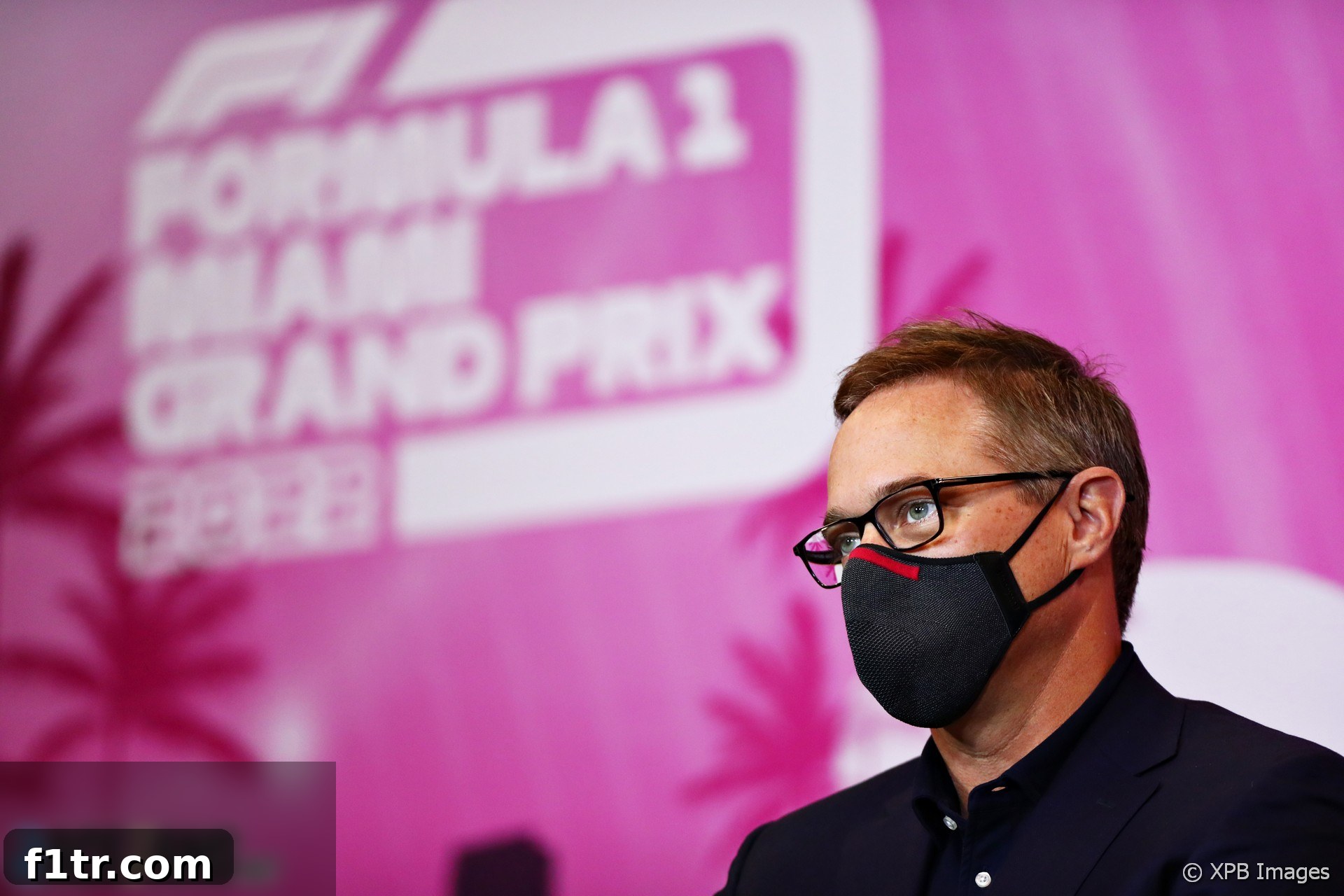
Having an American driver is not inherently essential for Formula 1’s burgeoning success in the United States, according to the visionary promoter behind the Miami Grand Prix. This assertion challenges a long-standing belief within the motorsport community that a homegrown star is the linchpin for unlocking the immense potential of the lucrative American market. As F1 continues its strategic expansion across the US, a nuanced understanding of its growing appeal is emerging, shifting focus from individual national heroes to broader factors driving unprecedented engagement.
Advert | Become a Supporter and go ad-free
Formula 1 is set to amplify its presence in the United States next year with the introduction of a second championship round at the Miami International Autodrome. This temporary circuit, ingeniously constructed around the iconic Hard Rock Stadium in Miami Gardens, symbolizes a significant step in F1’s ambitious plan to captivate an even wider American audience. For decades, the championship has actively pursued a larger footprint in one of the world’s most economically powerful and sports-obsessed nations. Historically, the presence of a successful American driver was frequently highlighted as the crucial catalyst for achieving this penetration, a sentiment deeply embedded in the sport’s strategy for the region.
Formula 1’s American Ascent: Miami GP Promoter Dispels Myths on US Driver Necessity
However, Tom Garfinkel, the astute managing partner of the Miami Grand Prix, offers a compelling counter-narrative. He contends that the sport’s popularity is currently surging in the US, defying the conventional wisdom that ties success directly to an American driver. This surge is occurring despite the absence of a prominent American figure on the F1 grid since Alexander Rossi’s brief stint six years prior. Garfinkel’s perspective suggests a paradigm shift, where F1’s appeal transcends national allegiances and connects with fans through other powerful mediums.
“The popularity of the sport is growing a lot in the United States right now without an American driver,” Garfinkel candidly shared in an interview. While acknowledging the potential boon, he emphasized that it’s not an indispensable requirement. “I think having an American driver would be a great thing. I don’t know that it’s a necessary element, but it would definitely be a great thing to see an American driver come into the series.” This balanced viewpoint underlines a confidence in F1’s intrinsic appeal and its current strategies, which are proving effective regardless of driver nationality.
The “Drive to Survive” Phenomenon: A Game-Changer for US F1 Engagement
Garfinkel prominently cited the phenomenal success of the Netflix docuseries, “Drive to Survive,” as a prime example of how Formula 1 is forging deeper connections with a burgeoning fanbase across the USA. The series, launched in 2019, has been instrumental in demystifying the complex world of F1, transforming it from an obscure European motorsport into a captivating blend of high-stakes competition, compelling drama, and intricate human stories. By offering unprecedented behind-the-scenes access, it has effectively humanized the drivers, team principals, and rivalries, making the sport relatable and profoundly engaging to an entirely new demographic.
“It’s definitely increased the fan support and interest,” Garfinkel affirmed, underscoring the tangible impact of the show. He observed, particularly amongst younger generations, a remarkable surge in enthusiasm. “Especially, anecdotally, amongst teenagers. I see it with my sons and their friends, that series is something that they watch with anticipation and excitement and it’s gotten them excited about watching the races and getting to know the drivers and getting simulators and driving themselves.” This anecdotal evidence from a key promoter highlights how “Drive to Survive” serves as a powerful gateway, converting passive viewers into active participants who not only watch the races but also seek to understand the intricacies, personalities, and technologies that define Formula 1. It fosters a level of immersive engagement that traditional broadcasting alone often struggles to achieve.
Quantifiable Growth: Soaring TV Ratings and Market Expansion
Beyond anecdotal observations, hard data supports the narrative of Formula 1’s rapid ascent in the US. “The television ratings in the United States are up I think over 50 percent on the races right now,” Garfinkel added, pointing to a staggering increase in viewership. This significant surge in television audience demonstrates a quantifiable expansion of F1’s reach and popularity across diverse demographics. Such impressive growth is not merely a statistical anomaly; it reflects a broader cultural shift where Formula 1 is increasingly integrated into mainstream American sports consumption.
The implications of this heightened viewership extend far beyond mere entertainment. “The more that American companies, American fans get involved, the better it is for everyone,” Garfinkel emphasized. A larger, more engaged audience translates directly into increased sponsorship opportunities, greater advertising revenue, and a deeper pool of talent and investment within the US. This symbiotic relationship fosters a robust ecosystem where F1’s commercial viability in the region strengthens, attracting more domestic partners and solidifying its long-term presence. The economic power of the American market, once elusive, is now actively being tapped, creating a positive feedback loop for the sport’s global expansion.
Miami’s Strategic Significance: Fueling F1’s Presence in the US
Garfinkel projects that interest in Formula 1 will continue its steady upward trajectory in America, significantly bolstered by the strategic addition of a second race in the country. The Miami Grand Prix is not just another event on the calendar; it’s a meticulously planned pillar in F1’s aggressive strategy to cement its status as a major sport in the United States. Following the established success of the Circuit of the Americas in Austin, Miami provides a crucial new gateway into a distinct cultural and commercial hub, further diversifying F1’s footprint and appeal.
“It doesn’t happen overnight,” Garfinkel wisely stated, acknowledging that building a lasting sporting legacy requires sustained effort and investment. He articulated a clear vision for the combined impact of recent initiatives: “The Netflix series, having another race in the United States in addition to Austin, in Miami, I think is going to help.” The synergy between the engaging narrative of “Drive to Survive” and the tangible excitement of two highly anticipated races on American soil creates an unparalleled platform for fan engagement and education. Miami, with its vibrant international flair and dynamic urban setting, offers a contrasting yet complementary experience to Austin’s traditional motorsport heritage, collectively attracting a broader spectrum of fans.
Beyond the Spectacle: Understanding the Nuances of Formula 1
A crucial aspect of F1’s growth strategy in the US revolves around fan education. Garfinkel highlighted that Formula 1 is not a sport easily grasped at a glance. “The more people get educated about the sport, the more you fall in love with it. It’s not the kind of sport that you just turn on TV and all of a sudden you’re watching a race and you understand what’s going on.” Unlike many other sports with simpler rules and immediate gratification, F1 demands a deeper level of engagement to truly appreciate its complexity and allure. Fans need to understand the intricate strategy unfolding on track, the subtle yet critical technological advancements in the cars, the unique characteristics of each circuit, the individual talents and rivalries of the drivers, and the compelling personalities that populate the paddock.
This commitment to storytelling and contextualization is where F1 has excelled recently. “I think Formula 1 is doing a great job of telling those stories and growing the fan base and I think that it’s going to take some time. But having the race in Miami is one element of that, it’s certainly going to help.” By effectively communicating the rich tapestry of engineering, athleticism, and human drama, F1 transforms casual observers into passionate aficionados. The Miami Grand Prix serves as a magnificent live showcase, allowing new fans to experience the spectacle firsthand, further deepening their understanding and emotional investment in a sport that rewards intellectual curiosity as much as it does sensory excitement.
The Future of Formula 1 in the United States: A Sustained Trajectory
The future for Formula 1 in the United States appears exceptionally bright, underpinned by a multi-faceted approach that prioritizes accessibility, narrative engagement, and strategic event placement. The insights from the Miami Grand Prix promoter underscore a profound evolution in how F1 perceives and cultivates its American fanbase. The days when a single national hero was deemed indispensable are giving way to an era where collective passion, driven by immersive content and thrilling live experiences, is the primary engine of growth. This represents a more resilient and sustainable model for expansion in a market that has historically proven challenging to conquer.
The combination of Netflix’s “Drive to Survive” igniting fresh interest, the substantial increase in television viewership confirming widespread engagement, and the strategic addition of a high-profile second race in Miami alongside Austin, creates a powerful synergy. These elements collectively educate, entertain, and ultimately convert a diverse audience into dedicated Formula 1 enthusiasts. As more American companies invest in the sport and more fans embrace its unique blend of technology, speed, and drama, Formula 1 is not just gaining traction; it is firmly establishing itself as a mainstream sporting spectacle in the United States. This sustained trajectory promises continued growth and unprecedented success for years to come, solidifying the US as a cornerstone of F1’s global future.
Advert | Become a RaceFans supporter and go ad-free
2021 F1 Season Insights
- Masi ‘basically gifted the championship’ to Verstappen says 2021 FIA steward Sullivan
- Las Vegas race backers looking to extend F1 deal beyond 2025
- Why Mercedes put ‘a reminder of joy and pain’ on display in their factory lobby
- Verdict on error in GT race suggests Mercedes would have lost 2021 Abu Dhabi GP appeal
- Title ‘stolen’ from Mercedes made us ‘underdogs people cheer for’ – Wolff
Browse all 2021 F1 season articles