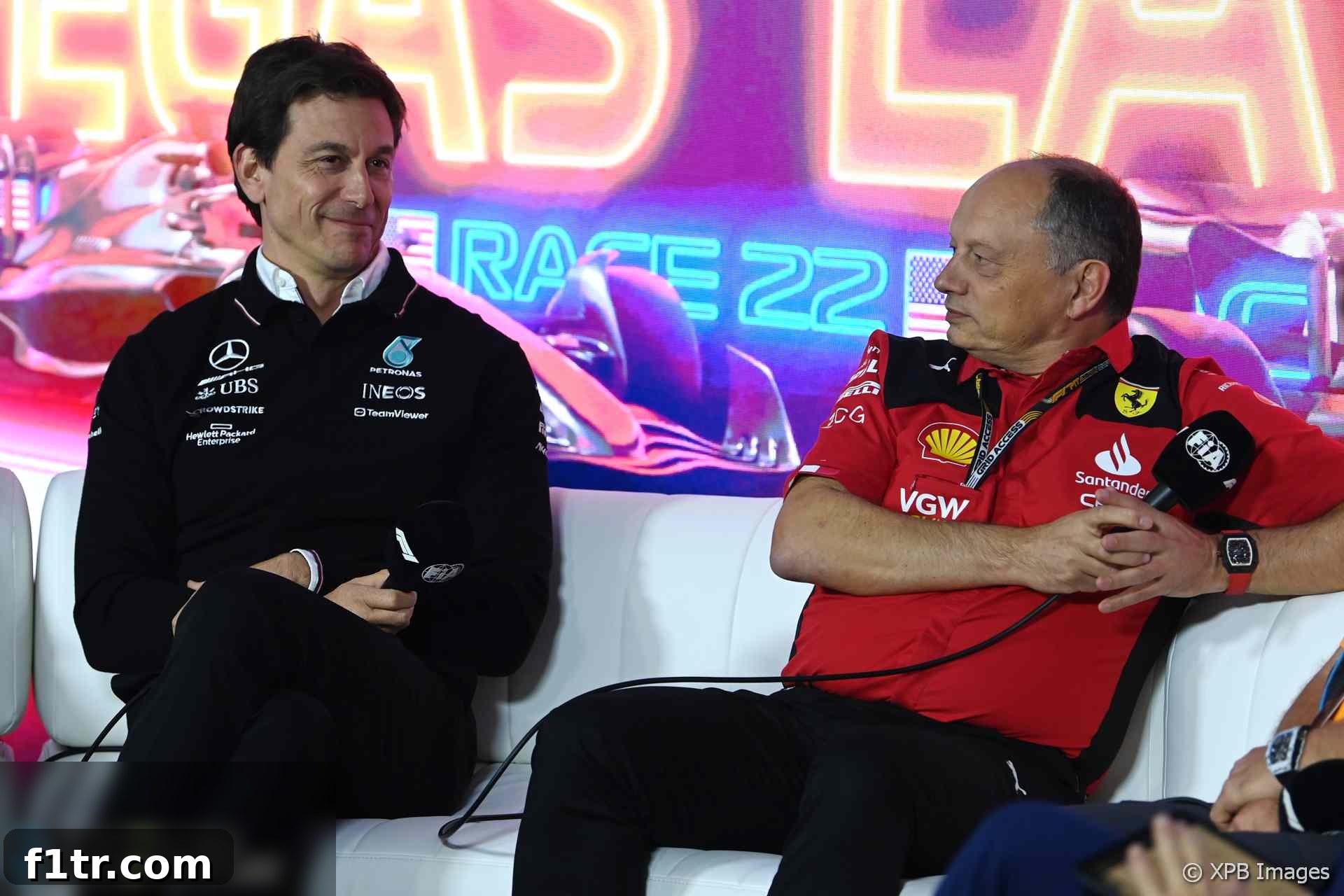
F1 Team Principals Wolff and Vasseur Issued Formal Warnings Over Las Vegas Press Conference Conduct
In a significant development for Formula 1, Mercedes team principal Toto Wolff and Ferrari counterpart Frederic Vasseur have received formal warnings from the sport’s governing body, the FIA. The reprimand comes after their use of strong language during an official press conference at the highly anticipated Las Vegas Grand Prix, an incident that quickly drew the attention of the FIA media delegate and sparked a broader discussion about professionalism in motorsport.
The Tense Backdrop: Las Vegas Grand Prix Debuts with Unforeseen Challenges
The inaugural Las Vegas Grand Prix was undoubtedly one of the most talked-about events on the 2023 Formula 1 calendar. Touted as a spectacle blending high-octane racing with the glitz and glamour of the Las Vegas Strip, the event carried immense commercial expectations for the sport. However, the much-hyped debut was marred by an unexpected and frustrating incident during its very first practice session.
Carlos Sainz’s Fateful Incident and Its Immediate Aftermath
Just eight minutes into the crucial first practice (FP1) session, Ferrari driver Carlos Sainz Jnr suffered a major setback. While navigating the newly laid street circuit at high speed, his car made contact with a loose water valve cover. The impact was severe, causing significant damage to the underside of his SF-23 chassis, battery, and power unit components. This alarming incident forced the immediate suspension and eventual abandonment of FP1, leaving teams with severely limited track time and a monumental repair job on Ferrari’s part. The safety lapse and the subsequent operational disruption cast a pall over what was meant to be a triumphant opening for the new race.
Raw Emotions Erupt During the Press Conference
The frustration stemming from the FP1 incident boiled over into the official team principals’ press conference held shortly after the session’s abandonment. The atmosphere was palpably tense, with media eager for answers regarding the unprecedented disruption and its implications for the event. What transpired highlighted the immense pressure and passion inherent in Formula 1.
Frederic Vasseur’s Unfiltered Outburst
When the press conference moderator attempted to steer the conversation towards Ferrari’s promotional activities for the Las Vegas race, Frederic Vasseur, still reeling from the extensive damage to Sainz’s car, made it unequivocally clear that his priorities lay elsewhere. His response was blunt and laced with profanity, reflecting the deep-seated anger and financial strain the incident had imposed on his team.
“I’m not sure that is the topic for me today,” Vasseur stated, visibly exasperated. “We had a very tough FP1. This will cost us a fortune. We fucked up the session for Carlos. We won’t be part of the FP2 for sure. We have to change the chassis out of the car, to set-up the car. Okay, the show is the show and everything is going well, but I think it’s just unacceptable for the F1 today.” His words underscored a growing sentiment among some in the paddock: a concern that the emphasis on spectacle might be overshadowing the fundamental sporting aspects and operational integrity of Formula 1.
Toto Wolff’s Vehement Defense of the Event
Later in the same press conference, Mercedes’ Toto Wolff vehemently defended the Las Vegas Grand Prix against criticisms, particularly from a journalist who suggested the Sainz incident was a “black eye” for Formula 1’s new event. Wolff’s reaction was equally impassioned, interjecting angrily and dismissing the severity of the issue with strong language.
“Did you ask the question?” Wolff retorted, challenging the journalist directly. “It’s completely ridiculous, completely ridiculous. FP1, how can you even dare trying to talk bad about an event that sets the new standards, new standards to everything. You’re speaking about a fucking drain cover that’s been undone, that has happened before. That’s nothing. It’s FP1.” Wolff’s defense highlighted the commercial stakes and the broader vision for F1’s expansion, attempting to minimize the impact of the technical glitch amidst the grandeur of the occasion.
The FIA’s Response and Official Scrutiny
The language used by both team principals did not go unnoticed. The FIA media delegate officially referred Wolff and Vasseur to the stewards, citing “the use of certain language at the FIA press conference in Las Vegas on 16 November.” This referral initiated a formal investigation into their conduct.
Breaching the International Sporting Code
Following a thorough review, the stewards determined that both Toto Wolff and Frederic Vasseur had breached Article 12.2.1.f of the International Sporting Code. This specific article forbids “any words, deeds or writings that have caused moral injury or loss to the FIA, its bodies, its members or its executive officers, and more generally on the interest of motor sport and on the values defended by the FIA.” The article serves as a crucial safeguard, ensuring that participants uphold the integrity and reputation of the sport at all times, especially in public forums.
The Formal Hearing and Justification for Delay
A formal hearing regarding the matter was eventually conducted at 5 pm local time at the Yas Marina Circuit, coinciding with the Abu Dhabi Grand Prix. An earlier hearing was not feasible on Sunday morning of the Las Vegas Grand Prix weekend, as the race itself took place on Saturday night, followed by immediate post-race commitments. This logistical constraint necessitated the delay, ensuring a proper review could take place away from the immediate heat of the moment in Las Vegas.
Stewards’ Verdict: A Clear Message for Professionalism
Despite the passion and frustration that led to their comments, both team principals were ultimately issued formal warnings. The FIA’s decision serves as a stern reminder of the high standards of conduct expected from public figures within motorsport.
The Defense Arguments Presented
During the hearing, both Wolff and Vasseur offered explanations for their choice of words. Vasseur articulated that he was “extremely upset and frustrated by the incident that had occurred in [first practice] and that language such as this, by him, was not usual.” Similarly, Wolff stated that “the use of the language concerned was in this case unusual” and further added that it was “provoked by an abrupt interjection during the press conference and therefore cannot be regarded as typical from this team principal.” These defenses aimed to contextualize their outbursts as exceptional reactions to stressful circumstances, rather than a reflection of their typical demeanor or disregard for the rules.
The Formal Warning and Future Expectations
Notwithstanding their explanations, the stewards maintained their position, issuing formal warnings to both individuals. Their statement underscored the FIA’s commitment to upholding decorum and professionalism: “the FIA regards language of this type to be unacceptable, moving forward, particularly when used by participants in the sport who have a high public profile and who are seen by many, especially younger, followers of the sport, as role models, and that in future the FIA will not tolerate the use of such language in FIA forums by any stakeholder.” This unambiguous statement signals a zero-tolerance policy for similar conduct in the future, emphasizing the responsibility that comes with their influential positions.
Beyond the Warnings: Implications for Formula 1’s Image
The formal warnings issued to two of Formula 1’s most prominent team principals highlight the ongoing tension between raw passion and the polished image the sport strives to project globally. It also brings into focus the delicate balance between the thrilling spectacle of racing and the inherent demands of sporting integrity and safety.
Balancing Sport and Spectacle in the Modern Era
Formula 1 has undergone a significant transformation in recent years, with a strong push towards expanding its global appeal, particularly in markets like the United States. New races, often positioned as grand spectacles, are a key part of this strategy. However, the Las Vegas incident, coupled with the team principals’ heated reactions, served as a stark reminder that the foundational elements of safety, fairness, and operational excellence must never be overshadowed by the pursuit of entertainment. The “show is the show,” as Vasseur put it, but the sport itself must remain paramount, free from preventable mishaps and managed with professionalism.
The Role of Public Figures in Motorsport
Team principals like Toto Wolff and Frederic Vasseur are not merely team managers; they are public faces of the sport, regularly featured in documentaries, interviews, and public appearances. Their words and actions carry significant weight, influencing public perception and shaping the opinions of millions of fans, including a growing younger demographic. The FIA’s emphasis on these figures serving as “role models” underscores the importance of maintaining a high standard of conduct, even under extreme pressure. Such incidents, while perhaps understandable in the heat of the moment, can detract from the sport’s reputation and its efforts to be seen as a paragon of professionalism and aspirational values.
Conclusion: Upholding Integrity in the Public Eye
The formal warnings issued to Toto Wolff and Frederic Vasseur serve as a crucial touchstone for Formula 1. They send a clear message that while passion and emotion are integral to the sport, there are boundaries for public discourse, particularly within official FIA forums. The incident at the Las Vegas Grand Prix and the subsequent reprimands underscore the FIA’s commitment to protecting the integrity of motorsport, ensuring that all stakeholders, regardless of their profile, adhere to a code of conduct that reflects positively on the sport as a whole. Moving forward, the expectation is clear: professionalism, respect, and adherence to the International Sporting Code must always prevail, maintaining the esteemed image of Formula 1 for its global audience and future generations.