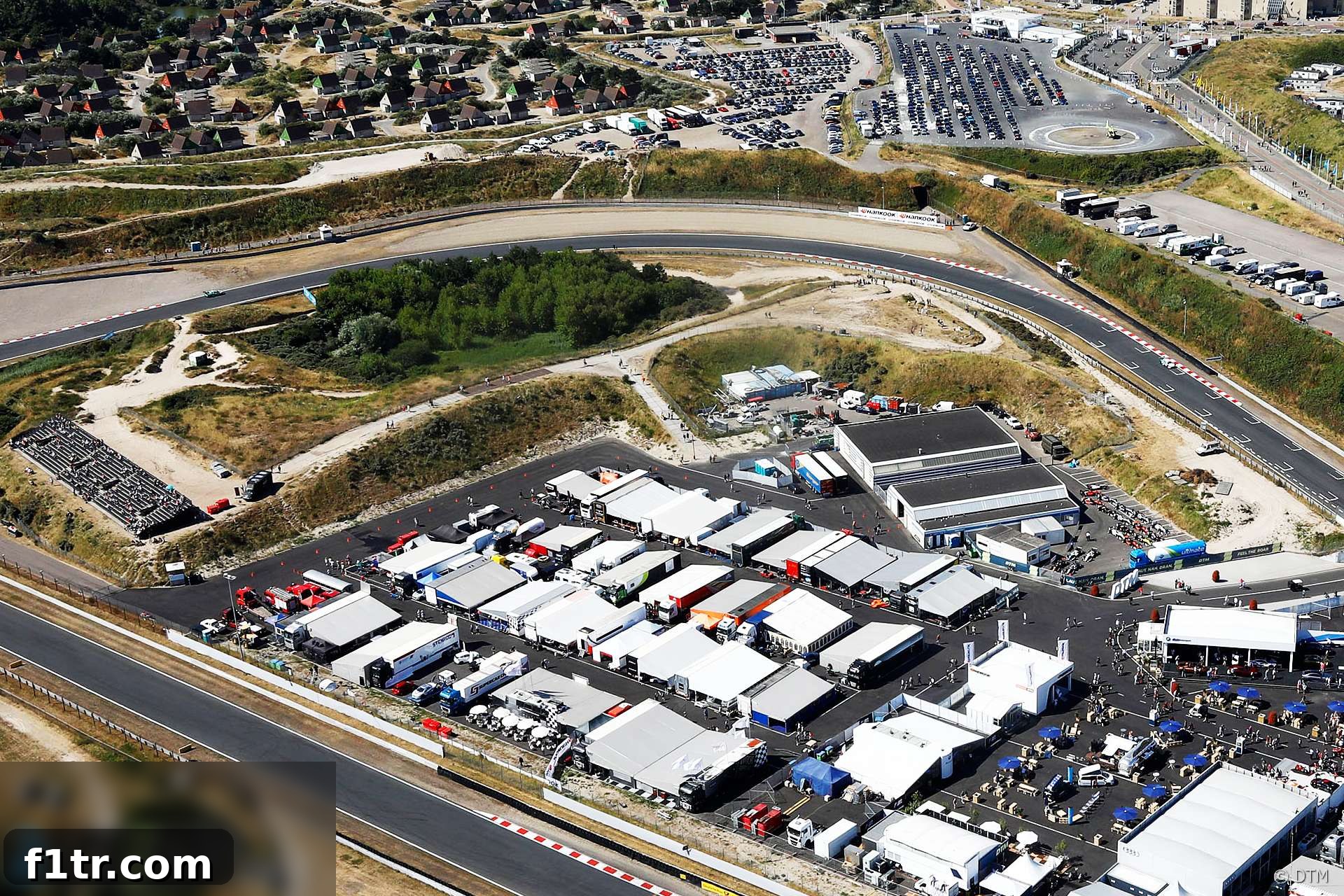
The return of the Formula 1 Dutch Grand Prix to the historic Zandvoort circuit in 2020 ignited immense excitement among motorsport fans globally. However, as preparations for this highly anticipated event commenced, F1’s official tyre supplier, Pirelli, expressed significant technical concerns regarding one of the proposed circuit modifications: the extensive banking of the final corner. This ambitious design choice, aimed at enhancing the spectacle and overtaking potential, has introduced a complex challenge for tyre engineering and overall race safety, prompting a cautious approach from the Italian manufacturer.
The Dutch Grand Prix marks its long-awaited comeback to the Formula 1 calendar for the 2020 season, ending a 35-year hiatus since the pinnacle of motorsport last graced the dunes of Zandvoort. To adapt the classic track for the demands of modern Formula 1 cars, circuit designers planned several revisions. Chief among these is the dramatic re-profiling of the Arie Luyendijkbocht, the circuit’s crucial final corner, with banking slated to reach an impressive 18 degrees. Such a steep inclination is a rarity in contemporary Formula 1 circuit design and immediately raised eyebrows within the technical community, especially concerning tyre integrity and performance.
The concept of steeply banked corners is not entirely new to motorsport, yet their application in Formula 1 has been historically limited and often fraught with challenges. An 18-degree banking at Zandvoort would significantly surpass the 9.2-degree banking found at the Indianapolis Motor Speedway, a venue infamous in F1 history for a severe spate of tyre failures during the 2005 United States Grand Prix. That notorious incident saw only six cars ultimately start the race due to safety concerns stemming from tyre delaminations on the high-speed banking, casting a long shadow over the use of such features in F1. This historical precedent underscores Pirelli’s vigilance and their commitment to avoiding a repeat of similar safety compromises.
Mario Isola, Pirelli’s esteemed Motorsport Director, openly conveyed to RaceFans the substantial technical hurdles involved in crafting tyres capable of safely and effectively operating on such a unique and demanding corner. He candidly described the task as “technically a big challenge,” articulating a clear preference to “prefer not to have banking” if given the choice. Isola elaborated on the intricate physics at play, explaining that the sustained centrifugal forces exerted on the tyres within a steep banking would necessitate a significant increase in minimum tyre pressures to withstand the intense, prolonged stress. This requirement, however, introduces a precarious balancing act for teams and Pirelli alike.
The core dilemma lies in the conflicting demands of different sections of the Zandvoort circuit. While elevated minimum tyre pressures would be crucial for enduring the high-stress environment of the Arie Luyendijkbocht, these same pressures would prove suboptimal, even detrimental, for the flatter, more conventional sections of the infield. Isola underscored this challenge: “The problem is that the pressure in that case will be too high for the rest of the circuit. So the teams have to find a balance between the banking or the infield part of the circuit that is without banking. It’s not easy.” This necessitates a compromise in setup that could affect performance, wear rates, and ultimately, race strategy, making tyre management an even more critical factor at the Dutch Grand Prix. High pressures could lead to reduced grip and increased wear on flat sections, while lower pressures, ideal for the infield, would dangerously compromise tyre structural integrity on the banking.
In its diligent pursuit of optimal and safe tyre solutions, Pirelli is proactively leveraging a wealth of data derived from its extensive participation in various motorsport disciplines outside of Formula 1. A key reference point for their analysis is the iconic Daytona International Speedway, a track renowned for its incredibly steep banking, reaching up to 31 degrees in certain sections. While the vehicles and racing dynamics at Daytona differ significantly from Formula 1, the fundamental principles of tyre behaviour under extreme banking offer invaluable insights into thermal loads, structural deformation, and wear characteristics. This meticulous study allows Pirelli engineers to predict potential stress points and develop robust tyre compounds and constructions that can withstand the unique forces anticipated at Zandvoort.
The company entrusted with the intricate task of designing and implementing the modifications at Zandvoort is Dromo, a highly respected name in global circuit engineering. Dromo’s expertise is well-established, having previously overseen significant re-profiling projects, notably the extensive alterations to Malaysia’s Sepang International Circuit in 2016. Their track record in modernizing and enhancing circuits for international motorsport suggests a deep understanding of the delicate balance between preserving a track’s character, ensuring safety standards, and improving the racing spectacle. The collaboration between Dromo and Formula 1, coupled with input from Pirelli, is paramount to the successful integration of the banked corner.
From the perspective of the event organizers, the banking of the final corner serves a clear and strategic purpose, articulated by Dutch Grand Prix sporting director and former F1 driver Jan Lammers. Lammers revealed that the primary motivation behind this bold design choice was to enable drivers to tackle the Arie Luyendijkbocht completely flat-out, with the Drag Reduction System (DRS) engaged. This audacious approach is intended to significantly boost the potential for overtaking manoeuvres into the subsequent straight, an area where many drivers have historically predicted that opportunities would be exceedingly scarce at the inherently tight and flowing Zandvoort layout. By creating a high-speed, challenging exit, the banking aims to generate slipstream advantages, thereby enhancing the racing spectacle and injecting more dynamism into the Grand Prix.
Furthermore, the banked design offers a practical advantage in terms of circuit infrastructure. By allowing cars to maintain higher speeds through the corner with greater inherent stability provided by the banking, the need for extensive run-off areas – typically required to safely decelerate cars that might exceed track limits on a flat corner – is substantially reduced. This is a significant consideration for Zandvoort, a circuit nestled within a natural dune landscape with limited space for expansion. The banking thus represents an innovative solution to maximize track action while minimizing the environmental footprint and maintaining the intimate character of the venue. It’s a design philosophy that marries spectacle with pragmatic spatial constraints.
While the excitement for the banked corner is palpable, its integration might not be immediate for the inaugural 2020 race. Current discussions suggest the banking may be fully implemented for the 2021 season, aligning with a pivotal technical shift for Formula 1: the introduction of a new 18-inch wheel format. This timing is critical, as the larger wheel diameter and lower-profile tyres will fundamentally alter tyre dynamics, construction, and interaction with the track surface. Pirelli will need to develop an entirely new generation of tyres for 2021, and integrating the specific demands of Zandvoort’s banked corner into this development cycle presents both a challenge and an opportunity to fine-tune the new tyre architecture for this unique feature. The transition allows for a more comprehensive and holistic approach to tyre development, ensuring that the 18-inch wheels are robust enough to handle the sustained lateral loads of the Arie Luyendijkbocht from their very debut.
The Zandvoort circuit’s ambitious banking project encapsulates the spirit of innovation and challenge that defines Formula 1. While Pirelli’s concerns highlight the complex engineering required to ensure both performance and safety, the circuit designers and organizers are committed to delivering a thrilling spectacle. The delicate balance between historical charm, modern safety standards, and the quest for enhanced racing action will be meticulously managed as the Dutch Grand Prix prepares to reclaim its place on the F1 calendar. All eyes will be on the Arie Luyendijkbocht, not just for its potential for dramatic racing, but also as a testament to the continuous evolution of Formula 1’s technical and sporting landscape.
Related Articles: The 2020 F1 Season & Beyond
- Grosjean to make F1 test return tomorrow for first time since Bahrain horror crash
- Pictures: Wrecked chassis from Grosjean’s Bahrain fireball crash to go on display
- Bottas vs Rosberg: Hamilton’s Mercedes team mates compared after 78 races each
- F1 revenues fell by $877 million in Covid-struck 2020 season
- Hamilton and Mercedes finally announce new deal for 2021 season
Browse all 2020 F1 season articles