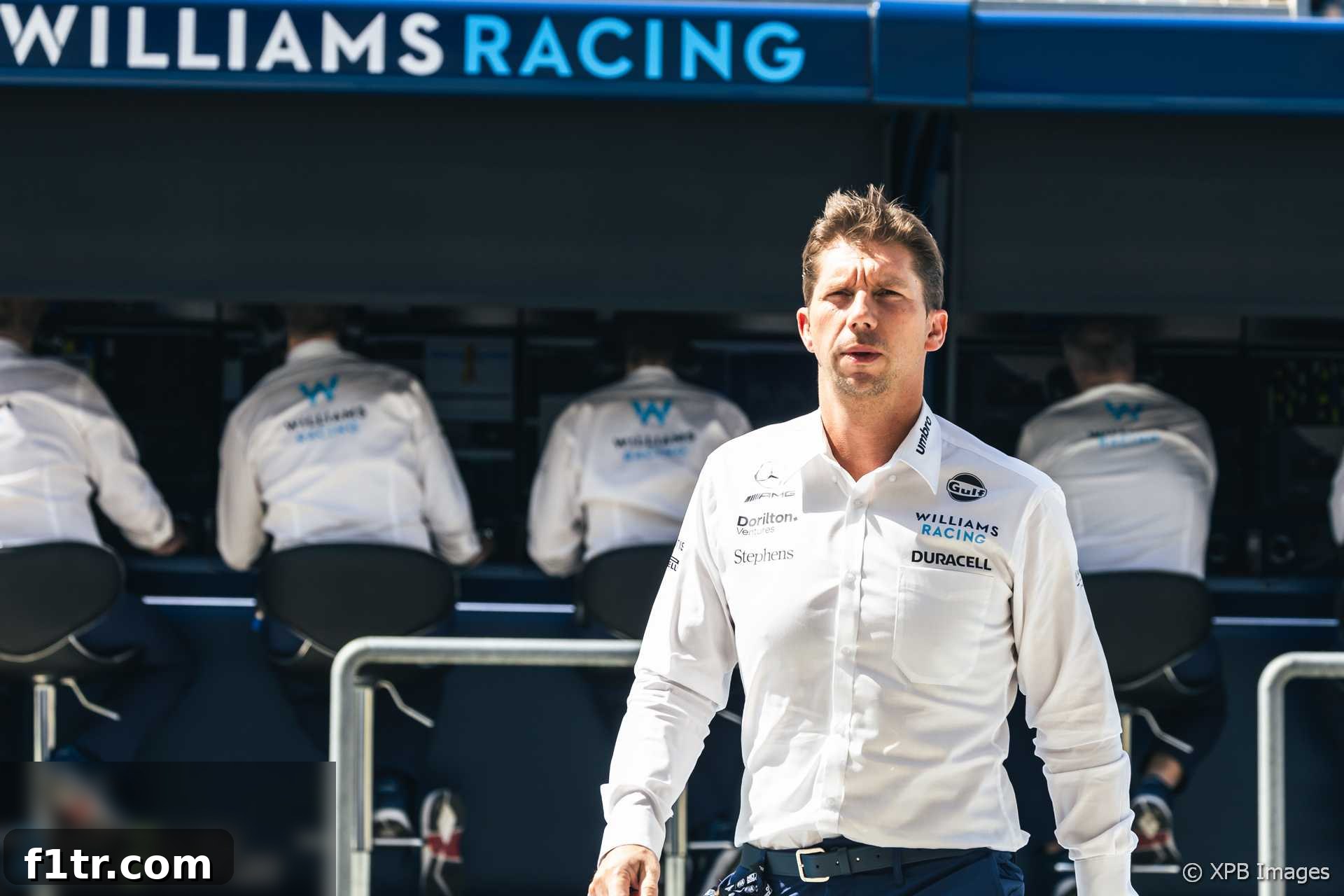
Williams F1’s New Era: James Vowles’ Vision for a Storied Comeback
The hallowed doors of Williams Racing’s Grove headquarters in Oxfordshire swung open last month to welcome a new era. James Vowles, stepping into the demanding role of Team Principal, arrived acutely aware of the monumental task awaiting him. His appointment marks a pivotal moment for one of Formula 1’s most iconic yet recently struggling outfits, signalling a determined effort to reclaim past glory and chart a sustainable path forward. Vowles’ extensive background as Strategy Director for the dominant Mercedes-AMG Petronas F1 Team brings a wealth of championship-winning experience and a fresh perspective to a team desperate for revival.
Williams, a name synonymous with Formula 1 excellence, boasts a legacy few can rival. Founded in 1977 by the legendary Sir Frank Williams and Sir Patrick Head, the team rapidly ascended to become a dominant force in motorsport. Their first Grand Prix victory came in 1979 with Clay Regazzoni at the British Grand Prix, a harbinger of the success to follow. Just a year later, in 1980, Williams secured its inaugural Constructors’ Championship. This was merely the beginning of an extraordinary period that would see the team amass an astonishing nine Constructors’ titles, placing them second only to Ferrari in the sport’s illustrious history. Multiple Drivers’ Championships also followed, with legends like Alan Jones, Keke Rosberg, Nelson Piquet, Nigel Mansell, Alain Prost, Damon Hill, and Jacques Villeneuve all clinching titles with the team, cementing Williams’ place among the sport’s true giants.
The Long Road Down: A Decade of Decline and Financial Strain
However, the glorious chapter of Williams’ past has been overshadowed by a prolonged period of decline. The team’s last Grand Prix victory dates back to 2012, a significant drought for a team of its stature. Following a promising third-place finish in the constructors’ standings in 2015, Williams embarked on a disheartening downward trajectory. The subsequent years saw a significant drop in performance, culminating in a last-place finish in 2018 with a meager seven points. The struggle to improve became an annual narrative, creating immense pressure on the team and its leadership.
The 2019 season proved particularly disastrous, with significant delays in car development meaning the FW42 wasn’t even ready for pre-season testing. This set the tone for another challenging year, one marked by reliability issues and a fundamental lack of pace. The following season, 2020, saw the team fail to score a single point, with drivers George Russell and Nicholas Latifi unable to break into the top ten. Williams consequently finished last in the Constructors’ Championship for the third consecutive season. These on-track struggles were compounded by severe financial pressures, which were only exacerbated by the global COVID-19 pandemic. The immense strain ultimately led to the Williams family, who had passionately steered the team for decades, making the painful decision to sell. In August 2020, American investment firm Dorilton Capital acquired the team, ushering in a new ownership structure and a much-needed injection of capital, but the on-track performance remained challenging.
James Vowles: The Architect of a Long-Term Revival Strategy
James Vowles arrives at Williams with an enviable pedigree, having spent two decades at Mercedes-AMG Petronas F1 Team, most recently as their highly respected Strategy Director. His extensive experience with a championship-winning organization provides him with an intimate understanding of what it takes to succeed at the pinnacle of motorsport. Speaking ahead of his first race in charge, Vowles candidly acknowledged the profound struggles his new team has endured:
“The team has over the last 15 years been through a tremendous amount of difficulty financially and otherwise, and it survived through all of that,” Vowles stated, paying homage to the resilience ingrained within the team’s DNA. He further emphasized the significant disparity between the team’s current standing and its aspirational future: “There are stark differences between where we are today and where we need to be in the future.” This honest appraisal sets a realistic tone for the challenging road ahead.
Vowles’ appointment, just days before the 2023 pre-season testing, allowed him little time for transition. However, his deep understanding of modern Formula 1 operations means he possesses a clear vision of Williams’ areas for improvement. Crucially, he did not sugar-coat the magnitude of the challenge, dismissing any notions of a rapid turnaround in the team’s fortunes. This pragmatic approach, honed during years at the sharp end of F1 competition, is a cornerstone of his strategy. He understands that systemic issues require systemic solutions, which by their nature are not quick fixes.
Confronting the Giants: The Competitive Landscape and Operational Hurdles
The path back to competitiveness is fraught with obstacles, particularly when aiming to challenge the sport’s established front-runners. Vowles articulated the immense hurdle of breaking into the top tier, dominated by teams like Red Bull, Ferrari, and his former employer, Mercedes:
“To break into the top three is incredibly difficult,” he explained. “They have resources beyond your dreams. They have experience beyond your dreams. They have the best people on the grid.” This candid assessment highlights the scale of the competitive gap, which isn’t just about raw budget but also accumulated knowledge, state-of-the-art facilities, and a settled, high-performing workforce.
Beyond raw financial power and sheer scale, the top teams benefit from a virtuous cycle of efficiency and innovation. As teams excel, they become more adept at optimizing every aspect of their operation, from advanced composite production techniques to streamlined logistical processes and efficient design methodologies. This inherent efficiency creates a further gap, as Vowles highlighted: “As you become better and better at what you do, you also become more and more cost-efficient… So all of those additional costs that will be borne by teams that perhaps are fourth and backwards.” Williams, currently at the back of the grid, bears the brunt of these inefficiencies, requiring a systematic overhaul of its internal processes, tools, and talent to improve its cost-effectiveness and competitive standing.
Strategic Goals: Incremental Gains Leading to Sustained Success
Vowles’ vision for Williams is built on a foundation of incremental, sustained progress rather than seeking a miraculous leap. He outlined a two-tiered objective for the team, emphasizing patience and a methodical approach:
“I think certainly a realistic step for this organisation is, first and foremost, to make sure that every year we are just edging forward. That has to be dream number one.” This commitment to continuous, measurable improvement forms the bedrock of his strategy. It’s about small, consistent steps that accumulate into significant progress over time.
The second, more ambitious goal is a multi-year endeavour, requiring a concerted and disciplined effort:
“Dream number two is we have to set a sensible period of time in the future – and it’s years – where we start to actually break into sixth, fifth, fourth place.” Achieving these mid-grid positions will be a significant achievement in itself, reflecting a substantial improvement in performance, infrastructure, and personnel quality. This target acknowledges the long-term investment required and the fierce competition within the midfield.
However, Vowles acknowledges that truly challenging for the top three may require external factors beyond the team’s control:
“From then onwards, the sport really will probably have to have some level of political change to allow, properly, teams to break into the top three.” This alludes to potential future regulatory shifts, such as further cost cap adjustments or even more standardized components, that could further level the playing field, making it feasible for teams like Williams to bridge the formidable gap to the absolute front-runners.
Navigating F1 Regulations: Cost Cap and Aerodynamic Testing Restrictions (ATR)
Formula 1 has introduced significant regulatory changes in recent years, most notably the budget cap in 2021 and revised Aerodynamic Testing Restrictions (ATR). The ATR rules are specifically designed to aid struggling teams by granting them more wind tunnel time and CFD (Computational Fluid Dynamics) simulations based on their previous year’s championship position. As Williams finished last in 2022, they currently receive the highest allocation for aerodynamic development, theoretically providing an opportunity to catch up.
While these regulations are intended to promote convergence and prevent any one team from dominating indefinitely, Vowles believes they might not be sufficient on their own to overcome the entrenched advantages of the top teams:
“Where the top three are at the moment is such a strength that even with ATR catch-up, it’s very difficult to make up for lost time in that regard,” he explained. To truly balance the field and accelerate the convergence of performance, Vowles advocates for more fundamental changes, suggesting an increase in shared components across teams:
“What I really mean by that is that I think more components that have been shared between organisations, more major components that take away perhaps some of the locked-in gain, that will help balance things.” This approach could significantly reduce the development burden on smaller teams and mitigate the advantages derived from the superior design, manufacturing capabilities, and sheer intellectual property of the sport’s giants.
The F1 cost cap, designed to limit spending and prevent runaway budgets, has indeed reduced the financial disparity between teams. However, it introduces its own set of constraints, particularly regarding capital expenditure (CapEx) on fixed assets and infrastructure. This directly impacts Williams’ ability to upgrade its outdated facilities, a critical area for improvement that has suffered from years of underinvestment.
“The cost cap is a limiting factor in all of these things simply because it puts us in a position where there’s a limited amount of CapEx,” Vowles clarified. He added, “It won’t be enough to spend our way to success, as I would probably define it.” This means Williams cannot simply outspend its rivals to build a faster car or a state-of-the-art factory overnight. Instead, they must prioritize strategic investments, maximize efficiency within the existing financial framework, and make every pound count—a challenge that necessitates astute management, innovative solutions, and meticulous long-term planning.
Rebuilding Infrastructure and Recruiting Key Personnel
The journey back to sustained competitiveness is not merely about car performance; it’s about rebuilding the entire organizational backbone of Williams Racing. Vowles emphasized the time-consuming nature of this endeavor, highlighting that patience will be a key virtue:
It will take time “to get some of the core facilities to the level required” and “that’s not the work of six months or 12 months” but rather a commitment spanning several years. Modern Formula 1 demands cutting-edge infrastructure, from advanced simulation tools and data analysis capabilities to efficient manufacturing processes and modern production lines. Williams has significant ground to cover in this regard, having fallen behind during its lean years.
Beyond physical assets, a critical priority for Vowles is addressing the team’s personnel deficiencies and strengthening its human capital. He openly stated: “Further to that, as I’ve discussed externally, we are in a position where we are lacking key technical personnel and the team are definitely under strain at the moment to ensure that we’re filling those voids as best we can. So the pathway is not one of months but years.”
This candid assessment underscores the deep-seated issues that have plagued Williams. The team needs to attract top talent in a highly competitive industry, a challenge made more complex by its recent performance history. High on Vowles’ immediate agenda are two critical senior technical appointments. The departure of Technical Director Francois-Xavier Demaison, concurrent with Vowles’ predecessor Jost Capito, created a significant void. Additionally, the team is actively seeking a new Head of Aerodynamics to replace David Wheater, indicating a comprehensive restructuring of its technical leadership to bring in fresh expertise and perspectives.
Vowles’ initial assessment of the task ahead mirrored his expectations, albeit with a slight nuance: it was “about what I expected, but maybe a soupçon of being slightly worse.” This slight deviation speaks to the profound impact of years of instability on the organization:
“Any organisation – irrespective of whether it is a F1 team or otherwise – cannot be a high-performing outfit if you take money away from it and basically have such disruption across a number of years that you end up in a poor situation. And that’s where Williams stands. It’s not for lack of good people. It’s just simply a lack of stability.” This powerful statement highlights the root cause of Williams’ struggles: a prolonged period of financial constraint and organizational flux, rather than a lack of talent within its ranks. It’s a clear mandate for Vowles to bring stability, strategic direction, and renewed investment in human and physical capital.
Encouraging Start in Bahrain: A Glimmer of Hope for the Future
Despite the immense challenges and the long-term nature of the revival project, Williams began the 2023 season with an encouraging performance at the Bahrain Grand Prix, offering a tangible glimmer of hope for the future. The team demonstrated improved pace, positioning them closer to the competitive midfield group and allowing them to genuinely compete for points, a luxury they haven’t consistently enjoyed in recent years.
Rookie driver Logan Sargeant impressed on his Formula 1 debut, narrowly missing out on a spot in Q2 during qualifying by mere milliseconds. His performance hinted at significant potential and a quick adaptation to the demands of F1. Meanwhile, the experienced Alex Albon was convinced he would have reached Q3 had a front wing flap not broken during his qualifying run, underscoring the raw pace the car possessed and the team’s ability to extract performance when conditions are right. In the race itself, Albon capitalized on opportunities, expertly guiding his Williams to a commendable 10th place, securing a crucial point for the team on Vowles’ very first weekend in charge. Sargeant, too, put in a promising performance, rising to an encouraging 12th position and demonstrating strong race craft.
After the race, a beaming Albon expressed his pride in the team’s progress: “To have the pace we had under the circumstances, I have to say I’m super proud.” He further highlighted the team’s significant step forward by pointing out that only Aston Martin had achieved a greater lap time gain around Bahrain compared to 2022. This data-backed improvement provides concrete evidence that Williams is moving in the right direction, a testament to the hard work behind the scenes and the initial impact of Vowles’ leadership and strategic adjustments. It’s an important early validation for the new direction.
The Long Road Ahead: A Commitment to Revival and Sustained Competitiveness
The encouraging start in Bahrain serves as a vital morale boost and a positive early indicator for Williams under James Vowles’ stewardship. However, Vowles remains firmly grounded in reality, harboring no illusions about the true scale of the challenge that lies ahead. Returning to the glorious days of their last championship win, now more than 25 years ago, will be an arduous, multi-year undertaking that demands unwavering dedication and strategic foresight.
His strategy is clear: focus on fundamental improvements in processes and tools, strategic personnel recruitment to fill critical technical voids, and meticulous facility upgrades, all while operating shrewdly within the confines of the F1 cost cap. The journey for Williams Racing is not one for the faint-hearted, but with James Vowles at the helm, the iconic team has a clear vision, a renewed sense of purpose, and the strategic acumen necessary to navigate the complexities of modern Formula 1. The aim is not just to survive, but to painstakingly rebuild, step by step, and, hopefully, orchestrate a storied comeback to sustained competitiveness. The eyes of the motorsport world will be keenly watching as this new chapter unfolds, hopeful for the revival of a true Formula 1 legend.
Further Motorsport Insights
- No happy ending for Ricciardo’s made-for-Netflix redemption arc
- No ‘two alphas’ for Red Bull as team forms its longest-running driver line-up
- Will Mercedes come to the rescue of Ocon’s career a third time?
- How the midfield’s hottest team mate rivalry boiled over
- Petty officialdom or deserved decisions? Five drivers stripped of wins in 2024
Browse all News Focus articles