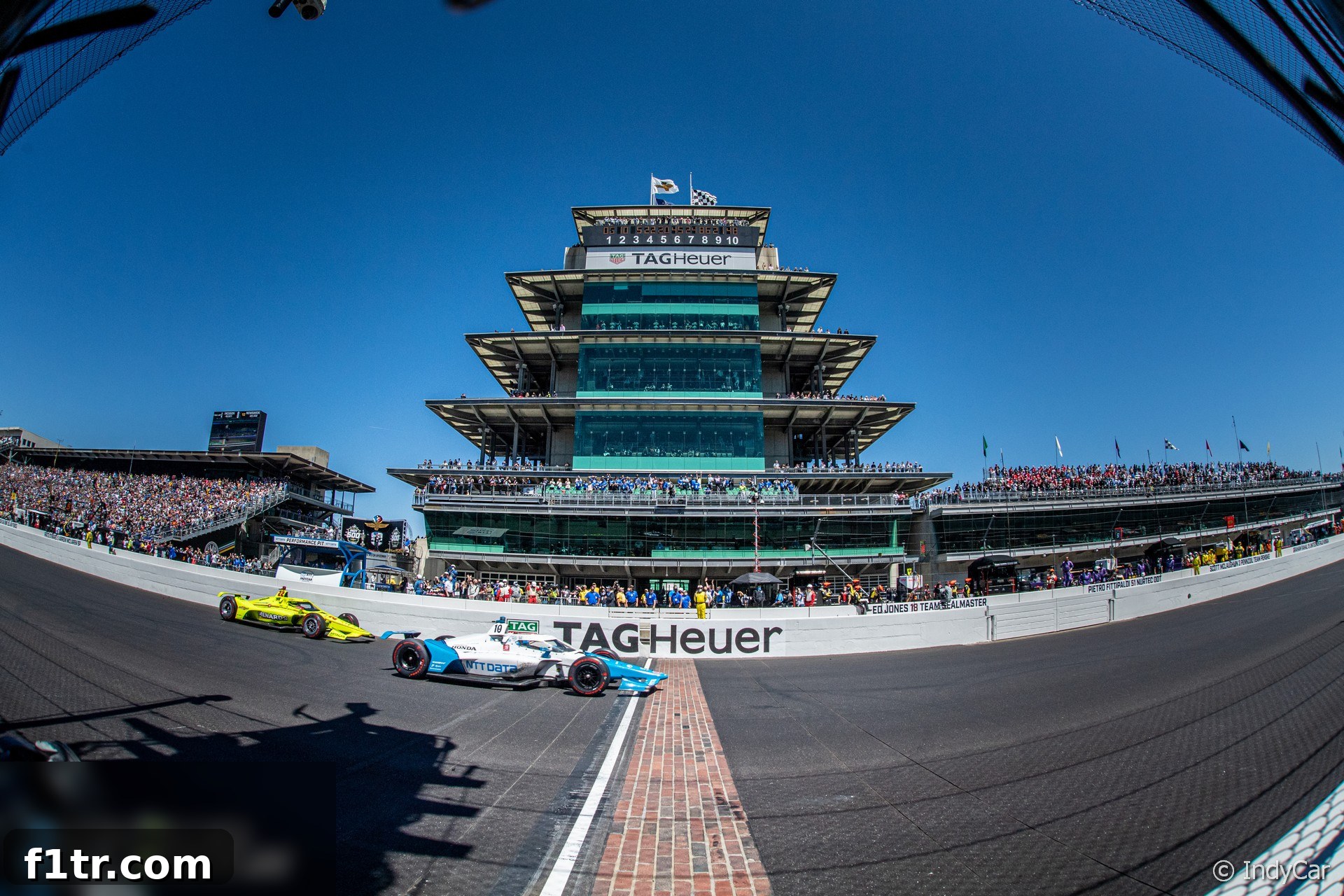
Simon Pagenaud’s Epic Indianapolis 500 Comeback: A True Test of Grit and Strategy
The Indianapolis 500, often dubbed “The Greatest Spectacle in Racing,” rarely disappoints, and the latest edition was no exception. While Hélio Castroneves etched his name into history with a remarkable fourth victory, it was the charge of Simon Pagenaud that captivated many. Despite a starting position of 26th on the grid and an early, unforeseen emergency fuel stop that dropped him to the very rear, the Team Penske driver mounted an extraordinary comeback, ultimately finishing a phenomenal third, mere fractions of a second behind runner-up Alex Palou and race winner Castroneves. Pagenaud’s performance was a testament to his skill, his team’s strategic acumen, and the sheer unpredictability of IndyCar racing.
An Unforeseen Challenge: Starting from the Back
The 2019 Indianapolis 500 champion, Simon Pagenaud, arrived at the Brickyard with high hopes, but qualifying placed him 26th, deep in the field. This already presented a formidable challenge, requiring a strategic and patient approach to navigate through a competitive grid of 33 cars. However, the race threw an even bigger curveball in its early stages. During the first caution period, spanning laps 32 to 45, the pit lane was closed. A critical miscalculation or unexpected fuel consumption forced Pagenaud, along with seven other drivers, to make an emergency fuel stop. This infraction meant he had to restart the race from the absolute back of the field, effectively erasing any progress he might have made and leaving him with a monumental task: to fight his way to the front with just three-quarters of the race remaining. It was a moment that could have derailed lesser competitors, but for Pagenaud, it ignited a fierce determination.
The Relentless Ascent: 156 Laps to Glory
Facing a deficit of nearly two dozen positions, Pagenaud’s focus immediately shifted to an aggressive, yet controlled, comeback. “We had 156 laps to come back to the front,” he stated, highlighting the immense journey ahead. His ascent through the field was a masterclass in car management, strategic overtakes, and unwavering mental fortitude. Navigating the treacherous traffic at over 200 mph demanded precision and courage. Each pass was carefully calculated, utilizing slipstreams on the straights and pinpoint braking into the corners. The turning point arrived after the second caution period, on lap 127, when Pagenaud seized the restart opportunity. Demonstrating exceptional race craft, he skillfully maneuvered past three competitors in quick succession, breaking into the coveted top 10. This surge not only showcased his driving prowess but also the significant improvements made to his car’s setup throughout the race, proving that meticulous adjustments could transform a challenging situation into a competitive advantage.
Pedal to the Metal: Battling with Legends
As the race entered its thrilling final phase, Pagenaud found himself in elite company, dueling with the likes of four-time winner Hélio Castroneves, the formidable Alex Palou, and the aggressive Pato O’Ward. His Team Penske machine, which he described as feeling “phenomenal all day,” allowed him to push to the absolute limits. “At the end, I was pedal to the metal. I didn’t care. I just wanted to get to these guys and have some fun with them,” he recalled, emphasizing his single-minded pursuit of the podium. From his vantage point, Pagenaud had a front-row seat to the strategic battle unfolding at the very sharp end of the race. He observed Castroneves’s calculated approach: “I could see Hélio was playing a very smart game. Obviously he knows how to win the race. Álex was trying his best to hold him off. Hélio was just biding his time.” This insight into the leaders’ tactics further fueled Pagenaud’s own charge, as he sought to capitalize on any opportunity that might arise in the closing laps.
The Final Lap Thriller: So Close, Yet So Far
The closing laps of the Indianapolis 500 are renowned for their heart-stopping drama, and this year was no exception for Simon Pagenaud. He found himself running fourth, tucked in behind Castroneves, Palou, and O’Ward. The close proximity, while offering the potential for drafting, also presented a challenge. “Because of the draft, it was difficult in fourth place to get through Pato,” Pagenaud explained. The aerodynamic turbulence created by the cars ahead made it hard to make a decisive move. Nevertheless, the Frenchman, with his characteristic tenacity, executed a brilliant overtake on O’Ward on the very last lap, snatching third place. This daring maneuver put him squarely on the podium, but his ambition soared higher. “I thought I may have had a shot in turn four, but Hélio was too fast,” he admitted, reflecting on the final moments where Castroneves’s pace proved insurmountable. Finishing just half a second behind the winner, Pagenaud’s third-place finish was a blend of triumph and a hint of what-could-have-been, a testament to his fighting spirit.
Engineering Performance: The Crucial Role of Downforce
A significant factor in Pagenaud’s ability to slice through the field was the meticulous in-race adjustments made by his Team Penske crew. He revealed that his car’s initial setup lacked optimal downforce. “We started with too little downforce,” he explained. “I was struggling on the first stint to get passes done. The chassis was fantastic, but we just needed more downforce to be more aggressive.” Downforce is critical at Indianapolis, providing the necessary grip for high-speed cornering and stability in traffic. Too little makes the car prone to sliding and difficult to manage when battling other cars, while too much can reduce straight-line speed. Pagenaud keenly awaited his first pit stop to address this. “I was waiting for the pit stop to make adjustments. We made a rear wing adjustment, a front wing adjustment at the same time and the car came together.” The car’s handling dramatically improved, allowing him to drive with greater confidence and aggression. Throughout the race, his team continued to fine-tune the setup, ultimately making the car “loose” at the end, a setup often preferred by drivers for better maneuverability and overtaking capability in heavy traffic. This iterative process of driver feedback and mechanical adjustment proved instrumental in his podium charge.
The Evolving Landscape of IndyCar: Aeroscreen and Aero Packages
Beyond individual performance and team strategy, Pagenaud also credited IndyCar’s evolving technical regulations for enhancing the racing spectacle. The introduction of the Aeroscreen in recent years, while primarily a safety innovation, has also had an impact on aerodynamic performance. However, Pagenaud felt that the broader changes to the aerodynamic package had successfully promoted better on-track action. “I thought it was great racing,” he commented. “I could pass people. I thought it was a matter of having the right adjustment done during the pit stops. It was a matter of being aggressive also.” These aerodynamic tweaks are designed to reduce the “dirty air” effect, which historically made it difficult for cars to follow closely and overtake. By allowing cars to run closer, these changes created more opportunities for wheel-to-wheel battles, rewarding skilled drivers who could maximize their car’s potential and execute daring moves. Pagenaud’s ability to carve through the field from 26th place is a powerful endorsement of these changes, underscoring a healthier, more competitive IndyCar Series.
Inspired by a Legend: Hélio Castroneves’s Historic Feat
For Simon Pagenaud, the Indianapolis 500 was not just a race; it was a source of inspiration. Witnessing Hélio Castroneves, at 46 years old, secure his monumental fourth victory at the Brickyard deeply resonated with the 37-year-old Frenchman. Castroneves’s achievement places him in an elite club of four-time winners, a rare feat in the history of motorsports. “He’s writing a huge page of the 500 mile history here,” Pagenaud remarked with admiration. “Finally, a guy of our generation is going in the four-time winners’ club. That’s very special. He’s a great friend.” Beyond the historical significance, Castroneves’s longevity and continued success serve as a powerful motivator for Pagenaud’s own career. “He just gave me 10 more years in my career to go catch him. Thank you, Hélio!” Pagenaud laughed, a testament to the camaraderie and competitive spirit that defines the IndyCar paddock. This shared ambition, fueled by mutual respect and a passion for the sport, highlights the enduring appeal of the Indianapolis 500 and the legends it continues to produce.
IndyCar Insights
- IndyCar driver McLaughlin cleared of injury after crashing through barrier at Barber
- Schumacher says his IndyCar feels like ‘an F2 car, just with better tyres’
- IndyCar “way faster than Formula 1” in some corners, says Grosjean
- FIA to award more F1 superlicence points to IndyCar drivers from 2026
- Schumacher to race full-time in IndyCar with RLL in 2026
Browse all IndyCar articles