Mercedes’ Unconventional Path: Unlocking W13 Performance Amidst F1 Challenges
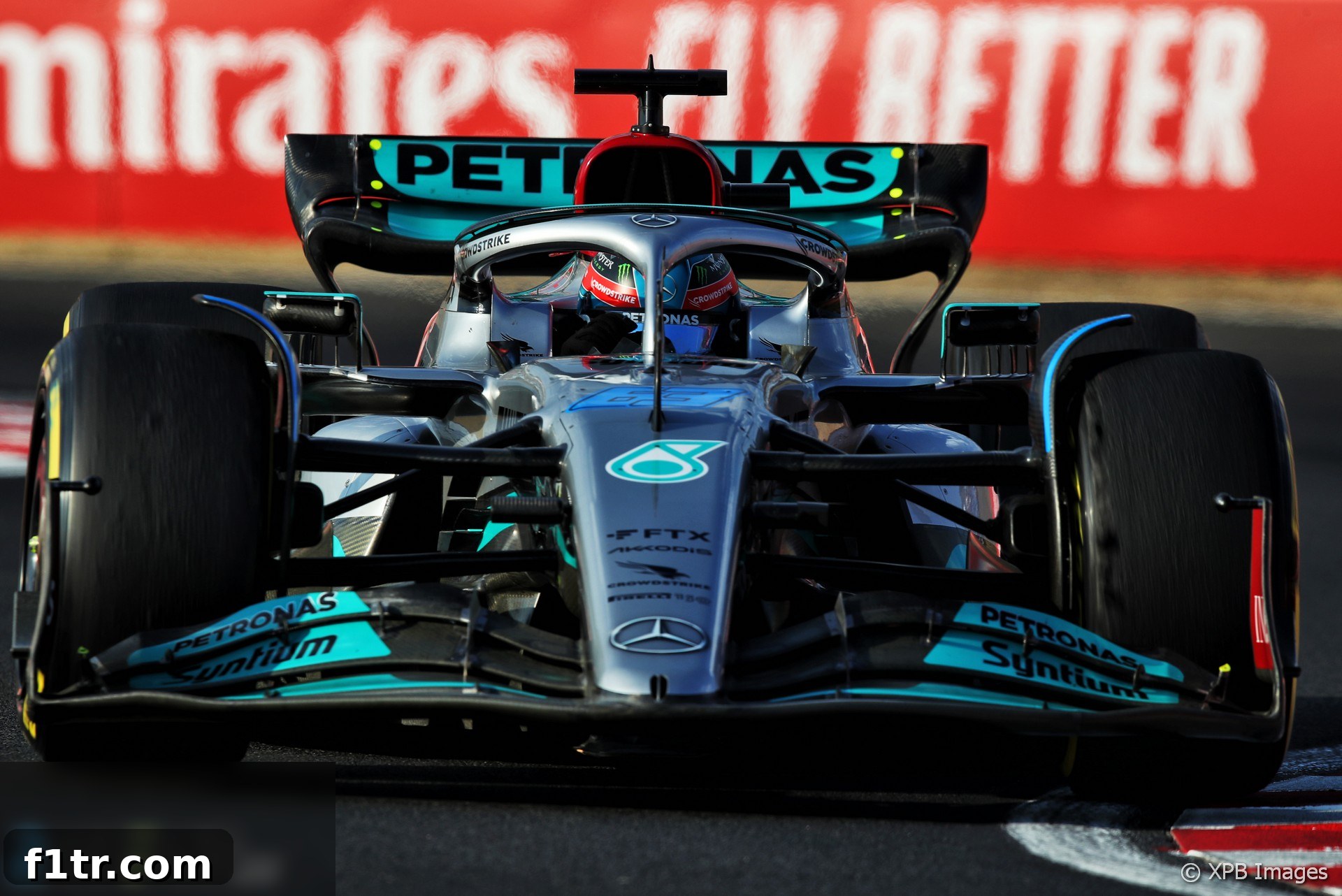
The 2022 Formula 1 season presented an unprecedented challenge for Mercedes-AMG Petronas F1 Team, a squad accustomed to an era of unparalleled dominance. Following a radical overhaul of technical regulations, the team found itself grappling with a car, the W13, that proved notoriously difficult to understand and extract performance from. This profound struggle forced the Brackley-based outfit to embark on a journey of “unconventional” approaches, a bold strategy that remarkably culminated in George Russell’s sensational pole position at the Hungarian Grand Prix.
Navigating the W13 Enigma: When Data Fails
For years, Mercedes epitomized engineering excellence, meticulously developing cars through sophisticated simulations, extensive wind tunnel testing, and cutting-edge computational fluid dynamics (CFD). However, the W13, with its ground-effect aerodynamics, presented a unique conundrum. Team Principal Toto Wolff vividly articulated the depth of this challenge, describing how the team was compelled to deviate significantly from its well-established development techniques.
“This season we have done unconventional things,” Wolff revealed. He recounted a specific instance that underscored the team’s radical shift in methodology: “I remember having a chat with a very clever lady in aerodynamics and she said ‘if you would have told me last year that we are putting a floor on the car that we haven’t drawn in the wind tunnel, I would have said we are never going to do this’. And we did and everybody was proud of the results.” This anecdote highlights the extent to which Mercedes was pushed to bypass traditional validation methods, instead relying on real-world testing and agile experimentation to address the W13’s inherent issues, particularly the notorious ‘porpoising’ phenomenon and its narrow operating window.
The High-Stakes Bet: Aggressive Development in Hungary
The Hungarian Grand Prix weekend served as a crucible for these aggressive, unconventional strategies. After what appeared to be a disheartening performance during Friday’s practice sessions, the team doubled down on its experimental approach. This high-risk, high-reward gamble paid off handsomely, with George Russell seizing a shock pole position, marking a significant milestone in his nascent Mercedes career. The jubilant scenes in the garage, however, were tempered by the contrasting fortunes of his illustrious teammate, Lewis Hamilton, who unfortunately experienced a DRS failure during qualifying and could only manage seventh.
Wolff elaborated on the continuous, almost frantic, pace of experimentation: “It’s the same thing every weekend and more so yesterday and today, we’ve tried things.” He underscored a fundamental breakdown in their established workflow: “This is a data-based sport. But if you can’t rely on the data because they don’t correlate from the virtual world, from the tunnel, from CFD, from the simulations with what’s happening in real-time on the track, you’ve just got to try things and find correlations.” This admission speaks volumes about the technical hurdles Mercedes faced, effectively forcing them to “reverse-engineer correlation.” Instead of using data to predict outcomes, they were using track outcomes to understand and validate their data, a testament to the W13’s unpredictable nature and the team’s relentless pursuit of understanding it.
The Emotional Rollercoaster: Oscillation Between Hope and Despair
The 2022 season was an emotional rollercoaster for Mercedes, a team unaccustomed to anything less than championship contention. Wolff candidly described the season as an “oscillation between depression and exuberance, sometimes changing from day to day.” This sentiment encapsulates the immense pressure and psychological toll on a team that had become synonymous with victory. Every minor breakthrough was met with cautious optimism, always shadowed by the fear of another setback. The quest for performance was not just a technical challenge but also a profound test of resilience and morale.
The Hungarian GP pole position, therefore, represented more than just a single qualifying success; it was a beacon of hope, a validation of their radical development philosophy. “Yesterday we tried things that didn’t work at all but they gave us a little bit more direction for today,” Wolff noted, highlighting the iterative and often frustrating process of trial and error. “To be honest it’s a painful exercise this year and today’s one of the days where against all of the tendencies of the season, where we’ve been really bad in qualifying but performing well on the Sunday, we’ve actually unlocked some potential in the car.”
This admission of pain and perseverance from a team principal who has overseen an era of unparalleled success further underscores the extraordinary difficulties encountered with the W13. For a team known for its meticulous planning and execution, being forced into such a reactive and experimental mode was a humbling yet ultimately character-building experience. The Hungarian pole was a stark reversal of their typical weekend pattern, where strong race pace often followed a subdued qualifying performance, indicating a genuine step forward in understanding the car’s elusive sweet spot.
Beyond the Pole: The Cautious Optimism for Race Pace
Despite the elation of Russell’s pole, Wolff maintained a pragmatic and cautious outlook. The memory of previous false dawns loomed large, making him hesitant to declare their latest approach an unqualified success before seeing the car’s performance in tomorrow’s race. “If we can prove tomorrow that our race pace hasn’t suffered then I would see us back in a solid position,” he stated, emphasizing the critical distinction between qualifying pace and long-run performance. A strong Saturday needed to translate into a competitive Sunday to truly signify a breakthrough.
The fear of “another false dawn” was palpable, echoing moments earlier in the season where promising signs ultimately faded. Wolff articulated this apprehension clearly, expressing his hope that the Hungarian result would not be merely a fleeting success, only for the team to realize “tomorrow and Spa that it didn’t reap the benefits that we were hoping to have.” The upcoming races, particularly the Belgian Grand Prix at Spa-Francorchamps, would serve as further tests of their unconventional solutions and the underlying pace of the W13. These iconic circuits, with their diverse characteristics, would provide crucial data points for validating their progress.
In this respect, the Mercedes team continued to approach their newfound qualifying success with a healthy dose of skepticism, understanding that Formula 1 is a marathon, not a sprint. The ultimate goal remained consistent, sustained performance, which required a deep and reliable understanding of their challenger. As Wolff concluded, with a tone reflecting both hope and pragmatism, “In that respect, let’s just wait and see where this is going.”
The Enduring Quest for Performance: Lessons for the Future
The journey of the Mercedes W13 in the 2022 season stands as a compelling narrative within the annals of Formula 1 history. It exemplifies how even the most dominant teams can be pushed to their limits by significant regulatory shifts and the inherent complexities of cutting-edge automotive engineering. The “unconventional approaches” adopted by Mercedes, born out of necessity and a relentless pursuit of speed, highlight the dynamic and adaptive nature of F1 car development. It underscores the human element in a sport increasingly driven by data, demonstrating that intuition, risk-taking, and a willingness to challenge established norms can sometimes unlock unforeseen potential.
George Russell’s pole position in Hungary was more than just a single exceptional lap; it was a symbolic victory for a team battling adversity, a testament to their perseverance, and a potential turning point in their understanding of the W13. While the immediate future required further validation on race day, the experience of having to “reverse-engineer correlation” and embrace radical solutions undoubtedly shaped Mercedes’ development philosophy for subsequent seasons, including the W14 and beyond. It served as a powerful reminder that in the relentless pursuit of perfection in Formula 1, sometimes the most rewarding paths are the ones less traveled.
Further Reading: 2022 Hungarian Grand Prix Insights
For more in-depth analysis and perspectives from the 2022 Hungarian Grand Prix, explore these articles:
- How many victory chances did Hamilton have in his first winless F1 season?
- Aston Martin expect rivals will copy novel rear wing by Singapore GP
- Transcript: Why Ferrari told Leclerc ‘the hard is worse than expected’ but still used it
- What made Verstappen’s 10th-to-first win in Hungary a rare achievement
- Gasly pleased FIA is considering “different options” for track limits policing in 2023
Browse all 2022 Hungarian Grand Prix articles