Jeddah Thrills and Off-Track Debates: A Formula 1 Race Weekend Roundup
As the Formula 1 circus rolled into the enigmatic Jeddah Corniche Circuit, anticipation was at an all-time high. The Saudi Arabian Grand Prix promised a thrilling, high-speed spectacle, but the weekend also brought its share of on-track drama, strategic dilemmas, and important off-track conversations. From Lando Norris’s self-confessed qualifying misstep to Charles Leclerc’s insights on the circuit’s unique demands, and vital community efforts for recovery, this roundup captures the essence of a pivotal F1 weekend.
F1 Weekend Highlights: Driver Insights & Key Developments
Advert | Become a Supporter & go ad-free
Norris Reflects on Missed Opportunity in Qualifying
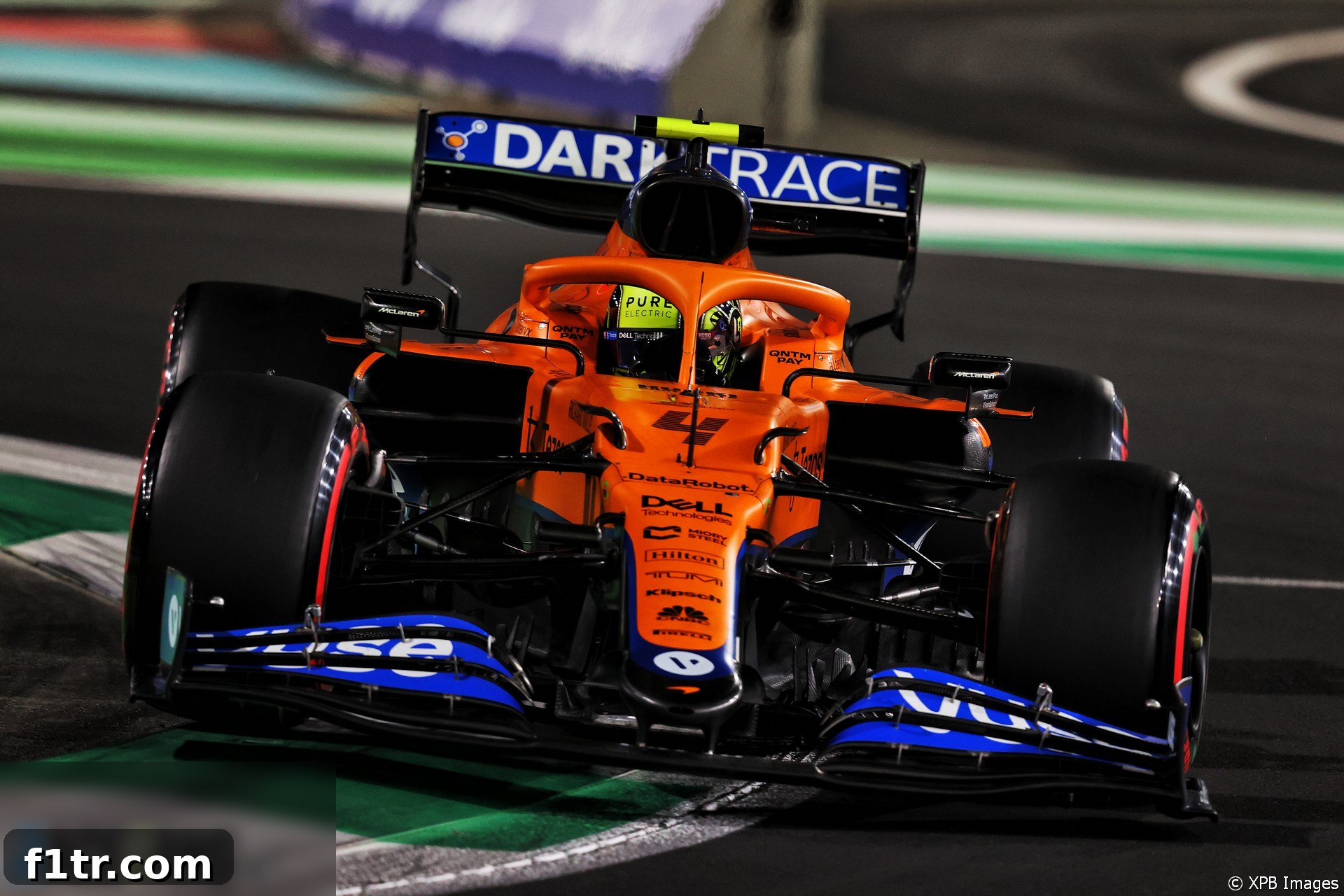
Lando Norris, the young McLaren ace, found himself starting seventh on the grid, a position he openly admitted could have been significantly better. Speaking after qualifying, Norris pinpointed a less-than-perfect final lap as the direct cause of missing out on a coveted top-five spot, expressing clear frustration with his own performance.
“I should have been in fifth place, ahead of Pierre [Gasly] and ahead of Sergio [Perez],” Norris stated, highlighting the tight margins that define Formula 1 qualifying. His candid assessment revealed a detailed understanding of where crucial tenths were lost. “I messed up on my last lap. I was down, but I think the last two corners I definitely could have improved.”
The British driver elaborated on the specific error that cost him precious time: “I obviously didn’t because I pushed a bit too much into turn 22 and then bottomed out a lot over the exit kerbs.” This insight into the Jeddah Corniche Circuit’s unforgiving nature underscores the fine line between pushing the limits and overstepping them. Turn 22, a critical high-speed corner, proved to be Norris’s undoing, preventing him from extracting the absolute maximum from his McLaren MCL35M.
Despite his disappointment, Norris acknowledged the strategic advantage of his tire choice. As the sole driver within the top 10 starting the race on the soft compound tires, his strategy diverged from most of his direct competitors. He pragmatically summed up his grid position as “good enough” given the circumstances and the challenges McLaren faced. “I’m happy to be in Q3,” he added, referencing his teammate Daniel Ricciardo’s earlier exit in Q2, “we could have been out like Daniel was, but I’m happy enough to be P7.” This acceptance, mixed with competitive regret, paints a clear picture of a driver striving for perfection while recognizing the broader team effort.
Leclerc on Jeddah: A Circuit That Rewards the Brave
Ferrari’s Charles Leclerc offered a fascinating perspective on the Jeddah Corniche Circuit, describing it as an incredibly demanding track where taking calculated risks yields substantial rewards. As drivers prepared for a grueling 50-lap race, Leclerc emphasized the unique character of the Saudi Arabian venue, setting it apart from other circuits on the F1 calendar.
“It’s going to be incredibly difficult, especially to stay on it,” the Ferrari driver explained, alluding to the circuit’s high-speed corners and close proximity to the walls. The Jeddah Corniche Circuit, with its rapid succession of blind turns and narrow sections, demands pinpoint precision and unwavering concentration for the entirety of the race distance. It’s a true test of physical and mental endurance, pushing drivers to their absolute limits.
Leclerc further highlighted a key characteristic of the track: “The risks that you take are a lot rewarding in terms of lap times, which sometimes on tracks it’s not that way, it’s particularly like this here.” This statement encapsulates the unique philosophy of Jeddah – unlike many modern circuits designed with expansive run-off areas, Jeddah punishes mistakes severely but simultaneously entices drivers to flirt with the absolute limits of adhesion and the concrete barriers. A driver brave enough to carry more speed through a blind corner, inches from the wall, can shave off crucial tenths, while a slight misjudgment can lead to significant consequences.
Despite the inherent challenges and the high-stakes nature of the circuit, Leclerc remained optimistic for the race. “It’s going to be tricky, but our race pace looks strong. So I am optimistic for tomorrow,” he concluded. Ferrari’s improved performance throughout the season, combined with Leclerc’s natural talent for street circuits, offered a promising outlook for their prospects in the inaugural Saudi Arabian Grand Prix, where courage and precision would undoubtedly be the keys to success.
Fundraiser Launched for Abbie Eaton’s Spinal Injury Recovery
The motorsport community has rallied around Abbie Eaton, the acclaimed professional driver and W Series competitor, following a severe injury sustained at the Circuit of the Americas (COTA). A fundraiser has been established to support her recovery after she fractured two vertebrae in an incident involving a now-infamous ‘sausage kerb’ that caused her car to lift abruptly and slam back down onto the track. The kerb, designed to deter track limits violations, was subsequently removed following a series of similar incidents and safety concerns.
Eaton’s initial diagnosis of a single vertebral fracture was later updated to a double fracture upon undergoing treatment, revealing the full extent of her injury. The recovery pathway outlined by the fundraiser indicates a prolonged and challenging period ahead. She is expected to wear a neck brace until at least February 2022 and will require extensive physical therapy and recovery time thereafter to regain full mobility and strength. This type of spinal injury is not only physically debilitating but also presents significant professional and financial hurdles for a driver whose livelihood depends on her physical capabilities.
The fundraising page, thoughtfully organized by fellow driver Jamie Stanley, sheds light on the profound impact of this injury on Eaton’s career. “During this time she won’t be able to earn a living from her job as a professional driver and driver coach,” the page explains. This period of incapacitation means a complete halt to her primary income sources, adding immense stress during an already difficult recovery. Stanley’s initiative aims to alleviate this burden: “I wanted to help raise some money for her to help remove the stress of this from her recovery and to help her get the medical treatment needed to hopefully be fit enough for 2022.” The goal is to ensure Eaton can focus entirely on her healing without the added pressure of financial insecurity, enabling her to access the best possible medical care to facilitate a strong return to racing.
Abbie Eaton herself shared the fundraiser on her social media channels, expressing overwhelming gratitude for the outpouring of support. “I can’t even begin to explain how overwhelmed I am with the kindness of Jamie and everyone so far,” she posted. She confessed to having hesitated about setting up such a fund herself, having explored other avenues for assistance that had fallen through, admitting, “but I must admit I feel uncomfortable about these sorts of things.” Her humility and vulnerability resonated deeply with fans and fellow competitors alike. The immediate positive response has already made a significant difference: “You guys have already made me breathe a little easier in only a few hours. Thank you all so much,” she conveyed, acknowledging the profound emotional and practical relief provided by the community’s generosity.
- Support Abbie Eaton’s Recovery: Visit the GoFundMe Page
Jeddah Podium Celebrations: A Dry Affair
Formula 1 podium celebrations are synonymous with the iconic spraying of sparkling wine, a tradition steeped in motorsport history. However, at the Saudi Arabian Grand Prix in Jeddah, this celebratory custom takes a different form. In line with local customs and regulations, the podium celebrations are notably “dry,” meaning no alcoholic beverages, or even symbolic alternatives, are permitted. This decision mirrors practices seen in other motorsport events held in the region, such as Formula E races in Riyadh, where cultural and religious sensitivities regarding alcohol are strictly observed.
While other Middle Eastern venues, like Bahrain or Abu Dhabi, where alcohol consumption is restricted, have often substituted sparkling wine with rose water for podium festivities, Saudi Arabian laws present a more stringent approach. The regulations in Saudi Arabia prohibit not only the consumption but also the promotion of anything that even remotely resembles alcohol. This extends to symbolism, meaning that even a non-alcoholic substitute that could be mistaken for champagne is not permissible on the podium. Consequently, the Jeddah podium celebrations are distinct in their complete absence of any sprayable liquid, focusing instead on the trophy presentation and the drivers’ emotional responses.
This nuanced approach ensures that the Grand Prix respects the local cultural and legal framework while still allowing for the recognition and celebration of driver achievements. It’s a subtle but significant adaptation for Formula 1, demonstrating the series’ commitment to integrating into host nations’ cultures, even if it means altering one of its most recognizable traditions. For fans and drivers alike, it’s a reminder of the diverse global tapestry that Formula 1 now represents, where local customs shape aspects of the sporting spectacle.
Advert | Become a RaceFans supporter andgo ad-free
Social Media Spotlight: Insights from the Grid and Beyond
A selection of notable posts from Twitter, Instagram, and other social media platforms, offering glimpses into the F1 world:
In Jeddah with @F1 CEO Stefano Domenicali, @MercedesAMGF1 boss Toto Wolff and @redbullracing chief Christian Horner at my last Team Principals’ Meeting as @FIA President. Deeply touched by the friendship they have shown me.#F1 #SaudiArabianGP 🇸🇦 pic.twitter.com/j2NKQjL6VF
— Jean Todt (@JeanTodt) December 4, 2021
Outgoing FIA President Jean Todt shared a poignant moment from his final Team Principals’ Meeting, alongside F1 CEO Stefano Domenicali, Mercedes-AMG F1 boss Toto Wolff, and Red Bull Racing chief Christian Horner. His heartfelt message conveyed gratitude for the camaraderie experienced during his tenure, underscoring the collaborative spirit, despite intense competition, that often defines the upper echelons of Formula 1. Todt’s departure marked the end of a significant era for the sport’s governing body, with his presence at key events like the Saudi Arabian Grand Prix symbolizing his enduring dedication.
- Find more official F1 accounts to follow in the F1 Twitter Directory
Beyond the Track: Key Discussions and Motorsport Links
Exploring significant discussions and interesting articles from across the motorsport landscape:
Racing chief says Formula 1 shouldn’t get involved in politics as sport faces heat ahead of Saudi Grand Prix (CNBC)
Ahead of the Saudi Arabian Grand Prix, the debate surrounding Formula 1’s role in global politics intensified. FIA President Jean Todt weighed in on the contentious issue, articulating his perspective that the sport’s primary focus should remain on racing, rather than overtly engaging in political matters. “Saudi Arabia until 2018 could not host one international event because women were forbidden to drive, now women can drive, so changes are occurring, but we should not get involved in political matters,” Todt stated. His comments suggested that F1’s presence in certain regions could, by its very nature, contribute to positive social evolution, even without direct political intervention, by showcasing societal progress and encouraging further development. This view reflects a long-standing stance by many sporting organizations, aiming to promote universal values through sport while navigating complex geopolitical landscapes.
‘I respect Lewis Hamilton as a driver, but the rest… nothing’ (Daily Mail)
The intense rivalry between Max Verstappen and Lewis Hamilton, which defined the season, frequently extended beyond the track, drawing comments from various figures, including Max’s father, Jos Verstappen. In a candid interview, Jos offered a stark assessment of the championship battle and his perception of Lewis Hamilton. “Max is how he is. Some people like it. Some people don’t,” Jos remarked, characterizing his son’s direct and uncompromising approach. He contrasted Max’s focus purely on the sporting aspect with what he perceived as Hamilton’s engagement in broader social and political issues. “He says what he thinks but doesn’t get involved in political matters, such as what is happening in other countries, like Lewis does. Max sees it as a case of doing a job as a sportsman and leaving it at that.” These comments fueled the narrative of a “toxic” title race, highlighting the differing philosophies and public personas of the two championship contenders and their respective teams. The intensity of this rivalry often spilled into public discourse, with every word and action scrutinized, further escalating the drama of the season.
Saudi Arabian GP: a race for equal rights (BBC)
The BBC delved into the human rights discourse surrounding the Saudi Arabian Grand Prix, presenting diverse perspectives on Formula 1’s decision to race in the kingdom. The article highlighted the complex emotions and conflicting thoughts among individuals within the motorsport community regarding the event. Richard Morris, the UK’s most prominent openly gay racing driver, shared his personal struggle: “‘It was a difficult thing to process. It brought up a lot of conflicting thoughts in my mind,’ Richard Morris tells Newsbeat.” This piece underscored the ongoing ethical considerations and the moral dilemmas faced by participants, fans, and governing bodies alike when sport intersects with geopolitical and human rights concerns. It reflected a broader societal conversation about the responsibility of global sports entities to uphold ethical standards and advocate for human rights, while simultaneously engaging with nations undergoing periods of social change. The Saudi Arabian GP became a focal point for these discussions, prompting introspection and debate within the F1 world and beyond.
We always endeavour to credit original sources. If you have a tip for a link relating to single-seater motorsport to feature in the next RaceFans round-up please send it in via the contact form.
Advert | Become a RaceFans supporter andgo ad-free
Comment of the Day: Verstappen’s Qualifying Error Under Scrutiny
Our featured comment of the day delves into Max Verstappen’s dramatic last-corner mistake during qualifying, pondering whether a hasty throttle application turned a salvageable error into an avoidable crash with potentially severe consequences.
I think the issue I have with it is not the initial mistake – the lock-up – but rather the gunning of the throttle, that was only ever going to make the back slide round and hit the wall. Smacked of ill-discipline.
Making a mistake that ruins your lap is one thing, and forgivable. Crashing after the time damage is done and potentially giving yourself a gearbox penalty is another thing entirely.
@Tflb
This astute observation from @Tflb highlights a critical distinction in high-stakes motorsport. While a driver pushing the limits is bound to make errors, especially on a demanding circuit like Jeddah, the subsequent actions after an initial mistake can be even more impactful. Verstappen’s late lock-up was a clear error, costing him a potential pole position. However, the decision to immediately re-apply power, rather than allowing the car to coast, propelled him into the barrier. This action, interpreted as “ill-discipline,” not only cemented the ruined lap but also put his gearbox at risk, potentially incurring a grid penalty for the race – a far more damaging outcome than simply losing a pole lap. The comment sparks a broader discussion about driver composure, risk management, and the fine line between aggressive driving and self-sabotage in the heat of a championship battle.
Happy Birthday!
Wishing a very Happy Birthday to Eric! We hope you have a fantastic day celebrating.
On This Day in Motorsport History
- On this day last year (December 5, 2020), Valtteri Bottas narrowly edged out his one-off Mercedes teammate George Russell to secure pole position for the Sakhir Grand Prix. The margin was a minuscule two-hundredths of a second, highlighting the incredible competitiveness of that race. Notably, Bottas’s blistering lap also set a new record for the shortest ever lap time in Formula 1 history, showcasing the unique, ultra-fast layout of the outer Bahrain International Circuit.