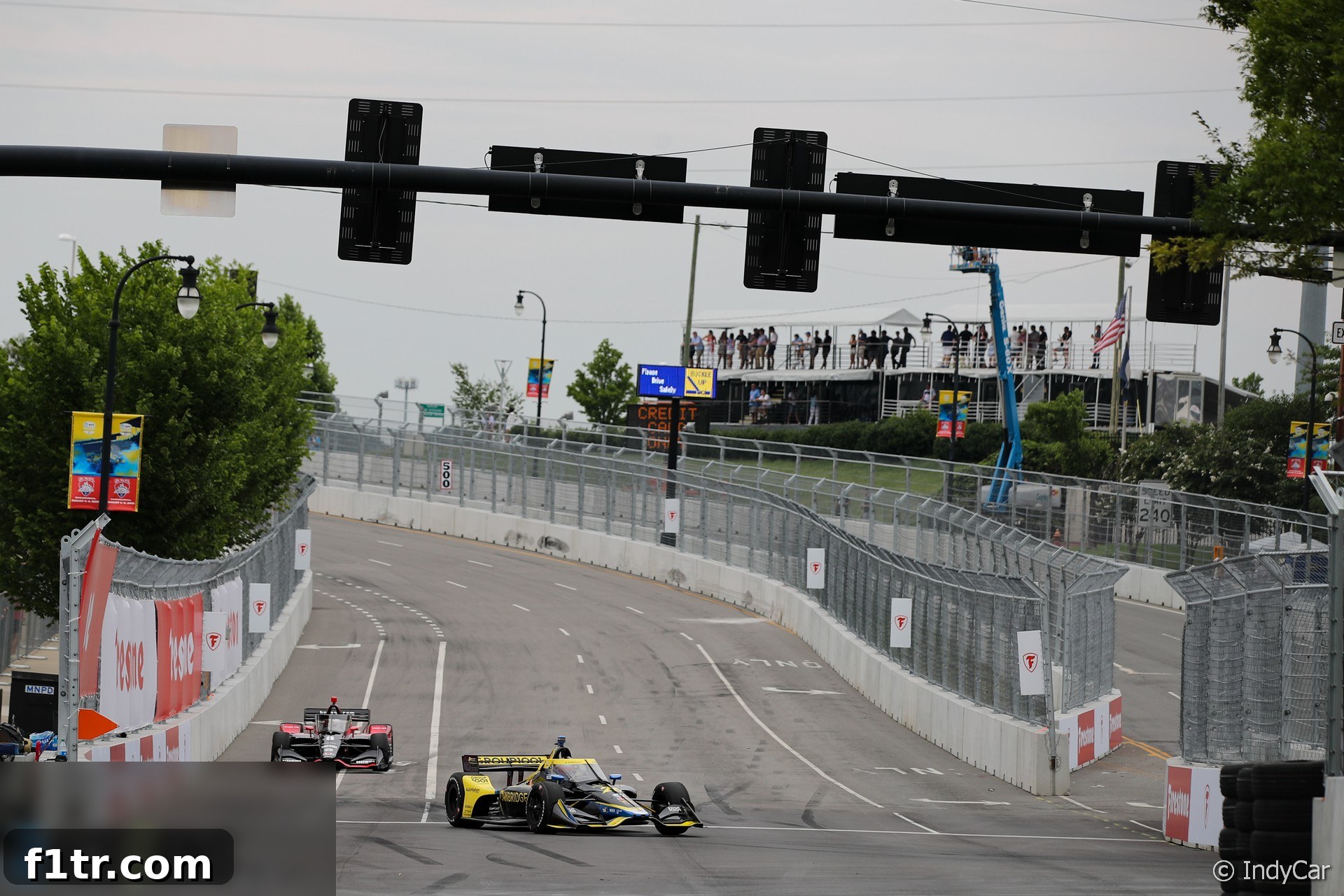
In a significant move that promises to electrify the NTT IndyCar Series calendar, the streets of Nashville, Tennessee, are set to host the season finale from 2024. This exciting announcement from the series signals a new era for the championship’s culminating event, placing one of motorsport’s most fiercely competitive spectacles in the heart of America’s iconic Music City.
The third running of the Nashville event is scheduled for this upcoming weekend, taking place on a challenging 3.37-kilometer temporary street circuit. However, anticipation is already building for next year, when a revised and slightly extended circuit, measuring 3.49 kilometers, will be introduced. This updated layout promises to enhance both the racing dynamics and the fan experience, further solidifying Nashville’s position as a premier destination on the IndyCar schedule.
Crucially, the revamped circuit will proudly retain its most distinctive features: the thrilling high-speed run across the Korean War Veterans Memorial Bridge and the iconic stretch through Nashville’s vibrant Honky-Tonk music district. These elements have quickly become synonymous with the Nashville Grand Prix, offering breathtaking visuals and a truly unique atmosphere that blends high-octane racing with the city’s unparalleled cultural charm. Spectators can expect the fusion of roaring engines and live music to create an unforgettable backdrop for the championship decider.
Nashville Takes the Global Stage: A New Era for IndyCar’s Finale
The decision to elevate the Big Machine Music City Grand Prix to season finale status underscores IndyCar’s strategic vision to showcase its exhilarating brand of open-wheel racing in dynamic, urban environments. Mark Miles, president and CEO of Penske Entertainment Corporation, which owns and operates IndyCar, expressed immense enthusiasm for the upcoming change, highlighting the event’s potential for exponential growth.
Miles stated, “Next year’s race in Nashville will be an unbridled celebration of the most fierce and competitive motorsport on the planet, set against the backdrop of an innovative and breathtaking stage that includes one of the premier global entertainment districts in the world.” His words paint a vivid picture of an event designed not just as a race, but as a comprehensive festival of speed and culture, drawing in fans from across the globe. By placing the championship showdown in Nashville, IndyCar aims to capture a broader audience and tap into the city’s vibrant tourism and entertainment infrastructure.
The move represents a deliberate effort to take the final race of the season “to an even higher peak on the global stage,” as Miles articulated. The urban setting, combined with Nashville’s reputation as a top-tier entertainment hub, offers an unparalleled platform to elevate the series’ profile. This strategic choice aligns with modern sports marketing trends, where events are increasingly curated as immersive experiences that extend far beyond the competition itself.
Laguna Seca: A Cherished Venue Continues Its Legacy
With Nashville stepping into the role of season finale, Laguna Seca will transition from its previous position as the championship decider. The historic circuit in Monterey, California, has served as the venue for IndyCar’s final race four times in the last six years, a tenure interrupted only in 2020 and 2021 due to the global disruptions caused by the Covid-19 pandemic. While it relinquishes the finale title, its place on the IndyCar calendar remains secured and highly valued.
Mark Miles unequivocally confirmed IndyCar’s commitment to continuing its presence at Laguna Seca next year, acknowledging its enduring appeal. He described it as “a beloved, historic venue for our teams, drivers and fans in an important and scenic market.” This statement reaffirms the series’ respect for tradition and the unique challenges that Laguna Seca presents to drivers, including its iconic Corkscrew turn. While no longer the final stop, Laguna Seca is expected to continue playing a crucial role in the championship narrative, perhaps as a critical mid-season test or a pivotal late-season challenge that shapes the points standings before the grand finale.
The shift highlights IndyCar’s dynamic approach to scheduling, balancing the allure of new, high-energy urban events with the preservation of classic, beloved tracks. Laguna Seca’s status as a driver’s circuit and a fan favorite ensures its continued importance to the series, offering a different kind of spectacle compared to the street races.
The Impact and Vision for Nashville’s Future
The selection of Nashville as the season finale is a powerful endorsement of the Big Machine Music City Grand Prix’s rapid success and its capacity to host an event of such magnitude. Miles further elaborated on this, emphasizing the collective effort behind the race’s ascent. “The fact that IndyCar has chosen Nashville and the Big Machine Music City Grand Prix as the crowning event is a testament to our fans, partners, stakeholders and truly the Nashville hospitality industry as a whole,” he added, crediting the local community and businesses for their unwavering support.
This sentiment underscores the collaborative spirit that has fueled the event’s growth. The local organizers, along with the city and state, have clearly demonstrated their capability to deliver a world-class experience, attracting large crowds and generating significant economic impact. The opportunity “to promote our city and state year-round and bring our race into the heart of Nashville is an absolute honour,” Miles continued, acknowledging the invaluable marketing exposure this brings. He concluded by expressing his astonishment at the event’s rapid trajectory, stating, “The Big Machine Music City Grand Prix continues to grow to levels that I never dreamed could have been possible.”
Beyond the immediate excitement of the racing, the Nashville finale is poised to deliver substantial economic benefits to the region. Major sporting events of this caliber attract thousands of tourists, filling hotels, restaurants, and local businesses. The Grand Prix becomes a significant generator of revenue and employment, solidifying Nashville’s reputation not just as a music capital, but also as a growing hub for sports and entertainment tourism. This sustained growth allows the event to become a cornerstone of the city’s annual calendar, cementing its long-term viability and impact.
IndyCar’s Strategic Calendar and the Road to the Championship
IndyCar’s calendar is meticulously crafted to offer a diverse range of racing challenges, encompassing traditional ovals, technical road courses, and vibrant street circuits. The decision to conclude the season on a street course like Nashville reflects a strategic choice to maximize excitement and drama. Street courses are notorious for their tight confines, unforgiving barriers, and unpredictable nature, often leading to thrilling, contact-heavy racing and dramatic championship deciders.
The atmosphere surrounding a street race finale is inherently different from that of a traditional road course or oval. The urban environment allows for greater fan accessibility, integrates the race directly into the city’s fabric, and creates a festival-like ambiance that attracts a wider demographic beyond traditional motorsport enthusiasts. This move suggests IndyCar’s commitment to innovation and its desire to continually engage new audiences while retaining its core fan base.
A championship battle culminating in Nashville promises high stakes and adrenaline-fueled action. The demanding nature of a street circuit means that even the smallest mistake can have significant consequences, adding an extra layer of tension and excitement for drivers and fans alike. This setting is ideal for showcasing the talent, precision, and bravery of IndyCar’s elite drivers as they vie for the coveted Astor Cup trophy.
Looking Ahead: The Future of IndyCar and Nashville
The announcement of Nashville as the IndyCar season finale from 2024 is more than just a calendar change; it represents a bold statement about the series’ direction. It signifies a strong commitment to bringing motorsports to the heart of urban centers, leveraging local culture and infrastructure to create unforgettable experiences. This forward-thinking approach aims to broaden the sport’s appeal, attract new partnerships, and enhance its commercial footprint on a global scale.
The continuous evolution of the Big Machine Music City Grand Prix, from its inaugural running to its new status as the championship finale, is a testament to the vision and hard work of everyone involved. It highlights the potential for new events to quickly establish themselves as pillars of the racing calendar when supported by passionate communities and strategic leadership.
As IndyCar looks to the future, the Nashville finale will serve as a beacon, drawing attention to the series’ unique blend of speed, strategy, and sheer spectacle. It promises to be a spectacular conclusion to each season, solidifying Nashville’s place in motorsports history and offering an exhilarating climax to the “fierce and competitive motorsport on the planet.”
Related IndyCar News and Updates
- IndyCar driver McLaughlin cleared of injury after crashing through barrier at Barber
- Schumacher says his IndyCar feels like ‘an F2 car, just with better tyres’
- IndyCar “way faster than Formula 1” in some corners, says Grosjean
- FIA to award more F1 superlicence points to IndyCar drivers from 2026
- Schumacher to race full-time in IndyCar with RLL in 2026
Browse all IndyCar articles