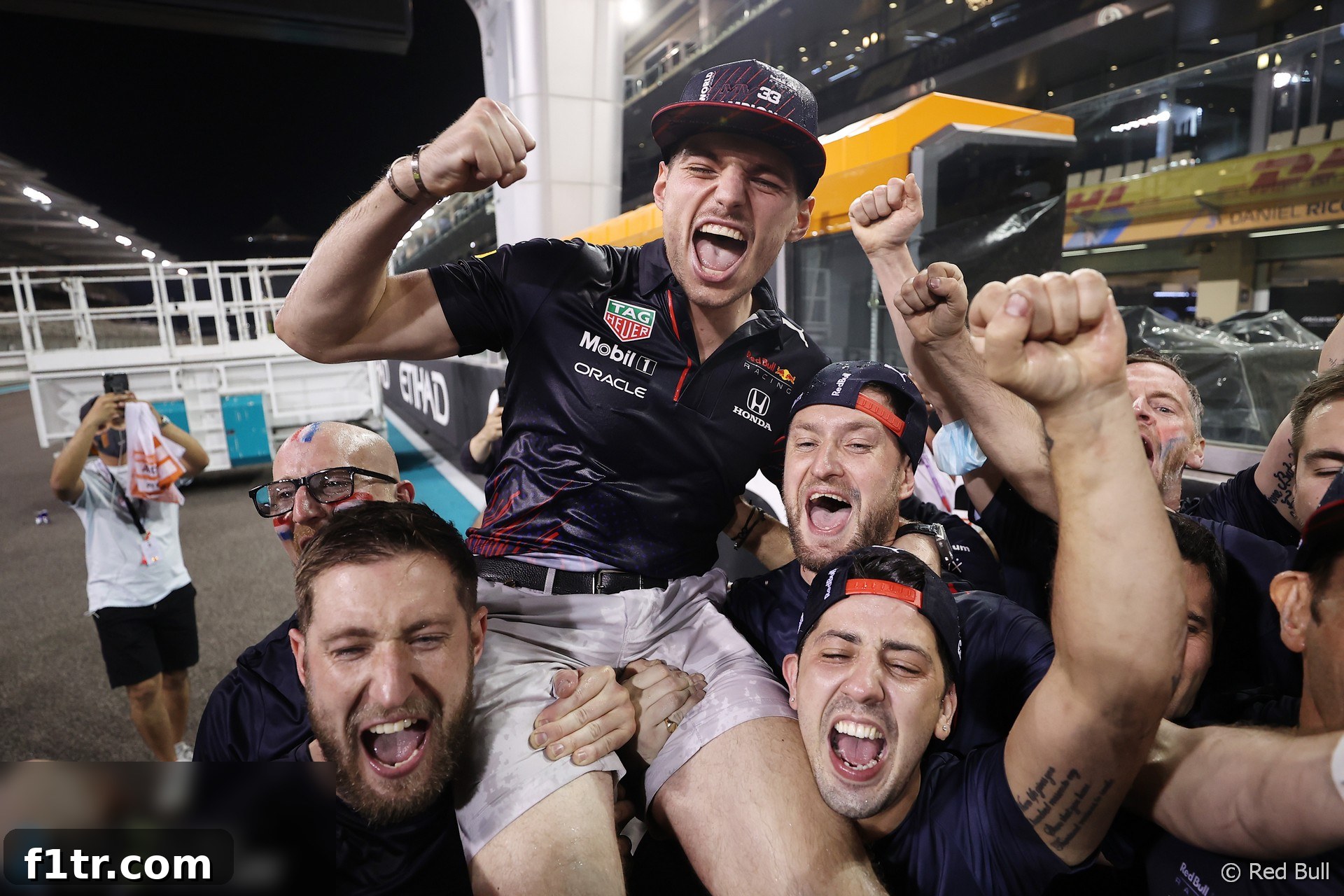
The 2021 Formula 1 season delivered unparalleled commercial success, yet its climax in Abu Dhabi was undeniably fraught with tension and controversy. As the final checkered flag fell, one team erupted in jubilation, while another grappled with the sting of defeat and the immediate contemplation of an appeal, casting a long shadow over an otherwise spectacular championship year. This dramatic conclusion to the F1 season, which saw the sport capture unprecedented global attention, also sparked intense debate about race governance and sporting integrity.
Saturday: Paddock Insights and Political Maneuvers
My Saturday at the Yas Marina Circuit began with an early arrival, just before midday, eager to soak in the pre-race atmosphere of the season finale. A key item on my agenda was a scheduled meeting with Zak Brown, CEO of McLaren. Our discussion centered on Formula 1’s remarkable commercial performance throughout 2021, the first full year under the leadership of Stefano Domenicali.
Brown articulated his clear satisfaction, highlighting how nearly all commercial metrics had shown significant upward trends. He pointed to the extension of numerous race contracts, securing the sport’s presence at key venues for years to come, and the influx of new, high-profile trackside sponsors. These indicators, he emphasized, underscored a robust and growing financial health for F1. Zak expressed genuine admiration for Domenicali’s transition from his role as Lamborghini CEO to the helm of Formula 1, commending his effective and commercially astute leadership.
Advert | Become a Supporter & go ad-free
During our conversation with Zak, my attention was drawn to Mohammed bin Sulayem, a prominent figure and hopeful candidate for the FIA presidency, seated within McLaren’s hospitality area. Seizing the opportunity, I approached him to delve into his strategic plans and policies should he be elected as the next FIA president during the upcoming General Assembly meeting in Paris. The election, scheduled for the following Friday, was a pivotal moment for global motorsport governance, promising a new direction for the sport’s regulatory body.
We are committed to providing our readers with a comprehensive profile of bin Sulayem and his campaign in the lead-up to these crucial elections. In fact, we recently published a detailed feature on his challenger, Graham Stoker, last week. During our engaging chat, bin Sulayem emphatically dispelled rumors about potentially relocating the FIA headquarters to Dubai if he secures the presidency. “I have a deep affection for Paris and the convenience of a private aircraft, allowing me to travel back and forth effortlessly,” he clarified, underlining his commitment to the traditional seat of the FIA. He firmly believes that the timing is opportune for the FIA to elect its first non-European president, citing an enormous groundswell of support from diverse regions across Asia, South America, and Africa, reflecting a desire for broader global representation within motorsport.
Our discussion concluded with a fascinating anecdote about his impressive collection of Mercedes 600s – a staggering 21 of these luxurious, imposing vehicles, famously favored by historical figures and prominent individuals. He proudly mentioned that his workshop in Dubai is not only Mercedes-approved but also possesses the unparalleled expertise to meticulously restore and rebuild these notoriously complex automobiles from the 1960s, a testament to his passion for automotive heritage and precision engineering.
En route back to the media center for a much-anticipated lunch, I spotted Red Bull Racing’s esteemed advisor, Helmut Marko. I seized the moment to ask the Austrian motorsport veteran a probing question: did this year’s fiercely contested world championship battle hold greater significance for the team than their consecutive title triumphs with Sebastian Vettel from 2010 to 2013? Marko’s response was insightful, highlighting the evolution of their challenges.
“A decade ago, the title fight felt entirely open, with a level playing field among competitors,” the former F1 driver and Le Mans winner explained. “This time, however, it’s a mission to halt the dominance of Mercedes, a team that has commanded the hybrid era for so long.” He further emphasized the immense importance of this championship for their engine partner, Honda, who were departing Formula 1 at the end of the season. “For Honda, it is absolutely critical that they conclude their tenure on a high note, leaving a lasting legacy of success.” This underscored the emotional and strategic weight placed upon securing the 2021 drivers’ title.
Prior to the qualifying session, I made a final, determined effort to resolve a persistent issue with my local Covid-19 health application, a necessity for international travel. After numerous attempts, working closely with the local test manager, we finally pinpointed the problem: a crucial digit had been inadvertently dropped from my unique identification number, preventing my passport and test results from correctly correlating. The relief was palpable; I could now look forward to flying home on Monday with a valid certificate, spared the intricate explanations about the “green” text messages I’d received after each test, which were confusingly not sufficient proof for international travel. This small victory against bureaucratic hurdles provided a much-needed moment of calm amidst the escalating tension of the championship weekend.
The post-qualifying interviews stretched late into the evening, concluding around 9 PM. As expected, the main talking points revolved around the ever-present perception of inconsistent stewarding decisions throughout the season, a theme that had fueled much of the championship’s drama. Additionally, considerable discussion focused on Red Bull’s ingenious strategy: deploying Sergio Perez to provide a crucial tow for Max Verstappen, a tactical masterstroke that gave Verstappen a vital edge and further inflamed the competitive rivalry between Red Bull and Mercedes.
Advert | Become a RaceFans supporter andgo ad-free
Sunday: The Championship Decider and its Controversial Wake
Sunday began with my routine Covid test, after which I immersed myself in the bustling paddock, pursuing whispers and rumors regarding Porsche’s potential entry into Formula 1. On Friday, I had received an intriguing message from a German source, indicating that Porsche’s supervisory board had convened on Thursday to deliberate on the matter. However, the exact outcome of their discussions remained shrouded in mystery, leaving the F1 world eager for clarification.
My source speculated on the prolonged silence: “The delay either signals exceptionally good news that requires careful and proper communication, or it’s diametrically the opposite, and they simply wish to avoid making any announcement about what would effectively be a corporate non-event.” This uncertainty fueled further speculation within the paddock about the future landscape of engine manufacturers in Formula 1. Despite numerous conversations with various individuals throughout the morning, I remained none the wiser concerning Porsche’s intentions. The air was thick with expectation, but concrete information was scarce, making the situation a frustrating enigma for those tracking potential new entrants.
With no clear answers on the Porsche front, I shifted my focus back to the widely discussed performance of Stefano Domenicali as F1 CEO. It was remarkably telling that despite offering an ‘off-record’ assurance, not a single negative word was uttered about his leadership. This unanimous praise was astonishing, especially considering that not long ago, the F1 paddock was famously dubbed the ‘Piranha Club’ – a cutthroat environment notorious for backbiting and intense rivalries. Domenicali’s ability to foster such widespread approval speaks volumes about his effective management and the positive direction he has steered the sport.
Walking the grid before the start of the race was an utterly incredible and almost surreal experience. The palpable tension was as taut as a kite string caught in the fiercest storm, a collective anxiety mirroring the magnitude of the impending championship decider. The pre-start nervousness was clearly visible and off the charts at both the Red Bull and Mercedes garages, with team personnel and drivers exhibiting the immense pressure of the moment. As Christian Horner and Toto Wolff, the rival team principals, walked past, their faces etched with determination and stress, I extended my best wishes to both, acknowledging the monumental stakes involved for their respective teams.
Advert | Become a RaceFans supporter andgo ad-free
Thereafter, it was time for the world to witness what many had billed as the title showdown of the millennium. Much has already been written, and undoubtedly much more will be debated, about the race itself and its messy, controversial aftermath. From my vantage point, it feels somewhat poetic that the driver who ultimately secured the championship, despite the formidable and relentless efforts of Mercedes – a team so acutely aware of the governance issues that they brought a barrister to Abu Dhabi, speaking volumes about their perceptions of F1’s current regulatory framework – also secured the most race victories of the season. Conversely, Mercedes, which undeniably possessed the overall fastest car throughout the year, fittingly clinched the constructors’ championship, a testament to their engineering prowess and consistent performance across both vehicles. This dichotomy perfectly encapsulated the season’s intense narrative.
However, it must be said, I believe the decision by Lewis Hamilton to bypass mandatory media commitments following the race smacks of poor sportsmanship, irrespective of the incredibly difficult circumstances he faced. This behavior is distinctly uncharacteristic of the Lewis Hamilton I have come to know and deeply respect over the past 15 years. It represents not only a regrettable lapse from one of the greatest drivers in the sport’s history but also a clear breach of Formula 1’s established sporting regulations, which mandate driver presence at post-race media sessions. While the emotions of the moment were undoubtedly raw and intense, the obligation to face the media and represent the sport remains a fundamental aspect of a driver’s role.
That said, I sincerely hope that he will choose to appear at the media sessions scheduled before the highly anticipated FIA awards gala on Thursday in Paris. This would be a crucial demonstration of his professionalism and respect for the sport, contrasting sharply with his alleged absence in 2019, when he claimed not to “feel 100%” yet appeared perfectly fine later that evening when collecting his trophy. I extended my forgiveness then, recognizing the pressures of the season. However, a repeat of such an absence, unless genuinely unavoidable despite his utmost efforts, would be deeply disappointing and, frankly, disgraceful, potentially undermining the integrity and spirit of the sport.
This brings us to the conclusion of what has been, without a doubt, the most tumultuous and captivating Formula 1 season I have experienced in over two decades of reporting on the sport. It was a year made even more challenging by the unprecedented obstacles and operational complexities imposed by the global Covid-19 pandemic, which tested the resilience of everyone involved. I sincerely trust that you, my esteemed readers, have enjoyed my contributions from various race tracks and locations around the world as much as I have enjoyed bringing them to you. As we look ahead, I extend my warmest wishes for a Merry Christmas to you and your loved ones, and a healthy and prosperous 2022. Here’s to the dawn of F1’s exciting new era, with its promise of renewed competition and technological innovation!
2021 Abu Dhabi Grand Prix: Further Reading
- Masi ‘basically gifted the championship’ to Verstappen says 2021 FIA steward Sullivan
- Norris called out F1 over its farcical 2021 finale. Will it get it right this time?
- Why Mercedes put ‘a reminder of joy and pain’ on display in their factory lobby
- Hamilton would be an eight-time champion if Whiting was still alive – Steiner
- Verdict on error in GT race suggests Mercedes would have lost 2021 Abu Dhabi GP appeal
Browse all 2021 Abu Dhabi Grand Prix articles