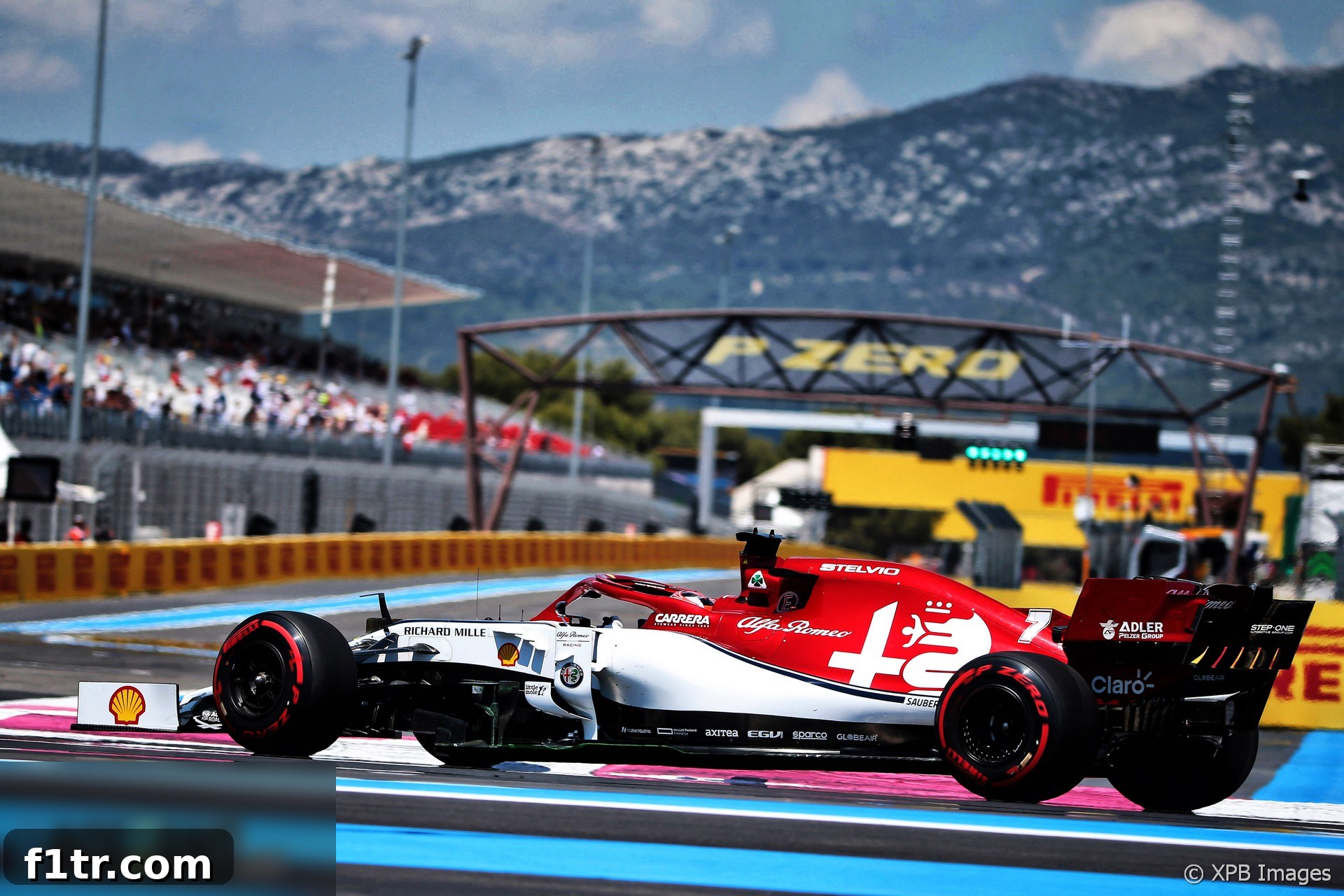
Stewards’ Verdict: Raikkonen and Ricciardo Clear of Penalties After Intense F1 Qualifying
A deep dive into the incidents involving Kimi Raikkonen and Daniel Ricciardo, and the meticulous decisions by Formula 1 stewards that saw both drivers avoid grid penalties following separate impeding allegations during a recent qualifying session. These rulings highlight the intricate balance between on-track racing and the strict enforcement of sporting regulations.
Navigating the F1 Rulebook: No Penalties for Raikkonen and Ricciardo
In a series of critical decisions that could have significantly reshaped the starting grid, Formula 1 stewards concluded that neither Kimi Raikkonen nor Daniel Ricciardo committed an offense warranting a penalty for impeding rival drivers during the competitive qualifying session. The rulings, delivered after careful review and driver testimonies, underscored the specific criteria applied to incidents of alleged obstruction, particularly the crucial phrase “unnecessarily impede.”
Qualifying in Formula 1 is a high-stakes endeavor, where every tenth of a second and every clear lap can be the difference between pole position and a mid-grid start. Drivers are constantly pushing the limits, often navigating heavy traffic on flying laps. This environment inevitably leads to close calls and potential conflicts, making the stewards’ role in interpreting and enforcing the rules paramount for fairness and safety.
The Raikkonen-Grosjean Incident: A Question of Rejoining Safely
One of the key incidents under scrutiny involved Alfa Romeo driver Kimi Raikkonen and Haas’s Romain Grosjean during the Q1 segment of qualifying. Raikkonen had gone off track, a common occurrence as drivers push the limits of grip, and subsequently rejoined the circuit. Grosjean, who was on a flying lap, found his progress potentially hindered by Raikkonen’s maneuver.
The stewards thoroughly investigated the event, taking statements from both drivers. Grosjean explained that upon witnessing Raikkonen’s off-track excursion and the resulting smoke and dust, he instinctively anticipated a yellow flag. In such situations, drivers are expected to reduce speed, and Grosjean accordingly backed off, affecting his lap time. This proactive measure, while potentially costly for his own performance, is a standard safety protocol in motorsport, designed to prevent further incidents in hazardous conditions.
Raikkonen, for his part, testified that he made a concerted effort to rejoin the track safely and gradually, aiming to do so parallel to the racing line to minimize disruption. Both drivers concurred in their testimonies that Raikkonen’s line of sight at that moment was unlikely to have allowed him to spot Grosjean’s approaching car. Furthermore, they agreed that if Grosjean had maintained full speed, Raikkonen would have been well clear, suggesting the impediment was largely a consequence of Grosjean’s precautionary braking rather than a direct, unsafe blockage by Raikkonen.
The stewards’ decision hinged on the interpretation of “unnecessarily impede.” They acknowledged that Grosjean’s lap was indeed compromised by the incident. However, they found that Raikkonen’s actions in rejoining the track did not cross the threshold of “unnecessarily impeding” given his efforts to rejoin safely and the mutual understanding that he couldn’t have seen Grosjean. This nuanced judgment recognized the challenging circumstances of rejoining the track after an off, balancing the need for safety with the competitive demands of qualifying. Consequently, no further action was deemed necessary against Raikkonen, allowing him to retain his grid position.
The Ricciardo-Raikkonen Interaction: The Limits of Evasion
The second incident under review saw Daniel Ricciardo implicated in potentially impeding Kimi Raikkonen. These scenarios are common in qualifying, where a driver on a slower cool-down or preparation lap might inadvertently hold up another driver on a critical fast lap. Such situations are often decided by the actions of the “slower” driver and the communication from their team.
Ricciardo provided his account to the stewards, explaining that his team had promptly advised him of Raikkonen’s approach on a fast lap. Acting on this crucial information, Ricciardo stated he immediately attempted to move out of the racing line to create space for the faster car. This swift response is often key to avoiding penalties, demonstrating an active effort to comply with the rules of engagement.
Interestingly, both Ricciardo and Raikkonen agreed on the circumstances and Ricciardo’s efforts. They concluded that given the specific section of the track where their paths converged, and the speed differential, no other evasive maneuver by Ricciardo would have substantially altered the outcome or prevented some level of potential impediment. The track layout and the rapid closing speeds in Formula 1 often present drivers with extremely limited options to fully get out of the way without compromising their own safety or that of others.
The stewards’ conclusion aligned with this mutual understanding. They ruled that Ricciardo had taken “reasonable steps” to avoid impeding Raikkonen. Crucially, they determined that his actions did not constitute “unnecessarily impeding.” This decision highlights the importance of timely team radio communication and a driver’s diligent effort to comply, even when perfect evasion might be impossible due to the inherent dynamics of Formula 1 qualifying.
The Stewards’ Role and the Nuance of “Unnecessarily Impede”
These two cases serve as excellent illustrations of the complexity involved in Formula 1 stewarding. The rules, while seemingly straightforward, require careful interpretation in the context of real-time racing incidents. The phrase “unnecessarily impede” is central to many such decisions, implying that not all impediments are punishable. An impediment only warrants a penalty if it is deemed “unnecessary,” suggesting a lack of reasonable effort by the impeding driver to avoid the situation, or an overtly dangerous maneuver.
The F1 rulebook mandates that drivers must not “unnecessarily impede another driver.” This means that while a driver might indeed slow down another competitor, the stewards must assess whether the impeding driver could have reasonably done more to prevent it. Factors like team radio communication, track visibility, available space, and the nature of the track section all play a vital role in determining culpability. Both Raikkonen and Ricciardo successfully demonstrated to the stewards that, under their respective circumstances, they either could not have done more or their actions did not constitute an “unnecessary” hindrance.
The consistent application of these rules is vital for the integrity of the sport. Drivers and teams rely on clear precedents to understand what is permissible and what will incur a penalty. These decisions reassure competitors that incidents will be judged on their specific merits, considering all available evidence and driver perspectives, rather than a blanket application of penalties for any perceived impediment.
Qualifying Dynamics: A Battle Against the Clock and Traffic
Qualifying in Formula 1 is a unique challenge that blends raw speed with tactical awareness. Drivers must extract maximum performance from their cars over a single lap while managing tire temperatures, fuel loads, and crucially, track traffic. The tiered structure of Q1, Q2, and Q3 intensifies this pressure, as drivers are eliminated progressively, forcing them to deliver under immense scrutiny.
The incidents involving Raikkonen and Ricciardo underscore the delicate balance drivers must strike. On one hand, they need to push the limits of their car and the track. On the other, they must remain acutely aware of their surroundings, particularly faster cars approaching or other drivers who might be off-line. Team radio communication is a lifesaver in this regard, constantly updating drivers on traffic situations and potential threats. However, even with the best information, split-second decisions in high-speed environments can lead to scenarios that blur the lines of “impeding.”
These rulings offer valuable insights into how Formula 1 aims to maintain a balance between allowing fierce competition and enforcing sporting fairness. They highlight that not every loss of lap time for a driver on a flying lap due to another car’s presence will automatically result in a penalty for the other driver. Instead, the focus remains on the intent and reasonable actions taken to mitigate the situation.
Conclusion: Upholding Fairness in Formula 1
The stewards’ decisions regarding Kimi Raikkonen and Daniel Ricciardo stand as a testament to the rigorous and meticulous process involved in overseeing Formula 1 races. By carefully analyzing testimonies, telemetry data, and video evidence, they determined that neither driver had “unnecessarily impeded” their rivals. These outcomes not only spared Raikkonen and Ricciardo from potentially damaging grid penalties but also reinforced the nuanced interpretation of racing regulations.
Such rulings are fundamental to the sport, ensuring that fairness prevails and that drivers are judged not just on the outcome of an interaction, but on their intent and the reasonable steps taken under high-pressure circumstances. As Formula 1 continues to evolve, the clarity and consistency of these decisions will remain critical in maintaining the integrity and excitement of qualifying sessions, where every moment can define a driver’s weekend.
Related to the 2019 F1 Season
- Crying in the Melbourne car park at 2019 grand prix was my career low – Ocon
- McLaren Racing reports reduced £71 million loss in 2019
- Kvyat: Hockenheim podium last year was “my biggest achievement” so far
- How the FIA’s new encrypted fuel flow meter targets Ferrari’s suspected ‘aliasing’ trick
- “He smashed my office door”: 23 must-see moments from ‘Drive to Survive’ season two
Explore More 2019 F1 Season Articles