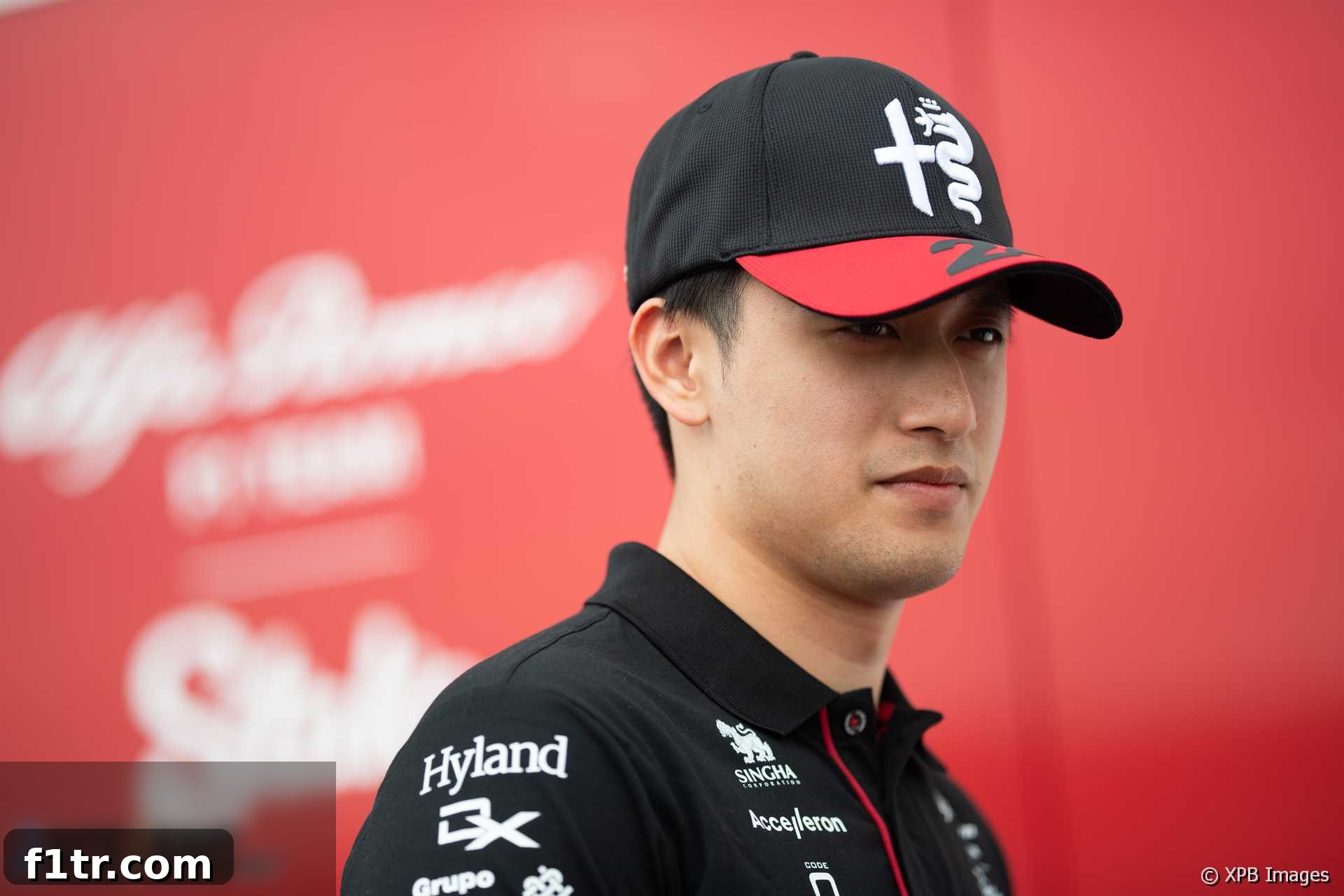
Zhou Guanyu is poised to tackle the Canadian Grand Prix with a surge of confidence, a direct result of his impressive ninth-place finish at the previous round in Spain. The Alfa Romeo driver’s strong performance at the Circuit de Catalunya-Barcelona not only secured crucial points for his team but also underscored his significant progress as a Formula 1 competitor in his second season.
Zhou Guanyu Carries Momentum and Renewed Confidence to Montreal
The Spanish Grand Prix proved to be a pivotal race for Zhou Guanyu and the Alfa Romeo F1 Team. Crossing the finish line in tenth position, Zhou later moved up to ninth after a five-second post-race penalty was applied to AlphaTauri’s Yuki Tsunoda. This hard-earned result marked only the second points finish for Zhou in the highly competitive 2023 Formula 1 season and merely the third time Alfa Romeo has scored points across the opening seven rounds. What made this achievement particularly significant for Zhou was that it wasn’t a result of chaotic incidents or multiple retirements; instead, it was a testament to pure pace and exceptional race craft in a highly competitive field where all 20 drivers completed the demanding Spanish Grand Prix.
A Breakthrough Performance Rooted in Pure Pace
Reflecting on the Spanish Grand Prix, Zhou expressed immense satisfaction with the outcome and the manner in which it was achieved. “It’s a good feeling, obviously,” Zhou stated. “It wasn’t like chaotic [things] happening – it was purely on pace, race craft to get these points. I think it’s very important, especially when we have these proper tracks and try this new package we had. It seems to be working in the right way.” His comments highlight the team’s ongoing efforts to extract more performance from the C43 challenger and the strategic importance of validating new components on traditional, high-demand circuits like Barcelona, which serve as true benchmarks for car performance.
This ninth-place finish now stands as the fifth points-scoring result in Zhou’s budding Formula 1 career since he debuted with Alfa Romeo in the 2022 season. For the young Chinese driver, this consistent improvement is a clear indicator of his growth and successful adaptation to the pinnacle of motorsport. Each race provides a learning opportunity, and his ability to convert potential into tangible results demonstrates his increasing maturity and understanding of Formula 1 racing. “For myself, I think it was just one of the greatest races I did since I arrived in this paddock,” he shared, emphasizing the personal significance of his performance. “I was really happy with the result I was able to achieve.”
Zhou’s journey in Formula 1 has been characterized by steady progression. After a commendable rookie season where he demonstrated flashes of speed and maturity, his second year has seen him consolidate his position, making fewer mistakes and consistently challenging for points in the fiercely competitive midfield. The psychological boost from a performance like the one in Spain cannot be overstated. In a sport where marginal gains are everything, a driver’s belief in their ability and the car’s potential can unlock precious tenths of a second, setting a positive trajectory and building invaluable momentum for upcoming races.
“Obviously I’m feeling good, especially knowing what I’m capable of doing that it just boosts my [confidence] level up and I just need to build on that,” Zhou added, underlining the importance of self-belief. This renewed confidence is a vital asset as the Formula 1 calendar continues with the challenging Circuit Gilles Villeneuve in Montreal.
Strategic Car Upgrades Delivering Tangible Results
Alfa Romeo arrived in Barcelona as one of only a few teams that did not introduce a major upgrade package at that specific event. However, the team had strategically implemented several significant updates during the preceding Monaco Grand Prix weekend. These crucial developments, aimed at boosting the car’s overall performance, included a new floor design, revised rear suspension components, and an updated rear wing. While Monaco’s unique street circuit layout doesn’t always provide the most representative data for general car performance, the subsequent race at the Circuit de Catalunya, known for its comprehensive demands on a car’s aerodynamic and mechanical setup, offered the perfect proving ground for these new parts.
The strong showing in Spain firmly validated the effectiveness of these strategic upgrades. Zhou confirmed that the improvements had successfully enhanced the Alfa Romeo C43’s competitiveness, particularly in cornering capabilities. “The package in general really just gives you more aero performance,” he explained. This focus on aerodynamic efficiency is critical in modern Formula 1, where downforce generation directly translates to higher cornering speeds and ultimately, faster lap times. The team’s decision to introduce the upgrades in Monaco and then rigorously test them in Barcelona reflects a calculated and patient development strategy aimed at maximizing performance gains throughout the demanding F1 calendar.
Despite these advancements, Zhou acknowledged that some inherent weaknesses of the Alfa Romeo car, such as its top speed and comparative drag, still persist. “Some of our weakness like the top speed, all that is still here. More drag compared to other teams,” he noted. This candid assessment highlights the continuous challenge of balancing downforce with straight-line speed – a fundamental trade-off in F1 car design that every team grapples with. However, the gains in cornering performance have been substantial enough to make a real difference in the competitive order. “But in general, I think in terms of just aero performance in the corners, I think it made a good step. It’s not big, it’s a few tenths but it’s just enough to put you [from] the bottom of the midfield to fighting with the top of the midfield guys. So it’s very crucial to have that.” These “few tenths” are incredibly valuable in the fiercely contested Formula 1 midfield, where the difference between scoring points and missing out can be minuscule, often decided by fractions of a second.
Optimistic Outlook for the Canadian Grand Prix at Circuit Gilles Villeneuve
Heading to the iconic Circuit Gilles Villeneuve in Montreal, Zhou Guanyu has every reason to be optimistic. This particular track holds positive memories for him, as it was the venue where he secured his career-best Formula 1 result of eighth place just last year. The potent combination of a confidence-boosting performance in Spain and a track where he has historically excelled bodes exceptionally well for Alfa Romeo’s prospects this weekend.
“In general I feel a bit more comfortable arriving here after the race in Spain,” Zhou commented, drawing parallels between the two circuits and the car’s recent performance. “Because in Spain with the new layout – with the last corner almost flat – I thought we were going to be struggling there a lot but it turns out we were actually performing quite well.” His team’s unexpected strength in Barcelona, particularly through high-speed sections and general aerodynamic stability, provides a strong foundation for the challenging nature of the Canadian Grand Prix, despite its different characteristics.
The Circuit Gilles Villeneuve is renowned for its unique blend of heavy braking zones, fast chicanes, and the aggressive use of kerbs, all set against a backdrop of concrete walls waiting to punish any error. Drivers must master the art of riding the kerbs to maximize lap time, while also managing tyre degradation on a circuit that can be demanding on the compounds due to its stop-and-go nature. Zhou believes these elements won’t pose a significant disadvantage for Alfa Romeo. “I feel like here it should be not a big issue because here still it depends on how you get the tyres to be working on lap one. And also the car over the kerbs, you have to take all these massive apex bump kerbs.” This suggests confidence in the car’s mechanical grip, suspension setup, and its overall ability to handle the bumpy and unforgiving nature of the track.
He concluded with a resolute statement on their approach for the upcoming Canadian Grand Prix: “So in general I think the track doesn’t really have a disadvantage for us. We’ll just focus on what we’ve been doing and we should have the speed that we had last time.” This indicates a continuation of the setup philosophy and operational strategy that yielded success in Spain, aiming to replicate the competitive pace and capitalize on any opportunities that arise in Montreal. The Canadian Grand Prix often delivers unpredictable and thrilling races, and with Zhou Guanyu and Alfa Romeo demonstrating improved form and renewed confidence, they are certainly a team to watch in the highly competitive midfield battle. Their ability to translate recent gains into another strong points finish would further solidify their position and validate the strategic development choices made earlier in the season.
Become a RaceFans Supporter
RaceFans is run thanks in part to the generous support of its readers. By contributing £1 per month or £12 per year (or the same in whichever currency you use) you can help cover the costs of creating, hosting and developing RaceFans today and in the future.
Become a RaceFans Supporter today and browse the site ad-free. Sign up or find out more via the links below:
- Become a RaceFans Supporter
- RaceFans Supporter FAQ
2023 Canadian Grand Prix Articles
- Norris ‘even more’ sure Canada penalty was wrong after review request fails
- McLaren seeking more than just downforce gains from major upgrade
- Winning more races won’t necessarily lead to F1 seat – Palou
- Red Bull’s testing restriction will “massively affect” 2024 car development
- Schumacher’s set-up input gives Mercedes a “super advantage” – Wolff
Browse all 2023 Canadian Grand Prix articles