The Unseen Battles of Silverstone: A Paddock Diary Unveils F1’s Legal & Commercial Undercurrents
The Silverstone paddock, a crucible of speed and high-stakes drama, is not merely a stage for Formula 1 racing. Beyond the roar of engines and the pursuit of milliseconds, a complex ecosystem of business dealings, legal skirmishes, and political maneuvering unfolds. This diary entry from the British Grand Prix captures a weekend brimming with such behind-the-scenes narratives, from the bizarre twists of the Rich Energy saga to the lingering fallout from Force India’s administration and an intriguing new court case involving sponsor BWT.
7am: Dawn Breaks Over British Motorsport’s Heart
The morning routine on a Grand Prix weekend is a familiar ritual: awaken, catch up on the latest news from the world of Formula 1, and then indulge in a hearty full English breakfast before making the pilgrimage to the circuit. This particular weekend, the journey to Silverstone was notably smooth, a stark contrast to some historical nightmares. I vividly recall my first British Grand Prix here in 1997, where traversing the mere fifteen miles from the M40 motorway to the circuit consumed a grueling two hours, even with a full media pass. That experience was a testament to the logistical challenges of hosting such a colossal event.
Another memorable, albeit less pleasant, Silverstone memory harks back three years after that, when then-F1 supremo Bernie Ecclestone controversially scheduled the Grand Prix for Easter Sunday. Many speculated this was a punitive measure against the British Racing Drivers’ Club (BRDC) for their refusal to accede to certain stringent demands. As one might predict for an April weekend in Britain, the weather was utterly miserable. Torrential rain transformed the circuit grounds into a quagmire. On Saturday, some ticket-holders found themselves unable to reach their parking spots, while on race day itself, spectator cars were entirely banned from the premises. Despite these measures, stories emerged of unfortunate fans whose vehicles remained mired in muddy fields until the following Wednesday. Mercifully, sound judgment has prevailed since, ensuring the British Grand Prix now enjoys a permanent summer slot, greatly enhancing the spectator experience and logistical flow.
9am: Paddock Whispers and Legal Lingering
Upon arrival at the circuit, a quick shuttle transfer delivers me directly into the bustling heart of the paddock. My rounds begin immediately, as early rumblings suggest a significant court case involving several high-profile F1 figures is brewing. It’s imperative to delve into these whispers, separating fact from paddock fiction.
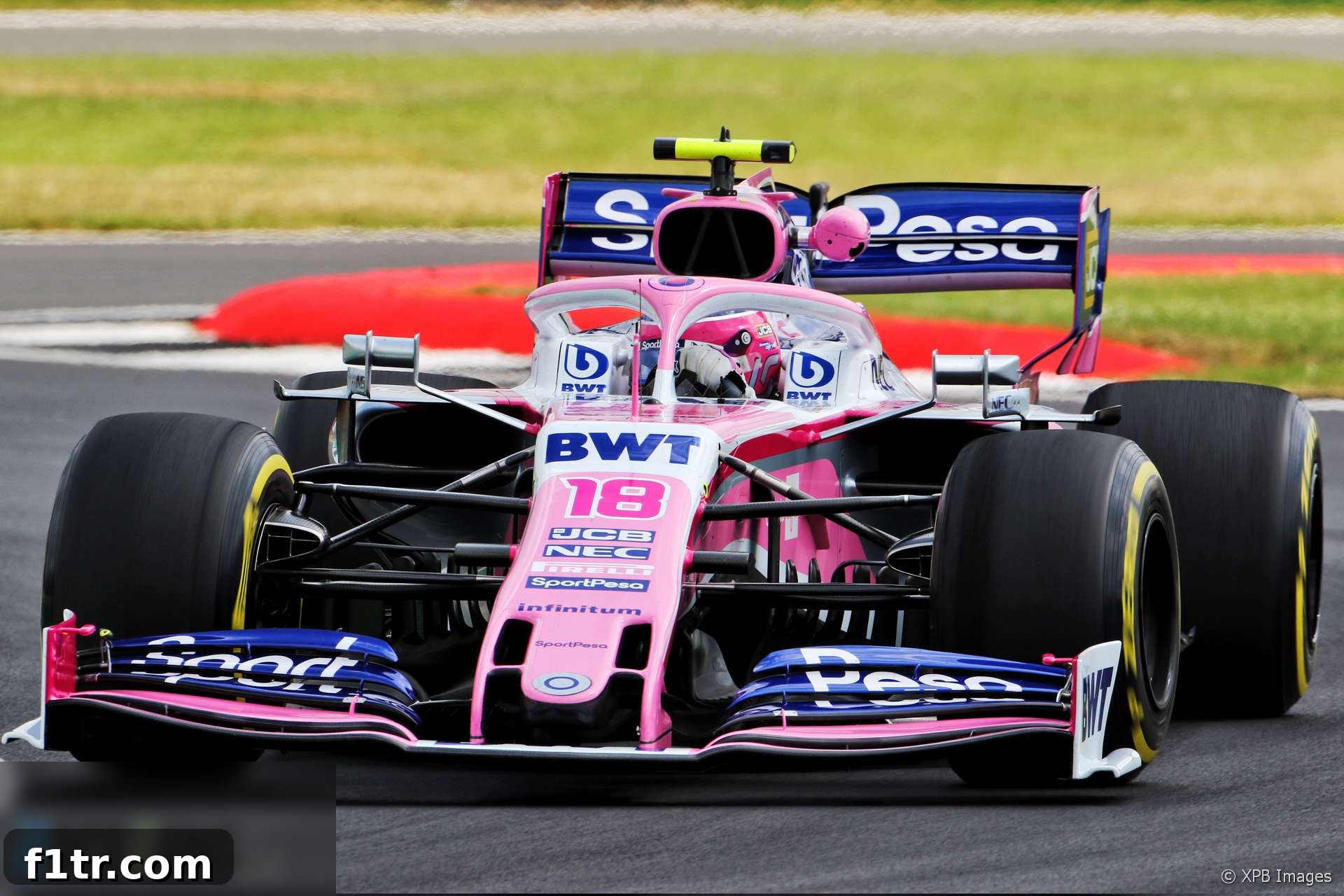
The details that emerge paint a fascinating picture: AMP, a Lichtenstein-based sponsor agent, is reportedly seeking millions in unpaid fees. Their claim stems from their pivotal role in brokering the sponsorship deal between the team formerly known as Force India and BWT, the Austrian water treatment company renowned for its distinctive pink livery. The saga is deeply intertwined with the financial turmoil that saw Force India plunge into administration in July of the previous year. The current iteration of the team, Racing Point, could potentially be held liable for aspects of this dispute from that critical date forward, highlighting the complex financial liabilities that can persist even after a team’s ownership transfer.
The list of individuals recently appearing in court reads like a who’s who of Formula 1. Among them are the enigmatic former Force India boss, Vijay Mallya, who remains entangled in his own legal battles; Toto Wolff, the influential team principal of Mercedes; Monisha Kaltenborn, the former Sauber boss, whose team had also been considered for the BWT sponsorship but ultimately couldn’t commit to the striking pink branding; and Racing Point’s team principal Otmar Szafnauer, accompanied by his head of marketing. These proceedings are scheduled to continue in London this week, adding another layer of legal intrigue to a sport often perceived as being solely about on-track competition. With the ongoing, frankly bizarre, Rich Energy saga also unfolding (which I’ll explore in more detail below), it seems Formula 1’s connection to the world’s courtrooms is a constant and often dramatic presence.
11am: Qualifying Beckons, Rich Energy Intrigue Deepens
As the final practice session gets underway, the circuit comes alive with the urgent symphony of F1 cars pushing their limits. While the on-track action is compelling, my focus remains firmly fixed on the perplexing Rich Energy situation. I’ve been offered an exclusive opportunity to speak with some of the company’s shareholders, including Justin King, the highly respected former CEO of Sainsbury’s and father of IndyCar racer Jordan King. With the interview scheduled for after qualifying, I keep one eye glued to the screens displaying lap times and sector performance, while simultaneously scouring the internet for any fresh developments concerning the controversial energy drink brand.
Noon: Lunch, Unexpected Calls, and Legal Echoes
Taking a brief respite from the intensity, I grab lunch in the bustling media canteen – a particularly delicious chicken pad thai on this occasion. My meal is interrupted by an unexpected call: the FIA president himself is willing to grant me an interview. This is a significant development, as I had specifically requested to discuss his recent comments on the potential reintroduction of refuelling in Formula 1 and the ongoing, passionate debate surrounding the idea of giving drivers more freedom to race without excessive penalties or limitations. This promises to be a revealing conversation, and I look forward to sharing insights from it very soon.
The hastily arranged interview slot, while a welcome opportunity, unfortunately means I have to miss a pre-scheduled appointment with Honda. My sincere apologies go out to Eric Silberman and his team, and I genuinely hope we can reschedule our discussion in the near future. Such is the nature of a Grand Prix weekend: a finely tuned schedule can be upended by unexpected, high-priority developments at a moment’s notice.
Later, I cross paths with Vijay Mallya, first in Racing Point’s hospitality suite, where he appears to be warmly received, and subsequently in the paddock itself. He seems remarkably relaxed, offering a broad confirmation of the information I had gleaned regarding the AMP/BWT dispute. He then shares a personal victory, informing me that he had won an important appeal on July 2nd in connection with his protracted extradition case to India. While this marks a step forward for him, it serves as a stark reminder that his own complex legal saga, much like some of the broader F1 narratives playing out, is far from reaching its conclusion.
2pm: A Rally Legend in the Media Centre
During the intensity of qualifying, I am genuinely flattered to be joined by Paddy Hopkirk, the venerable chairman of the British Racing Drivers’ Club (BRDC) and a legendary Mini rally driver from the iconic 1960s era. It’s a true privilege to have him in the media centre, and he takes the opportunity to quiz me on the current standards and facilities. I am delighted to inform him that the Silverstone media centre now ranks among the very best on the entire Formula 1 circuit, a significant improvement from previous years and a testament to the circuit’s commitment to excellence.
Paddy Hopkirk’s ‘giant-slaying’ heroics in his Mini Cooper during the 1960s are the stuff of motorsport legend. His famous victory at the 1964 Monte Carlo Rally, overcoming more powerful and larger competitors, remains an enduring symbol of skill and determination. It’s truly wonderful to see him again, looking hale and hearty at 86 years old. He is a truly wonderful character, embodying the spirit of motorsport’s golden age. It is incredibly heartening to witness him continue to dedicate his time and effort to the BRDC, ensuring the club’s legacy and future remain vibrant.
3pm: Post-Qualifying Debriefs and the Rich Energy Unraveling
The immediate aftermath of qualifying is a flurry of activity, with drivers and team personnel available for interviews. I manage to grab the Red Bull pairing, who delivered an impressive performance by splitting the Ferraris, demonstrating their pace and potential. I had also planned to attend Toto Wolff’s scheduled session, but word quickly spreads that it has been cancelled due to him feeling unwell, a rare occurrence given his usual robust presence.
With Wolff’s cancellation, I pivot and head straight to the Haas F1 team hospitality for my eagerly anticipated Rich Energy appointment. As is so often the case in disputes of this nature, there appear to be at least three distinct sides to the story: the narrative put forth by Storey (no pun intended), the perspective of the remaining shareholders, and then, somewhere in between, the elusive truth. Justin King, unfortunately, is unable to make the appointment, but I am met by fellow shareholder Neville Weston, who provides crucial insights.
Weston confirms that the remaining shareholders are actively working to remove the previously dubbed “rogue” Storey from his CEO role and regain full control of the embattled company. However, citing ongoing legal complexities, he is unable to divulge specific details of their strategy. The immediate upshot for the Haas F1 team is positive: their sponsorship money appears to be secure, at least for the immediate future. Yet, the fundamental and truly telling question still lingers unanswered: just how many cans of Rich Energy has the company genuinely sold? This query cuts to the core of the brand’s legitimacy and market presence.
Looking ahead, the future of Rich Energy appears increasingly precarious. In my informed opinion, it is highly plausible that the company will eventually be deregistered. The pivotal challenge for the remaining shareholders will then revolve around their ability to transfer the (leased) recipe for the energy drink before any potential deregistration and, crucially, to seize control of the brand itself. However, even if they succeed in this, the value of the brand may be significantly diminished. Just a few weeks prior to this Grand Prix, a court ruling determined that Rich Energy’s distinctive stag head logo had infringed upon existing copyrights and trademarks, effectively stripping a key visual identifier and branding element from the company’s commercial arsenal. This legal setback represents a significant blow to the brand’s already fragile standing and complicates any future attempts at revival.
6pm: Winding Down and Reflecting
As the intense day at the circuit draws to a close, I begin to wind down. A visit to the canteen offers a delicious chorizo and bean stew accompanied by artisanal breads – a truly satisfying end to a long day. With dinner concluded, I leave the media centre, heading back to my bed and breakfast. There, I’ll pack my belongings, ready for an early check-out on Sunday morning. The paddock’s blend of high-octane racing, intricate legal battles, and commercial dramas ensures that an F1 Grand Prix weekend is never just about what happens on the track, but also about the many unseen battles unfolding behind the scenes.
2019 British Grand Prix
- 2019 British Grand Prix Star Performers
- Top ten pictures from the 2019 British Grand Prix
- Hamilton and Formula 1 at their best in Silverstone spectacular
- Hamilton passes Mansell and Clark as top Briton at home
- Paddock Diary: British Grand Prix day four
Browse all 2019 British Grand Prix articles