Formula 1’s Sustainable Future: Is the VW Group Poised for an Entry?
Formula 1, the pinnacle of motorsport, is at a pivotal moment, navigating a future increasingly defined by sustainability and technological innovation. With a clear commitment to becoming a net-zero carbon producer by 2030, the sport is actively exploring groundbreaking solutions, most notably through the development and integration of 100% sustainable fuels. This ambitious target is not merely an environmental statement; it’s a strategic move designed to secure the sport’s relevance and attract new manufacturers in an era of rapid automotive evolution.
Last December, the FIA Technical Department made a significant stride in this direction, distributing barrels of a 100% sustainable fuel to all current F1 power unit suppliers for comprehensive evaluation. This advanced bio-brew represents a second-generation biofuel, meticulously crafted for rigorous testing in high-performance F1 engines. Crucially, it is derived from bio-waste materials unsuitable for human or animal consumption, underlining a commitment to ethical and environmentally responsible sourcing. This initiative is a cornerstone of the governing body’s broader strategy to decarbonize the sport and showcase how advanced internal combustion engine technology can thrive in a sustainable future, challenging the conventional wisdom that electrification is the only path forward for eco-conscious motoring.
It is an open secret within motorsport circles that Formula 1 is actively seeking to expand its roster of teams and/or engine suppliers. This pursuit has gained considerable urgency since October of last year, when Honda, a long-standing and successful participant, announced its intention to withdraw at the close of the 2021 F1 season. The departure of such a prominent manufacturer leaves a void, creating both challenges and opportunities. Among the names most frequently speculated as potential new entrants are various prestigious brands under the vast Volkswagen Group umbrella – with Porsche and Audi typically leading the discussions, though Lamborghini and Bugatti also occasionally feature in mentions. Furthermore, the Hyundai Group, encompassing brands like KIA, has also been cited as a potential candidate, highlighting the diverse interest in Formula 1’s future trajectory.
Over the past year, in numerous interviews published by RaceFans – most recently with F1 managing director Ross Brawn – a consistent theme has emerged regarding Formula 1’s strategic objectives for its new 2025 power unit regulations. The core intention is to ensure the internal combustion engine (ICE) maintains a robust and solid future within the sport by pioneering the widespread adoption of non-fossil fuels. This direction is a deliberate effort to reposition the ICE as a sustainable technology, demonstrating its potential for environmental responsibility when paired with cutting-edge fuel innovations. This vision holds particular appeal for manufacturers like Porsche, which, as we reported in July of last year, has already been actively investigating the use of synthetic fuels in its own research and development programs. The synergy between F1’s objectives and manufacturers’ existing initiatives creates a compelling narrative for potential collaboration.
Shortly after assuming his new role as F1 boss in January, Stefano Domenicali, a figure immensely well-connected throughout the global motor industry thanks to successful tenures with Ferrari (then part of Fiat), Audi, and Lamborghini, spoke candidly about his keen desire to attract incoming brands and new teams. He emphasized that there was considerable interest from potential entrants. Domenicali’s extensive network and proven track record in leadership positions within major automotive groups lend significant weight to his statements, suggesting that his outreach efforts are founded on genuine engagement and concrete discussions.
“We are receiving a lot of interest from OEMs [original equipment manufacturers] who want to understand the future of Formula 1,” he stated during a select media briefing attended by RaceFans. He added, revealing a pleasant surprise, “We are receiving – it seems strange from outside, but I’m very happy for that – some new requests for teams or other organisations that want to see if there is a possibility to invest in Formula 1.” These comments underscore a growing curiosity about F1’s evolving landscape, particularly regarding its sustainability agenda and the financial viability of participation under the forthcoming regulations.
Volkswagen Group’s Tentative Steps Towards F1
Earlier this week, the BBC reported that “Porsche and Volkswagen Group considering entering F1”, citing VW Group head of motorsport Dr. Fritz Enzinger. His comments ignited a flurry of speculation: “It would be of great interest if aspects of sustainability – for instance, the implementation of e-fuels – play a role in this.” This statement directly links the VW Group’s potential interest to F1’s sustainability drive, particularly the focus on synthetic fuels, which align with ongoing research within the Group.
Enzinger further elaborated on the cautious approach: “Should these aspects be confirmed, we will evaluate them in detail within the VW Group and discuss further steps.” These measured words, while generating significant media attention, warrant a closer, more critical examination. The language used by Dr. Enzinger is steeped in conditional clauses, suggesting a preliminary assessment rather than a firm commitment or even a deep exploration.
Enzinger’s comments certainly prompted a flurry of similar articles, most adorned with broadly similar, enthusiastic headlines. However, do the highly respected engineer’s words truly translate into a definitive declaration of “considering an entry”? A careful analysis reveals a notable degree of caution. For starters, one must observe the numerous riders writ large in his comments: “would,” “if,” “for instance,” “should,” “evaluate,” “discuss,” “further,” and “steps.” That amounts to a remarkable eight provisos embedded within a mere 40 words. Such cautious language strongly suggests a very early, exploratory stage of consideration, rather than a robust internal plan or even a serious evaluation of a concrete entry strategy. It indicates a scenario where the VW Group is observing F1’s direction, particularly regarding sustainable fuels, to gauge if it aligns with their broader corporate and motorsport strategies, rather than actively building a case for entry.
Beyond the Headlines: A Deeper Look at VW’s F1 Prospects
More significantly, the timing of these comments and the internal dynamics within Porsche add another layer of complexity. Dr. Enzinger is scheduled to turn 65 in September, an age at which German companies are typically strict about retirement policies. Indeed, a Porsche insider has already indicated that his replacement has been chosen, suggesting a shift in motorsport leadership is imminent. The initial framework for F1’s new power unit regulations is unlikely to be officially presented to teams before the end of 2021, and formalization could take another year or more. This timeline suggests that Dr. Enzinger is highly unlikely to have executive input into any significant F1 discussions or strategic decisions held within the wider VW Group as the regulations solidify. Any serious engagement would fall under the purview of his successor.
In any event, the strategic direction of a motorsport division often hinges on the vision of its leadership. Who knows what categories his successor will prioritize? Predecessor Wolfgang Dürheimer, for example, deliberately nudged the VW Group towards rally, sports, and GT racing, consciously steering clear of Formula 1 during his tenure. However, staying abreast of the future direction of major motorsport categories is an inherent part of the job specification for every motorsport director worthy of the title. Their role includes diligently gauging whether these evolving categories fit any future plans or strategic objectives of their employer. Attending F1 Engine Advisory Committee meetings – which Porsche and other brands have variously done since at least 2009 – is therefore a standard due diligence exercise, not a guarantee of entry.
This historical pattern is crucial: the sheer number of ‘interested’ parties who have come and gone without making a firm commitment during that period stands as proof. We must not forget that the only new entrant in almost 15 years has been Honda, a manufacturer with a long and storied, albeit intermittent, history in F1 since 1964, and which is presently heading for the exit door once again. The commitment required to enter F1 as an engine supplier or a new team is monumental, both financially and technologically, often proving a deterrent even for well-resourced entities.
Porsche’s Existing Commitments and Resource Constraints
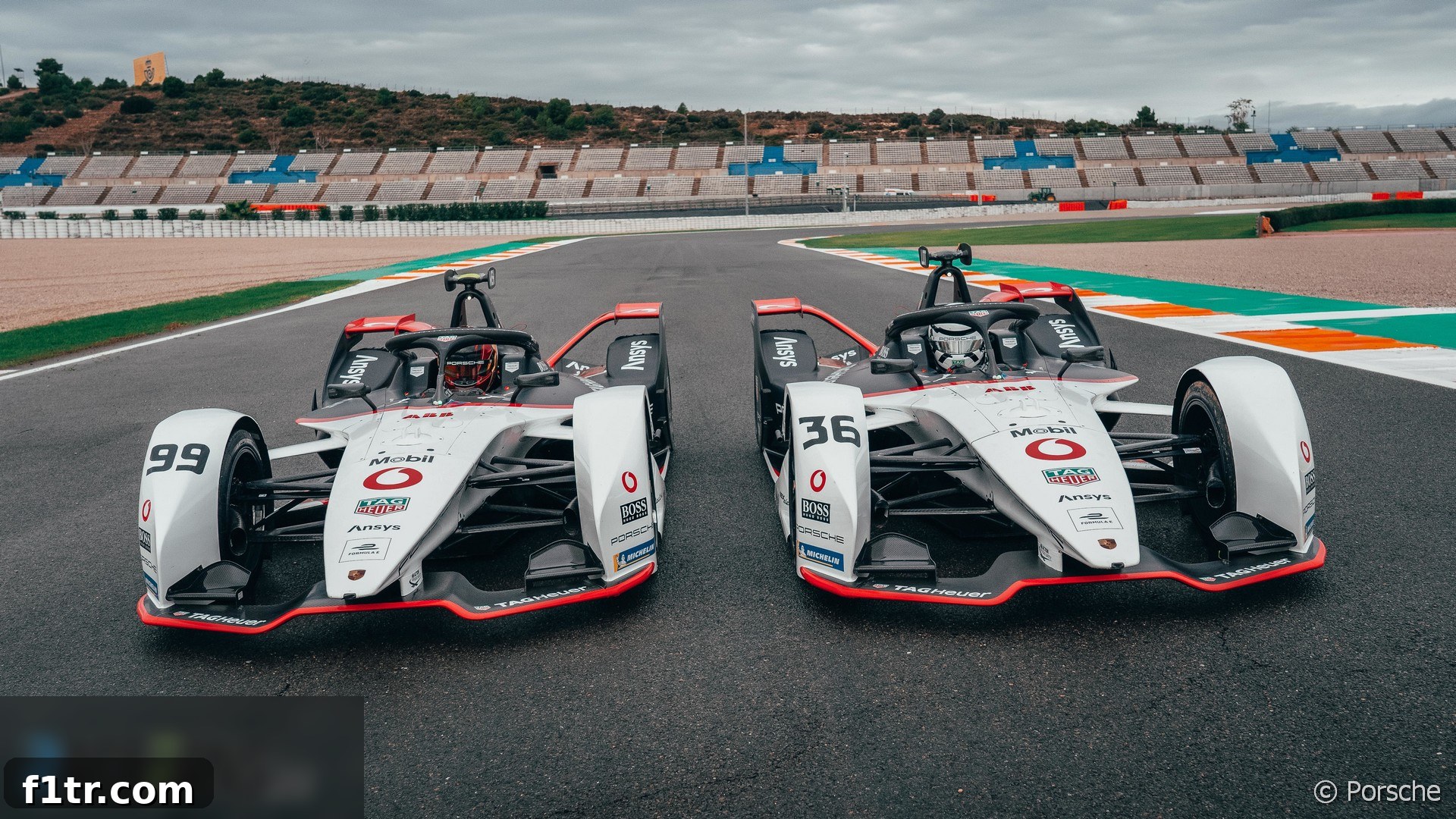
Porsche, in any event, has already made a significant announcement: its confirmed return to the World Endurance Championship (WEC) in the LMDh class for 2023. This commitment represents a substantial allocation of resources – engineering talent, financial investment, and development time. It is highly improbable that Porsche would simultaneously possess the capacity or the strategic appetite to develop a complete car for one high-profile category (LMDh) and, at the very least, a highly complex power unit for a totally different application and category like Formula 1. Attempting to run two such demanding, high-level motorsport programmes simultaneously is, more often than not, a recipe for failure and resource dilution. Modern motorsport demands hyper-specialization, and spreading efforts too thinly rarely yields optimal results.
Consider, too, the revealing comments made by Oliver Blume, chairman of the Porsche board, during the WEC LMDh announcement: “The new LMDh class allows us to fight for overall victory with a hybrid system in the classics of Le Mans, Sebring, and Daytona – without costing a fortune.” Does that statement sound like it comes from a company boss willing to spend gazillions on an F1 entry, particularly one whose brand is still deeply committed to Formula E, another prominent electric-focused series? Blume’s emphasis on cost-effectiveness in LMDh stands in stark contrast to the astronomically high budgets typically associated with Formula 1 participation, especially for a new engine manufacturer.
Assuming the new F1 power unit formula eventually ticks all eight conditional boxes referred to by Enzinger – a significant assumption in itself – there might theoretically be no impediment to another VW group brand entering F1. However, the crucial question then shifts to which specific brand would be the most suitable candidate: Bugatti, Lamborghini, Audi, VW, Seat, or Skoda? Bugatti operates in an ultra-low-volume, hypercar segment, far removed from mainstream brands and the technological relevance F1 seeks to provide. Lamborghini, currently enjoying great commercial success – in part thanks to Stefano Domenicali’s prior leadership – is unlikely to benefit commensurately by directly going up against its fierce rival, Ferrari, on the F1 stage, potentially diluting its unique brand identity.
Brands like Seat and Skoda simply do not fit the premium, high-tech, and performance-driven image that Formula 1 embodies. This leaves Audi as the most plausible, yet still challenging, candidate. Audi recently exited Formula E, signaling a strategic realignment to focus on its LMDh and Dakar rally programs. Where, then, does that leave the necessary resources – both financial and engineering – for a demanding Formula 1 entry? This question is particularly pertinent as Audi has recently embraced a strong road car electrification strategy, striving to vigorously shake off the lingering soot of the infamous Dieselgate scandal. That scandal, a significant reputational and financial blow, famously scuppered Audi’s most recent, more advanced F1 plans years ago, pushing the brand towards a more environmentally conscious image through electrification rather than high-performance ICE development for F1.
Conclusion: F1’s Need and VW Group’s Reality
Undeniably, Formula 1 desperately needs at least one additional engine supplier – and perhaps even a full team owner – to commit to the sport’s long-term health and competitive balance. The Volkswagen Group, with its immense financial clout, vast engineering resources, and diverse portfolio of brands, possesses the inherent capability to make a substantial and proper fist of an F1 entry. Their expertise in hybrid powertrains and internal combustion engine development, coupled with a growing focus on synthetic fuels, could theoretically make them an ideal partner for F1’s sustainable future.
That said, talk is cheap, and on current evidence, the most eligible brands within the VW Group appear to be strategically occupied elsewhere. Their existing motorsport commitments and corporate directives lean towards other series that currently offer a better alignment with their brand values, technological roadmaps, and return on investment without the extreme financial outlays and complexity of Formula 1. The allure of F1’s global platform is powerful, but the cost and commitment required remain a significant barrier.
None of this definitively means that the Volkswagen Group will not enter Formula 1 in some shape or form by 2025 or later. The motorsport landscape is ever-evolving, and strategic priorities can shift. However, at this present stage, the situation appears to be more one of peripherally considering whether to even consider F1 in the first place, rather than a serious and deep evaluation of a concrete plan to enter. Formula 1’s appeal is undeniable, but it still has work to do to make its proposition irresistible enough for a corporate giant like the VW Group to divert its considerable resources from existing, well-defined motorsport strategies and commit to the ultimate challenge of grand prix racing.