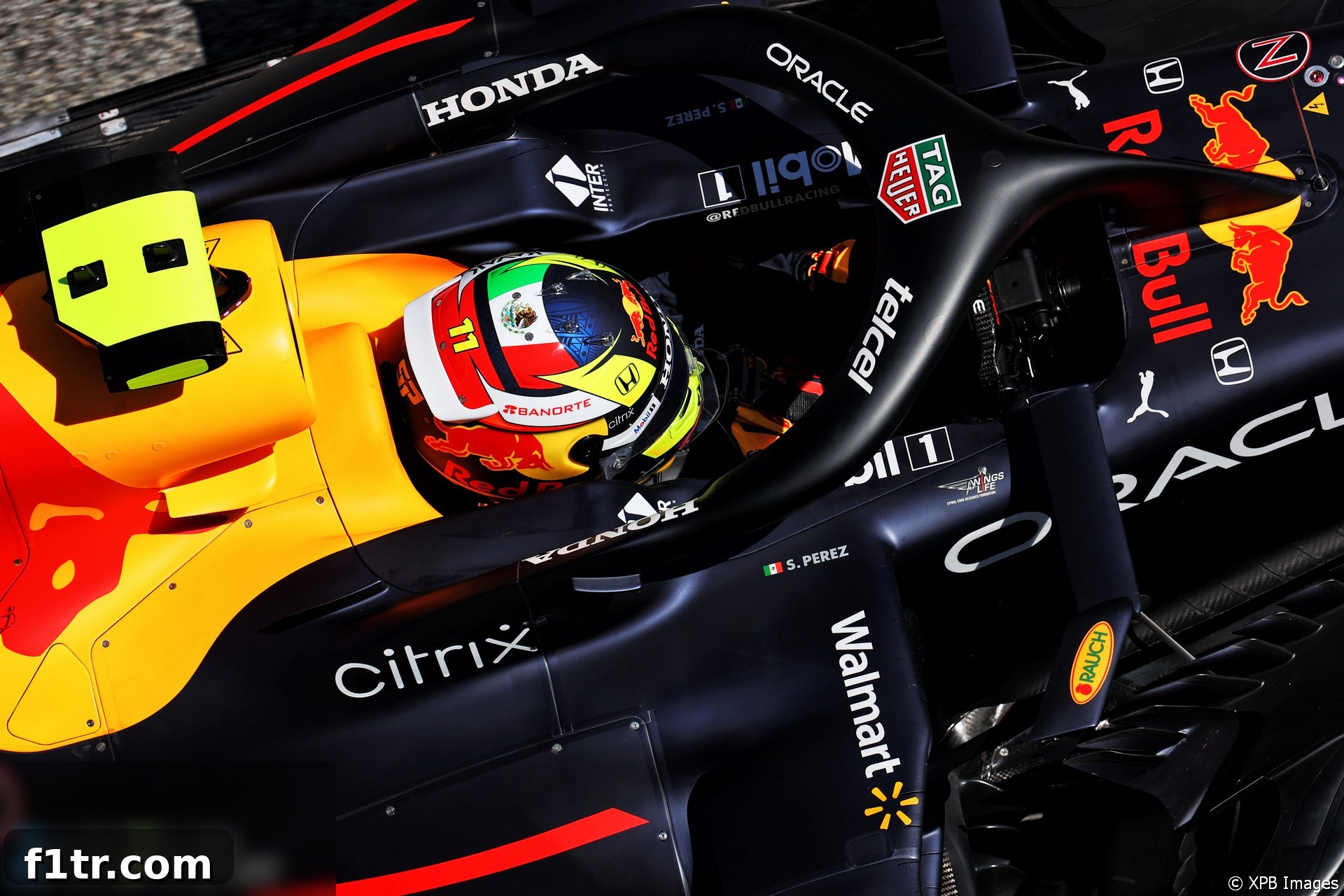
Sergio Perez: Shorter F1 Practice Sessions Hinder Red Bull Adaptation
Stepping into a top-tier Formula 1 team like Red Bull Racing presents an immense challenge, even for a seasoned veteran like Sergio Perez. The Mexican driver has openly expressed his struggles in fully adapting to the nuanced demands of the formidable RB16B chassis, citing the significant reduction in Friday practice session times as a primary factor slowing his integration. After four intense races with his new team, Perez candidly admits he’s “not there with the car yet,” a sentiment that underscores the intricate and often lengthy dance between driver and machine at the pinnacle of elite motorsport.
Advert | Become a Supporter & go ad-free
The Steep Learning Curve: Unlocking the Red Bull RB16B’s Potential
The transition to a new Formula 1 car is rarely straightforward, but the Red Bull RB16B, renowned for its aggressive aerodynamic philosophy and specific driving style requirements, offers a particularly steep learning curve. Drivers frequently speak of needing to “find the car’s limit” and, more importantly, their own unwavering confidence within those limits. This intricate process involves logging countless laps, making subtle yet crucial adjustments to their driving technique, and developing a profound understanding of how the car reacts to various setup changes, tire degradation patterns, and fluctuating fuel loads. Each component, from braking points to throttle application, demands a re-calibration of the driver’s instincts developed over years in different machinery.
Perez, who arrived at Red Bull with an impressive reputation for excellent tire management and astute race craft, has found himself grappling with the car’s distinct front-end characteristics and the delicate balance required to extract its maximum, often razor-thin, performance margins. While flashes of brilliance, particularly in race trim, have been undeniably evident, the consistent edge required to challenge at the very front of the grid in both qualifying and race pace has remained elusive. “You see that things are coming, but not together,” Perez explained, highlighting the fragmented nature of the progress he feels he is making. This suggests he is experiencing moments where specific elements click into place, but the holistic, cohesive performance package demanded for a full qualifying assault and sustained race distance is still very much under development.
The Shortened Practice Dilemma: A Major Hurdle for New Drivers in F1
One of the most significant procedural changes introduced in the 2021 Formula 1 season was the decision to shorten Friday practice sessions. Historically, drivers benefited from two 90-minute sessions, offering a generous total of three hours of crucial track time before Saturday’s decisive qualifying. However, this year, those sessions have been cut to just 60 minutes each, reducing the overall Friday running to a mere two hours. For an experienced driver like Perez stepping into a completely new team and car environment, this loss of an entire hour every race weekend is proving to be a substantial impediment to his accelerated integration and adaptation.
The impact of this reduction in track time is profoundly multi-faceted. Firstly, it drastically limits the opportunities available for engineers to conduct comprehensive experimentation with different car setups. Discovering the optimal aerodynamic balance, fine-tuning suspension settings, and calibrating differential characteristics are iterative processes that demand extensive data collection and real-world testing. Less track time directly translates into fewer chances to gather this vital data and to precisely fine-tune the car’s characteristics. Secondly, and arguably more critically for a new driver, it severely constrains the window for personal adaptation and confidence building. Every Formula 1 circuit possesses its unique nuances, from specific corner profiles and grip levels to track surface characteristics that influence tire performance. An additional 30 minutes per session allows a driver to gradually push the limits, explore various racing lines, and incrementally build confidence without the immense and compounding pressure of a rapidly ticking clock.
Perez articulated this profound frustration clearly: “Every time I get to the end of the week I’m like, I wish the weekend just start now because. Given how limited track time is it is very hard to get up to speed.” This sentiment reflects the universal struggle faced by drivers new to a team or those returning to the sport after a hiatus, where every single lap is invaluable for cementing a deeper connection and understanding with their new machinery. The mental bandwidth required to absorb new data, translate it into precise driving adjustments, and execute flawlessly under such intense time constraints is immense, and shorter sessions only serve to amplify this inherent pressure, making the process of adaptation considerably more challenging for newcomers.
Spanish Grand Prix: A Weekend of Compounded Frustration and Resilient Recovery
The 2021 Spanish Grand Prix at the Circuit de Barcelona-Catalunya served as a clear microcosm of Sergio Perez’s adaptation journey thus far. The weekend began with an unexpected physical setback, as Perez suffered from shoulder pain on Saturday morning. This ailment undoubtedly compromised his performance during the crucial qualifying sessions, where even minor physical discomfort can have a significant impact on a driver’s precision and concentration when pushing to the absolute limit of a Formula 1 car.
His qualifying session culminated in a spin during the critical Q3 phase, ultimately relegating him to a disappointing eighth place on the grid. This incident starkly underscored the delicate balance and razor-edge limits Perez is still striving to find with the demanding RB16B, particularly when pushing for ultimate single-lap pace. Starting from P8 on a circuit notoriously difficult for overtaking presented a significant strategic challenge, yet Perez impressively demonstrated his renowned race craft and unwavering determination on Sunday’s race day.
Despite the initial qualifying setback, Perez showcased his formidable fighting spirit during the grueling 66-lap race. He managed to make impressive and consistent progress through the field, climbing three positions to secure a valuable fifth-place finish. This ascent included a particularly well-executed, late-braking maneuver on Daniel Ricciardo at Turn 1, a clear testament to his ability to seize opportunities and manage tire degradation effectively throughout a long stint. “Of course it is frustrating,” he admitted regarding his qualifying performance, expressing understandable disappointment. “But given our poor day [on Saturday], I think that was everything we could have done.” This pragmatic and self-aware assessment reflects his deep understanding of the situation and his unwavering commitment to extracting the maximum possible result, even when circumstances are inherently challenging.
He further elaborated on the difficulty of his race strategy: “It took me a long time to get past Daniel. He was extremely quick on the main straight. It’s not an easy place to get past people.” This insightful comment highlights the fiercely competitive nature of modern Formula 1 and the immense premium placed on every single overtake, particularly against drivers of Ricciardo’s caliber. His determined climb through the field, even if it didn’t culminate in a podium finish, was a crucial and affirming step in building his confidence and demonstrating his formidable potential to his new Red Bull Racing team.
The Road Ahead: Building Crucial Momentum for Monaco and Beyond
With the Spanish Grand Prix now firmly behind him, Sergio Perez is already looking resolutely forward, focusing intently on the upcoming races and committing to the continuous, iterative process of learning and improvement. His philosophy for tackling these challenges is crystal clear: “So we’ll just forget this one and go back again in Monaco learn from what we’ve done and hopefully come back stronger,” he affirmed with characteristic determination. This positive, resilient, and forward-thinking mindset is absolutely essential for any athlete operating at the very pinnacle of their demanding sport, particularly in the cutthroat world of Formula 1.
The next monumental challenge on the Formula 1 calendar, the legendary Monaco Grand Prix, presents a truly unique and formidable set of circumstances. The ultra-tight, unforgiving street circuit demands absolute precision, unwavering confidence, and an almost intuitive understanding of the car’s exact dimensions and handling characteristics through its iconic corners. For a driver still finding his ultimate rhythm and connection with a new machine, Monaco can indeed be a daunting prospect, but it also paradoxically offers an unparalleled opportunity to demonstrate raw talent, adaptability, and nerve under the most extreme pressure. A strong performance in Monaco, even a robust points finish, would be a massive and much-needed confidence boost for Perez and a crucial indicator of his accelerating progress and increasing comfort within the RB16B.
Red Bull Racing’s ambitions for the highly competitive 2021 season are unequivocally clear: to challenge Mercedes fiercely for both the illustrious Drivers’ and Constructors’ Championships. To achieve these ambitious goals, a consistently strong and highly synchronized performance from both cars is not just important, but absolutely paramount. Perez’s ability to quickly get fully up to speed and to consistently deliver high points finishes is therefore not merely important for his individual standing and career trajectory but is truly vital for the team’s overall strategic objectives and championship aspirations. The entire Red Bull Racing team will undoubtedly be working tirelessly and collaboratively to help him overcome these initial hurdles, providing extensive data analysis, ample simulation time, and precise setup guidance to significantly accelerate his integration process.
While the reduced practice time undoubtedly presents a persistent and inherent challenge, Sergio Perez’s inherent resilience, methodical approach, and unwavering determination strongly suggest that his full and formidable potential with Red Bull is yet to be fully unlocked. The “steps” he refers to are gradually and purposefully building into a more comprehensive and intuitive understanding of the RB16B, and with more races and critical track time under his belt, the crucial cohesion he seeks with his new Formula 1 machine will undoubtedly emerge, positioning him to be a truly formidable and indispensable asset in Red Bull’s relentless pursuit of the championship title.
Advert | Become a RaceFans supporter andgo ad-free
Related Articles: Exploring the 2021 Formula 1 Season
Discover more insights into the thrilling world of Formula 1 and the ongoing 2021 season through these comprehensive articles:
- Why Circuit de Barcelona-Catalunya’s Performance Isn’t Always a Championship Predictor for the Season
- McLaren’s Strategic Approach: Continuous Car Updates Throughout the Demanding 2021 Season
- F1’s Persistent Challenge: A Dedicated Working Group Tackling the Controversial Track Limits Problem
- Hamilton vs. Verstappen: An In-Depth Analysis of Their Intense Spanish Grand Prix Team Radio Exchanges
- Highlighting the Exceptional Star Performers and Key Moments of the 2021 Spanish Grand Prix
- Unpacking the Red Bull RB16B: A Detailed Explanation of its Unique High-Rake Aerodynamic Philosophy
- Driver Adaptation in Modern F1: Why New Teams and Regulations Pose Unique Challenges for Rookies and Veterans Alike
- Monaco Grand Prix Preview: Key Strategic Insights, Driver Expectations, and the Unique Demands of the Street Circuit
- The Evolving Role of F1 Practice Sessions in a Condensed Schedule and Its Impact on Team Preparation
- The Art of Tyre Management: How Strategic Tire Usage is Deciding Races in the 2021 F1 Season
Browse all 2021 Spanish Grand Prix articles and more comprehensive Formula 1 coverage, including team analysis and driver insights.