Williams F1’s FW42 Debut Delayed Amidst Intense Pre-Season Push
In a significant pre-season development that has raised eyebrows across the Formula 1 paddock, the iconic Williams Racing team confirmed it has been forced to abandon plans to run its brand new FW42 challenger during a scheduled filming day this weekend. The decision, communicated in a statement, highlights the intense pressures and tight deadlines faced by teams in the fiercely competitive world of F1, particularly for those striving to bounce back from challenging seasons.
The Grove-based outfit had initially planned a critical shakedown for their 2019 contender on Saturday. This crucial initial run, often referred to as a filming day, provides an invaluable opportunity for teams to conduct basic system checks, ensure all components are functioning as expected, and gather essential promotional material. However, the FW42’s late completion date has made this impossible, adding an extra layer of complexity to Williams’ already demanding pre-season preparations.
A Setback Before the Season Even Begins: Claire Williams Addresses the Delay
Deputy Team Principal Claire Williams addressed the situation, underscoring the formidable engineering challenge her team has undertaken over the winter break. “As anyone would expect, we have had an extremely aggressive engineering programme over the winter,” Williams stated. This candid admission points to the extraordinary efforts and long hours invested by the engineering and production teams to bring the FW42 to fruition amidst stringent timelines and finite resources.
The decision to forgo the filming day was not taken lightly, as Williams explained the rationale behind it. “As such, we have taken the decision not to run our car during our filming day this weekend in order to allow the team to maximise the time at the factory before we head to Barcelona for the first day of the test on February 18th.” This strategy, while understandable, places immediate pressure on the team to ensure that every minute spent at their factory in Grove is optimally utilized to complete the car and prepare it for its official debut in Spain.
The purpose of a filming day is multi-faceted. Beyond the obvious media obligations, it serves as a vital preliminary test session where teams can perform low-speed runs, verify telemetry, and check fundamental car systems in a controlled environment. Missing this opportunity means that the FW42’s very first track laps will occur during the official pre-season test at Circuit de Barcelona-Catalunya, a period when track time is already at a premium and every lap counts towards understanding and developing the new car. For a team like Williams, aiming to improve significantly, losing even a single day of data gathering or systems validation could have ripple effects on their early season performance.
The Weight of Expectation: Williams F1 in 2019
Williams Racing, a name synonymous with Formula 1 glory, boasts a storied history of championship successes, including nine Constructors’ and seven Drivers’ titles. However, the team has endured a challenging period in recent years, consistently finishing towards the back of the grid. The 2019 season, therefore, represented a critical juncture for the outfit, a chance to demonstrate progress and begin the arduous journey back towards competitiveness. The delay of the FW42’s initial shakedown adds a layer of concern for fans and observers who had hoped for a smoother start to their recovery efforts.
Heading into the 2019 campaign, expectations for Williams were cautiously optimistic, despite their recent form. The team secured a new title sponsor, Rokit, injecting much-needed financial impetus and presenting a fresh livery that captured attention. With a promising driver lineup featuring the highly-rated George Russell and the inspiring return of Robert Kubica, there was a quiet hope that the team could begin to turn the tide. However, the underlying technical struggles and the inherent challenges of operating as an independent constructor against well-resourced manufacturer teams remained significant hurdles.
The FW42, like its recent predecessors, is powered by a Mercedes-AMG power unit, a formidable engine package that has dominated the hybrid era. While the engine department’s performance was not the primary concern, the challenge for Williams lay in designing and manufacturing a chassis that could effectively harness that power and deliver competitive aerodynamic performance. The “aggressive engineering programme” mentioned by Claire Williams strongly suggests an ambitious development cycle aimed at correcting the deficiencies of previous designs, but it also hints at the difficulties encountered in executing such an ambitious plan within the tight off-season schedule.
The FW42: Unveiling and Underlying Challenges
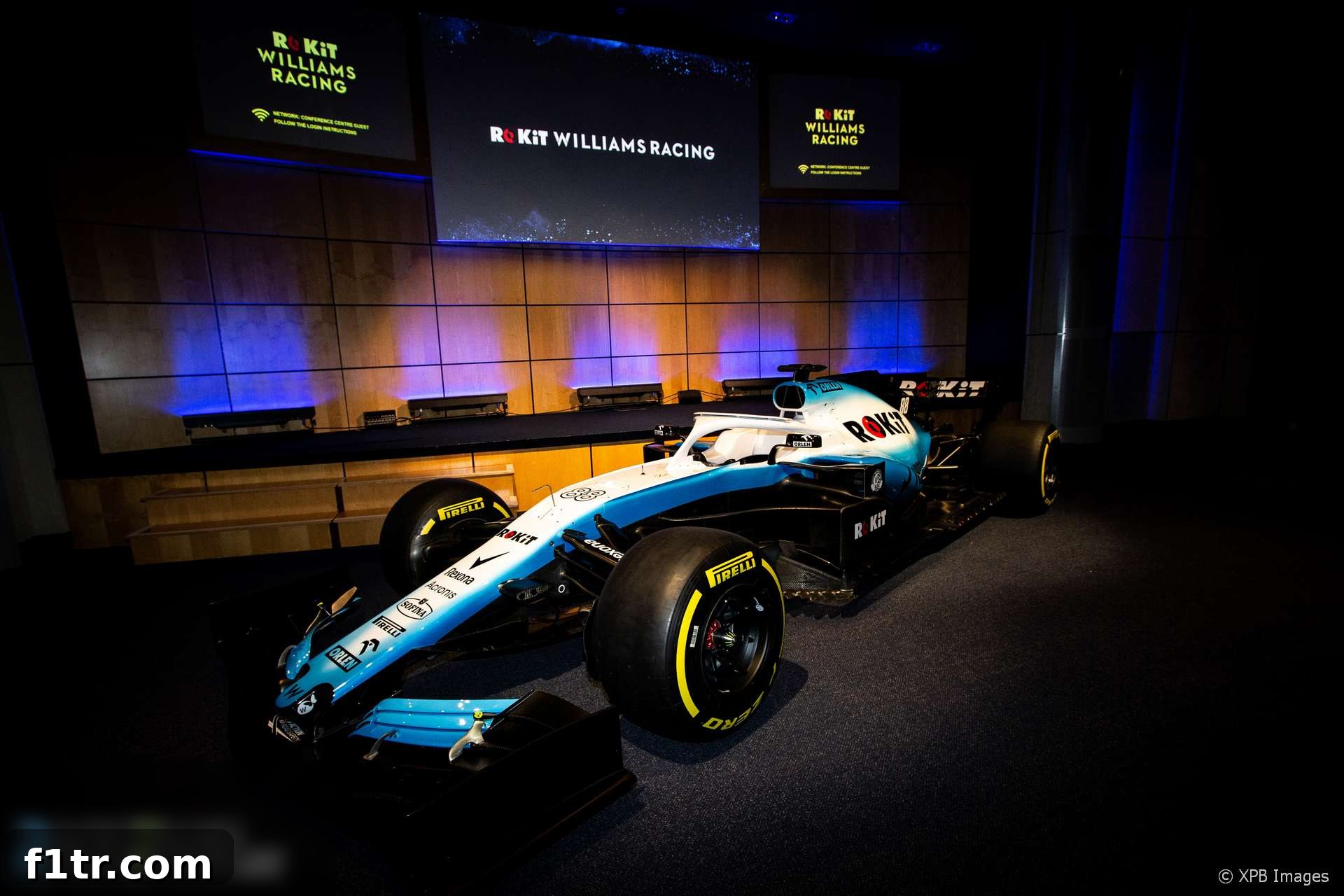
The official presentation of Williams’ new title sponsor and livery took place earlier in the week at their factory in Grove. While the event generated excitement, a notable detail was that the striking new blue and white livery was revealed on the team’s 2018 car, albeit fitted with a 2019-specification front wing. This move, while not uncommon, fuelled speculation among some observers about the actual state of readiness of the FW42, even before the filming day cancellation was confirmed. Teams often use show cars or previous-year models for launches if their new car is not fully prepared for public display, allowing them to meet sponsorship obligations while keeping the actual car under wraps until the very last moment.
Despite the delays in track testing, the FW42 did achieve a significant milestone on Monday: its first fire-up. This moment, where the engine is switched on for the first time within the completed chassis, is a symbolic and technically critical step in any F1 car’s lifecycle. It confirms the integration of the power unit, gearbox, and ancillary systems, signaling that the car is nearing a state of operational readiness. While a positive step, it ultimately underscored the tight timeline the team was operating under, as only days after this initial fire-up, the decision to postpone the filming day was made.
The engineering crunch behind such a delay is multifaceted. It could stem from late design decisions, unexpected manufacturing hurdles, issues with parts supply, or difficulties in passing mandatory FIA crash tests. Any of these factors, or a combination thereof, can snowball into significant delays, particularly when working against the immutable deadline of pre-season testing. For a team like Williams, with finite resources compared to its wealthier rivals, managing such a tight development cycle is an even greater challenge.
Crucial Pre-Season Testing in Barcelona
The Formula 1 pre-season testing sessions in Barcelona are the crucible where all the winter’s hard work is put to the ultimate test. These sessions are absolutely vital for every team, but perhaps even more so for those, like Williams, who are looking to make substantial gains. Over two weeks of testing, teams meticulously log hundreds of laps, gathering crucial data on aerodynamic performance, reliability, tyre degradation, and engine mapping. This information forms the bedrock of their understanding of the new car and dictates the development direction for the opening races of the season.
The impact of missing a pre-season shakedown, even a short one like a filming day, means the team’s first real track opportunity to run the FW42 will be under the intense spotlight of official testing. This places immense pressure on the drivers, George Russell and Robert Kubica, as well as the engineers and mechanics, to quickly identify and rectify any initial issues. Without the benefit of the preliminary checks, the team risks spending valuable pre-season test time addressing basic reliability concerns that could have been identified and resolved during the private shakedown. This effectively reduces their available time for performance-focused development work.
The competitive nature of the 2019 Formula 1 grid also amplifies the significance of this delay. With every team striving for an advantage, even minor setbacks can have magnified consequences. The midfield battle, in particular, was expected to be fiercely contested, and any team losing track time or struggling with initial reliability could quickly find themselves on the back foot. For Williams, aiming to climb out of the Constructors’ Championship basement, a smooth and productive testing period was paramount. The delayed debut, however, suggests they might start the season playing catch-up.
Navigating the Modern F1 Landscape
Operating an independent Formula 1 team in the modern era is an immense challenge. The financial disparity between the top manufacturer teams and the privateers has grown considerably, making it increasingly difficult for outfits like Williams to compete on an equal footing. The search for substantial sponsorship, the continuous investment in cutting-edge technology, and the retention of top engineering talent are constant battles. The announcement of Rokit as a new title sponsor was a positive step, injecting vital funds, but the inherent financial pressures remain.
Beyond the financial aspects, the human element cannot be understated. Engineers, designers, mechanics, and support staff work tirelessly through the off-season, often putting in gruelling hours to meet deadlines. An “aggressive engineering programme” translates directly into immense pressure on these individuals, pushing them to their limits. While the passion and dedication within F1 are legendary, such intense schedules can also lead to unforeseen challenges and, in some cases, compromises that manifest as delays. The decision to maximize factory time rather than rush to a filming day underscores the team’s commitment to delivering a well-prepared car, even if it means sacrificing an early track appearance.
As Williams heads to Barcelona for the crucial pre-season tests beginning on February 18th, all eyes will be on the FW42. Its performance during these sessions will provide the first real indication of whether the team’s aggressive winter programme and subsequent factory focus have paid off, or if the initial delay signals a continuation of their recent struggles. The journey back to the top for Williams F1 is a long and challenging one, and the start of the 2019 season promises to be a telling chapter in their ongoing pursuit of competitiveness.
Video: Williams F1’s 2019 Livery and Sponsor Reveal
Stay Connected with Formula 1 Insights
Follow RaceFans on social media to ensure you don’t miss any breaking news or in-depth analysis from the world of Formula 1:
- Join RaceFans on Facebook for exclusive updates
- Follow RaceFans on Twitter for real-time news and discussions
- Get daily email updates directly from RaceFans
Explore More from the 2019 F1 Season
Delve deeper into key moments and stories from the 2019 Formula 1 season with our related articles:
- Crying in the Melbourne car park at 2019 grand prix was my career low – Ocon
- McLaren Racing reports reduced £71 million loss in 2019
- Kvyat: Hockenheim podium last year was “my biggest achievement” so far
- How the FIA’s new encrypted fuel flow meter targets Ferrari’s suspected ‘aliasing’ trick
- “He smashed my office door”: 23 must-see moments from ‘Drive to Survive’ season two
Browse all 2019 F1 season articles