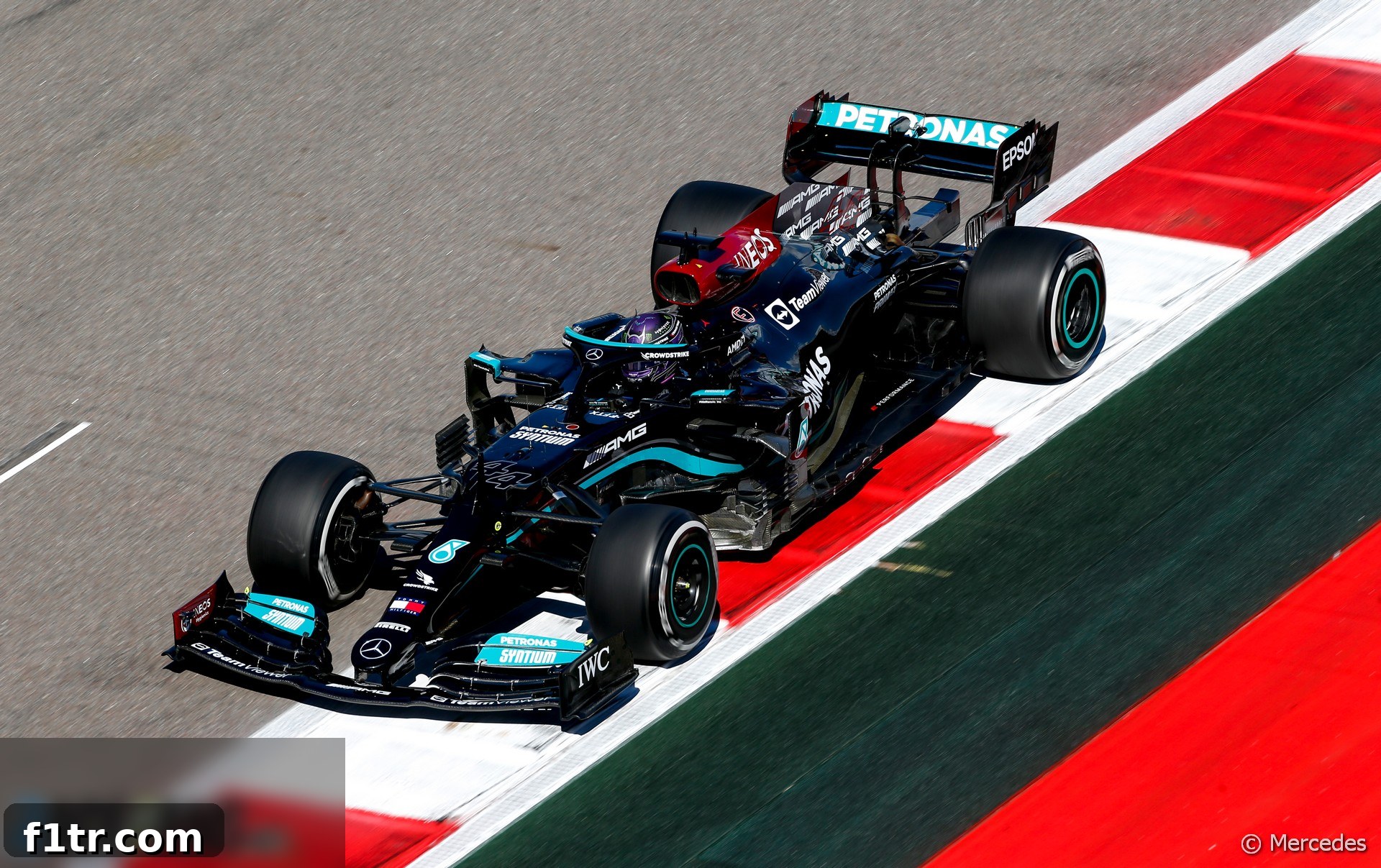
Formula 1 Latest: Hamilton on Mercedes Livery, Ricciardo’s Penalty, F3 Title Race & Ferrari’s Wet Weather Focus
Welcome to your essential round-up of the latest news and developments from the exhilarating world of Formula 1 and its competitive feeder series. This comprehensive overview covers significant discussions about iconic team liveries, strategic qualifying decisions, championship twists, and innovative data-gathering techniques. Dive in to get up to speed with all the crucial paddock insights.
Lewis Hamilton Open to Mercedes Reverting to Silver for 2022 F1 Season
Seven-time Formula 1 World Champion Lewis Hamilton has indicated he would have no objection if his Mercedes-AMG Petronas F1 Team chose to return to its traditional silver livery for the highly anticipated 2022 F1 season. This potential shift marks a significant talking point, as the team has sported a prominent black colour scheme for the past two seasons, a powerful statement initiated to champion diversity and combat racism within motorsport.
The ‘Silver Arrows’ heritage is an integral part of Mercedes’ illustrious racing history, a nickname that dates back to the 1930s when the manufacturer’s cars were famously stripped of their white paint to meet weight regulations, revealing the bare, gleaming aluminium underneath. This iconic identity has been synonymous with Mercedes’ dominance and innovation in Formula 1. The decision in 2020 to switch to black was a bold departure from this tradition, reflecting a deeper commitment to social causes championed by Hamilton and the team.
Key Paddock Updates
Hamilton: Black Livery’s Tenure “Not Particularly Long” But Its Impact Endures
Advert | Become a Supporter & go ad-free
Speculation about a livery change gained traction after Mercedes team principal Toto Wolff hinted in an interview last year that 2021 might be the final year for Mercedes’ anti-racism black livery, which was first introduced at the start of the 2020 season to amplify the Black Lives Matter movement and the team’s commitment to a more inclusive environment.
Hamilton, who was instrumental in initiating the black livery after discussions with Wolff prior to the 2020 season, expressed that his focus remains firmly on the substantive changes and diversity programmes Mercedes is implementing, rather than the aesthetic of the car itself. He articulated a pragmatic and forward-looking perspective on the matter.
“I don’t have a particular feeling towards it,” Hamilton stated regarding the potential return to silver. “I’m obviously not involved in that particularly right now for next year, and it is originally a ‘Silver Arrows’.” This acknowledges the deep-rooted historical significance of the silver colour while underscoring that the core message of diversity transcends the visual identity of the car.
He clarified his initial expectations for the duration of the black livery: “I did expect, when I asked if we could make the car black last year in terms of the symbolism and what we intend to do moving forward in terms of support, I wasn’t expecting it to last particularly long and we carried it into a second season, which is awesome.” The fact that the black cars continued for a second year demonstrates Mercedes’ extended dedication to the cause, surpassing Hamilton’s initial anticipations and reinforcing the message.
Hamilton affirmed that a potential return to silver would not diminish the profound changes Mercedes is implementing internally to foster greater inclusivity. “If it goes back, it would be a nice change, and it doesn’t deter us from the changes that we are making internally as we continue to truly push for diversity, even working with all our partners,” he asserted. This statement highlights a mature approach where the commitment to diversity and inclusion is embedded in the team’s operations and partnerships, rather than being solely dependent on a visual representation.
The champion provided tangible examples of these ongoing initiatives, showcasing a comprehensive strategy: “Just the other day with UBS, we had these young kids come, trying to inspire the next generation of engineers of all different backgrounds. We’ve got a good programme going, so it doesn’t make a difference.” Such programmes underscore Mercedes’ long-term vision to create systemic change and open pathways for underrepresented groups in motorsport, proving that their commitment extends far beyond the paint on their cars.
The discussion about the livery also comes at a pivotal moment for Formula 1, with drastic new technical regulations set to revolutionize car design and competition in 2022. A new era on track could naturally coincide with a refreshed visual identity, allowing Mercedes to potentially reintroduce a silver challenger that symbolizes both their storied heritage and their progressive stance on social responsibility as they navigate the sport’s evolving landscape.
Daniel Ricciardo Reprimanded for Impeding Lance Stroll in Qualifying
McLaren driver Daniel Ricciardo was issued an official reprimand by the stewards after an incident during qualifying where he was deemed to have impeded Aston Martin’s Lance Stroll. This event, while resulting in a relatively light penalty, serves as a crucial reminder of the exacting standards and critical communication required within the high-stakes environment of Formula 1 qualifying sessions.
The stewards’ investigation confirmed that Ricciardo had indeed blocked Stroll during his flying lap. However, the ruling also acknowledged significant mitigating factors, primarily attributing the misunderstanding and subsequent impeding to an error in communication from the McLaren team. The team had mistakenly informed Ricciardo that Stroll was on a slow lap, leading to the unfortunate incident on track.
In their detailed explanation of the decision, the stewards highlighted their rigorous process: “The stewards compared this situation to every other impeding case for the past two and a half seasons. The stewards believed this bordered on ‘unnecessary impeding’ hence was a breach of the rules and therefore required a penalty. However, considering all the circumstances, it was felt a reprimand was the most appropriate and consistent penalty.” This careful consideration of precedent and specific context allowed for a balanced judgement.
An ‘unnecessary impeding’ infringement is a serious matter in qualifying, as it can unfairly compromise a competitor’s lap time and, by extension, their grid position, which is often crucial for race strategy and potential points. While a reprimand is the mildest form of penalty in Formula 1, it carries official weight as a formal warning, signaling that such conduct, even if accidental, is unacceptable.
Following the verdict, both McLaren and Daniel Ricciardo received a stern warning that any repetition of a similar error would result in more severe sanctions. This serves as a vital reminder to all teams and drivers about the absolute necessity of precise and timely information during qualifying, where every millisecond and every track position counts. Navigating multiple cars with varying lap objectives – some on flying laps, others cooling down, or preparing for another attempt – demands impeccable coordination between the pit wall and the driver to prevent such incidents.
F3 Championship Standings Affected by Reduced Sochi Race Schedule
The fiercely contested FIA Formula 3 Championship experienced an unexpected and significant shift in its final weekend of the 2021 season in Sochi, Russia. A decision to restrict the race schedule to only one reverse-grid race and the qualifying-decided feature race on Sunday, effectively cancelling one of the planned sprint races, had immediate and dramatic implications for several drivers battling for top championship honours.
The Formula 3 format typically includes three races per weekend, offering a substantial haul of points across two sprint races (one with a reverse grid) and a primary feature race. This multi-race structure often means that championship battles remain open until the very last session, with every point vital for progression in a young driver’s career.
Had the full complement of 44 points still been available across all three races following the first race of the weekend, Clement Novalak, Victor Martins, and Frederik Vesti would have all retained mathematical possibilities to surpass Jack Doohan for second place in the overall standings. The prospect of a three-way battle for the runner-up spot would have provided an electrifying climax to the season.
However, with the maximum available points now reduced to just 27 due to the cancellation of one race, the championship landscape underwent a critical transformation. Under these revised circumstances, only Clement Novalak remained mathematically within range of Jack Doohan’s points total for second place. This unforeseen change had the unfortunate consequence of mathematically eliminating Victor Martins and Frederik Vesti from the chase for second place, and effectively removed three drivers from contention for third overall.
Such last-minute alterations to race schedules, while sometimes necessitated by logistical challenges, weather conditions, or other external factors, can be incredibly frustrating for teams and drivers. They meticulously plan strategies for the season finale, and a sudden reduction in available points can redefine championship aspirations overnight. It serves as a stark reminder of the unpredictable elements that can influence motorsport outcomes, occasionally overshadowing sheer on-track performance.
For aspiring young drivers in categories like F3, every race and every point carries immense weight, not only for championship glory but also for attracting the attention of higher-tier teams in Formula 2 and Formula 1. The cancellation of a race, therefore, not only reshuffles the standings but can also significantly impact the career trajectories and future opportunities of these emerging talents, adding an extra layer of challenge to their demanding journey through the motorsport ladder.
Charles Leclerc Utilizes Qualifying for Vital Wet Weather Data Collection for Ferrari
Charles Leclerc demonstrated a remarkably strategic and selfless approach during qualifying, choosing to participate in Q1 and Q2 despite knowing that he would be starting from the back of the grid due to pre-announced power unit penalties. His objective was not to chase a higher grid slot but to gather crucial wet running data for Ferrari, highlighting the team’s dedicated focus on long-term development and performance optimization across all conditions.
Leclerc elaborated on the tactical decision behind his laps: “I actually wanted to do quite a bit of laps in those conditions. I think it’s conditions where we’ve been struggling in the past.” This candid acknowledgement underscores Ferrari’s historical challenges and areas for improvement in wet weather. Unlike controlled dry conditions, which can often be simulated and fine-tuned in a virtual environment, genuine wet track running provides invaluable real-world data regarding car balance, tyre performance, aerodynamic efficiency in spray, and driver feel, all critical for future race preparation.
He emphasized the significant learning potential derived even from a limited amount of track time: “So even though it seems like it’s only five laps, it’s five laps where we can learn a lot, and I think we did today.” In the highly analytical world of Formula 1, every data point is meticulously scrutinized. A few laps in specific conditions can yield vital insights into vehicle dynamics, optimal setup parameters for wet tyres, and how the car behaves under varying levels of grip. This information is indispensable for fine-tuning the car’s development and informing race strategies, especially given the unpredictable nature of weather during Grand Prix weekends.
Leclerc also noted positive indications from the session: “We were also very competitive in the last five laps. So we didn’t put the second set off of tyres in Q1, just to not take too much risk, but we’ve learnt a little bit, which was the goal with this lap. So now we’re focussed on the race tomorrow. It’s not going to be an easy one.” This suggests that the data collected not only provided insights but also confirmed potential performance gains or setup directions, turning a seemingly ‘penalty-affected’ session into a productive test.
Wet weather conditions are naturally less frequent than dry races during a typical Formula 1 season, making any opportunity for real-world testing in the rain extremely valuable. “Of course, because these are conditions that you don’t find very often in the season, and even though we’ve had them a bit more often this season than others,” Leclerc acknowledged. The rarity of such conditions further amplifies the strategic importance of maximizing every available minute on track when the rain dictates the running.
He concluded by reiterating the broader benefit of their proactive approach: “But I think it’s a good opportunity for us, every time you have those conditions to get out and do some mileage, considering that not so consistent in those conditions. So, yes, even though it was normally a useless session for us, I think we’ve learnt.” This commitment to continuous improvement across all scenarios demonstrates Ferrari’s determination to enhance their competitive edge, effectively transforming a session that would typically be bypassed due to grid penalties into a vital learning and development exercise for the team’s future success.
Advert | Become a RaceFans supporter andgo ad-free
Social Media Highlights from the Motorsport World
Stay connected with the vibrant pulse of motorsport through notable posts from Twitter, Instagram, and other platforms. These snippets offer a glimpse into fan reactions, driver thoughts, and critical updates from various racing series.
Well, I for one am glad the conditions were suitable to run Qualifying in today. Stealing the trophy… #RussianGP pic.twitter.com/T0vrTX2Bek
— Randy (@randysingh86) September 25, 2021
The sentiment captured here reflects the excitement among fans when challenging weather conditions allow for a dramatic qualifying session, often leading to unexpected results and showcasing exceptional driving skill. The trophy emoji adds a playful touch to the shared enthusiasm.
UPDATE: Following his crash on the way to the grid in Sprint Race 1, Felipe Drugovich was taken to hospital for precautionary checks
Felipe has had a CT scan and X-Ray, and although he’s a bit sore, he’s fortunately been given the all-clear 💙#F2 #RussianGP pic.twitter.com/Mh4JPOizyT
— Invicta Racing (@InvictaRacing) September 25, 2021
Updates concerning driver safety, particularly after incidents, are always a priority for fans and teams alike. This post from Invicta Racing (formerly MP Motorsport) provides a reassuring update on Felipe Drugovich’s condition, highlighting the excellent medical protocols in place in Formula 2 and motorsport generally.
- For a comprehensive list of official F1 accounts, drivers, teams, and other prominent motorsport personalities to follow, we invite you to explore our F1 Twitter Directory.
Essential Motorsport Links & Further Reading
Expand your knowledge and passion for single-seater racing with these carefully selected links. Featuring news, interviews, and thrilling race highlights from the world of Formula 3, Formula 4, and Formula 2, these resources offer deeper insights into the sport’s emerging talents and captivating action.
Correa Targeting Podium After Top Five Qualifying Result (Formula 3)
“‘I would really love to get a podium, but the guys around me are very strong as well,’ Correa said. ‘I’m approaching it as the final race of the season. I’m going to give it everything.'” This quote vividly captures the intense competitive spirit and determination of drivers pushing for success in the demanding F3 championship, especially in the crucial final races.
Zagazeta Resists Rees Pressure to Strike First at Silverstone (British Formula 4)
“Phinsys by Argenti’s Matias Zagazeta survived a first lap battle with team-mate Aiden Neate, then race-long pressure from chief title rival Matthew Rees (JHR) to win the opening F4 British Championship certified by FIA – powered by Ford EcoBoost race at Silverstone.” This report details a thrilling and hard-fought victory, showcasing the exceptional talent and composure required to succeed in the fiercely competitive British F4 series.
Zendeli Hoping for Sunday Rain Following Strong Sprint Race Surge (Formula 2)
“‘I think if the conditions are tricky again, I might make up even more positions,’ Zendeli said. ‘For sure I will try to keep it on the track first. I hope for some rain because it mixes up the field.'” This fascinating insight into a driver’s mindset reveals how challenging weather conditions, often dreaded by some, can be seen as a golden opportunity for others to capitalize and advance through the field.
Euroformula Open Round 13: Monza Race 1 Highlights (Euroformula Open via YouTube)
Relive the excitement and drama from Race 1 of Round 7 of the Euroformula Open series at the legendary Monza circuit. This highlight reel captures the best of the action, showcasing the speed and skill of the series’ rising stars on one of motorsport’s most historic tracks.
We always endeavour to credit original sources and provide valuable content for our readers. If you have a tip for a link relating to single-seater motorsport that you believe deserves to be featured in the next RaceFans round-up, please do not hesitate to send it in via our contact form. Your contributions are highly valued and help us keep our community informed and engaged.
Advert | Become a RaceFans supporter andgo ad-free
Comment of the Day: Debating Williams’ Performance and Russell’s True Impact
Following recent comments by Max Verstappen, who suggested that George Russell’s impressive qualifying performances hint at the Williams car being more capable than commonly believed, reader Ben Rowe offers a compelling and detailed assessment. His analysis delves into the nuanced interplay between driver talent and the machinery, questioning prevailing perceptions about the Williams team’s true standing in Formula 1.
I think several things about Russell and Williams.
I think that if people rate him as a top driver, and Latifi as one of the worst, then that car has to be right up in the midfield now or Latifi simply wouldn’t be doing as well as he is. Latifi did indeed have one good lap early on in Q1, which was good enough to get through. And what is interesting is that Russell had his first attempt as well as two more, and he still couldn’t beat Latifi’s time despite the track improving considerably. It isn’t the only wet/damp race or qualifying where Latifi looked very good alongside Russell. I think the car is actually very solid in the wet and it certainly very capable of Q3. Russell’s performances are still outstanding, but I’m actually not as convinced that he will have beaten Latifi by much at all.
I get more annoyed with people effectively saying things like how amazing it is that such a time can be done “in a Williams”. Many keep making it seem like it is still the worst team on the grid. The team has made a huge step forward this season and I still keep seeing jokes about how slow the car is such as these silly YouTube videos that make the Williams look much slower than it is. It may not always be where it is in the wet, but it isn’t a back marker any more.
@Thegianthogweed
Ben Rowe’s insightful comment provides a refreshing and analytical perspective on the Williams Racing team’s performance, particularly when contrasted with the popular narrative surrounding George Russell. He directly challenges the widespread belief that Russell almost single-handedly elevates an inherently uncompetitive car to positions it doesn’t deserve. Instead, Rowe argues that the occasional strong showings by Nicholas Latifi, especially in mixed or wet conditions, indicate that the Williams car (specifically the FW43 or its iteration) possesses a greater underlying capability than it is often credited with.
The observation that Latifi’s early Q1 lap remained competitive, and even superior, despite subsequent track improvement and Russell’s multiple attempts to surpass it, serves as compelling evidence. This suggests that in certain conditions, the car itself is genuinely performing well. Rowe points out that this isn’t an isolated incident, highlighting other wet or damp sessions where Latifi has shown surprising pace alongside his highly-rated teammate. He concludes that the car appears to be “very solid in the wet” and “certainly very capable of Q3,” implying that Russell’s brilliance, while undeniable, is perhaps not the sole factor in the team’s improved fortunes.
Furthermore, Rowe expresses frustration with the persistent perception of Williams as the grid’s perennial backmarkers. He argues that this outdated view, often perpetuated by casual observations and comedic portrayals, fails to acknowledge the substantial progress the team has made. Williams has demonstrably closed the gap to the midfield, and while their dry-weather pace might still lag behind the front-runners, their performance in specific conditions, like the wet, showcases a significant leap forward. This nuanced perspective encourages Formula 1 enthusiasts to re-evaluate their assumptions and appreciate the complex interplay of driver skill, car development, and track conditions that collectively define a team’s performance, moving beyond simplistic judgments.
Celebrating Birthdays in the Motorsport Community!
A very special shout-out and Happy Birthday wishes go out to Ron, Greg, Theo Parkinson, and Corey today! We hope you all have a fantastic day filled with joy and celebration, surrounded by loved ones.
If you would like to receive a birthday shout-out in our upcoming round-ups, please don’t hesitate to inform us of your special day via our dedicated contact form. Alternatively, you can add your name to our growing list by visiting this link here. We love celebrating with our vibrant community of readers!
On This Day in Motorsport History
- 25 Years Ago: Damon Hill’s Shock Move to Arrows
- Exactly 25 years ago today, Damon Hill, who was on course to win the Formula 1 World Championship for the dominant Williams team, made a truly astonishing decision. Despite being at the pinnacle of his career and driving for the sport’s leading constructor, Hill signed a contract with the struggling backmarker team, Arrows. This highly unexpected transfer sent shockwaves through the motorsport world, as a reigning, or soon-to-be reigning, champion opting for a team at the opposite end of the grid was virtually unprecedented, underscoring the intricate politics and personal motivations often at play within Formula 1 contracts and team dynamics.