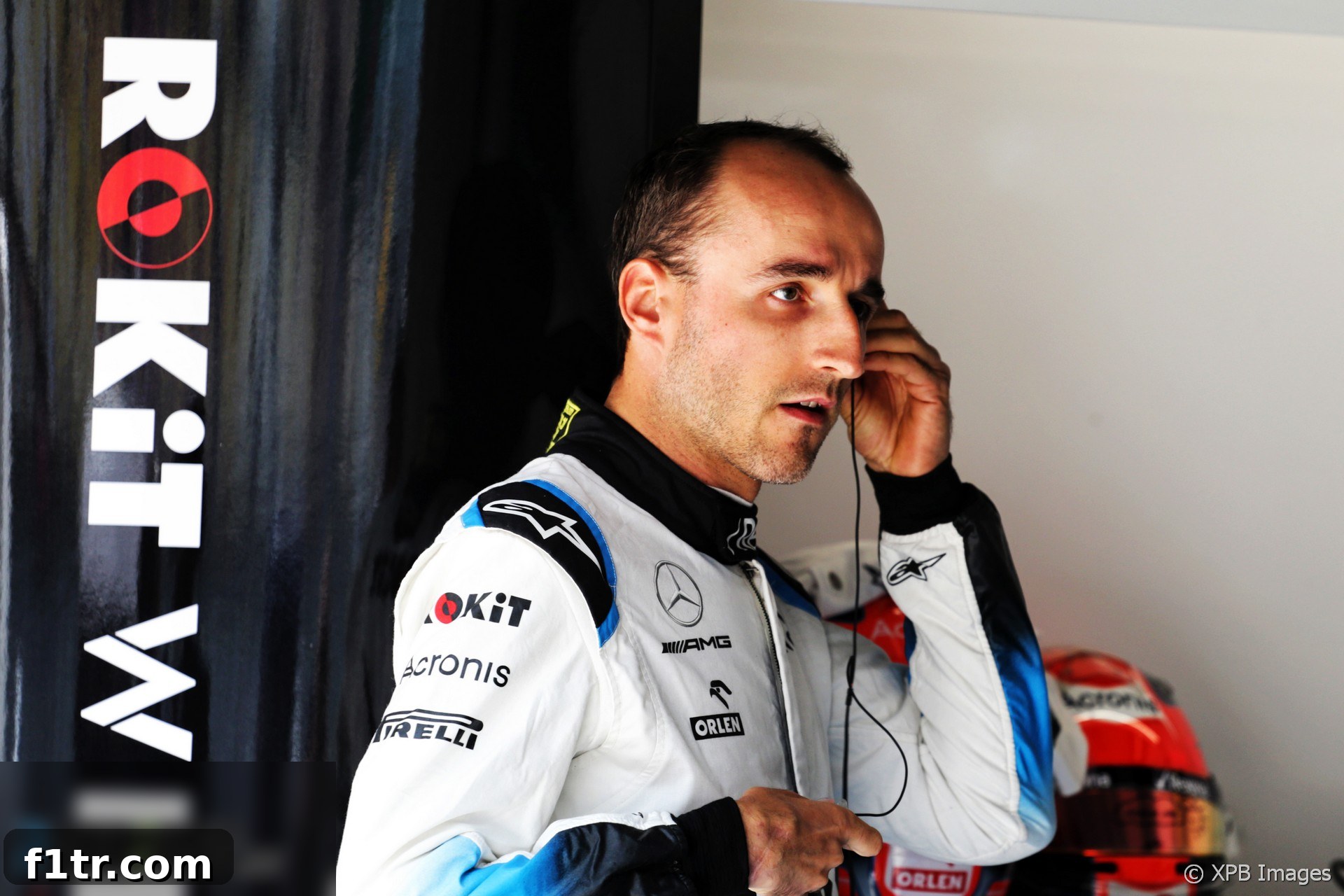
Robert Kubica’s highly anticipated return to the electrifying world of Formula 1 after an eight-year absence was a profound moment for the sport, a testament to an indomitable spirit. Marking his competitive comeback at the 2019 Australian Grand Prix, Kubica observed that significant aspects of Formula 1 had become “completely different” since his last race in 2010. This transformation, he noted, wasn’t merely superficial; it fundamentally altered the sport from both a technical and driving perspective. While the core thrill and competitive fire remained unchanged, the intricacies of racing at the highest level had evolved considerably, demanding new skills and adaptations from the returning veteran.
The journey back to the pinnacle of motorsport for Kubica was nothing short of miraculous. His promising F1 career, which included a memorable victory at the 2008 Canadian Grand Prix and a reputation as one of the grid’s most talented drivers, was tragically cut short by a severe rally crash in February 2011. The incident left him with life-altering injuries, particularly to his right arm, casting a long shadow over his future in racing. Many believed his F1 chapter was permanently closed. However, Kubica’s relentless determination and arduous rehabilitation defied expectations, paving the way for one of the most remarkable comebacks in modern sporting history. His insights upon returning offer a unique perspective on the profound shifts Formula 1 underwent during his prolonged hiatus.
The Dynamic Evolution of Formula 1: A Technical and Strategic Revolution
The period between Kubica’s last race in 2010 and his return in 2019 witnessed a revolutionary transformation within Formula 1. The V8 naturally aspirated engine era, characterized by screaming high-revving power units, had given way to the complex V6 turbo-hybrid powerplants introduced in 2014. These modern engines are marvels of engineering, integrating sophisticated Energy Recovery Systems (ERS) that harvest kinetic and heat energy, significantly altering power delivery and strategic considerations. Beyond the powertrain, aerodynamics became increasingly complex, generating unprecedented levels of downforce that allowed for higher cornering speeds and greater demands on drivers.
These technical advancements fundamentally reshaped the driving experience. Cars became heavier due to the hybrid components, yet faster through corners, requiring drivers to adapt to different braking points, throttle applications, and steering loads. The introduction of Drag Reduction System (DRS) also added a new tactical layer to racing, influencing overtakes and defensive maneuvers. Kubica highlighted this evolution, stating, “There’s a lot of things which are the same and you get exactly the same feeling or same approach. But there are things which are completely different like managing the tyres.” This observation perfectly encapsulates the duality of F1: the enduring spirit of competition coexisting with ever-changing technical and operational demands.
Drivers in the contemporary F1 era are not just piloting powerful machines; they are managing complex energy systems, sophisticated electronic controls, and an array of setup parameters from their steering wheels. This requires a level of multi-tasking and mental bandwidth that was less prevalent in the earlier V8 years. The ability to monitor fuel consumption, ERS deployment, brake bias, and differential settings, all while battling rivals at speeds exceeding 300 km/h, represents a quantum leap in the demands placed upon Formula 1 drivers. Kubica, having experienced both eras, possessed a rare insight into the sheer scale of this evolution, confirming that F1 had indeed changed “not only from technical point of view but also from driving point of view.”
The Pirelli Challenge: Mastering the Art of Tyre Management
Among the most pronounced changes Kubica encountered was the strategic shift in tyre philosophy. His last competitive season in F1, 2010, was during Bridgestone’s tenure as the official tyre supplier, known for producing durable compounds that often allowed drivers to push their cars harder for longer stints. Upon his return, Pirelli had been the exclusive supplier for several years, introducing a range of compounds explicitly designed for higher degradation to inject more strategic variation and excitement into races. This fundamental difference meant that tyre management transformed from a secondary concern into a critical determinant of race performance.
Pirelli’s tyres are notoriously sensitive to temperature, wear, and driver input. They have a narrow operating window where they deliver optimal grip, but pushing them too hard can quickly lead to overheating and rapid thermal degradation. Conversely, failing to bring them up to temperature or running them too cold can result in ‘graining’ – a phenomenon where rubber pieces tear off the tyre surface, severely reducing grip. Kubica immediately recognized this as a dominant factor: “There are things which are completely different like managing the tyres.” This wasn’t just about making tyres last; it was about understanding their intricate behavior, anticipating degradation, and fine-tuning driving style to extract performance without compromising longevity.
The challenge was further compounded by the performance characteristics of his 2019 Williams FW42, which lagged significantly behind its rivals. A car with inherent struggles in generating grip and downforce places an even greater strain on the tyres, making their management an almost Herculean task. “In general the pace, race pace is completely different to the past, especially in our situation where we struggle with the grips. The tyres are an extremely important factor and it’s a topic where you have to put a lot of attention,” Kubica explained. This highlights how the combined factors of tyre design and car performance can elevate tyre management to the paramount strategic concern in a race. Mastering the art of making these sensitive compounds work effectively became a daily battle, demanding a level of finesse and strategic thinking that was less central during his initial F1 career. It underscored the relentless pursuit of perfection required in modern Formula 1, where every small detail can dictate success or failure.
A Triumph of Spirit: Proving Physical Readiness Against All Odds
Beyond the technical adaptations and strategic complexities, Robert Kubica’s return carried a deeply personal and inspirational dimension: silencing the doubts surrounding his physical capacity to compete after his devastating 2011 rally crash. The severity of his injuries, particularly the partial loss of movement in his right arm and hand, fueled widespread skepticism about whether he could withstand the intense physical demands of Formula 1 racing, let alone perform at the elite level. The G-forces, the prolonged physical exertion, and the fine motor skills required for steering and operating complex controls were thought by many to be insurmountable hurdles.
However, Kubica’s unwavering resolve and meticulous rehabilitation efforts proved the naysayers wrong. His comeback at the 2019 Australian Grand Prix was far more than a ceremonial appearance; it was a full competitive race where he demonstrated complete physical capability. Despite the inherent difficulties with the Williams FW42’s performance, his ability to complete the entire race distance without any physical compromise was a resounding affirmation of his recovery and an extraordinary personal triumph.
“I didn’t have doubts, but for sure as I haven’t done long races in the past the last years there is always kind of a question mark,” Kubica candidly acknowledged, recognizing the legitimate concerns stemming from his extended absence and severe injuries. Yet, his self-belief never wavered. “My physical level is good and I didn’t have problems during the races which was something probably most of the people were worried. It came out that we shouldn’t be worried about this. I was expecting it.” This powerful statement underscores his own confidence and the extensive, dedicated preparation he undertook to ensure he was fully ready.
Kubica described this outcome as “very good,” a modest understatement for what was, in fact, an incredible testament to human resilience. It was a categorical answer to those who questioned whether his body could endure the unique stressors of an F1 cockpit. His performance throughout the 2019 season, consistently completing races despite the car’s limitations, not only showcased his enduring talent but also provided an inspiring narrative of perseverance against seemingly impossible odds. His comeback became a potent symbol of hope, demonstrating that determination and a tenacious spirit can overcome even the most formidable physical challenges, leaving an indelible mark on the sport and beyond.
A Lasting Legacy of Perseverance in Formula 1
While the 2019 Formula 1 season presented considerable challenges for Robert Kubica and the Williams Racing team, it cemented a critical chapter in his already legendary career. The lack of competitive pace from the FW42 meant that achieving strong results was often out of reach, but Kubica’s sheer presence on the grid and his consistent ability to complete races stood as victories in their own right. His candid observations about the evolving nature of F1, particularly regarding the sophisticated demands of tyre management and the complexities of modern machinery, provided invaluable insights for fans and experts alike, highlighting the ongoing technical and strategic development of the sport.
Robert Kubica’s extraordinary journey back to Formula 1 stands as an enduring testament to the boundless capacity of the human spirit to overcome adversity. His story transcends mere motorsport; it’s a powerful narrative about a man who defied medical predictions and challenged the limits of what’s possible after life-altering injuries. The “completely different” aspects of F1 he encountered were indeed significant, but his ability to adapt, compete, and prove his physical readiness, even under challenging circumstances, underscored his exceptional talent, unwavering dedication, and profound love for racing. His courageous return remains an inspirational tale, teaching us that with enough grit, determination, and relentless effort, even the most daunting obstacles can be surmounted.
The lessons learned from his remarkable comeback — lessons of resilience, adaptation, and the relentless pursuit of one’s dreams — continue to resonate deeply within and outside the racing community. While Kubica may not have returned to the podiums he once graced, his return to the grid served as a powerful symbol of defiance against fate. It demonstrated unequivocally that the competitive fire within a true racer, driven by an unyielding passion, can never be extinguished, no matter the length of the hiatus or the severity of the challenges on the long road back.
Further Insights from the 2019 F1 Season:
- Crying in the Melbourne car park at 2019 grand prix was my career low – Ocon
- McLaren Racing reports reduced £71 million loss in 2019
- Kvyat: Hockenheim podium last year was “my biggest achievement” so far
- How the FIA’s new encrypted fuel flow meter targets Ferrari’s suspected ‘aliasing’ trick
- “He smashed my office door”: 23 must-see moments from ‘Drive to Survive’ season two
Browse all 2019 F1 season articles