David Coulthard: Formula 1’s Tyre Management Obsession is “Super Boring”
Formula 1, often celebrated as the pinnacle of global motorsport and a crucible of technological innovation, has, in recent years, become overly engrossed in the intricate nuances of tyre management. This shift has not gone unnoticed by its most seasoned veterans, with former racer and highly respected pundit David Coulthard voicing strong disapproval. The 13-time Grand Prix winner believes that the current emphasis on tyre conservation significantly detracts from the thrilling essence of racing and diminishes the spectacle for legions of fans worldwide.
A Retrospective: Coulthard’s Era of Fierce Tyre Competition
David Coulthard’s illustrious 15-year Formula 1 career, which spanned from the mid-1990s to 2008, coincided with an exciting period of intense competition among multiple tyre manufacturers. During these years, Coulthard experienced firsthand the dynamics of racing on tyres supplied by industry giants such as Goodyear, Bridgestone, and Michelin. This era, often fondly recalled as the “tyre wars,” fostered relentless innovation and offered a dramatically different challenge to drivers compared to today.
“I’ve driven on Goodyears, Bridgestones, Michelins and actually none of them were what I would call ‘bad tyres’,” Coulthard recounted in an exclusive interview with RaceFans. He reminisced about a time when tyre suppliers were not just product providers but active competitors, each striving to outdo the other through continuous research and development. “There was obviously times where either Bridgestone or Michelin had a circuit advantage. But they were great companies to work with, pushing the boundaries, lots of new tyre developments.” This environment meant that tyre performance was a variable, adding a layer of strategic depth, but always with the underlying expectation of robust, high-performance rubber.
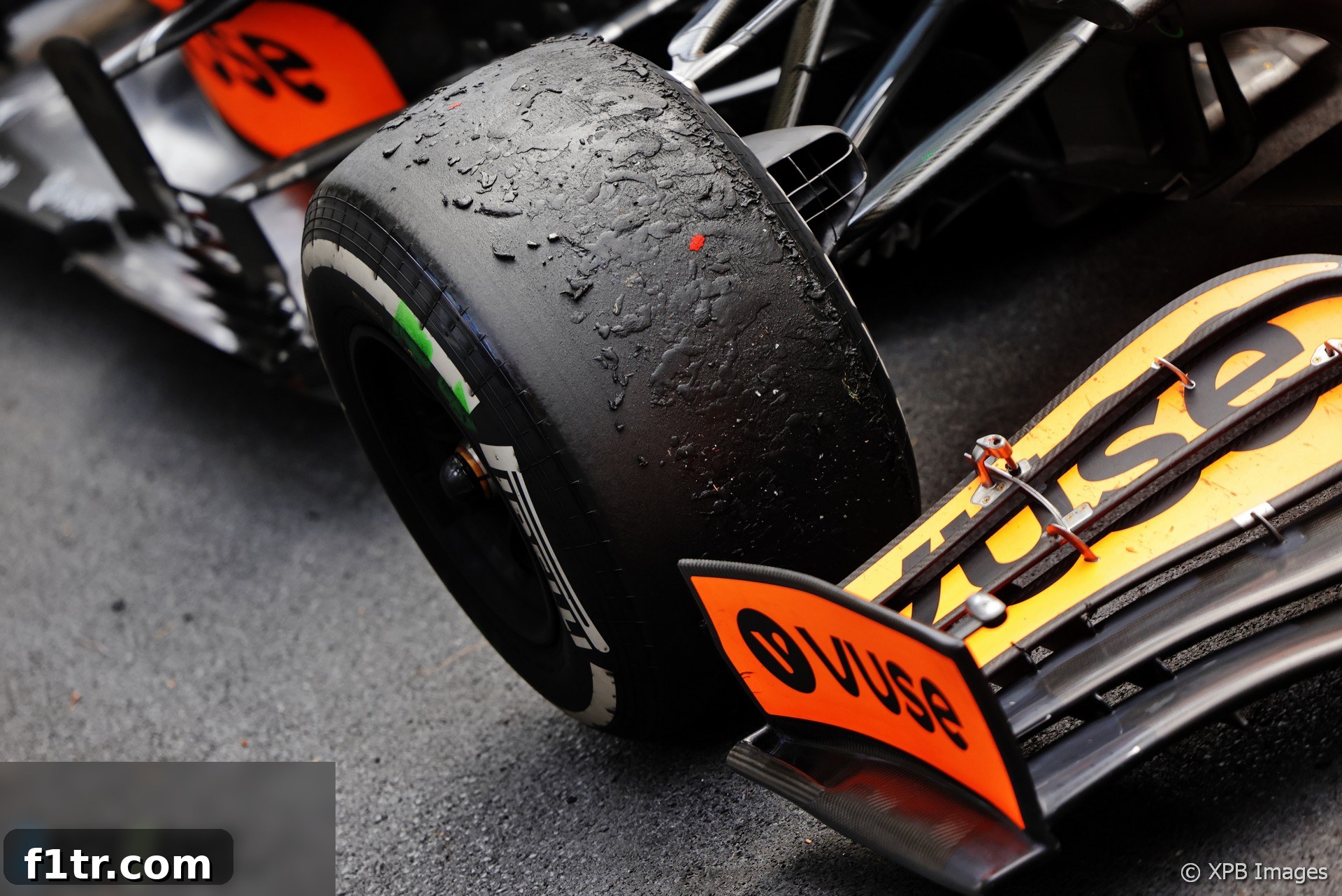
The veteran driver highlighted a significant cultural shift in the paddock’s discourse. In his racing days, the lexicon of tyre management was far simpler and less restrictive. “We never spoke about thermal degradation. We never spoke about ‘[you] can’t push the tyres’,” he stressed. Instead, drivers understood their tyres inherently: “They peaked when they were new, they dropped off, maybe you got some graining, maybe you got some blistering, but they were tyres.” This critical distinction implies a focus on outright performance and driver skill, rather than the delicate art of preservation that dominates contemporary F1 conversations.
The Pirelli Era: A Strategic Mandate and its Divisive Outcomes
A pivotal transformation occurred in Formula 1 in 2011 when Pirelli stepped in to replace Bridgestone as the sport’s exclusive tyre supplier. This strategic decision was not merely a change of brand; it was accompanied by a clear mandate from the sport’s governing bodies. Pirelli was explicitly tasked with developing tyre compounds designed for faster degradation. The underlying hope was that these less durable tyres would necessitate more frequent pit stops, introduce greater strategic variability, and ultimately culminate in more thrilling and unpredictable races.
More than a decade into this new paradigm, the anticipated benefits of consistently exciting, strategy-driven races remain a subject of intense debate. While Pirelli has evolved its compounds, often producing tyres that are less prone to aggressive degradation than their initial iterations, the omnipresent issue of tyre management continues to loom large. Despite these technical advancements, teams routinely instruct their drivers to conserve their tyres, prioritizing longevity over unadulterated speed. This ongoing balancing act, frequently broadcast over team radios, has become an almost ubiquitous feature of modern F1 Grand Prix weekends.
For David Coulthard, now an insightful analyst for Channel 4’s F1 coverage, this pervasive narrative is profoundly unengaging. He expressed his candid frustration, stating, “This whole Pirelli era is just confusing to me and boring to me to have to talk about, and super-boring for me to have to listen to the drivers going ‘I was trying to avoid pushing too hard on the tyres’.” Coulthard’s sharp critique reflects a broader sentiment among many long-time fans and purists who yearn for a return to racing where the primary focus is on a driver’s raw talent and outright speed, unfettered by the constant demands of tyre preservation.
The End of the Tyre War: An Inconsistent Rationale?
The practice of allowing multiple tyre suppliers to compete in Formula 1 was discontinued approximately 15 years ago, precisely when Coulthard was still an active participant in the sport. The fundamental reason behind this significant policy change was cost reduction. In an effort to curb escalating expenditures within F1, a single tyre supplier was deemed a more economically viable model, intended to level the playing field and mitigate the intense research and development costs associated with a competitive tyre market.
However, Coulthard remains unpersuaded that this decision has ultimately served the sport’s best interests. He highlights what he perceives as a striking inconsistency in F1’s competitive philosophy. “We’ve got engine wars, we’ve got chassis wars, we’ve got driver wars and then we’ve got one single tyre manufacturer, where all the drivers complain about the tyres,” he articulated. This observation points to a paradoxical situation: if intense competition in engine and chassis development is considered crucial for technological advancement and on-track excitement, why are tyres – an equally fundamental performance component – exempt from such a dynamic?
Coulthard firmly believes that reinstating a multi-supplier model could inject a vital dose of competitive spirit and technical ingenuity that he feels is currently lacking. The presence of rival manufacturers would inherently lead to a diversity of tyre characteristics, compelling teams to develop more adaptable car designs and sophisticated race strategies. While acknowledging the importance of cost control, the former Grand Prix winner suggests that the current single-supplier model has inadvertently created a different kind of “cost” – one measured in the form of diminished racing spectacle and a less satisfying experience for both competitors and the global audience.
Coulthard’s Vision: Embracing Simplicity, Durability, and Unrestricted Racing
Given his profound dissatisfaction with the current tyre landscape, what alternative vision does David Coulthard propose for Formula 1? His solution is refreshingly straightforward and unequivocally focused on restoring the purity and intensity of competitive racing. He advocates for a scenario where tyre performance is both reliable and robust, empowering drivers to push their cars to their absolute limits without the constant apprehension of premature degradation or strategic compromises.
“I would rather go to Avons or Goodyear or something and they just have two generic compounds but good tyres and then we don’t have to listen to the bullshit,” he stated emphatically. The cornerstone of his proposal lies in the concept of “good tyres” – compounds characterized by their durability, consistency, and predictable performance under aggressive driving conditions. Such tyres would not be engineered for rapid degradation but rather for optimal grip and sustained performance throughout a stint, allowing for longer, harder driving. This fundamental shift would reorient the strategic focus away from mere tyre preservation and back towards raw speed, genuine driver skill, and the strategic refinement of car performance.
In Coulthard’s ideal Formula 1, the race narrative would be dominated by audacious overtakes, relentless pursuit, and the sheer talent of elite drivers expertly wrestling powerful machines around the world’s most challenging circuits. The strategic intricacies would unfold through precise car setup, judicious engine mode management, and unwavering driver bravery, rather than the intricate, often frustrating, calculus of tyre wear and thermal management. This return to simplicity, he argues, would effectively eliminate the “boring” discussions and redirect attention to the core elements that have historically made Formula 1 such a captivating global phenomenon: the unadulterated thrill of speed and pure, uncompromised competition.
Broader Implications for Formula 1’s Identity and Future Trajectory
David Coulthard’s forthright critique of Formula 1’s prevailing tyre management ethos transcends a mere personal opinion; it delves into fundamental questions about the sport’s core identity and its enduring appeal to a vast global audience. For countless fans, the allure of F1 lies in witnessing drivers extract every ounce of performance from their highly advanced machinery and push the boundaries of what is humanly and mechanically possible. When drivers are systematically compelled to hold back, to conserve precious resources rather than unleash their full potential, a crucial element of that inherent excitement is arguably diluted or even lost.
The ongoing debate surrounding Formula 1’s tyre philosophy perfectly encapsulates a larger, persistent tension within the modern sport: the delicate balance between fostering genuine, unbridled competition and efficiently managing the complex economic and logistical challenges inherent in a global racing series. While the initial intention behind adopting a single-supplier model was undoubtedly to simplify regulations and control burgeoning costs, Coulthard’s perspective suggests that it may have inadvertently introduced a new, perhaps more detrimental, layer of complexity. This complexity often manifests as repetitive, tactical discussions that, from the perspective of many fans and pundits, frequently overshadow the thrilling on-track action.
As Formula 1 continues its evolutionary journey, confronting new regulations, sustainability mandates, and the constant imperative of enhancing fan engagement, the role and characteristics of its tyres will undoubtedly remain a central and contentious topic. Whether the sport will ever reconsider a return to a multi-supplier model, or if Pirelli will be challenged to develop compounds that more closely align with Coulthard’s vision of “good tyres” that empower drivers to push relentlessly, remains a significant question. What is unequivocally clear, however, is that for many, including revered veterans like David Coulthard, the future vibrancy and spectacle of Formula 1 hinges considerably on liberating its drivers from the often-onerous burden of incessant tyre management.
Don’t miss anything new from RaceFans
Follow RaceFans on social media:
- Join RaceFans on Facebook
- Follow RaceFans on Twitter
- Get daily email updates from RaceFans
More from the 2021 F1 Season
Explore related articles and insights from the 2021 Formula 1 season:
- Masi ‘basically gifted the championship’ to Verstappen says 2021 FIA steward Sullivan
- Las Vegas race backers looking to extend F1 deal beyond 2025
- Why Mercedes put ‘a reminder of joy and pain’ on display in their factory lobby
- Verdict on error in GT race suggests Mercedes would have lost 2021 Abu Dhabi GP appeal
- Title ‘stolen’ from Mercedes made us ‘underdogs people cheer for’ – Wolff
Browse all 2021 F1 season articles