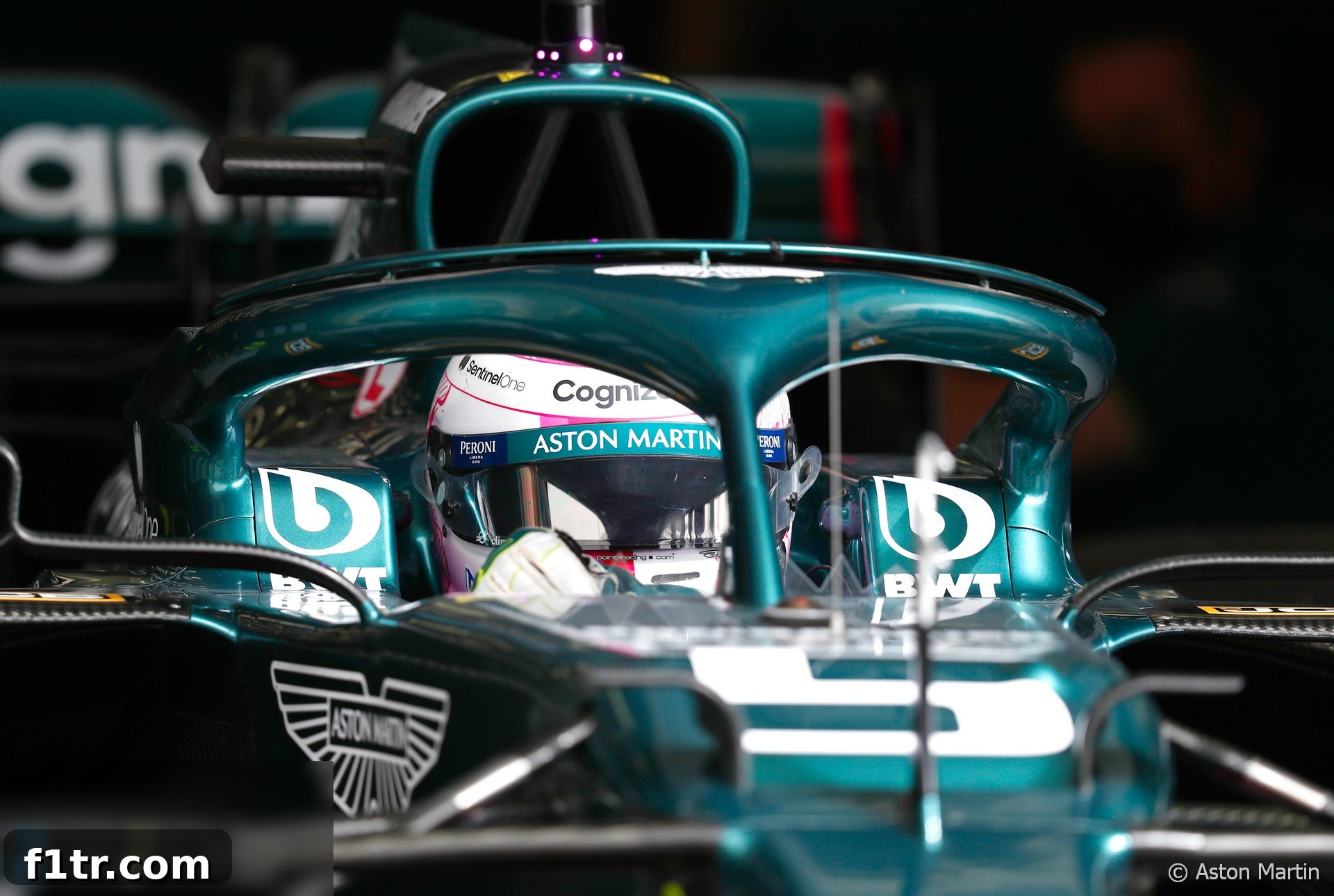
Sebastian Vettel, the revered four-time Formula 1 World Champion, finds himself in a critical phase of adaptation with his new team, Aston Martin. The German ace is intensely focused on maximizing his track time to fully integrate with the AMR21, especially after a challenging Saturday morning in pre-season testing saw him complete a mere 10 laps. This limited running, primarily due to an unforeseen gearbox change on his car, underscores the immense pressure and crucial importance of every minute on track during the condensed testing schedule.
For a driver of Vettel’s caliber, accustomed to the intricacies of top-tier machinery, the transition to a new car and a new environment is never trivial. Each Formula 1 car possesses a unique personality, a distinct set of characteristics that a driver must learn to master. From the chassis dynamics to the power unit’s delivery, the brake-by-wire system, and the overall aerodynamic balance, countless variables demand a driver’s intuitive understanding. The precious few days of pre-season testing are specifically designed for this deep dive into the car’s behavior, allowing drivers to develop a symbiotic relationship with their new racing weapon.
Advert | Become a Supporter & go ad-free
Vettel, who managed 51 laps on his initial outing with the AMR21 the previous day, openly articulated his need for extensive running. “It’s a different car and it’s obviously a different way of running the car, so naturally you would expect it to feel different as well,” Vettel explained, highlighting the fundamental shift he is experiencing. His words resonate with the reality of Formula 1: no two cars are identical, even if they adhere to similar regulations. The engineering philosophies, design choices, and subtle nuances in setup can dramatically alter a car’s feel and response.
The journey of adaptation, according to Vettel, isn’t about pinpointing one singular issue but rather a meticulous process of unraveling and mastering a multitude of small, interconnected details. “I haven’t had that much time yet, but like I said yesterday, I think I still need a bit of time to adapt to all the little things. It’s never one thing that you need to get on top of. It’s a lot of small things that ultimately make the difference,” he elaborated. This perspective perfectly encapsulates the precision required in Formula 1; often, fractions of a second are found or lost not through grand changes, but through the cumulative effect of optimizing numerous minor elements. From the exact steering wheel button mapping to the brake bias settings, the differential lock, and the energy recovery system management, every micro-adjustment contributes to a driver’s confidence and, ultimately, lap time.
The morning’s setback with the gearbox issue was undeniably frustrating for a driver so keen on maximizing seat time. In a pre-season test where every lap is gold, losing significant portions of a session can put a team and driver on the back foot. “I obviously wanted to have more laps this morning. I think we all wanted more laps, but it’s what it is,” Vettel admitted, acknowledging the unpredictable nature of testing. Yet, his gaze remains firmly fixed on the opportunities ahead: “Hopefully we have a good afternoon now and a good day, a strong day tomorrow to make up some of the lost ground.” This resilient mindset is characteristic of champions who understand that setbacks are part of the journey and the focus must quickly shift to recovery and maximizing future opportunities.
Beyond the technical intricacies of the car, Vettel also emphasized the crucial aspect of integrating with his new team, Aston Martin. This isn’t just about understanding the machine; it’s about aligning with the people, their methodologies, and their long-established working rhythms. For now, Vettel believes the onus is primarily on him to adapt to the team’s existing infrastructure and philosophy, rather than expecting immediate changes to accommodate his preferences. “At this stage I think it’s more for me to come their way, because obviously they worked on this year’s car already since early last year,” he stated, outlining a pragmatic approach to team integration. The development cycle of a Formula 1 car is extensive, spanning many months, and a new driver arriving just before the season begins cannot reasonably expect wholesale changes to the core design or operational procedures.
Vettel’s insight into the realities of F1 development is sharp. He understands that significant hardware modifications are simply not feasible within a few months of joining. “It’s not that you join and then you tell them what to do. The truth is that obviously there’s very little time to change things on the hardware side, et cetera. We started straight away on January 1st and it has been full-on since then.” This statement highlights the rapid-fire pace of preparation between seasons, where every moment is dedicated to fine-tuning and optimization rather than fundamental redesign. Immediate adjustments tend to focus on driver comfort, such as seat position, pedal placement, and steering wheel ergonomics – crucial elements for a driver to feel at one with the car, yet relatively minor in the grand scheme of car design. “Some stuff you change immediately – maybe a layout, in terms of driver comfort, which is important stuff that needs to be addressed immediately – but other stuff is very hard to change within a couple of months. So I think it’s only the beginning,” Vettel explained, offering a realistic timeline for deeper integration and potential influence on future car development.
Despite the initial hurdles, Vettel conveyed genuine enthusiasm and confidence in his new environment. Aston Martin’s return to Formula 1 as a works team marks a significant chapter for the iconic British brand, and they have ambitious goals. Bringing in a driver of Vettel’s experience and championship pedigree is a clear statement of intent. His positive appraisal of the team’s human capital is a good sign for their prospects. “I think they’re very capable people, a lot of racing enthusiasts in the team and a good spirit. So I’m happy to join and get it going.” This positive outlook underscores the belief that, despite the early challenges, the underlying foundations are solid, and a strong partnership can be forged. The synergy between driver and team is paramount in Formula 1, where communication, trust, and shared vision can elevate performance. Vettel’s long career has taught him the value of a cohesive team, and his current optimism speaks volumes about the atmosphere he’s encountered at Aston Martin.
As the condensed pre-season testing progresses, every lap for Sebastian Vettel becomes an invaluable lesson, a step further in understanding his new machinery and cementing his place within the Aston Martin family. The limited running on Saturday morning was a minor setback, but the broader narrative remains one of intense focus, professional adaptation, and the shared ambition to propel Aston Martin up the Formula 1 grid. The F1 community eagerly awaits to see how this storied driver and ambitious team will perform once the lights go out for the first race of the season.
Advert | Become a RaceFans supporter andgo ad-free
2021 F1 season
- Masi ‘basically gifted the championship’ to Verstappen says 2021 FIA steward Sullivan
- Las Vegas race backers looking to extend F1 deal beyond 2025
- Why Mercedes put ‘a reminder of joy and pain’ on display in their factory lobby
- Verdict on error in GT race suggests Mercedes would have lost 2021 Abu Dhabi GP appeal
- Title ‘stolen’ from Mercedes made us ‘underdogs people cheer for’ – Wolff
Browse all 2021 F1 season articles