Lewis Hamilton Questions Ferrari’s Shifting Driver Dynamics and Strategic Choices
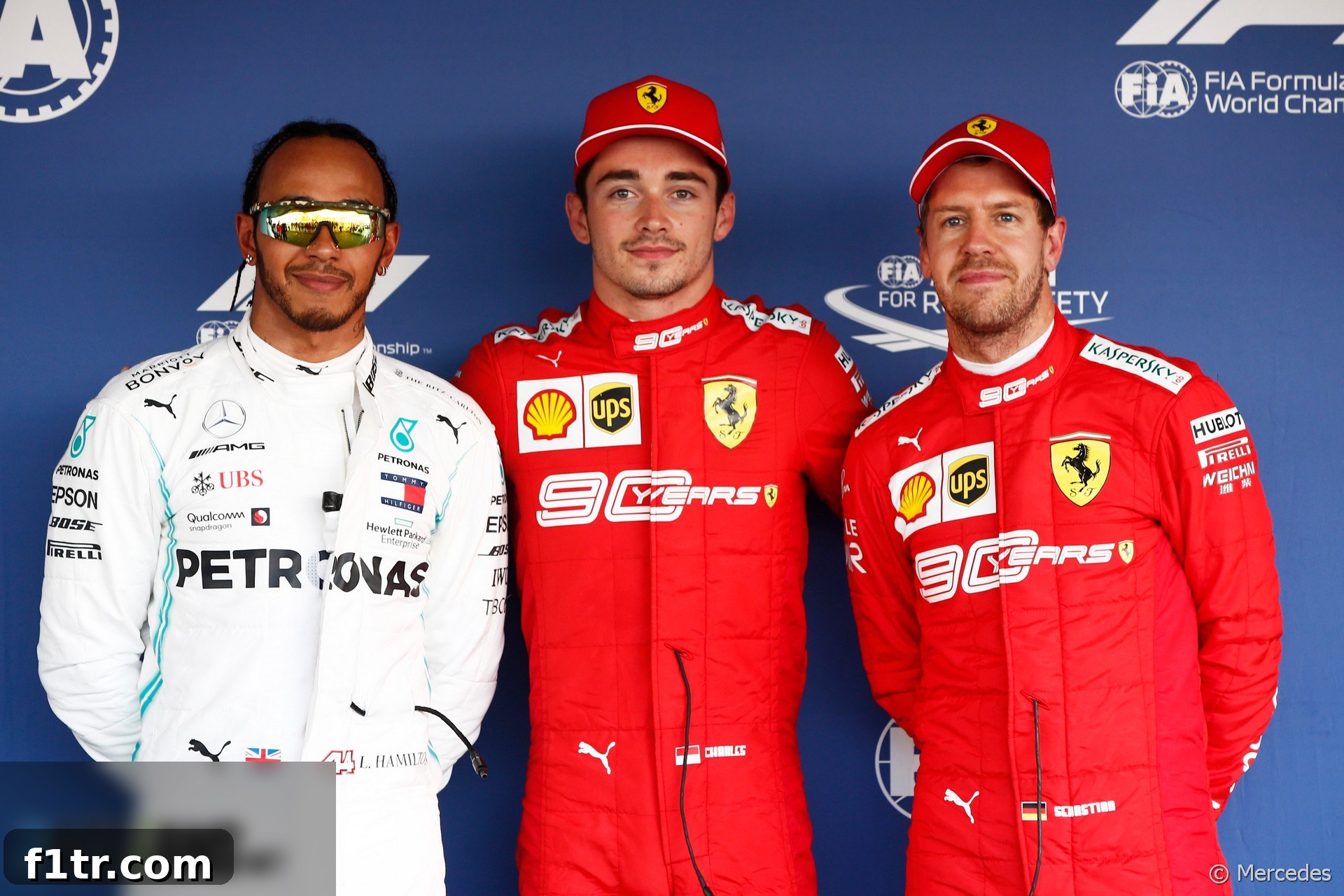
In the high-stakes world of Formula 1, team dynamics are often as crucial as raw pace. Few know this better than Lewis Hamilton, the multi-time world champion, who recently voiced his skepticism regarding Ferrari’s approach to managing its two star drivers, Sebastian Vettel and Charles Leclerc. Hamilton believes that the Scuderia has overtly shifted its focus and favoritism from one driver to the other, a strategy he openly doubts will yield positive long-term results.
The controversy came to a head during the Russian Grand Prix, where Ferrari’s attempts to impose team orders on its drivers spectacularly backfired. The directive for Sebastian Vettel to allow Charles Leclerc to re-overtake him after a coordinated slipstream maneuver highlighted an underlying tension within the team. Speaking to the media at Suzuka, Hamilton articulated his observations on Ferrari’s evolving internal politics.
The Shifting Sands at Ferrari: Vettel to Leclerc?
“It’s an interesting dynamic they have there because obviously Seb was number one and now clearly not,” Hamilton stated, reflecting on the palpable change in Ferrari’s internal hierarchy. “From kind of the energy, from the outlook, they’re trying to ramp Charles up to be.” This shift, according to Hamilton, marks a significant departure from Ferrari’s established pecking order, where Vettel, a four-time world champion, had historically been the undisputed lead driver since joining the Italian outfit.
Hamilton didn’t mince words when questioning the efficacy of such a strategy. “Is that good for a team? I don’t think so. But that’s the philosophy they’ve had for forever.” He implied that Ferrari’s historical tendency to designate a clear number one driver, rather than fostering an environment of equal opportunity, might be detrimental. This contrasts sharply with Mercedes-AMG Petronas F1 Team’s own approach, which Hamilton champions.
Comparing it to his own team’s philosophy, Hamilton added, “We don’t complain because we have a good philosophy, it works really well here and we don’t plan on changing it any time soon.” Mercedes has long maintained a policy of allowing its drivers to race fairly, intervening only when absolutely necessary for strategic advantage or championship implications, typically much later in the season. This stark difference in team management philosophies underscores Hamilton’s critical assessment of Ferrari’s current predicament.
Dissecting the Russian Grand Prix Controversy
The incident at the Russian Grand Prix served as a prime example of Ferrari’s muddled driver strategy. The initial plan involved Leclerc providing a slipstream to Vettel on the long run down to Turn 2, allowing Vettel to overtake Hamilton and ideally secure a strong team position. However, the subsequent expectation for Vettel to yield the position back to Leclerc sparked a heated debate, both internally and within the wider F1 community.
Lewis Hamilton offered a detailed tactical breakdown of the botched strategy, drawing on his own experiences with Valtteri Bottas at Mercedes. “We work together as a team when we do that start,” he explained, describing how Mercedes drivers cooperate to maximize their advantage. “[If] I’m pole [or] Valtteri’s pole, instead of giving the tow to the third place guy, giving the tow to second place guy. We work together in that scenario, we did it a couple of years ago. He covered it inside, I got a tow, we locked up and he kept the lead.”
Hamilton highlighted the crucial difference: Mercedes’ strategy involves clear communication and a shared understanding of roles, which typically culminates in maintaining the team’s leading position. In contrast, Ferrari’s plan in Russia seemed to involve an expectation for Leclerc to cede a position and then effortlessly reclaim it, a notion Hamilton found strategically unsound. “So I understand that working ethic. But I think Charles had said that ‘I’ll let you take the tow’ and didn’t move and defend which he should have done. You don’t give up a place and then expect to get it back.” This pointed critique suggests that Leclerc’s initial compliance without proper defensive action after the tow made his subsequent demand for the position back illogical from a pure racing perspective.
Echoes of the Past: Hamilton’s McLaren 2007 Season
To further contextualize his views, Lewis Hamilton drew a compelling parallel to his tumultuous debut season in Formula 1 with McLaren in 2007, alongside two-time world champion Fernando Alonso. This period is widely remembered for its intense intra-team rivalry and its significant impact on the championship outcome. “I’ve not had a team back the other side so much, so heavily, before,” Hamilton recounted, referencing the initial favouritism shown towards Alonso.
He continued, “Obviously when I was with Fernando he was the hired number one. But then mid-season they changed that.” This dynamic shift within McLaren, driven by Hamilton’s unexpected and phenomenal performance as a rookie, led to a more equal footing between the two drivers, particularly regarding fuel loads in qualifying and race strategy. “He was still the number one because he was the highest-paid driver, et cetera, but then they gave us equal fuel and then you started seeing changes like Montreal and Indianapolis, were we had equal fuel loads and stuff like that. Then that dynamic shifted, and it obviously didn’t go well for the team.”
The 2007 season saw McLaren ultimately lose both the drivers’ and constructors’ championships despite having a highly competitive car, largely due to the internal strife and points shared between Hamilton and Alonso. Hamilton’s recollection serves as a cautionary tale, implying that Ferrari’s current dilemma, if not managed carefully, could similarly derail their championship aspirations and create a toxic environment within the team. It underscores the delicate balance required to manage two top-tier drivers with championship ambitions.
The Philosophy of Earning Number One Status
Hamilton’s personal philosophy on driver status is clear: it should be earned, not assigned. “I do understand because ultimately when you arrive you want to have equal opportunity, I think,” he explained, acknowledging the natural desire for fair treatment. “But there are drivers that always wanted that number one status. It’s easier for them. I like to earn that.”
He advocates for a meritocratic approach where performance on track dictates who leads the charge. “Start on an equal platform, then either of you can get that number one status on that weekend: Weekend in, weekend out, rather than [over] the course of the season.” This perspective emphasizes fierce, yet fair, competition between teammates, believing it pushes both drivers to perform at their absolute best. It also avoids the potential for resentment and demotivation that can arise when one driver is perceived as being unfairly disadvantaged or overlooked, as might be the case for Vettel at Ferrari.
A team that fosters genuine competition, where the best performer on any given weekend earns the primary strategic focus, often cultivates a healthier and more productive environment. It encourages drivers to constantly push their limits, leading to stronger overall team results. Conversely, a team that prematurely elevates one driver risks alienating the other, potentially leading to a breakdown in trust and cooperation, which are vital for championship success in modern Formula 1.
Sebastian Vettel’s Position and Ferrari’s Future
Amidst the swirling speculation and Hamilton’s pointed observations, Sebastian Vettel was directly confronted by German media, asking if he felt he had become the number two driver at Ferrari. His response was succinct and defiant: “Definitely not.” This public denial, however, does little to quell the intense scrutiny on Ferrari’s internal workings, especially given the radio exchanges from Russia that painted a clear picture of team orders in effect.
Ferrari’s dilemma is multifaceted. They have two incredibly talented drivers, both capable of winning races and challenging for championships. Charles Leclerc represents the future – young, aggressive, and incredibly fast, he has quickly become a fan favorite and a strong contender. Sebastian Vettel, a seasoned veteran and multiple world champion, brings a wealth of experience and a track record of success. Balancing the ambitions of both drivers, while maintaining team cohesion and optimizing championship chances, is a tightrope walk for team principal Mattia Binotto.
The perceived shift in focus, whether intentional or not, risks creating instability. If Vettel genuinely feels undermined, his performance could suffer, impacting the team’s ability to challenge Mercedes. If Leclerc is prematurely elevated, it could lead to undue pressure and a potentially divisive atmosphere. Lewis Hamilton’s comments serve as a powerful reminder of the delicate psychology at play in Formula 1 and the critical importance of a clear, consistent, and equitable team strategy.
Conclusion: The Implications for the Championship Battle
As the Formula 1 season progresses, the management of the Ferrari driver lineup will undoubtedly remain a focal point. Lewis Hamilton’s insightful comments highlight not just a competitor’s observation, but also a seasoned veteran’s understanding of the intricate dance between individual ambition and team success. His comparison to the 2007 McLaren season underscores the potential pitfalls that Ferrari faces if they fail to navigate this complex dynamic with precision and fairness.
The championship battle is rarely won by pace alone; strategic brilliance, team unity, and psychological fortitude are equally vital. Hamilton’s Mercedes has consistently demonstrated these qualities. Ferrari, with its rich history and immense pressure, finds itself at a crossroads. How they choose to manage the Sebastian Vettel-Charles Leclerc dynamic will not only define their immediate championship prospects but also shape the narrative of their team for years to come. The question remains: can Ferrari foster a winning environment when one of its star drivers, according to its fiercest rival, is being subtly sidelined?
2019 F1 Season Insights
- Crying in the Melbourne car park at 2019 grand prix was my career low – Ocon
- McLaren Racing reports reduced £71 million loss in 2019
- Kvyat: Hockenheim podium last year was “my biggest achievement” so far
- How the FIA’s new encrypted fuel flow meter targets Ferrari’s suspected ‘aliasing’ trick
- “He smashed my office door”: 23 must-see moments from ‘Drive to Survive’ season two
Browse all 2019 F1 season articles