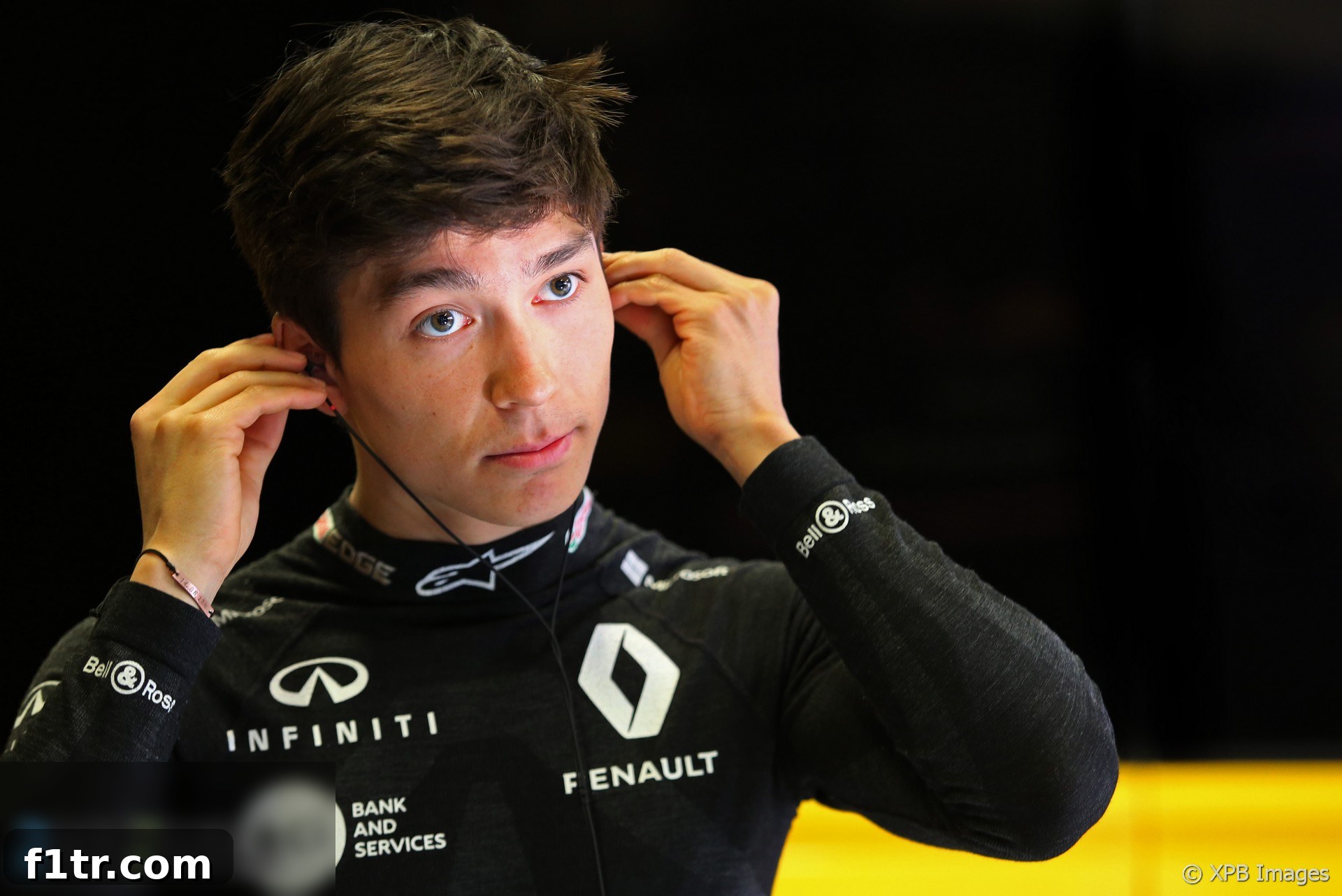
In a significant development for the 2020 Formula 1 season, Williams Racing officially announced the appointment of former Renault junior driver Jack Aitken as their Reserve Driver. This strategic move highlighted Williams’ enduring commitment to cultivating young talent and bolstering their operational framework as they prepared for what promised to be a dynamic and challenging year in the pinnacle of motorsport.
Jack Aitken: A Journey to the Cusp of Formula 1
At 24 years old at the time of his appointment, Jack Aitken brought with him an impressive track record from the highly competitive junior racing categories. His tenure as part of the esteemed Renault Sport Academy provided him with invaluable exposure to Formula 1 environments, honing his technical understanding and race craft. Aitken’s progression through motorsport’s feeder series has been marked by consistent performance and a clear demonstration of his potential to compete at the highest level.
Aitken’s racing career features several notable achievements that underscore his capabilities. In the fiercely contested 2019 FIA Formula 2 Championship, he secured an impressive fifth-place finish overall. This strong performance included three commanding victories, showcasing his strategic acumen, ability to manage pressure, and raw speed against a grid filled with future Formula 1 hopefuls. Prior to his success in Formula 2, Aitken also demonstrated his versatility and dominance by winning two Formula Renault 2.0 titles in 2015, affirming his early promise and adaptability across different racing machines.
His experience within the Renault junior program was instrumental in his development, providing him with critical insights into the technical and strategic demands of Formula 1. This included extensive simulator work, engineering briefings, and direct engagement with a top-tier F1 team’s operational structure. Such a comprehensive background prepared him not only for the physical demands of driving but also for the intricate technical contributions expected of a modern Formula 1 driver.
The Multifaceted Role of an F1 Reserve Driver at Williams
The position of a reserve driver in Formula 1 is profoundly important, demanding more than just a readiness to step in. It requires a deep understanding of the car, strong technical communication skills, and an unwavering commitment to the team’s development. Aitken’s responsibilities at Williams were broad, directly influencing the team’s performance and long-term strategic goals throughout the 2020 season.
Gaining Track Time: The Friday Practice Session
A key aspect of Aitken’s agreement was the opportunity to participate in at least one Friday practice (FP1) session during the 2020 F1 season. This rare chance offers immense value for both the driver and the team. For Aitken, it was a crucial opportunity to experience the current F1 car in a competitive, real-world setting. This hands-on experience allowed him to familiarize himself with the car’s intricate systems, precise handling characteristics, and the formidable speed that distinguishes Formula 1 machinery from junior series cars. These sessions are essential for drivers to recalibrate to the extreme G-forces and complex controls unique to F1, providing invaluable seat time that builds confidence and familiarity.
For Williams, integrating a reserve driver into an FP1 session provides several significant advantages. It enables the team to collect additional performance data on various car setups, evaluate new aerodynamic components, or test different tyre compounds under actual track conditions. Moreover, an additional driver offers a fresh perspective on the car’s behavior, potentially revealing insights that might complement or expand upon the feedback provided by the primary drivers, George Russell and Nicholas Latifi. This enhanced data collection is vital for accelerating the car’s development cycle and optimizing its performance for critical qualifying sessions and races.
Crucial Contributions: Simulator and Engineering Support
Beyond his track appearances, Aitken’s primary and most extensive role involved rigorous work on Williams’ state-of-the-art simulator program. The simulator is an indispensable tool in modern Formula 1, offering a highly efficient and cost-effective platform for comprehensive car development. It allows engineers to test new car parts, refine existing setups, and meticulously practice race strategies in a controlled virtual environment. Aitken’s hours spent in the simulator were fundamental for validating engineering hypotheses, proactively identifying potential car issues before track sessions, and continuously optimizing the car’s virtual performance.
His detailed and precise feedback from countless virtual laps directly informed the engineering team’s decisions, empowering them to make data-driven choices about car development and setup. This iterative process ensures that the car arriving at a Grand Prix weekend is as optimized as possible, thereby minimizing costly setup time during real-world practice sessions and allowing the race drivers to focus on fine-tuning. Aitken’s prior experience with similar programs at Renault further enhanced his ability to contribute meaningfully in this crucial technical capacity, making him a highly valued asset to the Williams engineering department.
Always Prepared: The Stand-by Imperative
Perhaps the most challenging, yet often understated, aspect of a reserve driver’s responsibility is the constant state of readiness to step into the cockpit with minimal notice. Aitken was required to attend every single Grand Prix of the 2020 F1 season, always on standby to replace either George Russell or Nicholas Latifi, should circumstances demand it. Such circumstances could range from unforeseen illness or injury to other unforeseen events that might prevent a primary driver from competing.
The capacity to seamlessly integrate into the team, understand the car’s nuances, and perform under immense pressure with little preparation is the hallmark of a truly capable Formula 1 reserve driver. This demands not only peak physical and mental conditioning but also an intimate, up-to-date knowledge of the car’s current specifications, the team’s operational procedures, and the specific characteristics of each circuit on the F1 calendar. Aitken’s unwavering dedication to maintaining this state of readiness underscored his professional ambition and his profound commitment to capitalizing on this significant opportunity within Formula 1.
Williams Racing: A Legacy of Nurturing Motorsport Talent
Williams has long been celebrated for its tradition of identifying and developing promising motorsport talent, and Aitken’s appointment further reinforced this fundamental aspect of their team ethos. Jack Aitken himself expressed his profound enthusiasm for his new role, stating, “Williams is a team with strong heritage, and continued longevity, and I’m looking forward to directly contributing to their development through my simulator and testing work.” This sentiment was strongly echoed by Deputy Team Principal Claire Williams, who highly praised Aitken’s potential and suitability for the role.
“It is obvious from what Jack has achieved so far he is a young driver with a great career ahead of him,” said Claire Williams, highlighting her confidence in his future. “and we believe he has the right credentials to reach the top in the sport. Jack has proved his ability in FIA Formula 2 and GP3 and we look forward to seeing what he can achieve as the team’s official reserve driver.” These comments reflect the team’s belief in Aitken’s proven abilities and his capacity to grow within their structure.
Indeed, Williams’ commitment to nurturing the next generation of racing stars was profoundly evident in their expanding roster of young talents. Aitken joined an impressive cohort of promising individuals, all contributing to the team’s long-term vision. This esteemed group included official test driver Roy Nissany, who was scheduled to participate in three practice sessions during the year. Nissany’s role was complementary to Aitken’s, offering additional diverse perspectives and significantly enhancing the team’s analytical and developmental capacity.
Further enriching this pool of talent were development drivers Dan Ticktum and Jamie Chadwick. Ticktum, a former member of the prestigious Red Bull Junior Team, brought his aggressive driving style and valuable experience from various junior categories to Williams’ simulator and development programs. His insights, particularly concerning car dynamics and setup optimization, were highly valued. Jamie Chadwick, a trailblazing figure and two-time W Series champion, represented another crucial facet of Williams’ comprehensive talent strategy. Her role as a development driver not only provided her with invaluable Formula 1 exposure but also offered the team a unique perspective, contributing to a more diverse and holistic approach to car development.
This multi-faceted strategy for talent development allowed Williams to access a broader spectrum of feedback and expertise, a particularly vital advantage for a team relentlessly striving to regain its competitive edge. By strategically investing in these young and ambitious drivers, Williams was not only preparing for the immediate challenges of the upcoming season but also meticulously laying the groundwork for sustainable success in the relentlessly competitive world of Formula 1.
Anticipating the 2020 F1 Season: A Look Ahead
The 2020 Formula 1 season was keenly anticipated with a complex blend of excitement and formidable challenges, particularly for a team like Williams. Having navigated a difficult period in previous seasons, the team entered 2020 with a clear focus on stability, achieving tangible performance improvements, and building a robust foundation for future competitiveness. The strategic inclusion of experienced yet ambitious young drivers such as Aitken, alongside their primary drivers Russell and Latifi, and a strong cohort of development drivers, signaled a resolute intent to move forward and reclaim their standing in the sport.
Williams aimed to thoroughly leverage Aitken’s detailed simulator work and his valuable feedback from his allocated FP1 session to meticulously fine-tune their new challenger, the FW43. The objective was clear: to extract the absolute maximum performance from its carefully engineered package. The synergy and cohesive collaboration between the race drivers and the reserve/development drivers were understood to be paramount in achieving their ambitious objectives for the season. Aitken’s comprehensive understanding of modern F1 cars, a direct result of his successful junior career and prior affiliations with F1 teams, positioned him perfectly to make immediate and profoundly meaningful contributions to the team’s efforts.
His presence also served as a significant morale boost for the entire team, symbolizing a continued belief in their ability to attract and develop top-tier talent. Furthermore, his appointment offered an essential additional layer of operational security, ensuring that the team possessed a proven and highly capable driver ready to step in should any unforeseen circumstances arise. The 2020 season, with its unprecedented global challenges and disruptions, would ultimately underscore the critical adaptability and unwavering importance of every single team member, a role where the reserve driver proved to be particularly invaluable.
A Stepping Stone Towards Formula 1 Glory?
For Jack Aitken, the reserve driver role at Williams represented a pivotal milestone, positioning him closer than ever before to achieving a full-time Formula 1 race seat. The annals of Formula 1 history are replete with examples of successful drivers who have navigated similar paths, utilizing reserve roles as essential launchpads to demonstrate their capabilities, readiness, and ultimate suitability for a primary seat. The invaluable opportunity to work intimately with a Formula 1 team, absorb their unique operational ethos, and contribute directly to cutting-edge car development is an unparalleled experience that simply cannot be replicated through other means.
The intensely competitive landscape of Formula 1 means that genuine opportunities for race seats are exceedingly scarce. Aitken’s prominent appointment at Williams placed him firmly within the spotlight of the F1 paddock, providing him with a critical platform to showcase his professionalism, astute technical acumen, and raw speed. His unwavering commitment to simulator duties, his preparedness for live track action, and his ability to integrate and perform effectively within a high-pressure team environment would all be under meticulous scrutiny. Sustained success and consistent dedication in this pivotal role could unequivocally pave the way for his future Formula 1 aspirations, positioning him as a prime and highly qualified candidate for any future openings in the sport.
View the current list of 2020 F1 drivers and teams
2020 F1 season: Related Articles
- Grosjean to make F1 test return tomorrow for first time since Bahrain horror crash
- Pictures: Wrecked chassis from Grosjean’s Bahrain fireball crash to go on display
- Bottas vs Rosberg: Hamilton’s Mercedes team mates compared after 78 races each
- F1 revenues fell by $877 million in Covid-struck 2020 season
- Hamilton and Mercedes finally announce new deal for 2021 season
Browse all 2020 F1 season articles