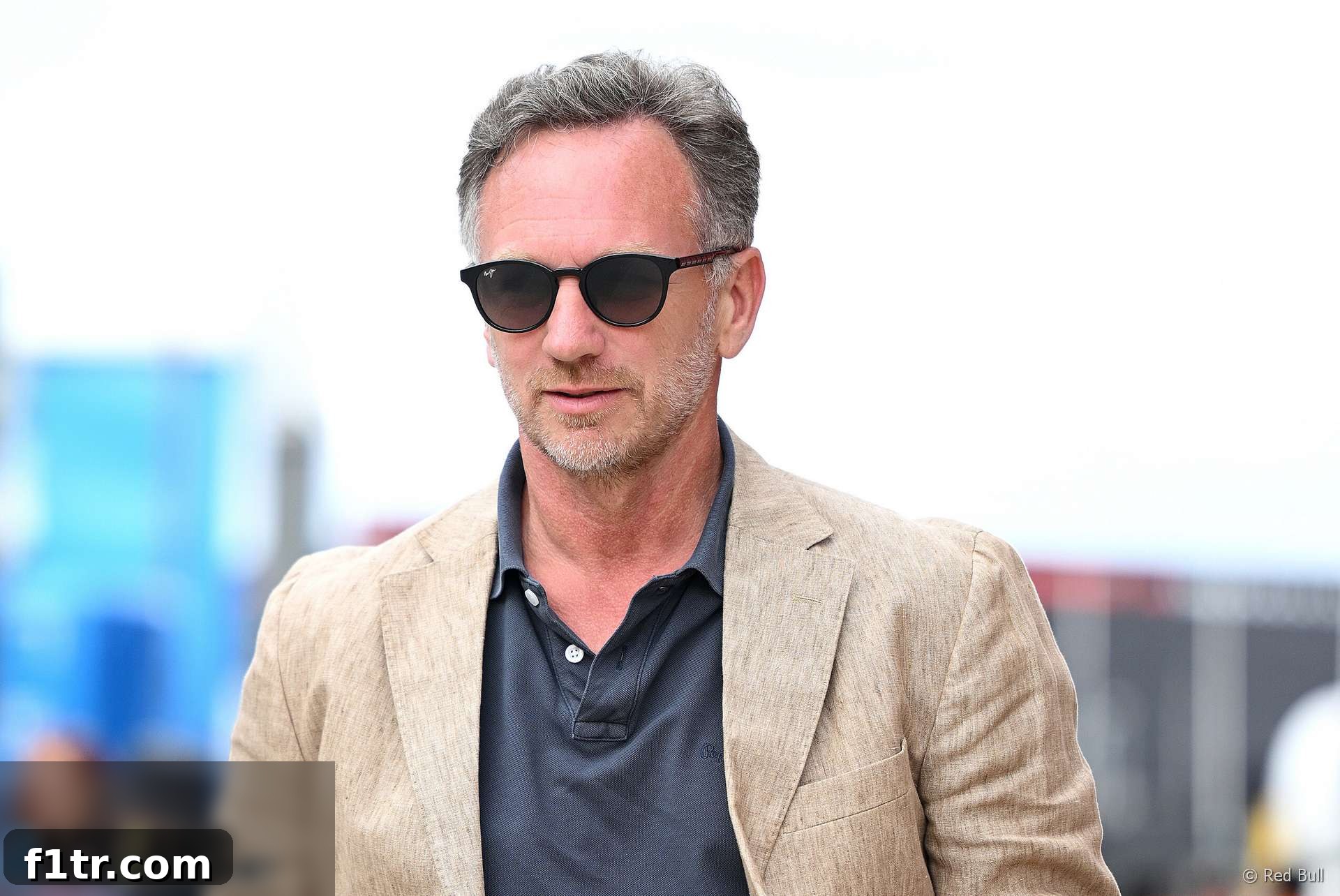
In the highly competitive and often turbulent world of Formula 1, leadership changes and speculative rumors are as commonplace as high-speed overtakes. Recently, the spotlight has fallen on the Alpine F1 Team, a French constructor grappling with a period of significant transition and seeking to solidify its management structure. Amidst swirling reports and industry chatter, Alpine consultant Flavio Briatore has decisively addressed suggestions that the team might be looking to onboard former Red Bull team principal, Christian Horner, confirming that such a move is not on the cards for the Enstone-based squad.
Advert | Become a Supporter & go ad-free
The prospect of Christian Horner joining Alpine had sparked considerable interest within the F1 community. Horner, a figure synonymous with sustained success, concluded his remarkable 20-year tenure with Red Bull Racing earlier this season. Having led the team since its inception in Formula 1 in 2005, he was instrumental in guiding them to an impressive string of championship victories in the early 2010s, with Sebastian Vettel, and again in the 2020s, with Max Verstappen. His track record of building and maintaining a championship-winning team makes him one of the most respected and successful leaders in modern F1 history. Given Alpine’s recent struggles with consistency and performance, any link to a proven leader like Horner would naturally generate significant discussion.
Alpine’s Quest for Stability: Acknowledging Recent Leadership Turmoil
Alpine’s recent history has been marked by a notable degree of instability at its top leadership positions. The team has arguably cycled through team principals and senior management more frequently than any of its direct rivals in recent years. This high turnover rate has often been cited as a contributing factor to the team’s fluctuating performance and perceived lack of a clear, long-term strategic direction. The demanding nature of Formula 1, where every decision can have profound implications for car development, personnel, and competitive standing, necessitates a stable and coherent leadership structure.
Flavio Briatore, a seasoned veteran of the sport and a consultant for Alpine, made it clear that despite the team’s current managerial reshuffle, Christian Horner is not being considered for a role. “I’m not considering anything in this moment,” Briatore stated, addressing the rumors directly. He acknowledged Horner’s current status outside the pinnacle of motorsport. “Christian is not in Formula 1 in this moment, anymore. I hope he comes back soon. But for the moment, he’s not in the picture of the team.” Briatore’s remarks underscore a focused internal strategy for Alpine, suggesting a deliberate move away from external, high-profile appointments for now.
The Impact of Frequent Leadership Changes at Enstone
The challenges of frequent leadership changes at Alpine became particularly evident with the departure of the team’s last team principal, Oliver Oakes, who stepped down for personal reasons in May. His tenure lasted a mere eight months, a period far too short to implement any significant strategic shifts or foster long-term stability. Such rapid departures can disrupt ongoing projects, create uncertainty among staff, and hinder the consistent application of a team’s vision. For a team like Alpine, which has grand ambitions of challenging the sport’s front-runners, a lack of continuity at the helm can be a significant impediment to progress and the cultivation of a winning culture.
Steve Nielsen: A Return to Familiar Territory for Alpine
In response to the recent vacancy and their ongoing efforts to stabilize the management, Alpine has moved to appoint Steve Nielsen as its new managing director, effective from next month. This appointment signals a commitment to bringing in experienced personnel with a deep understanding of Formula 1 operations. Nielsen is a highly respected figure within the paddock, known for his meticulous approach to logistics and operational excellence. His return to the team, which he has served previously, including a significant period with Briatore when it competed as Renault, is viewed as a strategic move to instill much-needed organizational discipline.
Nielsen’s extensive career in Formula 1 spans several decades and includes crucial positions beyond team operations. He has held significant roles at Formula One Management (FOM), the commercial rights holder of F1, and the Fédération Internationale de l’Automobile (FIA), the sport’s governing body. These experiences have provided him with a comprehensive understanding of the sport’s regulatory framework, operational intricacies, and commercial landscape. This broad expertise makes him a valuable asset, capable of navigating the complex web of technical, sporting, and administrative challenges inherent in F1.
Briatore’s Vision for Nielsen’s Role
Flavio Briatore expressed significant confidence in Nielsen’s abilities and the critical role he is expected to play in Alpine’s resurgence. “I’ve known Steve a long time,” said Briatore, “he was with me at Renault. We need somebody like Steve. We need a team manager.” This statement highlights the perceived void in day-to-day operational leadership that Nielsen is expected to fill. Briatore emphasized the need for a hands-on, comprehensive approach, reflecting the immense scope of the managing director’s responsibilities.
Briatore expects Nielsen to take full control of the team’s daily operations, a mandate that underscores the depth of the challenges Alpine faces and the trust placed in Nielsen to address them. “We need somebody who knows the system and knows the people, and someone who coordinates the team from A to Z,” Briatore elaborated. “It’s not just one job I expect from Steve, I expect Steve to be in charge from A to Z. Basically, it’s what the managing director is doing.” This description paints a picture of Nielsen as the central figure overseeing everything from logistical planning and budget allocation to personnel management and technical department coordination. His role will be pivotal in ensuring all aspects of the team operate cohesively and efficiently, fostering a streamlined environment conducive to performance improvement.
The anticipation for Nielsen’s arrival is palpable. “I’m happy to have Steve next week. I believe the first day is Monday, and our first race with Steve is in Monza,” Briatore confirmed. This timeline suggests an immediate integration into the team’s racing activities, allowing Nielsen to quickly immerse himself in the competitive environment and begin implementing his vision. The Italian Grand Prix at Monza, a historic and high-speed circuit, will mark the beginning of a new chapter for Alpine under Nielsen’s operational leadership, offering an early test of his influence on the team’s race weekend performance.
Advert | Become a RaceFans supporter andgo ad-free
The Path Forward for Alpine: Stability, Performance, and Ambition
Alpine’s current strategy appears to be firmly rooted in internal consolidation and the leverage of experienced personnel to navigate its current challenges. By bringing in a figure like Steve Nielsen, the team is signaling a desire for operational excellence and a structured approach to problem-solving. This contrasts with the speculative pursuit of a high-profile, external figure like Christian Horner, who, while immensely successful, might also bring a different set of dynamics and expectations. The denial of Horner’s consideration allows Alpine to focus squarely on integrating Nielsen and allowing him the space to rebuild and stabilize the team’s operational backbone.
The ultimate goal for Alpine remains clear: to climb the competitive ladder in Formula 1 and consistently challenge for podiums and eventually championships. Achieving this ambition requires not only a competitive car and talented drivers but also a robust, stable, and highly efficient organizational structure. With Flavio Briatore’s advisory input and Steve Nielsen’s proven operational expertise, Alpine hopes to lay a strong foundation for future success. The coming months will be crucial in observing how these leadership changes translate into tangible improvements on track and whether the team can finally find the stability it desperately needs to unlock its full potential in the fiercely contested world of Formula 1.
Miss nothing from RaceFans
Get a daily email with all our latest stories – and nothing else. No marketing, no ads. Sign up here:
Formula 1 Insights & Analysis
- F1 returning to India soon after 2027 sounds like wishful thinking
- Verstappen loathes F1’s new generation of cars – but what do his rivals reckon?
- The ‘throwback weekend’ is back in fashion. But it’s a flawed concept – especially for F1
- Is Formula 1’s double race cancellation a blessing in disguise?
- Todt admits Schumacher crashed on purpose – but did it really cost him two titles?
Browse all Formula 1 articles