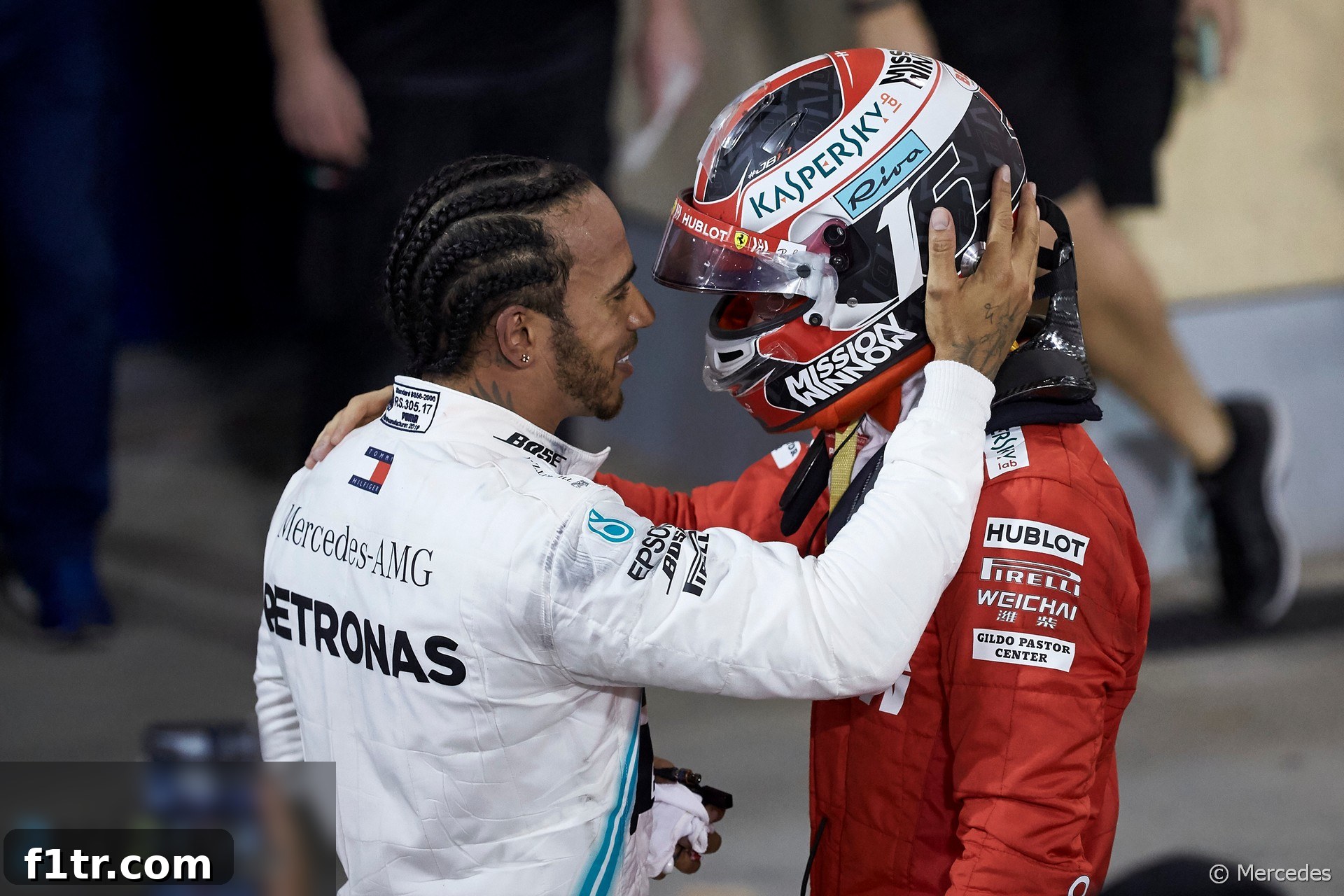
In the high-stakes world of Formula 1, where every millisecond and strategic decision can dictate destiny, the nuanced dynamics between teammates often become a captivating subplot. Seven-time World Champion Lewis Hamilton, a veteran of countless battles both on track and within team structures, has offered a revealing perspective on the burgeoning career of Charles Leclerc at Ferrari. Hamilton draws a striking parallel between Leclerc’s current situation – perceived as having to play a supporting role to his seasoned teammate, Sebastian Vettel – and his own fiery rookie season at McLaren alongside then-reigning champion Fernando Alonso in 2007. This comparison illuminates the inherent tension when a young, ambitious talent challenges the established hierarchy within an elite Formula 1 team.
Hamilton’s insights are not merely observations but stem from deeply personal experience. Reflecting on his debut season, he recalls the intense drive to succeed immediately. “I think he’s a little bit younger than I was, or just a year or so,” Hamilton noted when discussing the similarities. “When you’re young, particularly, I remember wanting to get to Formula 1 as soon as possible. And then when I got there, I wanted to win as soon as possible, and I wanted to beat the champion that I was racing against. So it was very similar. I see much of myself in Charles.” This candid admission reveals the raw ambition that fuels every aspiring champion, an ambition that often clashes with predetermined team strategies or a ‘number one’ driver designation.
The early stages of the 2019 Formula 1 season saw Ferrari issue explicit team orders to Leclerc, instructing him to support Vettel in at least three races. These directives were designed to prioritize the four-time world champion, an understandable strategy for a team aiming for a Constructors’ title, but one that inevitably stifles a young driver’s natural competitive instincts. In Bahrain, for instance, Leclerc was told to hold station behind Vettel for two laps. However, within a single lap, the Monegasque driver, brimming with speed and confidence, defied the order and overtook his teammate. While he did adhere to a similar instruction in China, Leclerc later publicly stated that he would only obey such orders “in some situations,” signaling his clear reluctance to accept a permanent ‘number two’ status.
Hamilton articulated his deep understanding of Leclerc’s position, explaining his own core philosophy as a racer. “The difficult thing is, my philosophy as a racing driver has always been I always want equal opportunity with whoever it is that I’m racing, so I can truly show my ability,” he asserted. This principle forms the bedrock of a competitor’s integrity. When a driver enters Formula 1, they often encounter a predefined team structure, especially when paired with multiple world champions who might demand a preferential ‘number one’ position. This scenario inherently relegates the junior driver to a ‘number two’ or supporting role. While being in F1 is a privilege, such a role fundamentally conflicts with the inherent values of a racing driver whose very essence is to compete and win on merit.
The psychological toll of being told to curb one’s competitive spirit is immense. Hamilton perfectly captured this sentiment: “So that’s what I’m saying, I understand how Charles feels. Because in his heart, he believes he’s the best, or has the potential to be the best, and it’s almost like having your light dimmed.” For a racer, having their ‘light dimmed’ means being prevented from demonstrating their full potential, to hold back when their instinct screams to push forward. This internal conflict inevitably sparks a powerful desire to rebel. When told to do one thing, the innate fight within a fierce competitor compels them to push in the opposite direction, to break free from constraints and prove their capability. This rebellious urge, Hamilton suggests, is a natural and necessary trait for any driver aspiring to the very top.
Hamilton’s own experience with this rebellious urge was famously showcased during the 2007 Monaco Grand Prix. In that race, he finished directly behind his teammate, Fernando Alonso. Post-race, Hamilton openly voiced his dissatisfaction, feeling he had been treated as a “number two” driver. The rules of that era allowed teams to refuel cars during races, and crucially, drivers qualified with their race fuel loads. Hamilton’s complaint stemmed from the fact that he carried an additional five laps’ worth of fuel in qualifying, a strategic decision by McLaren that he believed prevented him from genuinely challenging Alonso for victory. This disparity in fuel strategy directly curtailed his ability to compete on equal terms, fueling his frustration and sense of injustice.
Fortunately for Hamilton, the situation saw a rapid and positive change at the very next race in Canada. He vividly recalled the shift: “Luckily for me, my team at the time gave us equal fuel loads – because back then it wasn’t equal fuel loads in qualifying – and in the next race, they did, and I won, first grand prix [victory].” This victory was monumental, not just as his maiden Formula 1 win, but because it provided irrefutable justification for his earlier ‘rebellious’ stance. Achieving victory under conditions of genuine equal opportunity validated his belief in fair competition. From that moment forward, he felt a tangible shift, perceiving that he had “more of a real chance to show my ability each weekend,” unlocking his full potential and trajectory towards becoming a multi-world champion.
Drawing parallels to Leclerc, Hamilton noted the young Ferrari driver’s impressive performances despite the team orders and early-season challenges. Leclerc was well on his way to securing a dominant victory in Bahrain, having decisively passed Vettel, before a cruel power unit problem snatched the win away, ironically handing it to Hamilton. “He’s doing a great job already so far,” praised the Mercedes driver. “There’s really high expectations at a huge team like Ferrari, but he’s driving so well. He just has to keep doing what he’s doing. It’ll come to him.” This vote of confidence from one of the sport’s all-time greats underscores Leclerc’s raw talent and immense potential, suggesting that his journey to the top is inevitable, provided he continues to trust his instincts and push against the boundaries of imposed team dynamics.
The saga of Charles Leclerc’s early career at Ferrari, therefore, is not just a tale of team orders but a powerful narrative about the forging of a champion. Like Hamilton before him, Leclerc faces the delicate balance of team loyalty and personal ambition. His willingness to question and, at times, defy team directives mirrors the spirit of a true racer who believes in their own ability and the principle of equal opportunity. This dynamic interplay between driver autonomy and team strategy remains a cornerstone of Formula 1, consistently providing compelling drama and showcasing the enduring competitive fire that defines the sport’s greatest talents. As Leclerc continues to mature, his ability to navigate these complex waters will undoubtedly shape his legacy at Ferrari and in Formula 1 history.
Related Formula 1 Insights
- Inspiring Driver Journeys and Career Milestones
- Exploring F1 Team Dynamics and Race Strategy
- Key Moments and Controversies in F1 History
- Understanding Formula 1 Regulations and Their Impact
- In-Depth Grand Prix Race Reviews and Analysis
Browse all Formula 1 News and Features