Sebastian Vettel Disqualified from Hungarian Grand Prix: A Deep Dive into the Fuel Infringement and Its Championship Ramifications
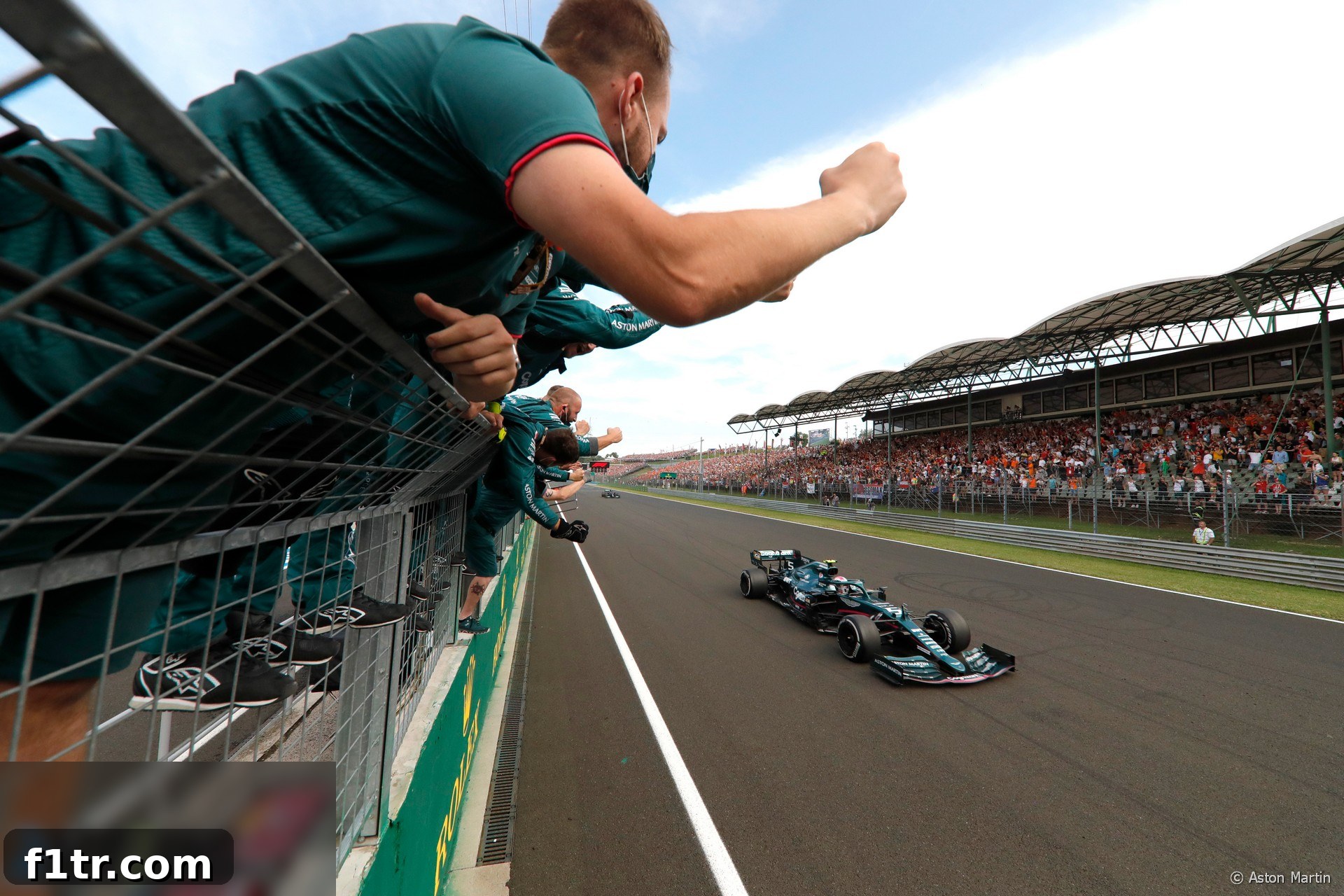
The thrilling conclusion of the Hungarian Grand Prix was overshadowed by a monumental decision from the FIA stewards, as Sebastian Vettel was officially disqualified from the race. This critical ruling stripped the four-time world champion of his hard-earned second-place finish, a result that had initially marked Aston Martin’s most significant achievement since their rebranding. The reverberations of this disqualification immediately reshaped the championship standings, handing Vettel’s second-place points to Lewis Hamilton and consequently promoting most of the other finishers up one position.
The Fuel Infringement: A Breach of Formula 1’s Strict Technical Regulations
The core reason for Sebastian Vettel’s disqualification stemmed from a fundamental breach of Formula 1’s stringent technical regulations. Following the race, the Aston Martin driver’s car was found to have an insufficient amount of fuel remaining. F1’s technical rulebook mandates that teams must be able to provide a one-litre sample of fuel for post-race testing and analysis. This regulation is crucial for ensuring fair competition and preventing teams from gaining an illegal performance advantage by under-fuelling their cars throughout a Grand Prix, which could reduce weight and boost lap times.
In Vettel’s case, when stewards attempted to extract the required fuel sample from his AMR21, they were only able to retrieve a mere 300ml. This figure fell significantly short of the mandated one-litre minimum, triggering an immediate investigation and subsequent penalty. The discrepancy raised immediate questions about the car’s operational integrity and the team’s adherence to the rules.
Aston Martin’s Defense and the Stewards’ Unyielding Decision
Aston Martin presented their case to the stewards, arguing that their internal data suggested the car contained more fuel than could be extracted. The team stated they believed there was an additional 1.44 litres of fuel remaining in the car, basing this estimate on information derived from their fuel flow meter or injector model. This indicated a potential technical issue that prevented the fuel from being extracted, rather than a deliberate attempt to flout the rules.
However, despite Aston Martin’s assertion, the stewards’ focus remained firmly on the tangible evidence. In their statement, they noted, “The team was given several opportunities to attempt to remove the required amount of fuel from the tank, however it was only possible to pump 0.3 litres out.” The inability to physically extract the required one-litre sample, irrespective of internal telemetry, left the stewards with no alternative but to apply the standard penalty for technical infringements.
The stewards’ verdict emphasized a critical principle in Formula 1 regulations: “it shall be no defence to claim that no performance advantage was obtained.” This means that even if Aston Martin could prove that the fuel issue did not give Vettel a performance boost, the breach of the technical regulation itself is sufficient grounds for disqualification. This rule ensures the integrity of the sport’s technical framework and maintains a level playing field for all competitors.
Championship Landscape Reshaped: A Crucial Shift in the Title Battle
The immediate and most significant consequence of Vettel’s disqualification was the seismic shift it caused in both the Drivers’ and Constructors’ World Championships. For Lewis Hamilton, who originally finished third, the penalty meant he inherited second place. This elevation was a critical boost, as it increased his points tally from the Hungarian Grand Prix and, more importantly, widened his lead in the Drivers’ Championship.
Hamilton’s championship lead over his fierce rival, Max Verstappen, grew from a narrow six points to a slightly more comfortable eight points. While seemingly small, every point proved crucial in the intensely competitive 2021 season. Verstappen also benefited from the disqualification, moving up one spot to ninth place, adding an extra point to his championship bid, mitigating some of the damage from his earlier race incidents.
The impact extended to the Constructors’ Championship as well. Mercedes’ lead over Red Bull Racing was enhanced, expanding from 10 points to 12. This extra buffer, while not massive, provided a small psychological and numerical advantage in the ongoing battle for team supremacy.
Furthermore, the revised results saw Carlos Sainz Jnr inherit the final podium position, moving up to third. This promotion was significant for Ferrari, but also for Sainz personally, as it allowed him to leapfrog his esteemed teammate, Charles Leclerc, in the Drivers’ Championship standings, adding an intriguing dynamic to their internal team battle.
Aston Martin’s Immediate Reaction and the Decision to Protest
In the wake of the disqualification, Aston Martin swiftly issued a statement expressing their disappointment. “The 18 points loss is disappointing for the team,” they acknowledged, highlighting the significant blow to their championship aspirations. However, the team also rallied behind their driver, stating, “but it doesn’t take away from an otherwise flawless drive from Sebastian.” This sentiment underscored the exceptional performance Vettel had delivered, navigating the chaotic and challenging conditions of the Hungarian Grand Prix to secure what was initially a fantastic result for the team.
Aston Martin also emphasized the positive aspects, noting, “Today we showed that our car has strong race pace. Onwards and upwards.” This forward-looking statement aimed to reassure fans and stakeholders of their competitive spirit and determination despite the setback.
Crucially, shortly after the disqualification was announced, Aston Martin confirmed their intent to appeal the stewards’ decision. This move signaled their belief that they had legitimate grounds to challenge the ruling, possibly related to the technical issue they cited regarding the inability to extract the fuel. A protest or appeal in Formula 1 is a multi-stage process, involving presenting further evidence or arguments to a higher authority within the FIA. Such challenges are not uncommon in the sport, especially when significant points and championship implications are at stake. The outcome of this protest would be keenly watched, as it had the potential to once again shake up the results and standings.
The Hungarian Grand Prix: A Race of Chaos and High Drama
To fully appreciate the context of Vettel’s disqualification, it is important to remember the nature of the Hungarian Grand Prix itself. The race was marked by an exceptionally chaotic start, exacerbated by wet conditions. A multi-car incident at Turn 1 eliminated several contenders and led to a red flag. Following the restart, the vast majority of the grid pitted for dry tyres, while Lewis Hamilton remained out on intermediates, only to pit a lap later, dropping him to the back. This sequence of events paved the way for Alpine’s Esteban Ocon to secure a stunning and unexpected maiden victory.
Sebastian Vettel, starting from 10th on the grid, expertly navigated the opening lap mayhem and positioned himself perfectly to capitalize on the unfolding drama. His measured and skillful drive saw him climb through the field, showcasing his renowned race craft and strategic acumen to cross the finish line in second place, just ahead of Hamilton. For Aston Martin, this result was a testament to their progress and Vettel’s enduring talent, making the subsequent disqualification all the more bitter.
The Enduring Significance of Fuel Regulations in Formula 1
Fuel regulations are a cornerstone of Formula 1’s technical rulebook, designed to ensure fairness, safety, and technological integrity. The requirement for a specific fuel sample post-race serves multiple purposes:
- Preventing Under-Fuelling: Teams might be tempted to start races with less fuel than needed, making the car lighter and faster, hoping to either finish just before running out or rely on safety cars to conserve fuel. The one-litre sample rule directly counters this.
- Fuel Integrity: The sample allows the FIA to verify that teams are using legal fuel compositions, as per regulations. Any additives or illegal blends could offer a performance advantage.
- Level Playing Field: By strictly enforcing these rules, the FIA ensures that no team gains an unfair advantage through technical trickery, keeping the focus on driver skill, car design within the rules, and strategic brilliance.
The severity of the penalty for fuel infringements – outright disqualification – reflects the FIA’s unwavering commitment to these principles. Past instances of similar breaches have consistently resulted in harsh penalties, underscoring that such infractions are not taken lightly, regardless of the perceived impact on performance during the race itself.
Looking Ahead: Impact on Vettel and Aston Martin’s Season
The loss of 18 crucial points was a significant blow to Sebastian Vettel’s individual championship standing and Aston Martin’s aspirations in the Constructors’ Championship. While Vettel had delivered a magnificent drive, the technical irregularity meant his efforts bore no fruit in terms of points. For a team striving to establish itself as a front-runner, every point is vital, especially when battling midfield rivals.
Despite the setback, Aston Martin’s performance in Hungary demonstrated the potential of their car and Vettel’s ability to extract maximum performance. The team would need to meticulously investigate the cause of the fuel extraction issue to prevent future occurrences, ensuring full compliance with technical regulations. The incident served as a stark reminder of the razor-thin margins and the absolute precision required at the pinnacle of motorsport.
In conclusion, Sebastian Vettel’s disqualification from the Hungarian Grand Prix was a dramatic and impactful event in the 2021 Formula 1 season. While the circumstances surrounding the fuel issue were debated, the FIA’s commitment to upholding technical regulations was clear. The revised results significantly influenced the championship battles, adding another layer of intrigue to an already historic season. As Aston Martin pursued their protest, the F1 world remained on tenterhooks, awaiting the final resolution of this high-stakes technical saga.
- Updated Hungarian Grand Prix race result after Vettel’s disqualification
- Updated championship points after Vettel’s disqualification
Update: Aston Martin begin proceedings to protest Vettel’s disqualification
More from the 2021 F1 Season
- Masi ‘basically gifted the championship’ to Verstappen says 2021 FIA steward Sullivan
- Las Vegas race backers looking to extend F1 deal beyond 2025
- Why Mercedes put ‘a reminder of joy and pain’ on display in their factory lobby
- Verdict on error in GT race suggests Mercedes would have lost 2021 Abu Dhabi GP appeal
- Title ‘stolen’ from Mercedes made us ‘underdogs people cheer for’ – Wolff
Browse all 2021 F1 season articles