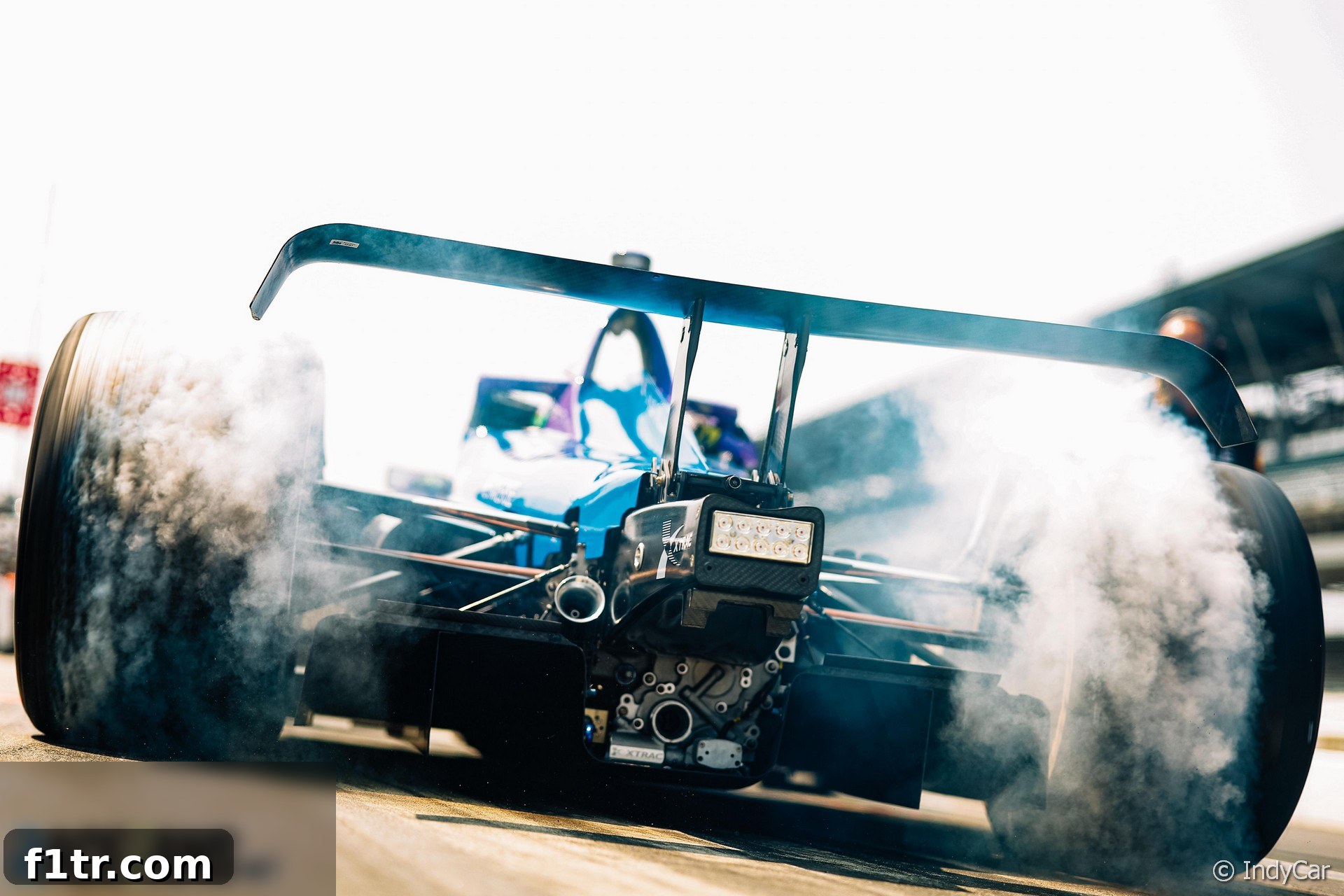
The Indianapolis 500 stands as a truly unique spectacle in the world of professional motorsport, embodying a spirit of pure meritocracy rarely seen elsewhere. Unlike events such as the 24 Hours of Le Mans, which operates on an invitation-only basis, or NASCAR, where top teams secure their starting spots through “charter” agreements, and Formula 1’s exclusive constructors who resist expansion, the Indy 500 proudly guarantees every prospective entry the opportunity to qualify. However, it guarantees no one the right to start the race through any means other than raw speed and skill. This legendary event, often hailed as “The Greatest Spectacle in Racing,” sets the stage for unparalleled drama and excitement even before the green flag waves.
This year, an intense field of 34 teams and drivers will vie for a mere 33 coveted starting positions. This means that for one driver, the ambitious dream of competing in the biggest race of the IndyCar Series season will tragically end a week before the race itself. The pressure is immense, not just for the seasoned full-season IndyCar competitors but also for the “500 specialists” – drivers and teams who often focus their entire year on this single, iconic event. Such high stakes demand a qualifying format as distinctive and challenging as the race itself, designed to test every facet of a team’s and driver’s capabilities.
The Road to the Grid: Saturday’s Qualifying Marathon
Full-field qualifying (11:00 local time / 16:00 BST)
The qualifying weekend begins on Saturday, with a sprawling six-hour and fifty-minute session dedicated to full-field qualifying. This extensive period allows all 34 drivers multiple opportunities to lay down their best efforts and secure a spot in the prestigious Indianapolis 500. By the end of this marathon session, 30 drivers will have successfully qualified for the race. The fastest 12 drivers from this session earn a crucial advantage, advancing to a two-stage pole shootout on Sunday. Meanwhile, drivers positioned from 13th through 30th will have their starting positions firmly locked in, giving them peace of mind for the big race, knowing their spot is secure, though perhaps not ideal.
Unlike many other racing series where a single fastest lap determines grid order, the Indianapolis 500 demands consistent speed and precision. Drivers are ranked not by their quickest single lap time but by the average speed achieved over four consecutive laps in a single-car format. This unique system emphasizes the importance of a well-balanced car, driver stamina, and meticulous setup, as maintaining peak speed for four uninterrupted laps requires both courage and technical mastery. It’s a true test of a driver’s ability to manage their car and maintain focus under extreme pressure.
Drivers undertake their initial qualification attempts in an order determined by a draw held on Friday evening, adding another layer of randomness and strategic consideration to the proceedings. The order is meticulously followed to ensure fairness and allow each team their designated window to prepare and execute their run. This initial queueing system, while seemingly straightforward, carries significant weight, as track conditions can evolve throughout the day, potentially favoring earlier or later runners.
| Position | Car | Driver | Team | Engine |
|---|---|---|---|---|
| 1 | 23 | Ryan Hunter-Reay | Dreyer & Reinbold | Chevrolet |
| 2 | 26 | Colton Herta | Andretti | Honda |
| 3 | 12 | Will Power | Penske | Chevrolet |
| 4 | 06 | Helio Castroneves | Meyer Shank | Honda |
| 5 | 98 | Marco Andretti | Andretti | Honda |
| 6 | 8 | Marcus Ericsson | Ganassi | Honda |
| 7 | 45 | Christian Lundgaard | RLL | Honda |
| 8 | 7 | Alexander Rossi | McLaren | Chevrolet |
| 9 | 9 | Scott Dixon | Ganassi | Honda |
| 10 | 60 | Simon Pagenaud | Meyer Shank | Honda |
| 11 | 55 | Benjamin Pedersen | Foyt | Chevrolet |
| 12 | 51 | Sting Ray Robb | Coyne/RWR | Honda |
| 13 | 6 | Felix Rosenqvist | McLaren | Chevrolet |
| 14 | 66 | Tony Kanaan | McLaren | Chevrolet | 15 | 33 | Ed Carpenter | Carpenter | Chevrolet |
| 16 | 50 | RC Enerson | Abel | Chevrolet |
| 17 | 30 | Jack Harvey | RLL | Honda |
| 18 | 20 | Conor Daly | Carpenter | Chevrolet |
| 19 | 29 | Devlin DeFrancesco | Andretti | Honda |
| 20 | 15 | Graham Rahal | RLL | Honda |
| 21 | 21 | Rinus VeeKay | Carpenter | Chevrolet |
| 22 | 5 | Pato O’Ward | McLaren | Chevrolet |
| 23 | 77 | Callum Ilott | Juncos Hollinger | Chevrolet |
| 24 | 24 | Stefan Wilson | DRR/Cusick | Chevrolet |
| 25 | 11 | Takuma Sato | Ganassi | Honda |
| 26 | 18 | David Malukas | Coyne/HMD | Honda |
| 27 | 14 | Santino Ferrucci | Foyt | Chevrolet |
| 28 | 10 | Alex Palou | Ganassi | Honda |
| 29 | 28 | Romain Grosjean | Andretti | Honda |
| 30 | 27 | Kyle Kirkwood | Andretti | Honda |
| 31 | 44 | Katherine Legge | RLL | Honda |
| 32 | 3 | Scott McLaughlin | Penske | Chevrolet |
| 33 | 78 | Agustin Canapino | Juncos Hollinger | Chevrolet |
| 34 | 2 | Josef Newgarden | Penske | Chevrolet |
This process continues until every car on the entry list has been given at least one opportunity to qualify. However, the drama doesn’t end there. After the initial round, teams are permitted to make additional qualification attempts, adding a layer of strategic complexity and tension. To do so, they must enter one of two distinct queues. Lane 1, often referred to as the priority or “fast lane,” offers quicker access to the track. The catch, however, is significant: any car choosing Lane 1 must forfeit its previously recorded qualifying time and speed for the privilege of priority access. This high-risk, high-reward decision can either pay off handsomely with an improved time or backfire dramatically if conditions worsen or the attempt is not successful.
Conversely, cars in Lane 2, or the “slow lane,” maintain their existing qualifying speeds but face a potentially longer wait for track access. This creates a fascinating strategic dilemma for teams: gamble on better conditions or a faster run in Lane 1, or play it safe in Lane 2. Furthermore, any car that finds itself relegated outside the top 30 automatically has its qualification speed voided. These drivers and teams then face a desperate fight against the clock, making as many attempts as possible within the remaining time to “bump” their way back into the top 30 and secure a starting spot. For those four unfortunate drivers who fail to make the cut on Saturday, the agonizing wait continues until Sunday, when they face the ultimate test in Last Chance Qualifying.
Advert | Become a RaceFans supporter andgo ad-free
Championship Sunday: Pole Position and Last Chance Drama
Sunday at the Indianapolis Motor Speedway is a day packed with high-stakes action, beginning with two crucial 60-minute practice sessions. Starting at 11:30 local time (16:30 BST), the first session is exclusively for the 12 fastest qualifiers from Saturday, allowing them to fine-tune their machines for the upcoming pole shootout. This is followed by a second practice session dedicated to the four drivers who will face the immense pressure of Last Chance Qualifying, giving them a final opportunity to find crucial speed.
Top 12 Qualifying: The Battle for the Front Rows
Top 12 Qualifying (14:00 local time/19:00 BST)
The afternoon kicks off with the Top 12 Qualifying session. The twelve fastest drivers from Saturday will embark on another tense four-lap run, but with a critical difference: the order is now reversed, with the slowest of the 12 going first, building anticipation. Unlike Saturday’s numerous opportunities, each driver in this session is guaranteed only one attempt to qualify. This “one and done” format amplifies the pressure exponentially; there are no second chances, no priority lanes to rely on. Every detail, every microsecond, counts. At the conclusion of this session, positions 7 through 12 will be locked in, securing their places in the third and fourth rows of the grid. The remaining six drivers, having demonstrated exceptional speed and consistency, will then advance to the ultimate showdown: the Fast Six Qualifying later in the evening, where pole position will be decided.
Last Chance Qualifying: The Heartbreak and the Heroics
Last Chance Qualifying (15:05 local time/20:05 BST)
Perhaps the most emotionally charged session of the entire weekend is Last Chance Qualifying, often referred to by fans as “Bump Day” or “The Bubble.” Here, four drivers will battle fiercely for the final three grid positions in a nail-biting, one-hour timed session. The tension is palpable, as for one of these four, the dream of racing in the Indy 500 will come to an abrupt and heartbreaking end. Each car is guaranteed a minimum of one attempt, and drivers may make multiple attempts to improve their speed until time expires. This allows for strategic decisions, as teams watch the clock and their competitors, deciding whether to make another run or stand on their current time.
To facilitate these multiple attempts, cars are allowed an additional “cool-down lap” following each qualifying run. This crucial lap helps to expedite engine cooling, allowing teams to prepare for another run more quickly. However, this luxury is only available until there are ten minutes left in the session, adding another layer of urgency as the clock winds down. Each car’s most recent qualifying speed remains eligible for the starting lineup until that time is either withdrawn (for example, by entering the priority lane for another attempt) or until the session concludes. This dynamic rule means that a driver can be “on the bubble” for most of the session, only to be dramatically bumped out by a faster competitor in the final moments.
The history of Last Chance Qualifying is rich with drama and unforgettable moments. The most recent session, held in 2021, saw two-time and reigning IndyCar Series champion Will Power narrowly escape humiliation, qualifying for the race alongside Sage Karam and Simona de Silvestro, while Charlie Kimball and RC Enerson agonizingly failed to make the cut. Even more dramatically, in 2019, six cars and drivers found themselves fighting for the final three grid slots. In a stunning turn of events, a dramatic final run by Juncos Racing driver Kyle Kaiser bumped two-time Formula 1 world champion Fernando Alonso and his McLaren entry from the field. Kaiser joined Karam and James Hinchcliffe on the final row, while Pato O’Ward and Max Chilton also failed to qualify alongside the legendary Alonso. These moments underscore the brutal reality and pure meritocracy of Indy 500 qualifying, where reputation and past achievements count for little when it comes to raw speed.
Fast Six Qualifying: The Ultimate Quest for Pole
Fast Six Qualifying (16:20 local time/21:20 BST)
The climax of the qualifying weekend arrives with the Fast Six Qualifying session. Here, the six fastest drivers from the Top 12 session make their final, decisive qualifying run. The order, once again, is set from slowest to fastest based on their preceding session times, ensuring that the tension builds to a crescendo. This is the moment where heroes are made, and pole position for the Indianapolis 500 is decided. The fastest driver in this elite group not only earns the prestigious pole position but also secures 12 valuable IndyCar Series championship points, providing a significant boost early in the season. The remaining top 12 qualifiers also earn championship points, acknowledging their exceptional performance throughout the grueling qualifying process.
While the intricacies of the Indy 500 qualifying format might appear complex when described in words, especially compared to simpler single-session or knockout formats, most spectators find it incredibly intuitive and captivating to watch unfold in real-time. The layered stages, the shifting priorities, the high-risk decisions, and the dramatic last-minute attempts create a genuine sense of intrigue and tension that permeates the entire weekend. This unique format is a testament to the Indy 500’s enduring legacy, ensuring that the path to “The Greatest Spectacle in Racing” is as thrilling and unforgettable as the race itself.
Advert | Become a RaceFans supporter andgo ad-free
Latest IndyCar News
- IndyCar driver McLaughlin cleared of injury after crashing through barrier at Barber
- Schumacher says his IndyCar feels like ‘an F2 car, just with better tyres’
- IndyCar “way faster than Formula 1” in some corners, says Grosjean
- FIA to award more F1 superlicence points to IndyCar drivers from 2026
- Schumacher to race full-time in IndyCar with RLL in 2026
Browse all IndyCar articles